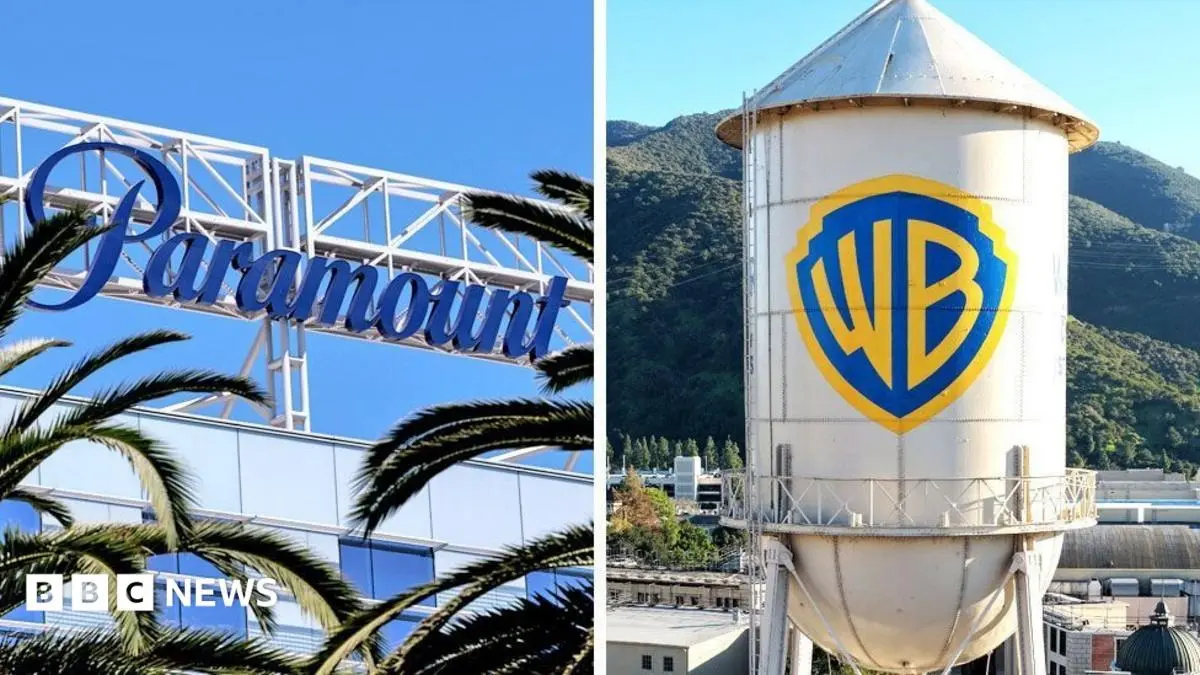
LOS ANGELES — In a transaction destined to permanently redraw the boundaries of global entertainment, commerce, and media, the ink has officially dried on a colossal $110 billion merger uniting Paramount Skydance and Warner Bros. Discovery. This historic combination marries two of the most storied, century-old studios in the history of motion pictures, forging an unprecedented content powerhouse. Yet, as Hollywood celebrates the birth of a new era, the industry stands breathless, grappling with the profound implications of sweeping consolidation, mounting debt burdens, shifting streaming paradigms, and the uncertain future of foundational journalistic institutions.
The mega-merger, masterminded by media mogul David Ellison, terminates months of bitter legal challenges, regulatory standoffs, and ferocious bidding wars that transfixed Wall Street and Washington alike. The newly integrated entertainment behemoth will operate under the banner of Skydance Corporation, housing an astonishing roster of assets that spans traditional broadcast networks, prestige cable giants, global streaming platforms, and iconic cinematic franchises.
While leadership heralds the deal as a masterstroke of modern corporate synergy designed to outpace Silicon Valley tech giants, labor unions, antitrust advocates, and industry analysts warn of seismic ripples across the creative economy. From the fate of cinematic releases to the structural integrity of vital American newsrooms, the tectonic shift has arrived.
Executive Overview: A Seismic Shift in Global Media
The scale of the newly minted Skydance Corporation is nothing short of breathtaking. By absorbing Warner Bros. Discovery, Paramount Skydance has aggregated an empire of pop-culture touchstones. Under a single corporate umbrella, the company now controls HBO, CBS, Nickelodeon, Showtime, Comedy Central, DC Studios, and the Food Network.
Furthermore, the merger unites two of the most lucrative intellectual property portfolios in human history. Warner Bros.’ crown jewels—including the Harry Potter, Game of Thrones, and The Lord of the Rings franchises—now sit alongside Paramount’s historic treasure trove, which features Indiana Jones, Mission: Impossible, and Shrek. This unprecedented concentration of cultural capital creates an entertainment colossus with unmatched global distribution muscle.
Yet, this monumental marriage of multi-national media assets arrives during a period of immense structural stress for the entertainment sector. Linear television continues its secular decline, cable cord-cutting is accelerating, and the streaming economy remains a punishing battlefield defined by high customer acquisition costs and elusive profitability. By bringing these two massive ships together, David Ellison is betting that sheer scale will provide the defensive moat necessary to survive a brutalized media landscape dominated by deep-pocketed tech behemoths like Apple, Amazon, and Netflix.
Detailed Chronology: From Bidding Wars to Antitrust Battles
The path to the $110 billion consolidation was fraught with high-stakes corporate maneuvering and fierce regulatory resistance. The corporate drama began when streaming pioneer Netflix entered advanced discussions to acquire a significant portion of Warner Bros. Discovery’s assets. Sensing an existential threat to traditional studio ecosystems, Paramount Skydance launched an aggressive, hostile counter-bidding war that ultimately forced Netflix to retreat from the negotiating table.
Once Paramount Skydance secured its agreement with Warner Bros. Discovery’s board, the battleground shifted from corporate boardrooms to federal and state courts. Attorneys general from approximately a dozen U.S. states—spearheaded by California Attorney General Rob Bonta—unleashed a wave of antitrust lawsuits seeking to block the merger entirely. The state regulators argued that the consolidation would fatally stifle market competition, drive up subscription and ticket prices, and inflict "substantial, irreparable harm" upon movie theaters, cable distributors, and ultimately, consumers nationwide.
Faced with the prospect of protracted, multi-year litigation that could cripple both businesses, Paramount Skydance engaged in intense negotiations with state enforcers. Last month, a historic settlement was reached, paving the way for the merger to clear its final major domestic hurdle.
California Attorney General Rob Bonta emphasized that the settlement terms were deliberately crafted to protect domestic film production and safeguard labor forces. Under the legally binding agreement, Paramount must release a minimum of 30 feature films annually, guaranteeing a steady stream of theatrical product. To prevent the studio from evading its obligations through cheap, automated content generation, the agreement features strict, enforceable guardrails explicitly banning the reliance on entirely AI-generated feature films.
Additionally, to ensure the deal directly benefits the domestic workforce, the settlement mandates that at least 20% of all film production must take place within the United States for the initial two-year period following the merger. This threshold scales upward, requiring more than 30% domestic production over the subsequent three years. Should Skydance fail to meet these stringent annual production quotas, the company faces a severe penalty: a forced divestment of its lucrative 49% stake in Miramax, the historic indie film company originally founded by Harvey and Bob Weinstein.
Supporting Context & Metrics: Financial Pressures and Leadership Realignments
Beneath the glittering veneer of red-carpet premieres and multi-billion-dollar valuations lies a sobering financial reality. Financial analysts have sounded alarms over the combined company’s debt load, which sits heavy at a time of elevated global interest rates.
Dan Coatsworth, Head of Markets at investment firm AJ Bell, underscored the immediate financial imperatives facing executive leadership. "The combined entity, now called Skydance, needs to cut costs and make bigger profits to be able to get the debt down to more manageable levels," Coatsworth explained. He added a stark reminder of the volatile nature of the film business: "The fact that Tom Cruise’s movie Digger, Warner Bros.’ last theatrical release prior to the merger, has been a major box-office flop is a reminder of how the film industry is not a guaranteed ticket to riches."
To navigate these turbulent financial waters, David Ellison has wasted no time restructuring the executive suite. Last week, Ellison appointed outgoing Mattel CEO Ynon Kreiz as co-chief executive of Skydance Corporation. While Ellison will concentrate on high-level corporate strategy, technological innovation, and long-term vision, Kreiz will take charge of day-to-day operations, overseeing the intricate, multi-billion-dollar process of business integration.
The streaming and content divisions have also seen significant shifts. Casey Bloys, the critically acclaimed architect behind HBO and Max’s prestige television dominance, has been elevated to co-chair and chief content officer for direct-to-consumer content.
Mike Proulx, Research Director at Forrester Research, analyzed the appointment, noting its profound operational impact. "This change essentially means the HBO leadership team is now in charge of Skydance’s combined streaming operation," Proulx observed. "While that bodes well for the HBO brand, make no mistake, Bloys will be pressured to find and deliver cost efficiencies that could affect content quality."
In the news division, veteran broadcast executive Mark Thompson—formerly Director General of the BBC—will continue his tenure as chairman and editor-in-chief of CNN Worldwide, while conservative-leaning media figure Bari Weiss remains editor-in-chief of CBS News.
Official Statements and Editorial Independence Concerns
The integration of two premier American news networks—CNN and CBS News—under the Skydance corporate banner has sparked intense national debate regarding journalistic integrity and editorial freedom. Political and editorial independence has been a sensitive subject at CBS since the network was absorbed into the Skydance orbit during a prior 2025 merger.
To quell mounting public skepticism and appease regulatory watchdogs, Paramount agreed as part of the state settlement to establish a dedicated "news editorial independence board." This oversight body is mandated to "ensure independent, objective, fact-based reporting" across both CNN and CBS, shielding newsrooms from corporate interference.
David Ellison, who made headlines earlier this year by hosting a private dinner for U.S. President Donald Trump, has repeatedly gone on the record to reassure journalists and the public that absolute editorial independence will remain a foundational pillar of the news divisions.
When asked for his assessment of the multi-billion-dollar union immediately following its finalization, President Trump offered a brief, glowing endorsement. "They’re terrific people and it’s going to be a great company," Trump remarked, describing the transaction as "great."
Future Outlook: Heritage, Creativity, and the Road Ahead
As the dust settles on the $110 billion transaction, Skydance Corporation inherits two vastly different, yet equally proud, cinematic legacies. Warner Bros. boasts a storied 103-year history that includes over 100 Academy Awards. The studio enjoyed an extraordinary run at last year’s Oscars ceremony, tying a historic record with 11 golden statuettes distributed among critically acclaimed features like One Battle After Another, Sinners, and Weapons.
Conversely, Paramount traces its corporate lineage back to 1912. Like its newly acquired stablemate, Paramount has amassed more than 100 Academy Awards across cinematic milestones ranging from The Godfather to Titanic. However, the studio has experienced a noticeable drought in recent Hollywood honors. Paramount failed to secure a single Academy Award nomination last year, with its most recent Oscar win dating back to 2022 for the blockbuster aviation sequel Top Gun: Maverick.
Whether the newly formed Skydance Corporation can successfully harmonize these historic legacies while satisfying ruthless Wall Street creditors remains the definitive question of the decade. The entertainment landscape has entered uncharted waters. For millions of moviegoers, television viewers, and digital streamers worldwide, the success—or failure—of David Ellison’s grand design will dictate the future of storytelling for generations to come.