Executive Overview
The Wimbledon International Music Festival (WIMF) returns for its 18th consecutive year this November, offering a sweeping, meticulously curated 26-event programme running from November 7 to 29, 2026. This year’s showcase marks a significant milestone: the second festival under the artistic directorship of clarinettist and programmer Anthony Friend, who officially assumed the mantle from founder Anthony Wilkinson in 2025.
Since its inception in 2009, WIMF has established itself as an indispensable fixture on the British cultural calendar, steadily expanding its footprint across southwest London. While Wilkinson’s foundational vision was deeply rooted in the long-held dream of establishing a dedicated, state-of-the-art concert hall in Wimbledon, Friend has steered the institution into a dynamic new era. Embracing a philosophy of "music in unexpected places," the 2026 festival rejects architectural exclusivity in favour of spatial diversity. Audiences will experience world-class classical, choral, jazz, and contemporary performance not only in traditional sacred and academic settings—such as St John the Baptist Church and King’s College School—but also in lively community hubs, including a local wine bar, an iconic gastropub, a public library, and a community theatre space.
The 2026 edition deftly balances monumental masterworks with innovative programming, featuring internationally celebrated virtuosos alongside rising stars of the next generation. From the soaring architectural vocal lines of Venetian and Spanish Renaissance masterworks to late-night French Baroque in the intimate setting of a neighbourhood pub, WIMF continues to challenge preconceptions of where and how classical music can be consumed. Furthermore, the festival’s steadfast commitment to community engagement and youth outreach—anchored by its partnership with the Merton Music Foundation—ensures that the magic of live performance resonates far beyond the concert hall walls.
Detailed Chronology and Programme Highlights
The expansive three-week itinerary for November 2026 is structured to guide audiences through centuries of musical evolution, narrative storytelling, and genre-defying collaborations.
Opening Weekend: Sacred Splendour and Grand Traditions
The festival opens on November 7 with Sacred Splendour, an ambitious and acoustically rich exploration of Venetian and Madrid polychoral music. Hosted in the atmospheric nave of St John the Baptist, Spencer Hill, the opening concert features the Academy Choir of Wimbledon under the baton of George Inscoe, Sub-Organist at St Paul’s Cathedral. They are joined by His Majesty’s Sagbutts and Cornetts—historically informed specialists whose sackbuts and early brass instruments recreate the resonant, golden acoustics of Renaissance cathedrals.
Mid-Festival Masterworks and Chamber Collaborations
As the weeks progress, the programme narrows its lens to the crystalline intricacies of chamber music and solo recitals.
- Piano Luminaries: Renowned Canadian pianist Angela Hewitt makes her third festival appearance, serving as the grand closer on November 29 with a characteristically refined piano recital. Earlier in the month, audiences are treated to the blistering technique of Georgian pianist David Khrikuli—a laureate of the prestigious Chopin International Piano Competition—who tackles a demanding repertoire spanning Bach, Chopin, Ravel, and Rachmaninoff.
- Intimate Ensembles: Festival Director Anthony Friend steps out from behind the administrative desk to join forces with the acclaimed Quatuor Agate. Together, they will perform Mozart’s peerless Clarinet Quintet, alongside string quartets by Erich Wolfgang Korngold and Franz Schubert.
- Cross-Cultural Dialogues: Spanish pianist Antonio Oyarzàbal joins the Solem Quartet for a lush, romantic programme pairing Dvořák’s Piano Quintet with works by American pioneer Amy Beach. Meanwhile, members of Sinfonia Cymru, led by Haim Choi, navigate a stylistic bridge from Mendelssohn’s effervescent Octet and Olari Mustonen’s Nonetto II down to micro-ensembles performing works by 20th-century trailblazers Lili Boulanger, Louise Farrenc, and Jean Françaix.
Sacred Reflections and Orchestral Firepower
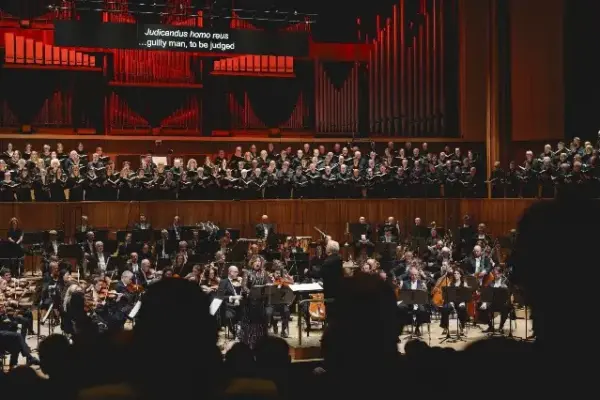
Choral-orchestral programming remains a cornerstone of the WIMF experience. Max Barley, Director of Music at Holy Trinity Sloane Square, returns with a dedicated Bach programme centering on the cantata Gottes Zeit ist die allerbeste Zeit, the motet O Jesu Christ, meins Lebens Licht, and the soaring Magnificat.
In a display of contemporary orchestral firepower, Sinfonia Smith Square takes the stage under the direction of conductor Charlotte Corderoy. Their programme features Anna Clyne’s virtuosic, adrenaline-fueled orchestral showpiece Sound and fury, alongside the world premiere run of Hargrove—a brand-new flugelhorn concerto by Gabriel Jackson written specifically for, and performed by, soloist Imogen Whitehead. The evening culminates in the sweeping, romantic expanses of Felix Mendelssohn’s Scottish Symphony.
The Next Generation: Rising Stars and Memorial Concerts
WIMF has earned a reputation for championing exceptional young talent. Violist Edgar Francis, who captured international attention when he won the Cecil Aronowitz International Viola Competition at just 22 years old, teams up with pianist Jâms Coleman for the annual Tertis Memorial Concert. Their programme shines a light on the expressive depth of the viola through works by Clara Schumann, Robert Schumann, Rebecca Clarke, and Frank Bridge.

Supporting Context & Metrics: Venues, Collaborations, and Innovation
The true hallmark of Anthony Friend’s directorship is the clever spatial curation of the 26 scheduled events. By dissolving the barriers between artist and audience, WIMF has transformed local commercial spaces into temporary cultural salons.
Spatial Diversity: From Crypts to Wine Bars
- Sacred & Academic Spaces: St John the Baptist (Spencer Hill) remains the spiritual anchor of the festival. However, educational venues such as Wimbledon High School’s Auditorium, the Upper Hall of Sacred Heart Church, and King’s College School provide state-of-the-art acoustic backdrops for chamber performances and recitals.
- Non-Traditional Venues: The festival’s alternative spaces are designed to encourage casual, exploratory attendance. Merton Arts Space within Wimbledon Library hosts literary-musical crossovers, while New Wimbledon Theatre plays host to dedicated school performances.
- The Gastronomic Circuit: The Rushmere pub on Ridgway transforms into a bohemian jazz den for two nights. It hosts jazz vocalist Natalie Williams and her band in a special collaboration with the legendary Soho venue Ronnie Scott’s, as well as the Orchestra of the Age of Enlightenment (OAE), who bring their accessible, conversational Night Shift format to a pub setting to perform lighthearted French Baroque music. Meanwhile, Jeroboams wine bar in Wimbledon Village pairs curated international classical repertoires with regional pairings—such as Neapolitan song paired with southern Italian wines, and Piazzolla’s fiery tango-nuevo coupled with robust Argentinian vintages.
+--------------------------------------------------------------------------+
|                     WIMF 2026 VENUE ECOSYSTEM                            |
+---------------------------+----------------------------------------------+
| Traditional Venues        | St John the Baptist, King’s College School   |
+---------------------------+----------------------------------------------+
| Community & Educational   | Wimbledon Library, New Wimbledon Theatre     |
+---------------------------+----------------------------------------------+
| Alternative & Commercial  | The Rushmere Pub, Jeroboams Wine Bar         |
+---------------------------+----------------------------------------------+
Multisensory Explorations: Candlelight and Live Painting
Atmospheric innovation is central to the 2026 calendar. Candlelit concerts create an intimate, Nordic-noir ambiance for performances like the Lodestar Trio, who ingeniously fuse traditional Scandinavian folk music with the mathematical precision of J.S. Bach. Similarly, soprano Ruby Hughes and lutenist Jonas Nordberg transport listeners to the Elizabethan era with a meditative programme devoted entirely to John Dowland.
Pushing the boundaries of synesthesia, one of the festival’s most anticipated events pairs live chamber music with live visual art. Cellist Jérémie Queyras and violinist Charlotte Spruit will perform while painters create three large-scale canvases live on stage—artworks that will subsequently be made available for public acquisition following the performance.
Official Statements and Artistic Vision
Reflecting on the evolution of the festival since his transition into the role of Artistic Director, Anthony Friend has consistently emphasized the importance of accessibility without compromising artistic integrity.
"Music happens in time, but it also happens in space," Friend noted ahead of the 2026 season. "When we take an ensemble like the Orchestra of the Age of Enlightenment into a local pub like The Rushmere, or pair the wines of Naples with the songs of its streets at Jeroboams, we aren’t watering down the classical tradition—we are restoring it to its original, vital function: a shared communal experience that belongs to everyone."
The festival’s Board of Trustees has echoed this sentiment, praising Friend for successfully honoring the foundational ethos established by Anthony Wilkinson in 2009 while injecting a youthful, experimental vitality that appeals to post-pandemic audiences seeking warmth, intimacy, and localized cultural connection.
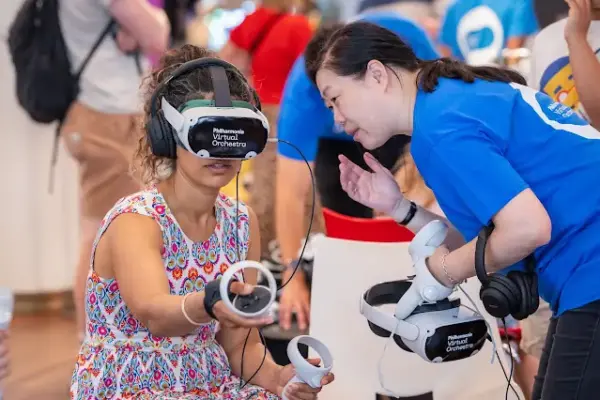
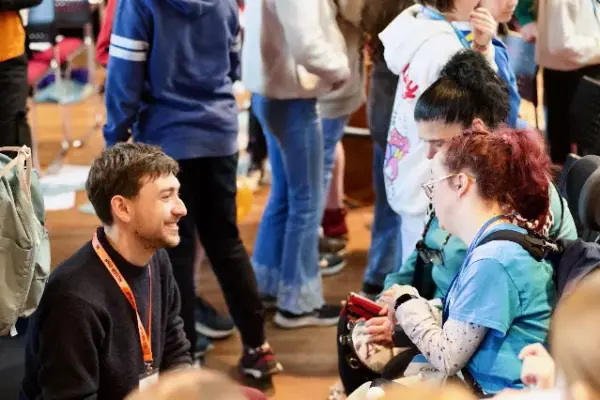
Furthermore, the institutional partnership with the Merton Music Foundation continues to serve as the beating heart of WIMF’s civic mission. By subsidizing ticket allocations, organizing tailored schools’ concerts at the New Wimbledon Theatre, and integrating student workshops into the overarching festival schedule, the organization ensures that thousands of children across the borough are given direct, unmediated access to elite-tier musicianship.
Future Outlook
As the Wimbledon International Music Festival prepares to throw open its doors for its 18th staging, it stands as a shining exemplar of how regional arts festivals can thrive in the 21st century. By refusing to rest on its laurels, WIMF has proven that heritage institutions do not need to choose between historical reverence and radical modern relevance; they can—and must—embrace both.
Looking ahead beyond November 2026, the blueprint established under Anthony Friend’s leadership signals a sustainable, outward-looking trajectory. Plans are already underway to deepen community partnerships, expand the footprint of alternative venue collaborations, and continue nurturing a pipeline of emerging talent that guarantees the future of classical music in south London. For residents and visitors alike, the 26 events of November 2026 promise an enriching, transformative antidote to the encroaching winter chill—a vibrant reminder of the unifying power of live music performed in unexpected places.