Executive Overview
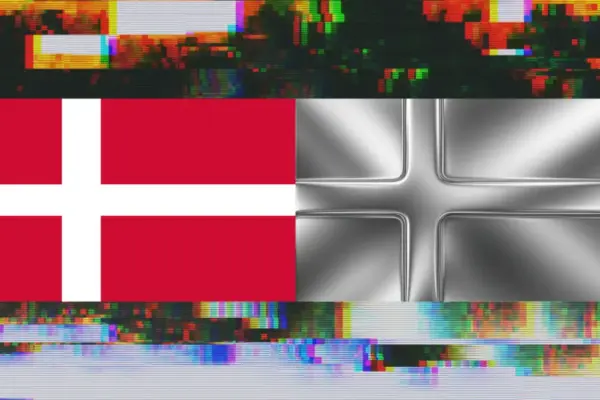
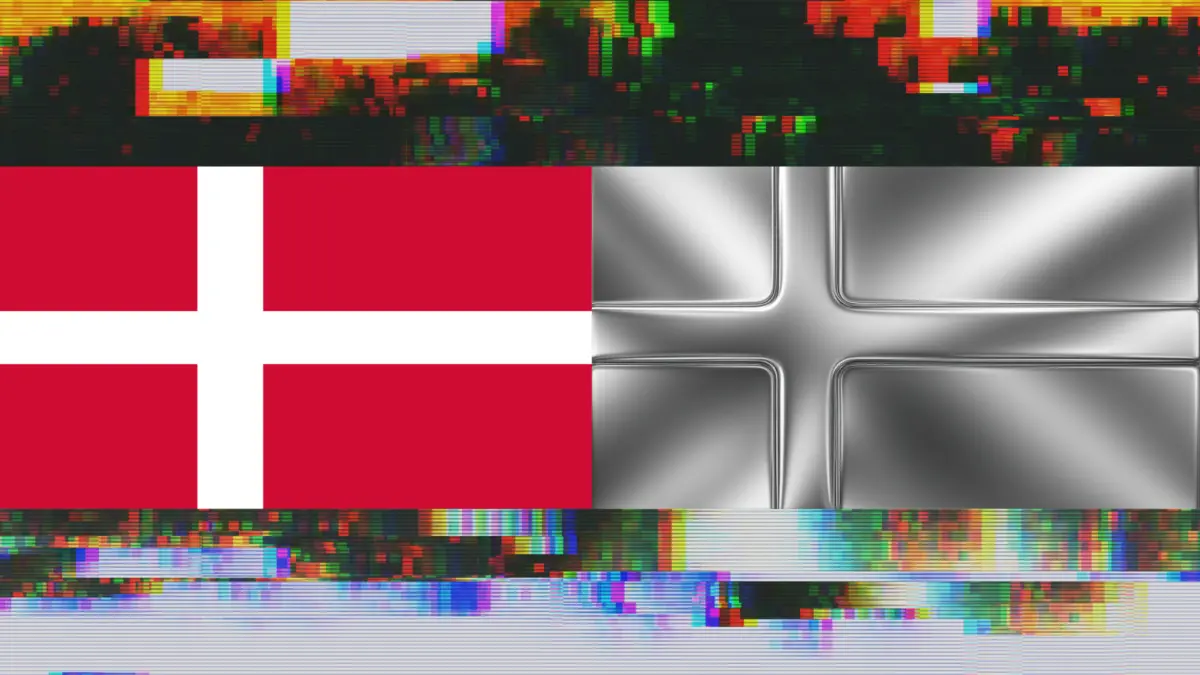
In a decisive legislative maneuver that could establish a definitive regulatory blueprint for the rest of Europe and beyond, the Danish government has formally introduced a revised and modernized bill designed to combat the unchecked proliferation of AI-generated deepfakes. Spearheaded by Denmark’s Minister of Culture, Zenia Stampe, the proposed legislation fundamentally seeks to empower performers, public figures, and everyday citizens with robust new legal instruments to block unauthorized digital replicas that imitate their voices, physical likenesses, and personal characteristics.
As artificial intelligence systems democratize the creation of hyper-realistic synthetic media—frequently achieved with just a few clicks—governments worldwide are grappling with the profound socio-political, legal, and economic fallout. From the malicious spread of political misinformation to the rampant exploitation of artists’ livelihoods through unauthorized voice cloning, the urgency for legislative intervention has never been more apparent. Denmark’s proactive stance represents one of the most comprehensive legislative attempts in the European Union to bridge the widening gap between rapid technological advancement and outdated intellectual property frameworks.
By amending existing Danish copyright law to introduce a novel, distinct right protecting personal characteristics, the proposed bill targets the core vulnerabilities exposed by generative AI. Crucially, the legislation does not merely serve as a protective shield for victims of digital identity theft; it also opens the door to structured commercial opportunities. By establishing absolute legal clarity over who controls a person’s digital double, artists and performers can safely license their likenesses and voices to ethical platforms and commercial partners.
With Minister Stampe pressing for an aggressive implementation timeline aimed at bringing the regulations into effect by the start of next year, technology giants, legal scholars, and creative industries worldwide are paying close attention. As parallel discussions unfold in the United States Congress regarding similar digital replica rights, the Danish model may well dictate how the United Kingdom, the wider European Union, and other international jurisdictions evolve their own statutory protections against the rising tide of synthetic media deception.
Detailed Chronology and Legislative Evolution
The journey toward Denmark’s landmark digital replica legislation has been shaped by rapid shifts in both artificial intelligence capabilities and domestic political landscapes. Understanding the mechanics of the current bill requires tracing its trajectory from preliminary policy discussions to its formal reintroduction in the Danish parliament.
The Genesis of the Debate (2022–2023)
As generative adversarial networks (GANs) and advanced text-to-speech models transitioned from academic research laboratories to consumer-facing applications, creative industries across Europe began sounding the alarm. Musicians discovered unauthorized AI-generated tracks utilizing exact replicas of their vocal cords, while actors faced the unsettling prospect of their digital ghosts being thrust into unauthorized films or promotional campaigns.
Throughout late 2022 and 2023, preliminary policy drafts were circulated within the Danish Ministry of Culture. Stakeholders from the music, film, and legal sectors urged lawmakers to recognize that traditional copyright law—which traditionally demands a threshold of original human authorship—was ill-equipped to handle the unauthorized appropriation of a human being’s raw biological and stylistic identity.
Political Transitions and the Re-tabling of the Bill (2024)
The legislative momentum experienced a temporary pause following a general election in Denmark and a subsequent cabinet reshuffle earlier this year. In June, Zenia Stampe assumed the role of Minister of Culture. Recognizing the urgency of the issue, Stampe immediately elevated the protection of human creativity and personal sovereignty to the top of her political agenda.
Rebuilding upon the foundational frameworks laid down the previous year, Stampe’s ministry worked closely with legal experts, trade organizations, and civil liberties groups to refine the proposals. On the floor of the Danish parliament yesterday, Stampe officially presented the revised bill. This formal re-tabling marks a critical milestone, effectively restarting the legislative clock with a streamlined, enforcement-focused text tailored to the realities of modern generative AI infrastructure.
Legal Architecture and Scope of the Proposed Protections
To comprehend the true legal significance of Denmark’s legislative initiative, one must examine how the bill alters existing statutes and precisely what forms of digital manipulation fall under its purview.
Amending Copyright Law via a "Right of Personal Characteristics"
A common point of confusion in intellectual property discussions is whether digital likeness rights ought to be classified strictly as copyrights or related rights. Legal experts monitoring the Danish bill have provided crucial clarity on this distinction. Jakob Plesner Mathiasen, an attorney with the prominent Danish law firm Gorrissen Federspiel and a director of the record industry trade group IFPI Denmark, has emphasized the structural nature of the new provision.
Writing in a professional analysis on LinkedIn, Mathiasen noted that while the protections are formally integrated via amendments to Danish copyright legislation, the remedy "does not constitute a copyright or a related right." Instead, the bill creates an entirely distinct legal category: a separate protection of personal characteristics.
This distinction is vital. Traditional copyright protects fixed, original works of authorship (such as a recorded song, a written script, or a painted portrait). By contrast, the new Danish provision protects the underlying persona—the unique vocal timbre, facial structure, gait, and expressive mannerisms that define an individual human being.
Breadth of Coverage: AI Deepfakes Versus Traditional Editing
A critical strength of the proposed legislation lies in its technological neutrality. While global media attention naturally focuses on generative AI deepfakes, the Danish bill is intentionally drafted to capture a wider spectrum of digital trickery.
As Mathiasen highlights, the provision covers both state-of-the-art AI-generated deepfakes and imitations created using more traditional, legacy digital editing tools (such as advanced audio splicing, Photoshop manipulation, or CGI compositing). However, the law maintains an important boundary to prevent frivolous litigation: it only applies to realistic imitations that create an obvious, tangible likelihood of confusion with the actual person being mimicked.
Exceptions, Freedom of Expression, and Public Safety
No democratic legislation regulating expression can exist without balancing individual rights against the fundamental tenets of free speech. The Danish bill incorporates carefully calibrated exceptions to safeguard artistic commentary, satire, and public discourse.
Specifically, the making or distribution of digital imitations will remain legally permissible under traditional exceptions for:
- Caricature: Exaggerated artistic representations for satirical or humorous effect.
- Parody: Imitations designed to mock, critique, or comment upon original works or public figures.
- Criticism: Journalistic, political, or artistic commentary that utilizes likeness for analytical purposes.
However, these protective exceptions are not absolute. The bill includes a crucial safety valve: the freedom-of-expression exceptions will not apply where an imitation constitutes misinformation that could specifically cause serious danger to the rights or essential interests of others, or where it creates a specific, imminent danger to human life or property. This ensures that malicious actors cannot hide behind the defense of "parody" or "satire" when deploying deepfakes to manipulate financial markets, incite public panic, or ruin private reputations.
Official Statements and Industry Perspectives
The introduction of the bill has drawn widespread praise from government officials, legal scholars, and creative trade groups who view the legislation as a vital shield for human dignity and economic stability.
Minister Zenia Stampe on Human Creativity and Identity Theft
During her address in the Danish parliament yesterday, Culture Minister Zenia Stampe framed the legislation not merely as an intellectual property issue, but as a fundamental human rights and labor protection initiative.
"Protecting human creativity is one of my most important tasks as Minister of Culture," Stampe stated emphatically. "That’s why I’m very pleased that one of my first bills is about securing the right to one’s own body and voice."
Elaborating on the immediate threats posed by unbridled technological progress, Stampe drew direct attention to the societal dangers of synthetic media:
"With AI, you can create manipulated videos and images with just a few clicks and share them on social media. This can lead to misinformation and create doubt about what is real. Now we’re stopping digital identity theft and helping artists whose livelihoods are being threatened."
Legal and Industry Reactions: The View from IFPI Denmark
The commercial implications of the bill are profound, particularly for the music and entertainment sectors. For years, record labels, artist managers, and performers have watched helplessly as unauthorized AI "cover songs" and synthetic voice models flooded streaming platforms and video-sharing networks without compensation or consent.
Jakob Plesner Mathiasen of Gorrissen Federspiel and IFPI Denmark underscored that the new framework provides the exact legal certainty the creative industries have been lobbying for. By establishing that unauthorized commercial exploitation of a person’s voice or likeness is explicitly illegal, the bill effectively hands leverage back to the creators.
Within the music industry, artists will no longer be forced to rely on convoluted, piecemeal arguments involving passing off, trademark dilution, or privacy torts. Instead, they will possess a dedicated, statutory mechanism to demand immediate takedowns and seek damages for vocal and visual misappropriation.
Supporting Context, Metrics, and Global Comparisons
To fully appreciate the significance of Denmark’s legislative pivot, it is essential to examine the broader international context and the mounting economic pressures facing creators in the age of generative artificial intelligence.
The Global Epidemic of Unauthorized Replicas
Empirical data collected by creative unions and digital rights watchdogs over the past twenty-four months reveals an exponential surge in synthetic media exploitation:
- Vocal Cloning Growth: Independent tracking platforms note that unauthorized AI voice models of chart-topping musicians have proliferated across online forums by over 400% year-on-year.
- Deepfake Fraud: According to cybersecurity and digital forensics firms, corporate deepfake scams and non-consensual intimate imagery (NCII) targeting private individuals have increased dramatically, overwhelming content moderation teams on major social media networks.
- Economic Dislocation: A recent survey of professional session musicians and voice actors indicated that over 65% fear losing primary income streams to synthetic voice generation within the decade if robust legal rights are not codified globally.
Parallels with US Congressional Initiatives
Denmark is not operating in a vacuum. Across the Atlantic, lawmakers in the United States Congress have been actively debating parallel legislation, most notably proposals centered on establishing a federal digital replica right (such as the proposed NO FAKES Act).
The simultaneous evolution of digital replica rights in both the United States and Denmark is creating a powerful trans-Atlantic legal convergence. Because multinational technology conglomerates—such as Meta, Google, Apple, and ByteDance—operate across global jurisdictions, standardized legal expectations in major Western markets heavily influence corporate compliance strategies worldwide. Consequently, the success of the Danish bill could serve as a valuable stress-test for how similar intellectual property expansions might be operationalized in the United Kingdom, EU member states, and beyond.
Future Outlook, Enforcement, and Implementation Timeline
Passing legislation through parliament is only half the battle; the ultimate efficacy of any modern digital law depends entirely upon its enforcement mechanisms and the cooperation of the world’s largest technology platforms.
Pressuring Tech Giants for Rapid Takedowns
Minister Stampe was explicit regarding the practical enforcement goals of the legislation. A primary objective of the bill is to compel major technology companies and social media platforms to take down manipulated, unauthorized content with unprecedented speed, thereby minimizing potential societal and economic harm.
Under the current regulatory architecture of the European Union—including the Digital Services Act (DSA)—platforms already face strict oversight regarding illegal content. However, Denmark’s specific statutory creation of a right to personal characteristics provides a crystal-clear legal baseline. When an artist or citizen flags an unauthorized deepfake, platforms will no longer be able to hide behind ambiguous grey areas in copyright law; the unauthorized commercial or misleading imitation of a voice or likeness will constitute a direct, actionable legal violation.
The Aggressive Timeline: Targeting Early Next Year
Acknowledging the breakneck pace of technological iteration, Minister Stampe stressed that government action cannot afford to move at traditional bureaucratic speeds. With artificial intelligence tools evolving almost weekly, the Danish Ministry of Culture has set an ambitious implementation target.
Stampe expressed her explicit hope that the new protections will officially come into effect by the start of next year. Following parliamentary debate, committee reviews, and final voting procedures over the coming months, Denmark is poised to become one of the very first European nations to transition deepfake protection from policy debate into hard, enforceable statute.
Conclusion
As the digital landscape navigates an era defined by synthetic blurring of truth and fiction, Denmark’s revised legislative proposals mark a watershed moment for digital rights. By refusing to let human creativity and personal identity be treated as collateral damage in the AI revolution, Minister Zenia Stampe and the Danish parliament are establishing a formidable gold standard. Whether through safeguarding the livelihoods of recording artists against vocal piracy or restoring public trust against malicious misinformation, the Danish digital replica bill offers a clear, enforceable vision for the future of human autonomy in the technological age.