Executive Overview
In contemporary Western culture, the label "witch" has undergone a radical metamorphosis. No longer exclusively a term of patriarchal condemnation, it has emerged as a potent symbol of feminist solidarity, resilience, and independence. Modern cultural touchstones—from viral digital subcultures like "WitchTok" to blockbuster cinematic returns such as Practical Magic 2—celebrate the archetype of the independent, knowledgeable woman resisting institutional authority. Fall book lists reflect this zeitgeist as well, anchored by high-profile releases like historical novelist Philippa Gregory’s Royal Witch.
Yet, this cultural reclamation prompts a critical historical question: Are we genuinely recovering the lived experiences of marginalized women, or are we simply recycling a posthumous identity built entirely from medieval accusations rather than historical facts?
For historians of gender and political power, the enthusiastic adoption of the witch persona carries a distinct intellectual responsibility. Before celebrating the label as a badge of feminist triumph, contemporary society must examine its origins. Far from being organic symbols of proto-feminist liberation, historical accusations of witchcraft were frequently deployed as tactical weapons of statecraft, designed to dismantle female political influence, neutralize aristocratic rivals, and enforce patriarchal compliance.
By flattening complex political histories into tidy, sensationalized narratives of magic and subversion, modern media risks perpetuating the very systems of control it seeks to subvert. This article investigates the historical chasm between the accused women of medieval England and the romanticized icons of modern fiction, arguing that while creative retellings keep history in the public eye, uncritical appropriations risk obscuring the true mechanisms of historical misogyny.
Detailed Chronology: Power, Politics, and Persecution
To understand how powerful women became synonymous with witchcraft, one must examine the specific geopolitical fault lines of 15th-century England. The era was defined by dynastic instability, protracted warfare with France, and bitter factionalism surrounding the weak and pious King Henry VI. In this high-stakes arena, proximity to the crown was perilous, particularly for women who exercised independent agency.
The Rise and Fall of Eleanor Cobham (1441)
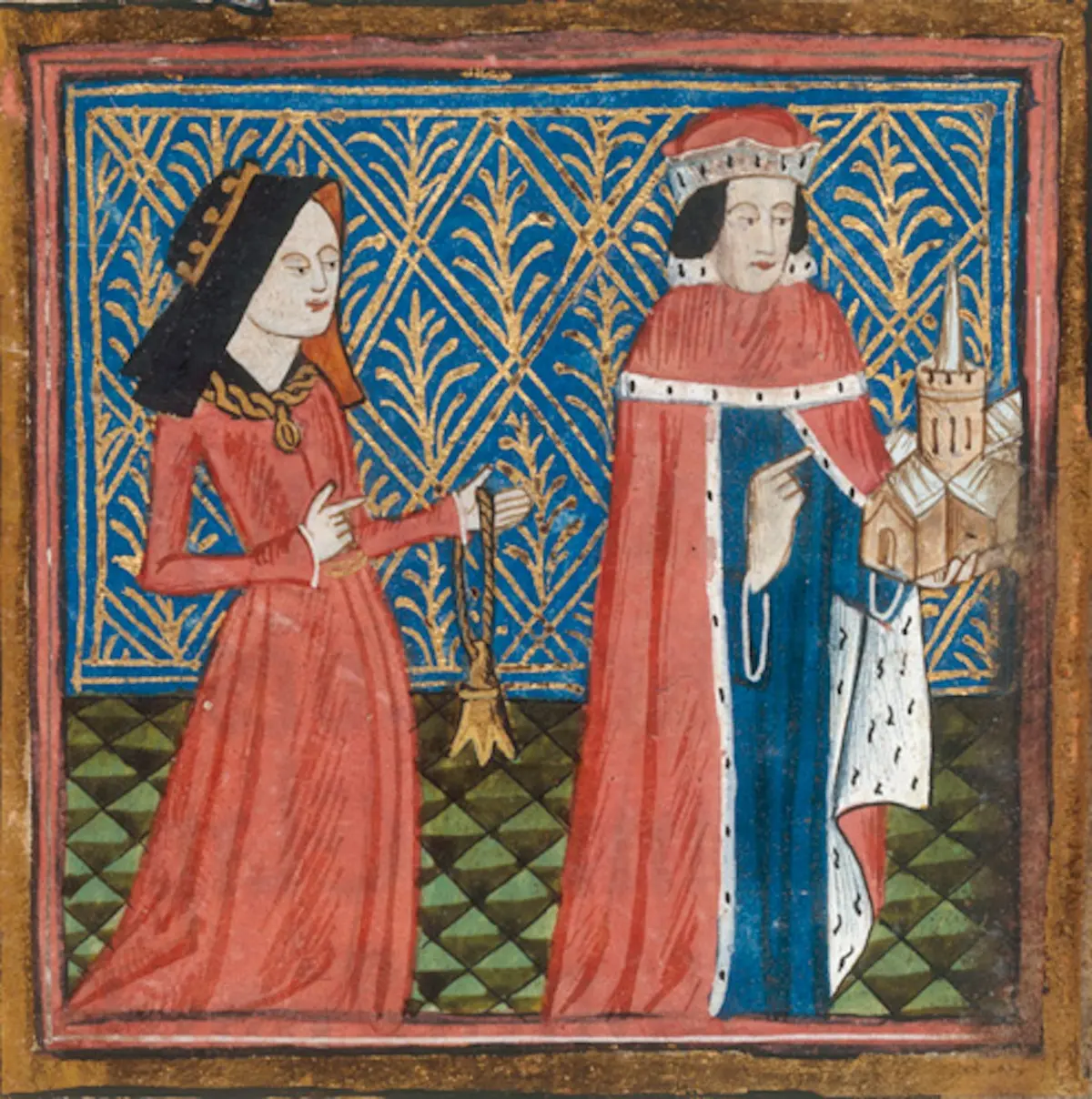
The narrative arc of Philippa Gregory’s Royal Witch centers on Eleanor Cobham, Duchess of Gloucester—one of the most dramatic cautionary tales of the late medieval period. Eleanor’s trajectory was extraordinary. Rising from relatively modest beginnings, she secured a position as lady-in-waiting to Jacqueline of Hainault, the first wife of Humphrey, Duke of Gloucester. Following the dissolution of that marriage, Eleanor became Humphrey’s mistress and subsequently his second wife.
As the wife of Humphrey—who stood briefly as heir presumptive to the young King Henry VI—Eleanor occupied the pinnacle of English secular power. However, her ambition and proximity to the throne made her a formidable target for her husband’s political rivals.
In 1441, a formal royal inquiry shattered the Gloucester household. Investigators revealed that Eleanor had commissioned scholars to cast King Henry VI’s astrological chart—an act intended to divine the monarch’s lifespan. More dangerously, the inquiry exposed her association with Margery Jourdemayne, a respected apothecary and practitioner of folk remedies who would subsequently be vilified across history as the "Witch of Eye."
The fallout was swift and total. While casting a royal horoscope was technically treasonous, the true offense was political: challenging the sanctity of the anointed king without royal sanction. While the male scholars implicated alongside Eleanor faced brutal secular penalties—Roger Bolingbroke was executed for treason, and Thomas Southwell died in the Tower of London—Eleanor was subjected to an ecclesiastical trial. She was publicly humiliated, her marriage was annulled, and she was condemned to life imprisonment.
The Eradication of Margery Jourdemayne
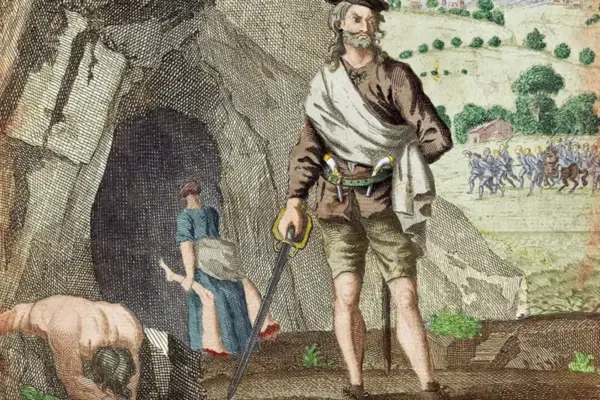
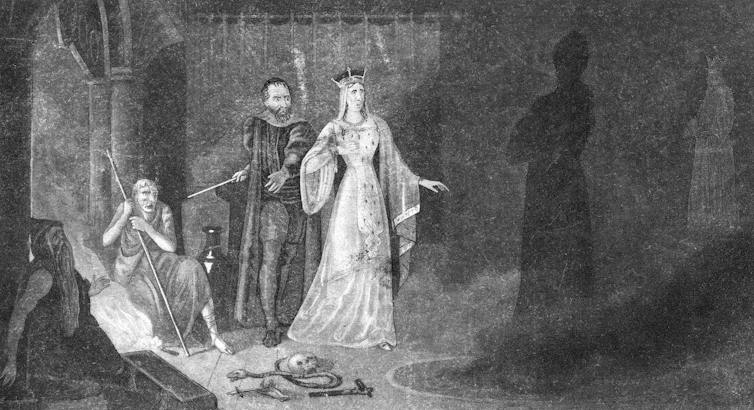
While Eleanor Cobham survived her ordeal behind stone walls, her associate Margery Jourdemayne paid the ultimate price. Jourdemayne was a fixture in elite social circles, supplying herbal remedies, protective amulets, and fertility treatments to high-ranking clientele, including members of the royal court.
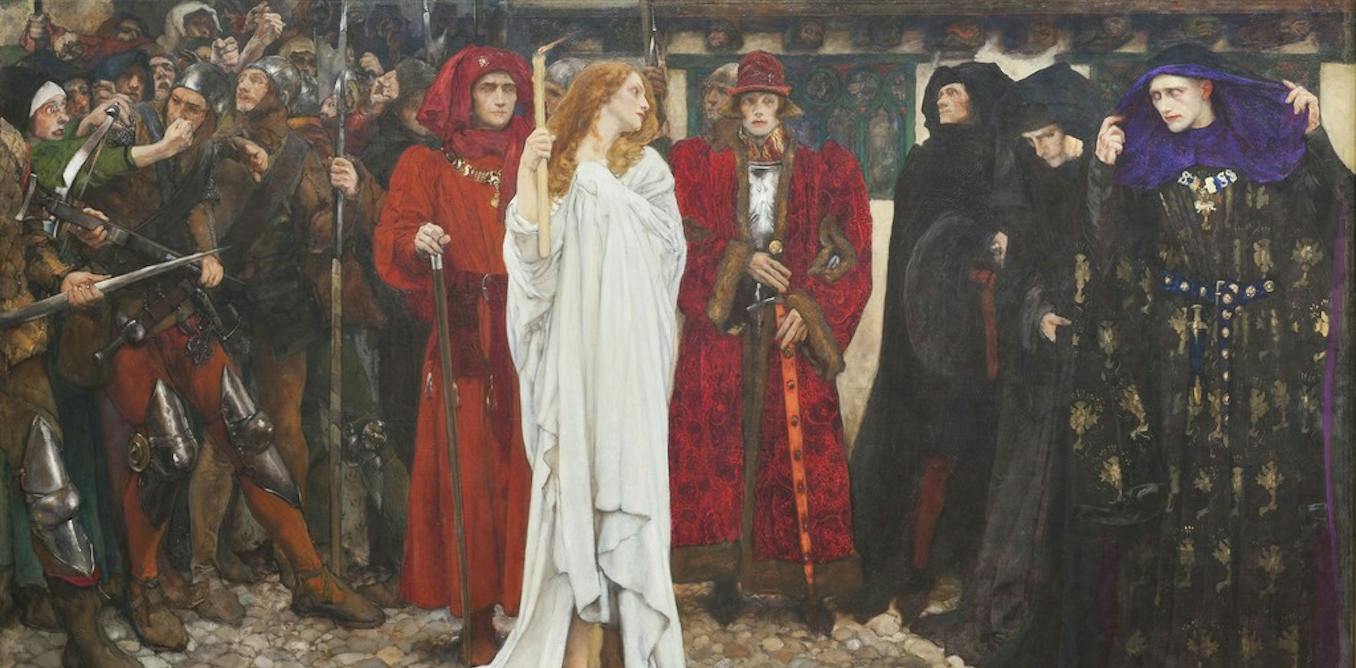
So long as Eleanor and Humphrey held supreme political sway, Jourdemayne’s services were quietly tolerated and utilized. However, the moment the Gloucester faction became a political liability, Jourdemayne’s established reputation rendered her profoundly vulnerable. Stripped of elite protection, she was condemned as a witch and burned at the stake at Smithfield on October 27, 1441. Her execution served a dual purpose for the Lancastrian regime: it discredited the Duke of Gloucester while providing a tangible, superstitious scapegoat for the realm’s anxieties.
The Precedent of Joan of Navarre
The weaponization of occult accusations against royal women was not an isolated incident. A generation prior, Joan of Navarre—dowager Queen of England, stepmother to Henry V, and stepmother-in-law to Humphrey of Gloucester—faced a similarly orchestrated fall from grace.
As the daughter of a French princess and the former Regent of Brittany, Joan’s foreign heritage made her a permanent target for xenophobic suspicion within the English court. In 1419, amid escalating tensions with France, Joan was accused of plotting against the life of King Henry V "by necromancy and magic."
Like Eleanor, Joan’s alleged commerce with the occult was a smokescreen for political expedience. The primary motivation behind the accusations was financial and strategic: King Henry V sought to seize Joan’s vast dower lands and neutralize her political influence. Although Joan was never formally convicted of witchcraft, chroniclers progressively wove the occult into her biography, transforming a sophisticated political operator into a sinister sorceress in the cultural memory of later generations.
Supporting Context & Metrics: The Mechanics of Historical Erasure
The transformation of complex geopolitical actors into one-dimensional "witches" highlights a recurring phenomenon in cultural memory: the flattening of historical nuance.
[Historical Reality] ---> Complex political maneuvers, policy disputes, factional rivalries
        |
        v
[State Intervention] ---> Accusations of treason, heresy, or the occult for political expediency
        |
        v
[Chronicler & Media] ---> Simplification into the archetype of the "witch"
        |
        v
[Modern Reclamation] ---> Romanticized as a feminist icon of resistance
Historians analyzing the trials of the 15th century note that charges of witchcraft against elite women shared several distinct operational metrics:
- The Political Expediency Index: Accusations invariably surfaced during moments of dynastic vulnerability, succession crises, or intense policy debates (such as Humphrey of Gloucester’s aggressive war stance versus the peace faction).
- The Association Metric: Women were rarely targeted in isolation; rather, their networks—servants, chaplains, apothecaries, and astrologers—were systematically targeted to construct a conspiracy narrative.
- The Erasure of Agency: Actual political grievances, such as control over land, diplomatic maneuvering, and court alliances, were consistently reframed as supernatural subversion driven by feminine irrationality or malice.
As literary scholar Misty Urban has observed regarding modern adaptations of medieval history, contemporary retellings frequently "attribute the same weapons to women that medieval authors did; they simply imagine a reception by the audience that is delighted rather than horrified."
The underlying accusations—manipulation, excessive ambition, and illicit influence—remain identical across the centuries. Society has simply inverted the moral framework, reading those traits as evidence of empowerment rather than proof of criminal guilt.
Official Statements & Academic Perspectives
The friction between creative historical fiction and rigorous historical methodology has sparked vital debates among academics, authors, and cultural critics.
Dr. Elena Woodacre, author of Joan of Navarre: Infanta, Duchess, Queen, Witch?, emphasizes the danger of removing the question mark from history. In academic evaluations of medieval queenship, Woodacre notes:
"The question mark matters. When we strip away the political reality of these women’s lives and replace it with a definitive, sensationalized label, we do a profound disservice to their lived experiences. They were navigating ruthless political landscapes where survival required acute intelligence and strategic maneuvering. Reducing them to witches strips them of their actual agency."
Philippa Gregory, whose extensive bibliography of historical fiction has done much to popularize figures like Eleanor Cobham and Elizabeth Woodville, defends the novelist’s role in keeping the past alive for contemporary readers. In interviews surrounding the release of Royal Witch, Gregory has consistently framed her work as an exploration of how institutional power silences formidable women:
"History is written by the victors, and for centuries, the victors were men who defined powerful, independent women as dangerous anomalies. By examining the women they called witches, we are looking at the points where female authority collided with patriarchal structures. Fiction allows us to inhabit those spaces and ask why society felt so threatened by them."
Public historians, however, urge caution regarding where the boundary lies between entertainment and historical education. While novelists utilize the "witch" archetype to construct engaging narratives that resonate with modern readers, cultural critics argue that consumers must maintain critical distance. Reclaiming the label of the witch as a symbol of modern feminist solidarity is an empowering cultural project, but it must not be conflated with historical excavation.
Future Outlook: Navigating Memory in the Digital Age
As digital subcultures like "WitchTok" continue to expand and Hollywood greenlights further explorations of the occult, the cultural appetite for the witch archetype shows no signs of waning. The convergence of ancient folklore and modern empowerment movements offers a compelling lens through which contemporary audiences process ideas of autonomy, bodily integrity, and resistance to oppressive structures.
However, the future of historical literacy depends on our ability to hold two competing truths in tension:
- The Cultural Value of Reclamation: Modern individuals and feminist movements have every right to redefine symbols of historical oppression into banners of strength and solidarity.
- The Integrity of Historical Truth: We must simultaneously honor the real women behind the myths—women who were not casting spells in midnight circles, but engaging in high-stakes political survival against systemic misogyny.
Ultimately, every generation inherits the stories of the past and rewrites them to suit its present needs. Historical women like Eleanor Cobham and Margery Jourdemayne were bequeathed reputations they never chose, weaponized against them by a political apparatus determined to neutralize their influence. As modern society continues to reinterpret these figures, the challenge lies in ensuring that our enthusiasm for empowerment does not blind us to the very real violence of historical accusations.
By questioning the labels handed down by chroniclers and inquisitors, we ensure that the women of the past are remembered not merely as the stock characters of a medieval smear campaign, but as complex, formidable historical actors who shaped their world—and deserved far better from it.