Executive Overview
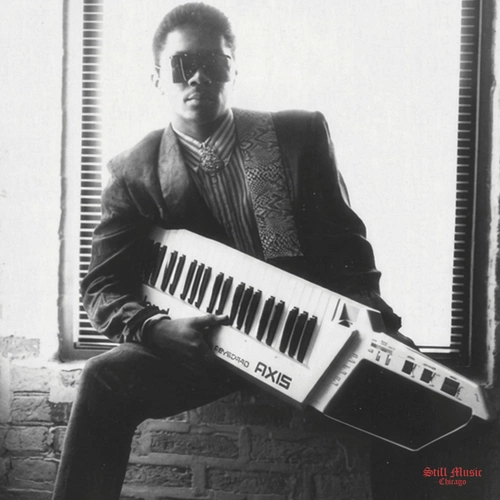
For decades, the standard historical narrative of house music has followed a well-trodden path. It begins in the hallowed halls of Chicago’s The Warehouse, follows Frankie Knuckles as he blends disco classics with European synth-pop and rhythmic manipulation, and sweeps forward through the legendary productions of figures like Marshall Jefferson, Larry Heard, and Ron Hardy. Yet, lingering comfortably within the shadows of this grand mythology is a foundational figure whose contributions have long been historically undersold: Irwin Larry Eberhart II, universally known to electronic music history as Chip E.
While Knuckles provided the name "house"—derived simply from shorthand for the records found "at the Warehouse"—it was Chip E. who first codified what that term actually meant in a production studio. With seminal 1985 releases like the Jack Trax EP, he didn’t just contribute to the genre; he actively christened its lexicon, cementing the words "house" and "jack" into the global vernacular of dance music. Furthermore, the skeletal, high-octane DNA of his tracks would go on to inadvertently birth subsequent underground explosions, laying down the structural scaffolding for both ghetto house and the frantic, syncopated rhythms of footwork.
Now, through an exhaustive archival reclamation project helmed by the Chicago-centric imprint Still Music, the record straight is finally being pulled taut. The label’s ambitious, three-part retrospective series kicks off with Chip E. – The Architect Of House – Chicago 1984-88. Volume 1: Classics—an 11-track masterclass in minimalism, grit, and visionary impulse.
This release does not merely serve as a nostalgia trip for crate-diggers; it acts as an archaeological excavation. It examines a pivotal era when contractual disputes and industry machinations prematurely silenced one of house music’s most vital architects, allowing contemporaries to step into the limelight and author their own versions of history. Today, as electronic music continually looks backward to fuel its future, Volume 1 demands that we retroactively rewrite the history books, placing Chip E. right back where he belongs: at the very apex of the blueprint.
Detailed Chronology: The Rise, Fall, and Re-emergence of a Pioneer
To understand the weight of The Architect Of House, one must trace the dizzying trajectory of Chicago’s mid-1980s underground scene, a landscape defined by fierce competition, technological limitations, and raw ingenuity.
1984–1985: The Genesis of ‘Jack’ and the Birth of a Sound
Long before software plugins and multi-terabyte sample libraries democratized music production, Chip E. was working with bare-bones gear, an insatiable curiosity, and an intuitive sense of dancefloor dynamics. Operating at the epicenter of Chicago’s burgeoning nightlife, he recognized that the local dancers needed something harder, faster, and more physical than the sweeping disco edits spinning at The Warehouse or the Music Box.
In 1985, Chip E. released Jack Trax. The impact was seismic. Not only did the record provide a template for the hypnotic, repetitive body movements known as "jackin’," but it also permanently affixed the terminology of the culture. Tracks like "Like This" quickly crossed over from local underground anthems to international phenomena. The music was stark, hypnotic, and unapologetically electronic, utilizing early Roland drum machines not merely as background percussion, but as the aggressive, driving core of the mix.
1986–1989: A Brief Reign and the Seeds of Ghetto House
Following the breakthrough of Jack Trax, Chip E. maintained a relentless work ethic, issuing a string of EPs that expanded the emotional bandwidth of his minimalist framework. His productions relied heavily on the Roland TR-808 and TR-909 drum machines, alongside rudimentary sampling hardware.
Because of the severe technical limitations of the era—most notably the agonizingly short, one-second sampling limit of the Boss sampling pedals he relied upon—Chip E. was forced to innovate. He utilized razor-sharp micro-loops, turning singular vocal syllables and spoken-word phrases into hypnotic, almost delirious mantras. This technique of frantic, repetitive vocal looping became an early template for what would eventually evolve into the raw, unhinged aesthetics of 1990s ghetto house and, decades later, Chicago footwork.
The Early 1990s: Contractual Limbo and Erasure
Despite his undeniable status as a chief innovator, Chip E.’s momentum came to an abrupt halt at the dawn of the 1990s. Entangled in complex and disadvantageous contractual disputes with record labels, he was forced into an extended hiatus from active production and releasing.
In an industry moving at lightspeed, a few years of silence can feel like a lifetime. As Chip E. fought legal battles behind the scenes, his contemporaries stepped into the vacuum. They occupied the magazine covers, inked lucrative licensing deals, and largely authored the popular historical narratives of how house music came to be. Chip E.’s name slowly drifted from active consciousness, relegated to the deep-digging vinyl lore of obsessive record collectors rather than mainstream textbooks.
Present Day: The Still Music Reclamation
The release of Volume 1: Classics via Still Music marks the definitive closure of this historical oversight. By returning to the original masters and pressing these foundational cuts with contemporary vinyl mastering standards, the project corrects a decades-long historical imbalance, offering a masterclass in how modern electronic music owes its life to the constraints of the mid-1980s Chicago underground.
Supporting Context & Metrics: The Anatomy of a Minimalist Masterpiece
Musically, the 11 tracks compiled on Volume 1: Classics read like a masterclass in structural economy. In an era dominated by maximalist digital production, Chip E.’s work stands as a testament to the power of subtraction.
Technical Constraints as Creative Catalysts
The sonic texture of early house music cannot be divorced from the gear used to create it. The equipment available to Chicago producers in 1984–1988 was often purchased secondhand, prone to overheating, and drastically limited by modern standards.
- The Rhythm Section: Roland’s 808 and 909 drum machines spit, hiss, and crackle with organic warmth. Rim shots snap with a piercing acoustic clarity, while heavy, subterranean basslines anchor the low end without overwhelming the mix.
- Atmospheric Density: The spaces between the notes are filled with a muggy, humid atmosphere—a sonic reflection of the sweat-drenched, packed basements and underground clubs of the South and West Sides of Chicago.
- The One-Second Loop: The limitation of early sampling pedals meant that textures had to be aggressively recycled. Vocals do not unfurl in traditional melodic phrases; instead, they stutter, loop, and hypnotize, wrapping themselves around the rigid grid of the drum machine.
Track Breakdown Analysis
While the overarching aesthetic is stripped-to-the-bone, subtle stylistic divergences across the compilation reveal a producer testing the boundaries of his own framework:
- "If You Only Knew (If You Dance Mix)": A fascinating anomaly that introduces frilly, Prince-esque guitar riffs, proving that Chip E.’s palette extended beyond cold machinery into organic, funk-infused textures.
- "Get On Up": Features a distinctly brighter emotional core, characterized by tinny, emotive chords that bear a striking sonic resemblance to the signature deep-house output later pioneered by Detroit’s Omar S.
- "Godfather Of House (Club Version)": Diverges from the moody, insular brooding of his other cuts, trading it for a looser, more elastic groove and an ecstatic, communal energy tailor-made for peak-hour floor control.
Official Statements and Industry Reception
The announcement of The Architect Of House – Chicago 1984-88. Volume 1: Classics has sent ripples through the international electronic music community, prompting reflection from historians, DJs, and contemporary producers alike.
"For too long, the story of house music has been flattened into a neat, easily digestible narrative that ignores the administrative and legal warfare waged against its creators in the early days," notes an executive at Still Music. "Chip E. didn’t just make records; he drafted the structural terminology of the entire culture. To talk about ‘house’ and ‘jack’ without centering his contributions is an incomplete history. This series is about setting the record straight."
Early reviews from underground music publications have universally praised the release for its historical gravity and timeless sonic punch. Critics have highlighted how remarkably well the tracks hold up on contemporary sound systems—a testament to the enduring power of raw, functional club music.
"Darkly seductive and fiercely functional, Chip E.’s stripped-to-the-bone take on house still has an inescapable bite," writes one leading electronic music critic. "These tracks do not sound like museum pieces preserved under glass; they sound like living, breathing blueprints that could clear out and command any modern underground warehouse party today."
Future Outlook: Re-evaluating the Canon and Looking Ahead to Volumes 2 and 3
The launch of Volume 1: Classics is merely the opening salvo in what promises to be a comprehensive reassessment of early Chicago house history.
As Still Music rolls out the subsequent installments of the three-part series, the broader electronic music ecosystem is forced to grapple with a larger, systemic issue: how many other foundational pioneers have been lost to the bureaucratic oversight and historical erasure of the 20th-century music industry?
The Legacy for Modern Producers
For contemporary electronic music producers—whether working within deep house, techno, or high-BPM footwork—Chip E.’s rediscovered catalog serves as a vital pedagogical tool. In an era where modern Digital Audio Workstations (DAWs) encourage endless track counts, infinite plugins, and over-saturation, returning to the ruthless minimalism of 1985 Chicago offers a radical antidote. It reminds creators that tension, space, and rhythmic momentum are far more potent tools than sonic clutter.
What to Expect from Volumes 2 and 3
While Volume 1 focuses primarily on the foundational classics and the rawest iterations of his early output, industry insiders anticipate that subsequent volumes will delve deeper into unreleased archive material, rare club mixes, and alternate takes that chart Chip E.’s stylistic evolution up through 1988.
Ultimately, The Architect Of House is more than a retrospective reissue campaign—it is an act of historical restitution. By giving Irwin Larry Eberhart II his rightful place at the head of the historical table, the global dance music community takes a crucial step toward honoring the true complexity of its own origin story. The house that Chip E. built is finally getting its plaque, and the foundation is stronger than ever.