The romanticized myth of the "tortured genius"—the self-destructive artist doomed to linger indefinitely in the wreckage of their own suffering—has long exerted a seductive grip over alternative and progressive music. With her latest studio triumph, As We Once Were, Welsh multi-instrumentalist, producer, and scholar Catherine Anne Davies—who records under the moniker The Anchoress—delivers a decisive counter-narrative. Following the critical acclaim of her 2021 release The Art Of Losing, which processed acute grief through meticulous, string-laden art-pop, Davies’ new record pivots from the isolation of trauma to the collaborative work of generational healing.
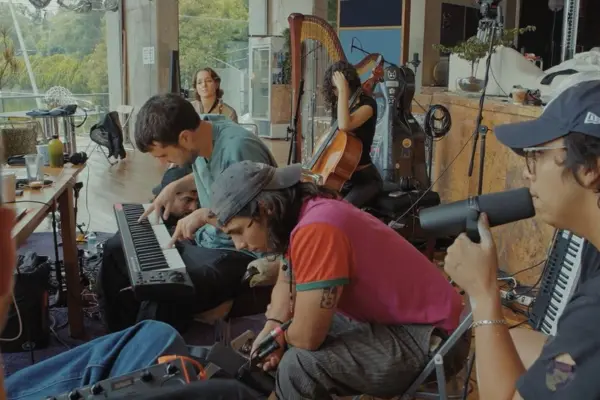
As We Once Were operates simultaneously as a deeply personal family document and an ambitious sonic experiment. Built upon restored analogue cassette recordings spanning four generations of women in her family, the album intertwines Davies’ voice with the voices of her late grandmother, her mother, and her young daughter. Recorded in part at Pete Townshend’s private studio using temperamental 1970s and 1980s analogue synthesisers, the album mirrors the fragility of human memory through volatile electronic circuitry. Featuring high-profile collaborations with James Dean Bradfield (Manic Street Preachers), Gwenno, and Eaves Wilder, the project solidifies Davies’ standing as one of modern art-rock’s most intellectually formidable and sonically daring producers.
       +-------------------------------------------------------+
       |             THE ANCHORESS: ALBUM EVOLUTION            |
       +-------------------------------------------------------+
       |                                                       |
       |  [Confessions of a Romance Novelist] (2016)           |
       |   ↳ Conceptual literary deconstruction & dark pop     |
       |                                                       |
       |  [In Memory Of My Feelings] (2020, w/ Bernard Butler) |
       |   ↳ Poetic immortality & collaborative exploration    |
       |                                                       |
       |  [The Art Of Losing] (2021)                           |
       |   ↳ Isolation, acute grief, uncompromising control   |
       |                                                       |
       |  [As We Once Were] (Current)                          |
       |   ↳ Generational healing, analogue synthesisers,      |
       |      four-generation vocal archival, reconciliation   |
       +-------------------------------------------------------+
Detailed Chronology: The Architectural Evolution of Trauma in The Anchoress’s Discography
To fully comprehend the achievement of As We Once Were, one must trace Davies’ artistic trajectory over the past decade, examining how her approach to pain, memory, and artistic autonomy has evolved across key releases:
1. Confessions of a Romance Novelist (2016)
Davies introduced The Anchoress with a critically acclaimed concept album that deconstructed literary tropes, female identity, and romantic illusion. Blending progressive rock arrangements with pop hooks, the debut established her signature approach: high-concept songwriting backed by exhaustive multi-instrumental self-production.
2. In Memory Of My Feelings (2020)
A joint venture with former Suede guitarist Bernard Butler, this project drew its title from American poet Frank O’Hara’s celebrated collection. The collaboration offered Davies a space to explore how art can immortalize fleeting emotional states, laying the conceptual groundwork for using recorded media as a vehicle for eternalizing human presence.
3. The Art Of Losing (2021)
Written and produced amidst a harrowing series of personal tragedies—including bereavement, pregnancy loss, and major illness—The Art Of Losing was characterized by Davies as a product of "stubborn refusal to collaborate." The record met grief head-on, constructing elaborate walls of sound, heavy basslines, and sweeping orchestrations to process agony. While undeniably a masterpiece, the record left its creator positioned in the immediate aftermath of destruction, placing her pre-trauma self on an idealized pedestal.
      +---------------------------------------------------------+
      |             TRAUMA PROCESSING METHODOLOGY               |
      +---------------------------------------------------------+
      |  THE ART OF LOSING (2021)   |  AS WE ONCE WERE (Current) |
      +-----------------------------+---------------------------+
      |  • Isolated production      |  • Active collaboration   |
      |  • Fixation on pre-loss self|  • Acceptance of change   |
      |  • Pain as raw material     |  • Pain transformed       |
      |  • Internalized grief       |  • Generational dialogue  |
      +-----------------------------+---------------------------+
4. As We Once Were (Current Release)
Marking a profound paradigm shift, the new album acknowledges that attempts to return to a "pre-broken" state are both biologically and psychologically impossible. Moving away from solitary suffering, Davies invites four generations of female lineage onto the master tapes, utilizing vintage analogue hardware to create a soundscape where historical pain is acknowledged, transformed, and ultimately laid to rest.
Supporting Context & Metrics: Sonic Archaeology and The Logic of Inherited Memory
The construction of As We Once Were rests on two foundational pillars: the evolutionary utility of inherited family trauma and the unpredictable physics of vintage analogue audio engineering.
The Evolutionary Utility of Generational Trauma
Rather than viewing trauma exclusively as a pathology to be erased, Davies approaches it through a logical, evolutionary lens. In her framework, memory—and the instinctual fears passed down through generations—serves a protective purpose.
A central narrative thread on the album stems from a tragic event in Davies’ family history: the death by drowning of her mother’s five-year-old sister, along with two others, in a freak tidal accident on the River Severn. The emotional fallout echoed down the family line, manifesting in her grandmother’s lifelong grief and her own protective maternal vigilance.
                  +-----------------------------------+
                  |      FOUR-GENERATION LINEAGE      |
                  +-----------------------------------+
                                    |
            +-----------------------+-----------------------+
            |                                               |
  [1. The Grandmother]                            [2. The Mother]
  Archival 20th-century tape                       Modern spoken reflections
  restored from degraded cassettes                 and inherited memories
            |                                               |
            +-----------------------+-----------------------+
                                    |
            +-----------------------+-----------------------+
            |                                               |
  [3. Catherine Anne Davies]                       [4. The Daughter]
  Lead vocals, multi-instrumental                  Intimate vocal snippets,
  production, analogue synths                      childhood melodies
"Evolutionary speaking, it’s useful to remember the mushrooms are poisonous," Davies explains. "Once we learn that fire is hot, we know not to place our hand over a flame. The same applies to generational trauma. I feel my grandmother’s trauma at the loss of her five-year-old daughter. It kind of means I’m not gonna let mine go anywhere near water. Those traumas help us survive."
Sonic Archaeology: Restoring the Cassette Archive
The foundational audio elements for As We Once Were were discovered almost by accident. Remembering an old cassette tape her sister had recorded in their family living room for a school history homework assignment decades earlier, Davies scoured her mother’s house until she located the physical medium.
Tape Condition: Severely degraded, chewed up, featuring extensive magnetic tape print-through and audio reversal.
Restoration Process: Over a week of manual audio restoration and digital cleanup in the studio.
Content: An intimate, unscripted interview with Davies’ grandmother detailing what it meant to live as a woman across the expanse of the 20th century.
Artistic Integration: Paired with modern recordings of Davies’ mother and candid audio clips of her young daughter singing, creating a four-generation vocal continuum.
Analogue Synthesisers and Conceptual Resonances
To capture the impermanence of memory, Davies rejected the static perfection of modern digital software instruments (plugins and digital presets). Instead, she gained access to Pete Townshend’s private studio, utilizing his collection of rare 1970s and 1980s analogue synthesisers.
The physical instability of vintage synth circuits—where subtle temperature shifts alter oscillator pitch and filter resonance—became an essential metaphor for the album:
"When you work with an old analogue synth, it can take two and a half hours to get to a specific sound. With modern synthesisers, you can save your preset and go back to it, but with old synths there’s this sense of grabbing gold dust as it’s coming through your fingers. The circuits are so unstable. Nobody else could get exactly the same sound as you, and it feels like if you don’t record it in the moment it’s going to disappear. That felt so conceptually resonant."
Official Statements & Track-by-Track Thematic Analysis
Davies, who holds a PhD in English Literature and works as a university professor, infuses her music with literary references, combining analytical rigor with deeply felt emotion.
    +-------------------------------------------------------------+
    |               KEY TRACKS & LITERARY CONNECTIONS             |
    +-------------------------------------------------------------+
    | TRACK                       | INSPIRATION / FEATURING       |
    +-----------------------------+-------------------------------+
    | Du Temps Perdu              | Kate Bush / Frank O'Hara      |
    | Throw Over Your Man         | Virginia Woolf love letters   |
    |                             | (feat. James Dean Bradfield)  |
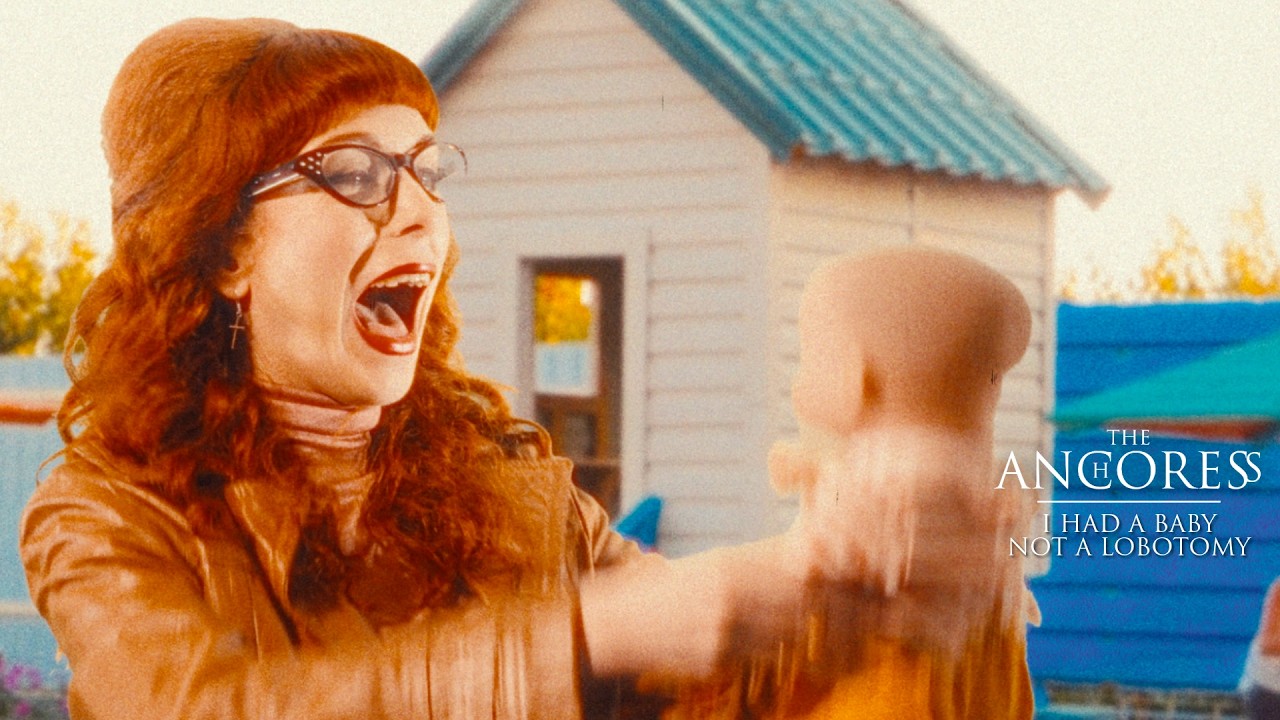
    | I Had A Baby Not A Lobotomy | Maternal autonomy             |
    |                             | (feat. Gwenno)                |
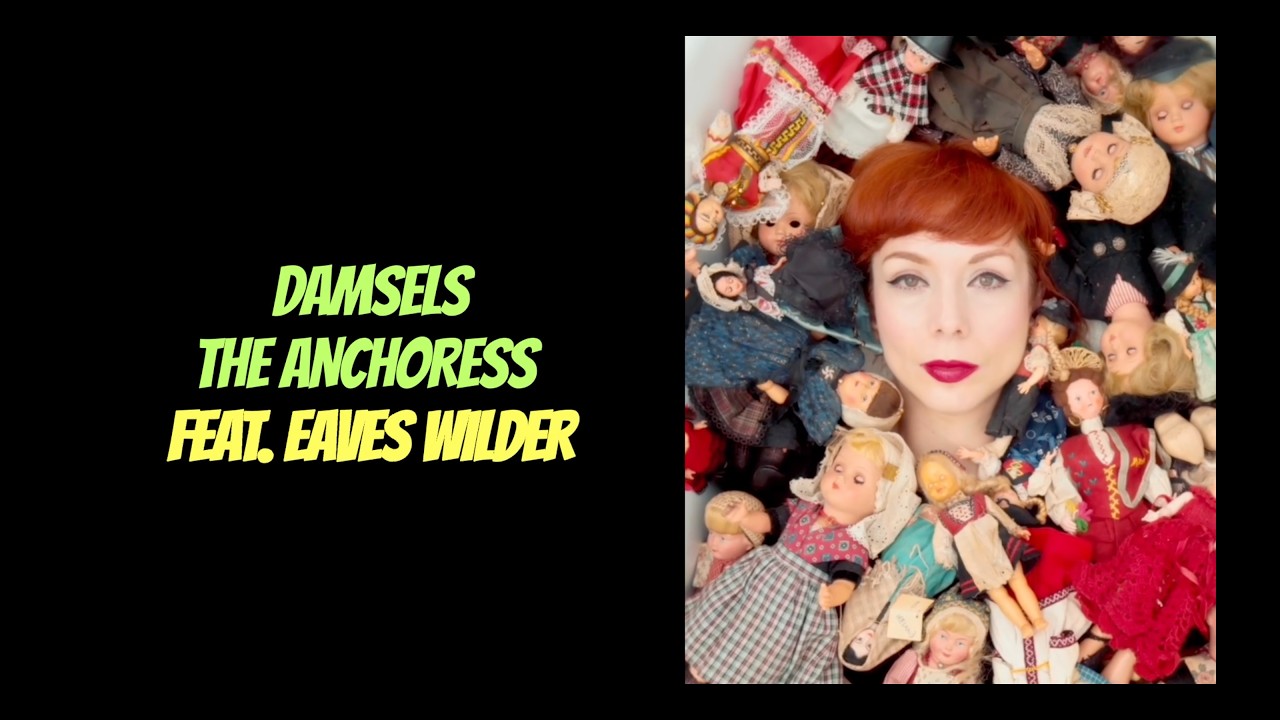
    | Damsels                     | Feminist deconstruction       |
    |                             | (feat. Eaves Wilder)          |
    | Hand To The Tide            | Severn River tidal accident   |
    | All Fall Down               | Richard Rohr philosophical    |
    |                             | quote on trauma               |
    +-------------------------------------------------------------+
On Reframing the Trauma Narrative
Davies rejects the industry’s glorification of psychological suffering:
"I think there’s a toxic idea of the tortured genius that persists in music. We must sit in that space of suffering, and we must sit in that space of reflection and continue to self-destruct. There’s much more value to be found in putting yourself back together. When certain things happen to us, we cannot be the same as we once were. Our initial response is to want to try to repair. We want to go back to the pre-broken version of ourselves. That isn’t possible."
Key Track Breakdown
"Du Temps Perdu (Introduction)": Serving as the record’s overture, this track bridges generations through delicate keys and nostalgic synth lines. It blends the voices of Davies’ grandmother and her daughter. Davies notes drawing inspiration from Kate Bush’s use of her son Bertie’s voice on Aerial (2005) and Frank O’Hara’s poetic philosophy that memory achieves immortality through artistic incarnation.
"Throw Over Your Man" (feat. James Dean Bradfield): A rhythmic track featuring tambourine flourishes and driving bass, incorporating lines from the love letters exchanged between Virginia Woolf and Vita Sackville-West. Davies reflects on combining academia with pop art: "I’ve always felt a little bit guilty about my music career: it’s a very working-class guilt. So it’s nice when your work does something good for society, even if it’s just encouraging someone to dive deeper."
"Hand To The Tide": One of the album’s most unsettling pieces, using creeping synth textures to evoke the frightening power of water and the tidal tragedy that claimed her young aunt.
"Stop The World" & "All I Really Want Is Peace": Positioned near the album’s climax, these tracks represent a move toward emotional resolution. "Stop The World" features raw vocal takes where Davies felt particularly exposed. "All I Really Want Is Peace" transitions into an ambient soundscape layered with recordings of her daughter playing in a field.
"All Fall Down": Features a prominent quotation from Franciscan friar and author Richard Rohr, summarizing the album’s thesis: "If we don’t transform our pain, we will most assuredly transmit it, usually to those closest to us."
Future Outlook: Art as Generational Transformation
With As We Once Were, Catherine Anne Davies establishes a new blueprint for art-rock and progressive music. By refusing to exploit her personal history for dramatic effect, she shows that processing trauma requires active transformation rather than passive re-enactment.
The album’s legacy lies in its refusal to treat loss as an insurmountable end point. By gathering the voices of her forebears and pairing them with the volatile tones of analogue hardware, Davies has created a lasting sonic document that honors where she comes from while building a safer framework for the future.
As Davies succinctly concludes regarding her purpose as an artist, scholar, and mother: "If I’m not making something new and useful for myself and my daughter, what’s the point?"
As We Once Were stands as definitive proof that while we can never return to who we were before being broken, we can craft something far stronger, wiser, and more beautiful from the pieces left behind.