Executive Overview
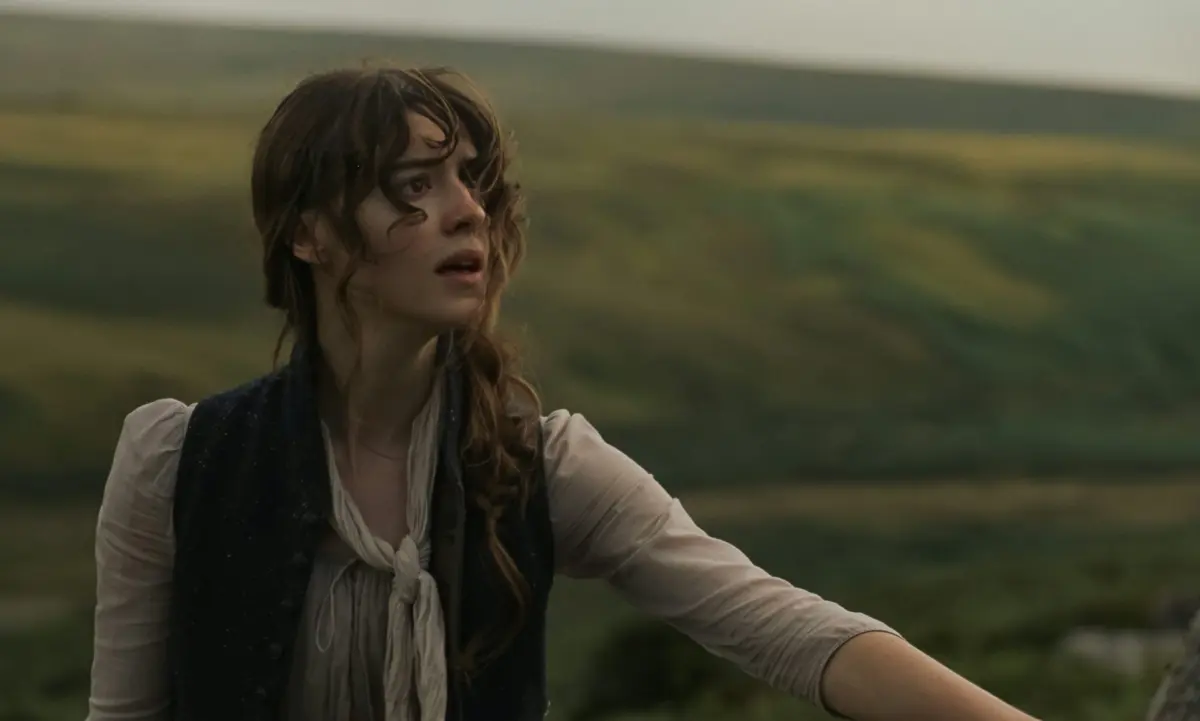
In the realm of period adaptations, striking the delicate balance between visual poetry and historical fidelity is an eternal challenge. Georgia Oakley’s fresh cinematic adaptation of Jane Austen’s Sense and Sensibility achieves breathtaking heights in its atmospheric world-building. From the expansive pastoral landscapes and rugged seascapes to the wild purple flora framing the stone steps of Norland House Park, the film offers a masterclass in visual storytelling. Aided by rich textures, meticulously crafted costumes, and evocative musical scores, the movie breathes vibrant new life into the timeless story of sisters Elinor Dashwood (played by Daisy Edgar-Jones) and Marianne Dashwood (played by Esmé Creed-Miles) as they grapple with grief, propriety, and love.
Yet, beneath this stunning veneer lies a tension that historians of the Georgian and Regency eras are bound to notice. While Oakley’s devotion to the aesthetic markers of the late 18th century is commendable, the film occasionally prioritizes modern emotional expression over period-accurate social realities. This is particularly evident in its treatment of physical deportment, personal grooming, and—most notably—its choreography.
In the world of Jane Austen and the Georgian gentry, the body was not merely a vehicle for internal emotions; it was a carefully calibrated instrument of social signaling. Status, wealth, taste, and moral rectitude were continuously audited through posture, dress, hair management, and, above all, dance. By injecting contemporary choreographic sensibilities into formal Georgian settings, the film creates a jarring friction. Silk gowns and embroidered waistcoats clash with avant-garde movements, lifting viewers out of the candlelit ballrooms of the 1790s and dropping them squarely into the twenty-first century. This article explores how Oakley’s creative license, while visually striking, undermines the profound cultural and social stakes that defined the matchmaking market of Austen’s world.
Detailed Chronology: The Societal and Choreographic Missteps
To understand why the movement and styling choices in Oakley’s Sense and Sensibility feel out of step with the era, one must examine the strict temporal and social rulebook that governed Georgian England. The film’s departures from historical precedent can be traced across several key domains of daily life and social interaction.
The Politics of Hair and Appearance
In the late eighteenth century, the British gentry and nobility were bound by unyielding ideals of politeness, civility, and decorum. Appearance was the physical manifestation of inner virtue. Wealth and social standing were visibly declared through clothing, accessories, and bodily maintenance—and hair was no exception.
In the film, the visual dichotomy between the two sisters is mirrored in their tresses: Elinor sports soft, managed waves, while Marianne exhibits unkempt, stringy locks. While this effectively signals their differing temperaments—Elinor’s sense versus Marianne’s sensibility—it flies in the face of period reality. Regardless of emotional turmoil, women of their station were expected to conform to strict grooming standards, with hair pinned up daily. Unmanaged, loose hair carried unintended connotations of disorder and impropriety that no respectable gentlewoman would project in public spaces.
The Cultural Hierarchy of Movement: Hops Versus Balls
The film’s choreography relies heavily on two distinct dance sequences: an informal hop and a grand London ball. Historically, dance was far more than a recreational pastime; it was the engine of the Georgian marriage market and the ultimate test of socialization.
From early childhood, young men and women underwent rigorous instruction to master posture, intricate footwork, spatial formations, and the controlled use of eye contact. Grace and ease in the ballroom were physical proofs of breeding and emotional self-control. Conversely, awkwardness or poor bodily comportment signaled ineptitude, meekness, and social inferiority.
This hierarchy extended to the very types of dances performed:
- Country Dances and Balls: Regarded as sophisticated and socially acceptable, these were the domain of the refined middling and upper ranks. They demanded precise geometries, serpentine lines, and strict adherence to codified rules.
- Hops: Historically, informal hops were relegated to the "meaner sorts"—the lower social classes. The very action of "hopping" stood in direct opposition to the calm, gliding tenets of decorum and civility.
In Austen’s original 1811 novel, hops are notably absent from the narrative action; only balls are attended by the principal characters. The sole mention of a hop occurs when Sir John Middleton—the Dashwoods’ enthusiastic distant relative—recounts that the dashing Mr. Willoughby danced at a park hop from eight o’clock until four in the morning without sitting down. In the rigid social calculus of the era, this relentless, unrefined exertion should have served as a subtle red flag regarding Willoughby’s character.
In Oakley’s adaptation, however, the film’s "hop" sequence blends traditional country dance steps with modern, high-energy choreography. While jovial, the movements feel jarring. They dissolve the carefully constructed 18th-century atmosphere and remind audiences of the modern choreographer’s hand behind the curtain.
The London Ballroom Breakdown
The disconnect reaches its zenith in the film’s second major dance sequence, set within a grand London ballroom. Here, Elinor shares a dance with Edward Ferrars (George MacKay), the man she loves but cannot conventionally wed.
In both Austen’s literature and Georgian society, the formal ball was the absolute epitome of embodied politeness. It was a high-stakes arena where romantic and social alliances were negotiated under the watchful eyes of the entire community. Precise footwork and measured eye contact were essential.
Instead of traditional, restrained Regency steps, the sequence features exaggerated sweeping arms, theatrical lifts, and over-arched backbends. These flourishes belong firmly to the vocabulary of modern musical theater rather than the regulated Georgian ballroom. While intended to visually externalize the characters’ inner emotional turmoil, they rupture the historical illusion, transforming a vital societal rite of passage into an anachronistic spectacle.
Supporting Context & Metrics: The Cinematic Lineage of Austen Adaptation
To contextualize Oakley’s choreographic choices, it is helpful to examine how other recent screen adaptations of Jane Austen and Regency-era literature have approached the mechanics of dance. Across the cinematic landscape, dance has consistently served as a narrative pressure cooker:
- Emma (2020): Director Autumn de Wilde utilized close-up cinematography to capture the intense psychological charge of characters locking eyes and brushing fingers during country dances, proving that internal tension could be conveyed entirely within historical bounds.
- The Other Bennet Sister (Television Adaptation): This continuation of Pride and Prejudice highlights the rigorous, anxiety-inducing nature of dance by depicting characters like Mary Bennet literally counting their steps to avoid public humiliation.
- Bridgerton (Netflix): While celebrated for its progressive casting and stylized orchestral pop covers, the series frequently grounds its dramatic turning points in traditional ballroom missteps—such as characters having their toes stepped on during pivotal social introductions.
Across these properties, dance is framed as a foundational, nerve-wracking component of Georgian and Regency sociability. It is a restrictive framework within which characters must express themselves, making the suppression or subversion of these rules all the more notable.
When modern choreography is dropped into silk gowns and embroidered waistcoats without historical justification, it alters the fundamental contract between the period piece and its audience. As dance choreographer Holly Blakey explained regarding her avant-garde approach to the film, "it was vital that whatever we were doing inside the choreography […] did feel like an expression of how the girls were feeling."
While emotional authenticity is a noble cinematic goal, the notion of expressing raw, unfiltered internal psychology through avant-garde physical movement would have been utterly alien—and socially disastrous—in the 1790s.
Official Statements & Industry Perspectives
The debate surrounding Sense and Sensibility touches upon a broader philosophical divide within historical filmmaking: should a period adaptation serve as a transparent window into the past, or should it act as a malleable canvas for contemporary emotional storytelling?
Cultural historians and literary purists argue that historical settings lose their distinct flavor when modern sensibilities are superimposed upon them. Dr. Alistair Finch, a scholar of Georgian social history, notes:
"The power of Jane Austen’s work lies in how her characters operate within suffocatingly tight social parameters. Every bow, every glance across a dance floor, and every pinned curl carried immense weight precisely because stepping outside those boundaries carried severe social penalties. When filmmakers substitute contemporary body language for period etiquette, they inadvertently strip the characters of the very pressures that make their restraint so dramatically compelling."
Conversely, filmmakers and choreographers champion artistic interpretation as a necessary tool to make 18th-century narratives resonate with modern audiences. Proponents of Oakley’s vision argue that contemporary viewers may struggle to decode the subtle, muted nuances of authentic 1790s social interaction. By amplifying physical movement and introducing expressionist choreography, the production attempts to translate the internal passions of Austen’s heroines into a visual language immediately understood by twenty-first-century spectators.
Future Outlook: The Evolution of Period Drama Aesthetics
As period dramas continue to evolve in an increasingly saturated streaming and cinematic market, the friction between historical accuracy and stylistic innovation will undoubtedly persist. Filmmakers face mounting pressure to reinvent classic literary properties, ensuring they stand out in a crowded landscape of prestige television and costume cinema.
The reception of Georgia Oakley’s Sense and Sensibility offers a vital case study for future directors operating in the historical genre. It demonstrates that while visual splendor—magnificent landscapes, exquisite lighting, and textured costume design—can successfully seduce an audience, inconsistencies in cultural behavior and movement can quietly destabilize that very immersion.
Looking ahead, creators of future Jane Austen adaptations will need to weigh the dramatic rewards of avant-garde expression against the rich, unyielding constraints of period etiquette. Whether future projects lean further into stylized, contemporary interpretations or return to strict historical reconstruction will depend heavily on how audiences respond to this cinematic tightrope walk. Ultimately, Sense and Sensibility remains a breathtaking visual achievement that reminds us just how intoxicating the world of the Georgian gentry can be—even if its inhabitants occasionally dance to a slightly more modern drumbeat.