Executive Overview
When the literary world gathered in the fading twilight of December 1764, few could have anticipated that a Christmas Eve publication would fundamentally rewrite the psychology of terror. Horace Walpole’s The Castle of Otranto, initially disguised as an ancient manuscript translated by a fictional medieval chronicler, birthed an entirely new literary genre: the Gothic novel. While the book cemented tropes that would dominate horror and speculative fiction for centuries—supernatural apparitions, ancestral curses, and brooding villains—its most enduring and radical creation was hiding in plain sight.
That creation was the castle itself.
Unlike the meticulously mapped environments of realist fiction, Otranto’s architectural framework is elusive, fragmented, and deliberately incomplete. Walpole constructed a labyrinth of the mind, utilizing the architecture of fear to bypass the intellect and strike directly at the reader’s primal imagination. This deliberate architectural ambiguity inspired generations of artists, architects, and writers, evolving from Walpole’s physical manifestation at Strawberry Hill House to the evocative 18th-century watercolors of teenage prodigy Bertie Greatheed Jr. Today, as contemporary pop culture reanimates haunted ruins and gothic aesthetics each Halloween, Walpole’s foundational insight remains unchallenged: the most terrifying architecture is not what is fully illuminated, but what is left lurking in the shadows.
Detailed Chronology: From Twickenham to Yale
To understand the architecture of The Castle of Otranto, one must trace a historical and creative trajectory spanning more than three decades—moving from the rolling lawns of Middlesex to the rare manuscript collections of Connecticut.
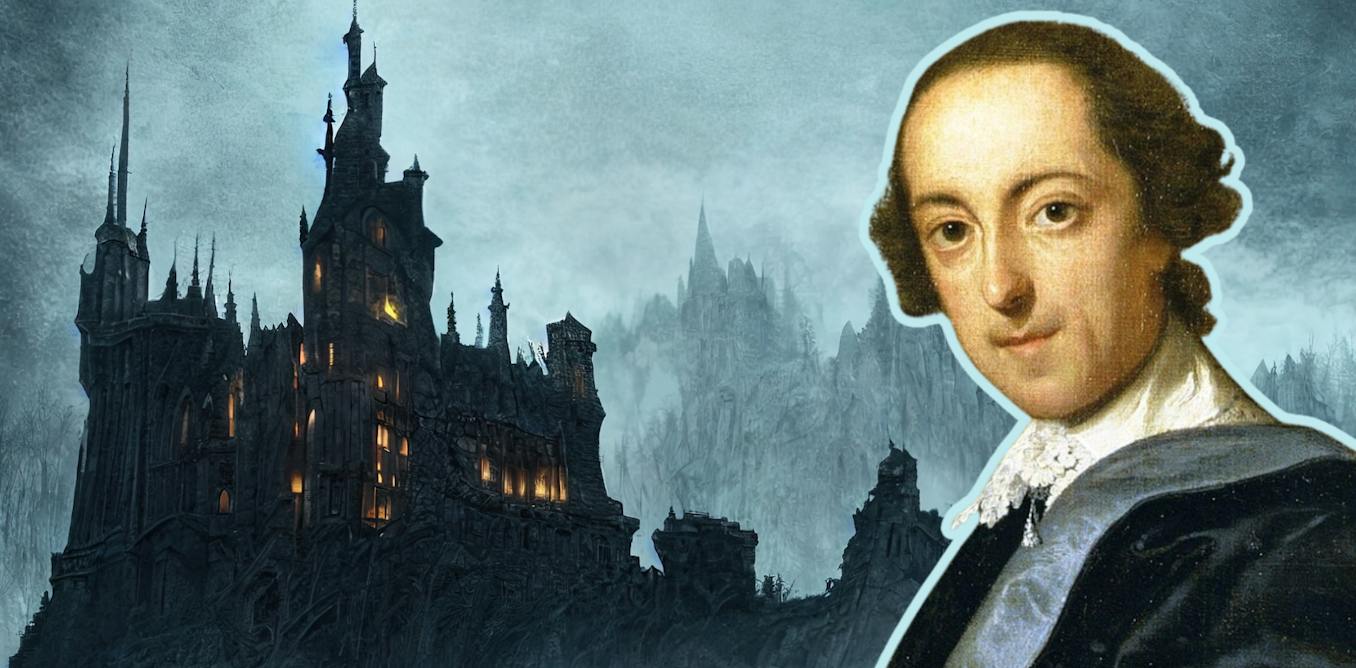
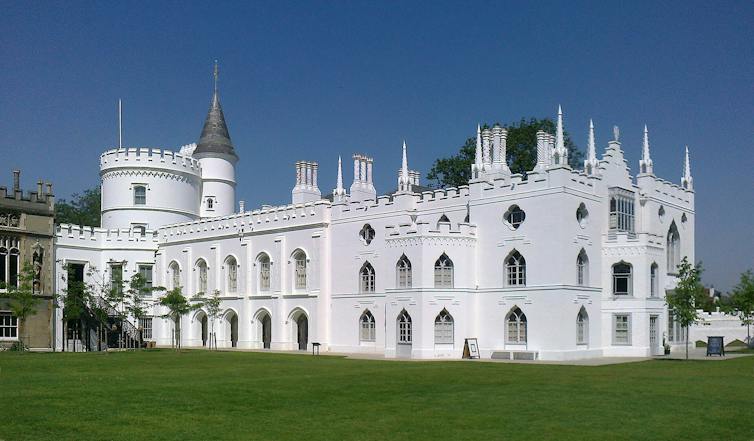
- 1749: Horace Walpole begins construction on Strawberry Hill House in Twickenham, transforming a modest country villa into a romantic, whimsical pastiche of medieval Gothic cathedrals and castles. This physical laboratory of design introduces the concept of "gloomth"—a calculated orchestration of dim light, soaring spaces, stained glass, and deep shadows.
- December 24, 1764: Walpole publishes The Castle of Otranto: A Story. The first edition is released under the guise of a translation by William Marshal of Ghent from an original Italian text dated 1529. In his preface, Walpole teases readers with the notion that the narrative is "undoubtedly laid in some real castle," pointing to specific geographical cues like chambers on the right and doors on the left.
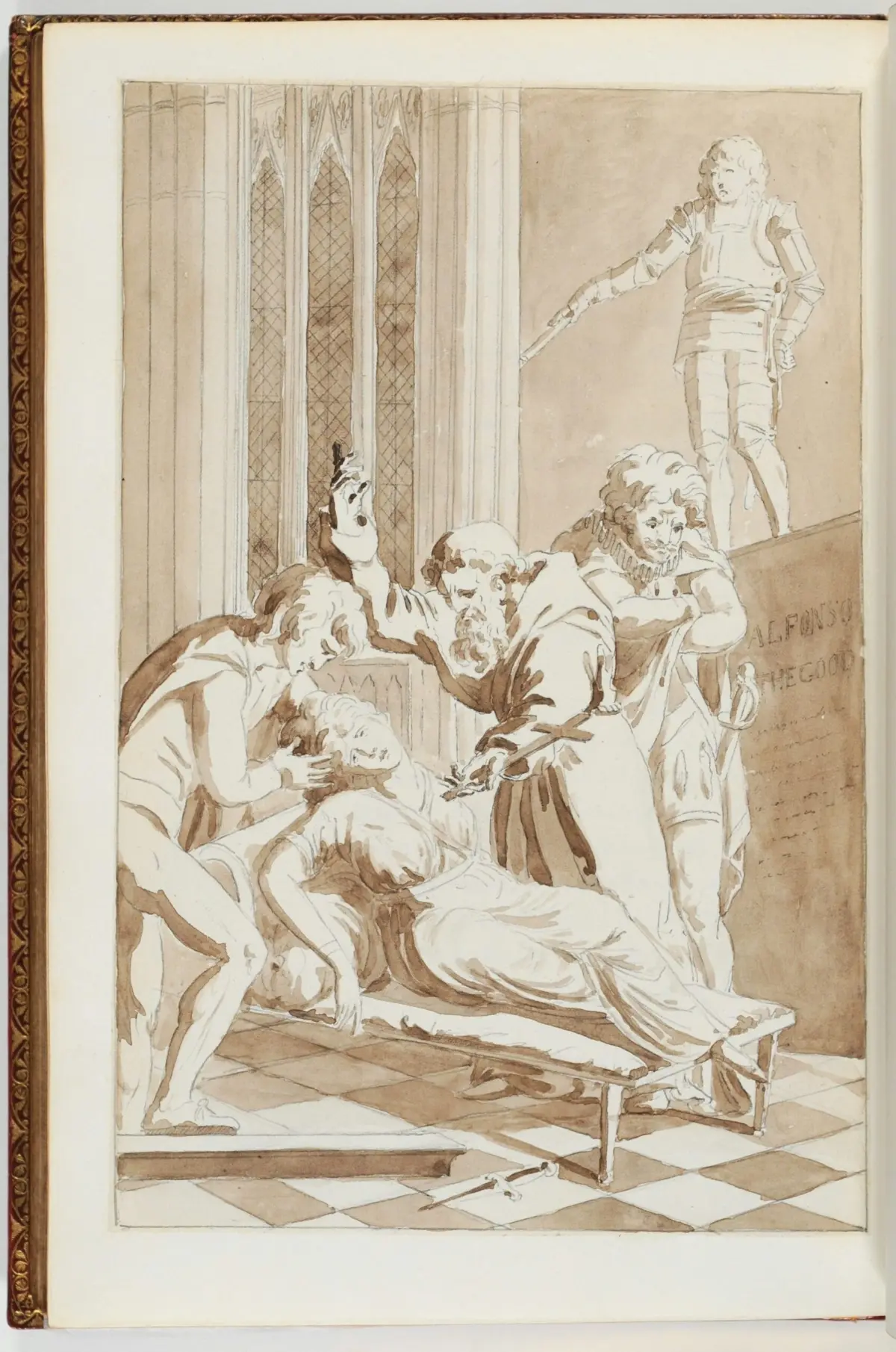
- 1796: More than three decades after the novel’s initial release, teenage artist Bertie Greatheed Jr. produces a series of four striking watercolors illustrating pivotal scenes from The Castle of Otranto. These illustrations are later pasted directly into Walpole’s personal copy of the novel.
- February 22, 1796: Overjoyed by the psychological depth and emotional intensity of Greatheed’s artwork, Walpole writes an effusive letter to the artist’s father. He declares that Greatheed’s visual interpretations—particularly the hollow sockets and reproachful dignity of the chapel ghost—surpassed even the author’s original mental conceptions.
- Present Day: The rare illustrated volume containing Greatheed’s watercolors finds a permanent home at Yale University’s Lewis Walpole Library in Farmington, Connecticut. The text continues to serve as a cornerstone for literary historians exploring the intersection of spatial theory and psychological terror.
Supporting Context & Metrics: The Architecture of "Gloomth"
The interplay between physical space and psychological distress is not merely a stylistic choice; it is a meticulously engineered sensory response. Walpole recognized that classical architecture—characterized by symmetry, order, clear sightlines, and rational geometry—promoted a sense of civic calm, intellectual clarity, and emotional equilibrium. Conversely, medieval Gothic architecture, with its erratic floor plans, soaring verticality, and obscure recesses, unsettled the human psyche.
| Architectural Style | Spatial Characteristics | Primary Psychological Response |
|---|---|---|
| Classical / Palladian | Symmetry, proportion, flat lighting, open vistas | Order, intellectual clarity, serenity, safety |
| Gothic / Medieval | Asymmetry, towering vaults, obscured angles, chiaroscuro | Awe, wonder, melancholy, existential terror |
Walpole coined the term "gloomth" to describe the specific atmospheric quality he sought to evoke both at Strawberry Hill and within the pages of Otranto. This aesthetic relies heavily on chiaroscuro—the dramatic contrast between light and dark. By forcing the human eye to strain against impenetrable shadows, the architecture co-opts the viewer’s imagination. As cognitive psychologists note, the human brain naturally populates ambiguous visual or spatial data with worst-case scenarios.
In The Castle of Otranto, readers never receive a complete blueprint of the fortress. Instead, the castle unfolds in jarring fragments: a heavy door swinging open on rusted hinges, a distant chapel echoing with unearthly footsteps, a subterranean passage swallowing the torchlight. By refusing to map the castle comprehensively, Walpole created an infinite canvas of dread. The architecture becomes an active participant in the narrative, compressing space to trap panicked characters or expanding it to dwarf them against the crushing weight of ancestral sins.
Official Statements and Historical Correspondence
The profound impact of Bertie Greatheed Jr.’s 1796 watercolours is best captured through the primary source correspondence of Horace Walpole himself. Writing to the young artist’s father on February 22, 1796, Walpole expressed a level of validation that he had never extended to any other illustrator of his work:
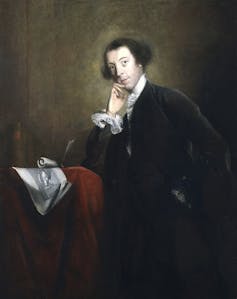
"I have seen many drawings and prints made from my idle […] not one of them approached to any one of your son’s four — a clear proof of which is, that not one of the rest satisfied the author’s ideas — It is as strictly, and upon my honour, true, that your son’s conception of some of the passions has improved them, and added more expression than I myself had formed in my own mind; for example, in the figure of the ghost in the chapel, to whose hollow sockets your son has given an air of reproachful anger, and to the whole turn of his person, dignity."
Art historians and curators at Yale University’s Lewis Walpole Library emphasize that Greatheed’s success lay in his departure from passive scenic backdrops. Rather than treating the castle walls as static wallpaper, Greatheed utilized pointed arches to frame scenes of psychological crisis, plunging characters into deep, claustrophobic shadows that mirrored their moral corruption and terror. The architecture in these illustrations does not merely house the drama—it actively dictates the emotional momentum of the scene.
Future Outlook: The Enduring Legacy of Gothic Space
As cultural iterations of horror continue to evolve in the 21st century—migrating from printed page to cinematic blockbusters, immersive theater, and virtual reality environments—the foundational principles laid by Walpole and illustrated by Greatheed remain profoundly influential.
Each Halloween, contemporary society experiences a mass cultural pilgrimage back to the Gothic. Haunted houses, derelict abbeys, and fog-shrouded castles dominate seasonal entertainment because they tap into a deeply ingrained architectural neurosis. We are irresistibly drawn to spaces that challenge our mastery over our environment.
Yet, as modern architectural theorists and horror creators frequently rediscover, the most effective scares rely on restraint rather than revelation. In an era saturated by high-definition clarity and hyper-realistic digital effects, The Castle of Otranto offers a timely reminder of the power of obscurity. By leaving structural gaps for the human imagination to fill, Walpole ensured that the true horrors of Otranto—and the countless haunted estates that followed in its wake—would always reside in the unfathomable darkness between the stones.