Executive Overview
In an era where modern popular culture often prioritizes fleeting trends and superficial escapism, rare artistic collaborations emerge to challenge the status quo, demanding deeper reflection from their audiences. The release of the official music video for "1000 Lashes"—a powerful joint effort by two-time Grammy-nominated Jamaican singer-songwriter Protoje and multi-Grammy-winning artist Stephen Marley—stands as a monumental achievement in contemporary roots reggae. More than just a song, the project is a sweeping transnational meditation on global inequality, historical trauma, systemic exploitation, and the heavy moral cost of modern comfort.
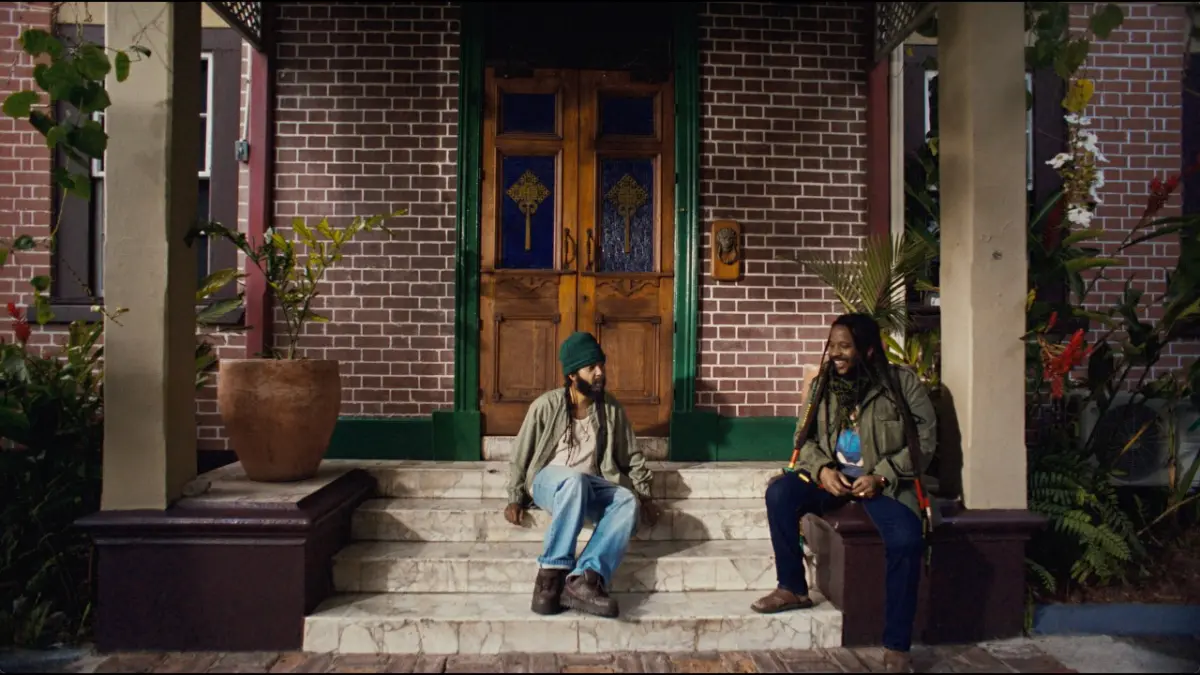
Directed by SAMO, the visual accompaniment to "1000 Lashes" is as historically resonant as the lyrics it portrays. Filmed across two profoundly symbolic geographic poles of Black history and resistance—the Adwa Victory Memorial Museum in Addis Ababa, Ethiopia, and the iconic steps of 56 Hope Road in Kingston, Jamaica—the video creates an unbreakable bridge between the cradle of African sovereignty and the spiritual capital of global reggae culture.
At its core, "1000 Lashes" confronts the glaring disparities of the modern world. Protoje, writing from a place of relative domestic privilege, turns a critical lens inward, interrogating his own peace and prosperity against a backdrop of global suffering. His poignant admission, "I’ve got my blessings and I’m feeling no pain," serves as a stark catalyst for a broader exploration of generational injustice, child labor, corporate exploitation, and the institutional shielding of wrongdoing. Bolstered by Stephen Marley’s soul-stirring chorus—"All the children are ours"—the track transcends traditional protest music, evolving into a universal call for human accountability.
As Protoje prepares to take these vital themes on an extensive international tour spanning major European festivals like Ruhr Reggae Summer and Uprising Festival, a slate of United States dates, and the upcoming Welcome to Jamrock Reggae Cruise, "1000 Lashes" cements itself as a defining cultural artifact of our time. This comprehensive report examines the genesis, thematic depth, historical significance, and future outlook of a track destined to leave an indelible mark on the landscape of modern music and social consciousness.
Detailed Chronology
To fully understand the weight of "1000 Lashes," one must trace the convergence of artistic intent, historical geography, and meticulous production that brought the project to fruition. The release of the track and its accompanying visual narrative represents the culmination of years of artistic evolution for both Protoje and Stephen Marley, operating at the height of their creative powers.
The Genesis of a Transnational Collaboration
The conceptual framework for "1000 Lashes" began to take shape as Protoje—born Oje Ken Ollivierre in the parish of Saint Elizabeth, Jamaica—was crafting material that would eventually tie into his broader artistic ecosystem, including his critically acclaimed work The Art of Acceptance. Having firmly established himself as a vanguard of the "Reggae Revival" movement through globally praised records like A Matter of Time and Third Time’s the Charm (both of which earned him Grammy nominations for Best Reggae Album), Protoje sought to push his lyricism beyond personal introspection.
While previous bodies of work often explored romance, personal growth, and the socio-political realities of contemporary Jamaica, "1000 Lashes" demanded a broader, macro-level canvas. To execute a vision addressing the hidden costs of global capitalism and historical impunity, Protoje enlisted Stephen Marley. As royalty of reggae music and a master producer and vocalist in his own right, Marley brought a seasoned, gravitas-laden perspective to the project. Marley’s vocal arrangement of the chorus—"All the children are ours"—provided the emotional anchor required to balance Protoje’s biting verses.
The Dual-Site Production: Addis Ababa and Kingston
Under the direction of SAMO, the production of the music video became an artistic pilgrimage, bridging two continents bound by a shared legacy of anti-colonial resistance and cultural resilience.
-
The Adwa Victory Memorial Museum (Addis Ababa, Ethiopia): Part of the video was filmed inside this architectural marvel, which stands directly on the historic site where Ethiopian forces decisively defeated invading Italian troops in 1896. This monumental victory preserved Ethiopia’s status as one of the very few African nations to successfully fend off European colonization during the "Scramble for Africa." By utilizing the museum’s profound historical backdrop, the visual narrative immediately invokes themes of sovereignty, endurance, and the triumph of the oppressed over imperial might.
-
56 Hope Road (Kingston, Jamaica): The second site of production hits closer to home for the reggae lineage. The steps of 56 Hope Road—historically the residence of the late, great Bob Marley and now a dedicated museum—serve as a sacred space of transmission. Filming on these legendary steps connects the struggles of the past with the ongoing fight for social justice in the Caribbean and the wider diaspora, creating an unbroken chain of musical and political resistance.
The Live Circuit and Future Trajectory
Following the release of the video and the ongoing promotion of his recent artistic endeavors, Protoje’s schedule reflects an unrelenting commitment to taking his message to global stages. The late-August weekend highlights a demanding European run, featuring high-profile performances at Ruhr Reggae Summer in Mülheim an der Ruhr, Germany, and the Uprising Festival in Bratislava, Slovakia.
These European dates serve as a prelude to an extensive tour across the United States throughout September, bringing the intricate lyricism of tracks like "1000 Lashes" directly to American audiences in intimate venue settings and major festival stages alike. The touring cycle culminates in November with a voyage on the prestigious Welcome to Jamrock Reggae Cruise, an annual pilgrimage where the global reggae community converges in the Caribbean to celebrate the genre’s past, present, and future.
Supporting Context & Metrics
The thematic resonance of "1000 Lashes" cannot be decoupled from the socio-economic realities it critiques. By examining the lyrical structure of the song alongside the metrics of global inequality, the deeper significance of Protoje and Stephen Marley’s message becomes starkly clear.
Lyrical Deconstruction: Comfort Versus Conscience
Protoje’s songwriting on "1000 Lashes" operates on a principle of radical self-awareness. In contemporary politically conscious music, artists frequently cast themselves purely as outsiders hurling critiques at corrupt systems of power. Protoje disrupts this trope by turning the microscope on himself first.
With the line, "I’ve got my blessings and I’m feeling no pain," he acknowledges the undeniable comfort and security afforded to successful recording artists in the modern global economy. He recognizes that his domestic peace—his ability to close his front door and escape the chaos of the outside world—is a luxury built upon a precarious foundation.
Once that front door closes, however, the song’s tone shifts dramatically. The subsequent verses catalog the invisible human toll required to sustain modern luxury. Protoje outlines:
- Backs lashed a thousand times by structural adjustment policies and systemic exploitation.
- Communities broken apart by civil strife, resource extraction, and geopolitical meddling.
- Opportunities systematically stolen from marginalized populations in the Global South.
- Wrongdoing shielded by institutional immunity, where corporate and political elites evade accountability.
- Children working dangerous mines and being forced into armed conflict to extract the raw materials that power global technology and consumer economies.
Stephen Marley’s Refrain: A Universal Collective Responsibility
Against Protoje’s cataloging of human suffering, Stephen Marley’s delivery of the chorus—"All the children are ours"—serves as a philosophical and spiritual counterweight. Rooted in the Rastafari principles of universal brotherhood, shared humanity, and collective responsibility, Marley’s vocals reject the geographic and psychological boundaries that allow individuals in privileged nations to ignore distant atrocities.
If children are mining cobalt in Central Africa for smartphones, picking cocoa in West Africa for global chocolate conglomerates, or caught in conflict zones fueled by international arms sales, Marley’s refrain insists that they are our children. The lyrics demand an end to apathy, positioning indifference as a form of complicity.
Cultural and Historical Metrics
- The Battle of Adwa (1896): An enduring symbol of anti-colonial resistance, the Ethiopian victory at Adwa shattered the myth of European invincibility in Africa. By choosing this location, Protoje and director SAMO ground "1000 Lashes" in an authentic tradition of African triumph rather than mere victimization.
- Grammy Accolades: Protoje’s career is marked by critical acclaim, underscored by two Best Reggae Album Grammy nominations for A Matter of Time and Third Time’s the Charm. These nominations place him in an elite tier of modern Jamaican artists who maintain commercial viability while refusing to water down their socio-political messaging.
- Digital Footprint: The release of "1000 Lashes" via digital streaming platforms and YouTube continues to garner international attention, supported by targeted cross-platform campaigns directing fans to acquire The Art of Acceptance and secure tickets for his global tour dates.
Official Statements
While direct press releases surrounding the single emphasize the artistic collaboration between Protoje and Stephen Marley, industry analysts, cultural historians, and the artists themselves have contextualized the work within the broader tradition of reggae as an international medium of liberation.
Cultural commentators observing the dual-site video shoot in Addis Ababa and Kingston have noted the profound intentionality of the project. A spokesperson for the Adwa Victory Memorial Museum highlighted the importance of contemporary African and diaspora artists utilizing historical spaces to foster transnational solidarity:
"When artists of the caliber of Protoje return to the source—to the soil of Addis Ababa where African freedom was defended against foreign aggression—they do not merely shoot a music video; they reactivate a historical memory. They remind the world that the struggles against exploitation in the Caribbean, Africa, and across the globe are deeply intertwined."
In discussions surrounding his recent body of work, including The Art of Acceptance, Protoje has consistently emphasized the necessity for artists to confront uncomfortable truths in an era marked by digital distraction and global polarization. By interrogating his own privilege within "1000 Lashes," Protoje addresses a central dilemma of modern social commentary: how to speak truth to power while acknowledging one’s own participation in global economic systems.
Stephen Marley, whose legendary lineage places him at the epicenter of roots reggae royalty, has long championed music as an instrument of spiritual and political awakening. Through his contributions to the chorus of "1000 Lashes," Marley reinforces his lifelong dedication to themes of unity, human rights, and the protection of the vulnerable.
Future Outlook
As "1000 Lashes" continues to resonate with audiences worldwide, its long-term impact on the cultural and political consciousness of the reggae community is expected to be profound. The collaboration between Protoje and Stephen Marley demonstrates that roots reggae remains a vital, evolving genre capable of addressing complex twenty-first-century geopolitics without losing its spiritual and rhythmic core.
Upcoming Tour and Live Performances
Protoje’s upcoming itinerary will serve as the primary vehicle for delivering the message of "1000 Lashes" to live audiences:
- Late August: European festival appearances at Ruhr Reggae Summer (Mülheim an der Ruhr, Germany) and Uprising Festival (Bratislava, Slovakia) will test the international resonance of the new material before diverse, multicultural European crowds.
- September: A comprehensive string of United States tour dates will provide North American fans with an intimate live experience of Protoje’s sophisticated lyrical delivery and band arrangements.
- November: The touring year reaches its zenith with the Welcome to Jamrock Reggae Cruise, where Protoje will perform surrounded by peers, legends, and dedicated fans in the heart of the Caribbean Sea.
The Evolution of Modern Reggae
Looking ahead, projects like "1000 Lashes" set a high benchmark for the future of Jamaican music. By fusing high-concept visual storytelling, deep historical reclamation (via Addis Ababa and Kingston), and unflinching socio-political critique, Protoje and Stephen Marley have proven that socially conscious music can command global attention in the digital age.
As listeners continue to engage with The Art of Acceptance and unpack the layers of "1000 Lashes," the track will undoubtedly endure as a masterclass in modern protest art—a timeless reminder that true peace cannot exist in isolation, and that until every back is spared the lash and every child is protected, none of us are truly free of pain.