Executive Overview
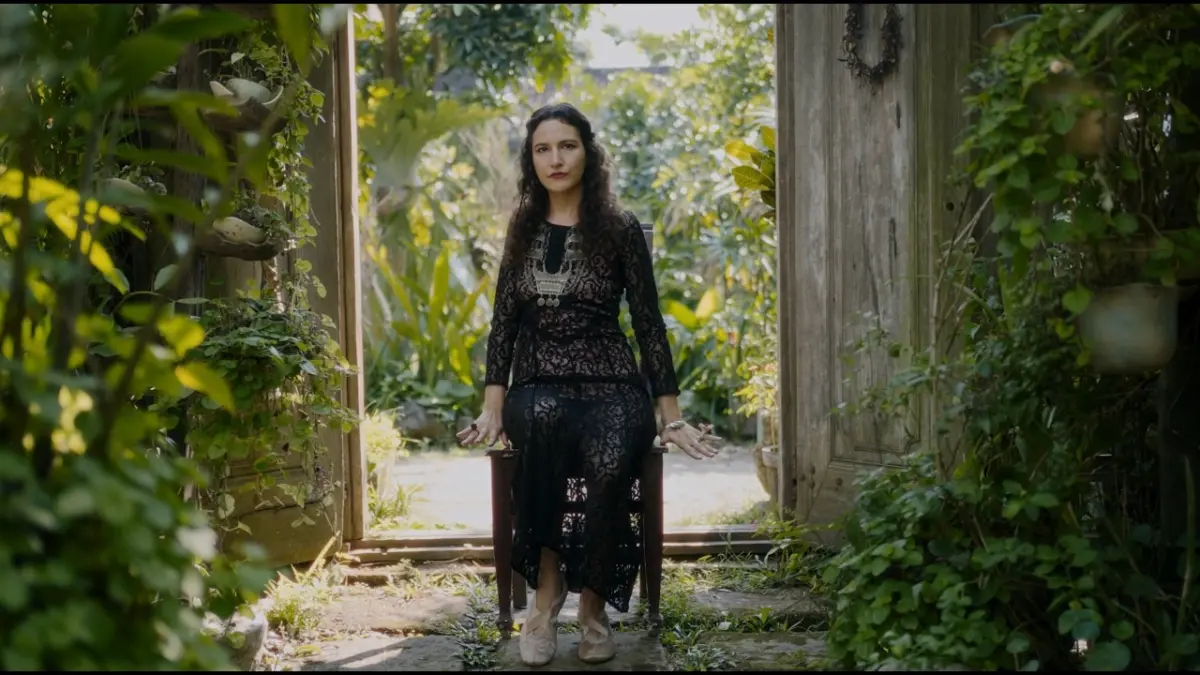
In the sprawling, hyper-connected landscape of contemporary global alternative music, few acts manage to bridge the chasm between ancient folklore and modern electronic production with the seamless grace of Karen y Los Remedios. Led by the haunting, deeply emotive vocals of Ana Karen G. Barajas, alongside the intricate guitar work of Guillermo Berbeyer and the visionary Mexico City-based producer Jiony, the cross-continental trio has steadily carved out a distinct niche within the global bass and dark cumbia movements.
Their latest single, "Curandera," serves as the arresting gateway to their highly anticipated sophomore studio album, Bestiaria, slated for an October 9 release via the vanguard imprint ZZK Records. Following the critical success of their 2023 breakthrough LP, Silencio, Bestiaria expands upon the band’s sonic mythology. The twelve-track project is structured around twelve archetypal and mythical figures, ranging from the revered Mesoamerican agave goddess Mayahuel to the classical fates of Greek mythology in "Las Moiras."
"Curandera," however, is more than just a compelling piece of dark cumbia; it is a deeply personal artifact born from physical affliction, emotional recovery, and the generational transmission of ancestral indigenous wisdom. The song invites listeners into a sacred space where traditional Mexican limpias (cleansing rituals), herbal remedies, and somatic self-awareness converge over a hypnotic, heavy-lidded rhythm section. This comprehensive report explores the genesis of "Curandera," the thematic architecture of Bestiaria, the geopolitical and emotional geography of Karen’s current displacement in Hong Kong, and the broader cultural significance of Karen y Los Remedios in the modern Latin American underground.
Detailed Chronology: From Guanajuato to Hong Kong and the Genesis of Bestiaria
The Roots and Migration of Ana Karen G. Barajas
To understand the melancholic yet empowering weight of "Curandera," one must trace the migratory and artistic trajectory of Ana Karen G. Barajas. Born in the sprawling, chaotic cultural epicenter of Mexico City and raised amidst the vibrant colonial architecture and rugged landscapes of Guanajuato, Karen’s early life was saturated with the sights, sounds, and spiritual syncretism native to central Mexico.
However, life’s unpredictable currents eventually transplanted her far from her homeland. Today, Karen resides in the hyper-dense, futuristic metropolis of Hong Kong—thousands of miles away from the familiar smells of corn tortillas, copal smoke, and the familiar cadence of Mexican Spanish. This geographical displacement has paradoxically sharpened her creative vision. Living in Asia as an expatriate artist has magnified her longing for her cultural roots, transforming memory into the primary fuel for her artistic output. It is precisely this distance that allows her to view Mexican folklore not as a mundane everyday reality, but as a vibrant, sacred technology that must be preserved, reinterpreted, and transmitted through music.
The Anatomy of an Illness
"Curandera" did not emerge from a detached songwriting session or a calculated attempt to craft a hit single. Instead, the track was forged in the crucible of personal vulnerability. During a period of severe physical illness while navigating the disorienting realities of life abroad, Karen found her body failing her.
In moments of crisis, familial bonds often transcend borders. Though separated by time zones, the women in Karen’s family rallied around her. Through digital communications, they offered a repertoire of traditional remedies, herbal recipes, and holistic advice rooted in generations of Mexican folk medicine. More importantly, they reminded her of the limpias—spiritual cleansings designed to clear negative energy, realign the spirit, and restore bodily harmony.
This period of forced stillness and healing became the thematic foundation for "Curandera." The song translates the wisdom of these maternal figures into a universal sonic mantra. As the track opens, a traditional healer—the curandera herself—issues a series of poignant instructions that dismantle the boundary between the physical body and the metaphysical soul.
Supporting Context & Metrics: The Sonic Architecture and Mythology of Bestiaria
Lyrical Deep Dive: Decoding the Wisdom of the Curandera
Lirically, "Curandera" operates as an intimate conversation between a wise elder and a suffering soul. The song’s opening lines immediately establish an atmosphere of tender urgency:
"Niña / Escucha cómo tu cuerpo te habla"
(Girl / Listen to how your body talks to you)
Sung with a chilling, restrained intensity by Ana Karen, these words challenge the modern tendency to ignore somatic signals in favor of relentless productivity. The curandera in the lyric hands the responsibility of healing back to the individual, urging the listener to tune inward—not just to the physical aches and pains, but to the rhythmic breathing of the soul.
Crucially, the song issues a stark warning about the dangers of emotional suppression:
"Cuando callas te guardas / Lo malo / Y lo bueno"
(When you stay silent, you keep inside / The bad / And the good)
In this couplet, Karen and her collaborators touch upon a foundational tenet of both traditional folk healing and modern psychosomatic medicine: unexpressed emotions do not simply vanish; they manifest as physical blockages, illnesses, and spiritual decay. By singing these words, the curandera acts as both a diagnostician and a liberator, demanding emotional honesty as a prerequisite for bodily recovery.
The Production Triad: Crafting Dark Cumbia
Musically, "Curandera" is a masterclass in atmospheric restraint. Produced by Mexico City-based beatmaker Jiony and anchored by the intricate, atmospheric guitar textures of Guillermo Berbeyer, the track avoids the hyper-polished, high-BPM excesses of modern commercial electronic music. Instead, it leans heavily into the shadowy, contemplative aesthetics of dark cumbia—a subgenre that has gradually evolved into one of Latin America’s most innovative sonic exports.
The track’s foundation rests upon a low, brooding bassline and a steady, hypnotic beat that mimics the slow, deliberate pace of a heartbeat or a ceremonial drum. Rather than overwhelming the mix, traditional rhythmic elements like the cowbell are utilized sparingly, acting as rhythmic signposts rather than dominant forces. A soulful trombone weaves in and out of the arrangement, adding a melancholic, brassy warmth that contrasts sharply with the cold, digital precision of contemporary club tracks.
In the background, a haunting organ hovers like mist in a cathedral, lending the song a distinctly liturgical, almost gothic ambiance. During the instrumental breaks, Jiony and Berbeyer unleash a dynamic interplay of analog synthesizer lines and muted guitar textures, creating a sonic landscape that feels simultaneously ancient and futuristic.
Bestiaria: A Pantheon of Mythological Archetypes
"Curandera" serves as the fourth single and the opening track for Bestiaria, an ambitious twelve-track conceptual album arriving on October 9 via ZZK Records. Following the critical acclaim of their 2023 debut album, Silencio, Bestiaria deepens the band’s exploration of identity, mythology, and the feminine divine.
The album’s title—derived from the concept of a bestiary, a medieval genre of literature that cataloged animals and mythical beasts—suggests a fierce, untamed collection of characters. However, rather than focusing on mythical monsters, Karen y Los Remedios populate Bestiaria with a pantheon of powerful female archetypes, goddesses, and mystical figures.
Among the twelve tracks, listeners will encounter nods to Mayahuel, the revered Mesoamerican goddess of the agave plant, pulque, and fertility—a figure deeply tied to the earth, intoxication, and sacred transformation. Elsewhere, the album channels the inescapable cosmic forces of the Greek Fates in the track "Las Moiras." By weaving together indigenous Mesoamerican deities and classical European mythologies, the trio constructs a borderless, pan-cultural spiritual landscape that mirrors Karen’s own transnational existence between Mexico, Europe, and Asia.
Official Statements and Artistic Philosophy
The members of Karen y Los Remedios have consistently articulated a vision of music not merely as entertainment, but as a form of cultural preservation and emotional therapy. In promotional materials surrounding the rollout of Bestiaria, the trio has emphasized the collaborative, ritualistic nature of their creative process.
Producer Jiony, speaking on the collaborative dynamic within the group, has noted that the production choices on tracks like "Curandera" are intentionally designed to leave physical space for the listener. "We didn’t want to crowd Ana Karen’s voice with unnecessary electronic clutter," Jiony explains. "The beats and the bass are there to anchor the body, but the space around the instruments is where the emotional work happens. It’s like clearing a room before you perform a ceremony."
Guitarist Guillermo Berbeyer highlights the ideological bridge between traditional Mexican folk music and contemporary electronic textures. "In cumbia, there is an inherent pulse that connects people to the earth," Berbeyer states. "When you slow that pulse down and introduce minor keys, ambient organs, and melancholic brass, you tap into a deeper emotional well. It allows us to process grief, migration, and healing without losing the dance floor."
For Ana Karen G. Barajas, Bestiaria represents an act of reclamation. Living as an artist in Hong Kong has forced her to confront the fragility of cultural memory. "When you are thousands of miles away from the streets you grew up on, you realize that your culture isn’t just a place—it’s inside your blood, your language, and the remedies your grandmother taught you," Karen reflects. "‘Curandera’ is my way of opening the door to Bestiaria. It tells the listener: before we can explore the goddesses, the monsters, and the myths of the world, we must first listen to our own bodies and heal what is broken inside."
Future Outlook: The Global Rise of Karen y Los Remedios
As the global music industry increasingly embraces boundary-pushing artists who subvert Western pop paradigms, Karen y Los Remedios are uniquely positioned for international breakout success. The impending release of Bestiaria on ZZK Records—a label globally renowned for championing cutting-edge Latin American electronic innovators like Chancha Vía Circuito, King Koya, and Nicola Cruz—provides the ideal institutional platform for their ambitious sonic vision.
With "Curandera" setting a high artistic benchmark, anticipation for the full-length LP is palpable among tastemakers, world music enthusiasts, and global bass aficionados alike. The track’s accompanying official music video (viewable via YouTube) further visualizes this ethos, pairing hypnotic visual imagery with the song’s dark, ritualistic cadence.
Looking ahead, the band faces the delightful challenge of translating the intricate, studio-crafted mysticism of Bestiaria into a compelling live concert experience across international stages. Whether performing in the underground clubs of Latin America, European festival circuits, or unexpected outposts in Asia, Karen y Los Remedios have proven that their brand of dark cumbia is far more than a passing regional trend. It is a vital, living archive of ancestral memory, somatic healing, and modern sonic alchemy.
Fans can stream "Curandera" across all major digital platforms and pre-order the physical and digital editions of Bestiaria ahead of its official October 9 release via ZZK Records.