On September 9, 2026, the vibrant landscape of contemporary British opera welcomed an unlikely yet brilliantly conceived addition with the workshop premiere of Edward Longstaff’s The History of Mr. Polly: Part One. Staged as part of the vanguard Tête à Tête: The Opera Festival at London’s dynamic Cockpit theatre, this ambitious work-in-progress translates H.G. Wells’s 1910 picaresque comic novel into the lyric theatre idiom.
While Wells’s classic text has enjoyed multiple adaptations across film and television—and inspired the 1963 musical Half a Sixpence (itself derived from Wells’s 1905 novel Kipps: The Story of a Simple Soul)—Longstaff’s piece appears to be the first-ever operatic staging of The History of Mr. Polly. The premiere offered an engaging, highly theatrical glimpse into the life of Alfred Polly, a bumbling Edwardian anti-hero whose lack of formal education and self-confidence is counterbalanced by a peculiar linguistic genius for coining descriptive neologisms.
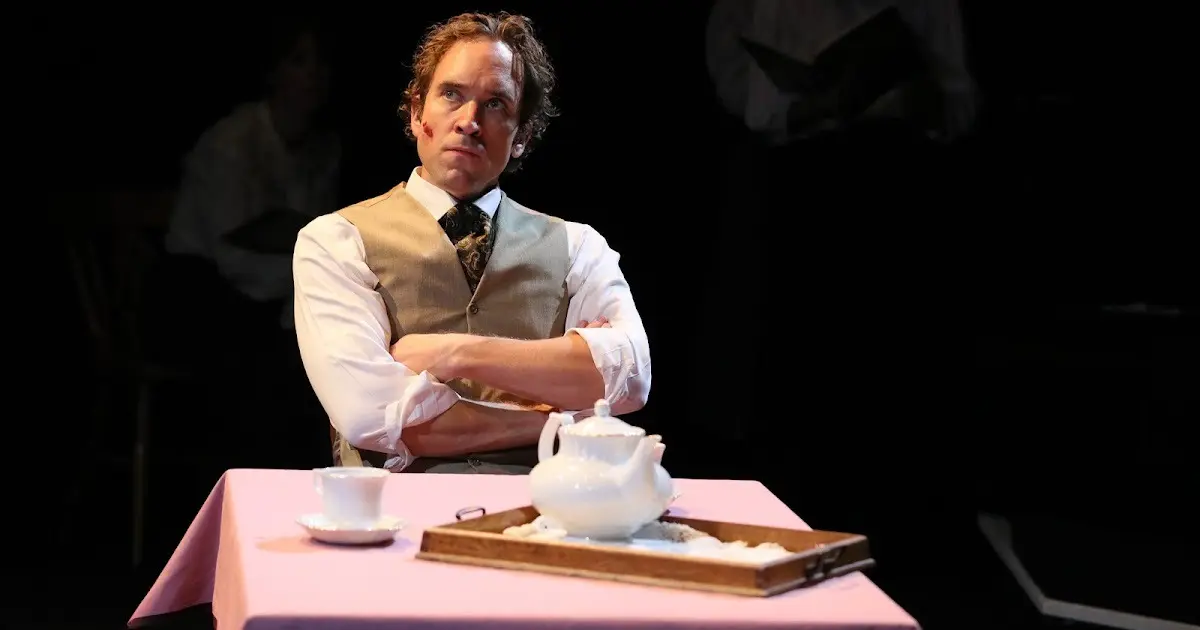
Spearheaded by composer and librettist Edward Longstaff, directed with nimble wit by Stuart Barker, and anchored by tenor Robin Bailey’s winningly charismatic portrayal of the title character, the production successfully navigated the structural hurdles of adapting a dense, plot-heavy novel. Accompanied by John Longstaff on a demanding piano reduction, the ensemble cast executed a clever double-duty performance: serving simultaneously as a choral framing device and stepping into distinct character roles.
Although the workshop format revealed certain structural tensions—particularly between moments of lively, period-evocative lyricism and heavier, more workmanlike recitatives—the capacity audience was visibly captivated. The History of Mr. Polly: Part One stands as a promising milestone in Longstaff’s compositional career, raising tantalizing questions about how the complete, fully orchestrated two-part masterwork will ultimately fare upon its realization.
Detailed Chronology
The Genesis of an Operatic Adaptation
The journey toward the Cockpit stage began years prior in the mind of Edward Longstaff. Following a distinguished 31-year tenure teaching at the prestigious Purcell School—during which he composed his first opera, Iphigenia, tailored for young voices—Longstaff turned his full-time attention to large-scale compositional pursuits. Choosing H.G. Wells’s The History of Mr. Polly was an audacious gamble. The novel is structurally sprawling, packed with dense social critique, suburban drudgery, and Dickensian flourishes, making it an untraditional vehicle for lyrical theatre.
Longstaff undertook the formidable task of drafting his own libretto, exercising rigorous editorial choices to distill Wells’s episodic narrative while preserving its core trajectory. Collaborating closely with director Stuart Barker, designers Valassia Barbouti and Maria J. Damia Patino, and movement director Ruth Howard, the creative team crafted a minimalist workshop aesthetic. The production utilized a clever staging device: a row of neutral Edwardian garments hung on set, allowing the ensemble to fluidly transition between their collective choral duties and specific characterizations.
Act I / Part One: From Despair to Accidental Heroism
The narrative structure of The History of Mr. Polly: Part One wisely honors Wells’s famous in media res opening. The opera begins with a startling psychological portrait: Alfred Polly, thoroughly disillusioned with his suburban lot in life, calculatingly planning to burn down his failing shop and commit suicide.

From this dark precipice, the narrative flashes backward to trace Polly’s stumbling trajectory through early adulthood. The audience is introduced to his formative experiences, beginning with his time as a draper’s assistant alongside the energetic Parsons (portrayed with boundless verve by Laurie Slavin). Parsons’s radical, ill-fated attempts to revolutionize shop-window displays serve as an early, unheeded warning to Polly regarding the perils of non-conformity.
Following the death of his father, Polly comes into a small inheritance, attracting the predatory interest of his calculating cousins, Mr. and Mrs. Johnson (Jack Holton and Maya Kumana). Holton and Kumana brilliantly milked the comedic dissonance between their characters’ outwardly proper Edwardian facades and their deeply grasping, opportunistic motivations.
Through the Johnsons, Polly is introduced to the Larkins family—specifically Ma Larkins (Elizabeth Lynch) and her daughters Annie (Emily McCarthy) and Miriam (Sophia Jin). Seeking a path of least resistance in life, Polly drifts into an almost entirely passive engagement with Miriam.
Interspersed between these domestic entrapments is Polly’s famous cycling excursion. In a moment of theatrical delight—complete with Bailey actually riding a bicycle across the stage—Polly encounters Christabel (Hailey West). This brief, sunlit romantic interlude awakens in Polly a fleeting appreciation for beauty and genuine emotional connection, before he is swiftly and sharply disabused of such lofty ideals.
As Part One sweeps forward, the timeline fast-forwards fifteen years into Polly’s miserable marriage to Miriam. Sophia Jin delivered one of the production’s emotional and comedic highlights during this sequence, performing a blistering aria detailing her profound hatred of cooking and domestic drudgery while violently venting her frustrations on a lump of bread dough.
The narrative circle finally closes as the opera returns to its starting point. Polly enacts his desperate arson scheme, burning the shop down. Yet, in true Wellsian fashion, rather than perishing or facing ruin, Polly emerges from the smoke and flames as an accidental public hero—bringing Part One to a cliffhanger close that leaves the audience eager for the psychological liberation promised in Part Two.
Supporting Context & Metrics
Production Personnel and Artistic Lineage
The realization of The History of Mr. Polly: Part One relied on a tight-knit collective of seasoned professionals and emerging artists:

- Composer / Conductor: Edward Longstaff
- Mr. Polly: Robin Bailey (Tenor)
- Parsons: Laurie Slavin
- Mr. Johnson: Jack Holton
- Mrs. Johnson: Maya Kumana
- Annie: Emily McCarthy
- Miriam: Sophia Jin (Soprano)
- Ma Larkins: Elizabeth Lynch
- Christabel: Hailey West
- Director: Stuart Barker
- Designers: Valassia Barbouti & Maria J. Damia Patino
- Lighting Designer: Ace McCarron
- Movement Director: Ruth Howard
- Piano Accompanist: John Longstaff
- Stage Manager: Julian Johnson
Musical Language and Stylistic Analysis
Longstaff’s compositional voice in The History of Mr. Polly is rooted firmly in a tonal, accessible idiom, yet it contains sophisticated layers of harmonic subversion. The score frequently flirts with the popular idioms, parlor tunes, and dance rhythms of the Edwardian era (circa 1910), grounding the action in its historical period. However, Longstaff subverts these cozy pastiches during instrumental interludes and scene-setting transitions, frequently veering into darker, more contemplative sonic territory that reflects Polly’s internal existential dread.
The choral narration device—utilizing the remaining seven cast members as an omniscient, slightly mocking Greek chorus—provided the work with a distinctive structural texture. This technique echoes Benjamin Britten’s Albert Herring, particularly in the way the community observes, judges, and pokes fun at the protagonist’s eccentricities.
Critically, however, the workshop performance highlighted certain areas for refinement. While the ensemble numbers and lyrical bursts soared, the solo recitative sections occasionally felt overly earnest and musically pedestrian. Critics and audience members alike noted that leaning further into the stylistic conventions of operetta might unlock a more consistently sparkling comedic momentum, smoothing out the transition between the novel’s dark satire and its farcical lightness.
Official Statements
While formal press releases from Tête à Tête and the creative team focused primarily on the logistical triumphs of mounting a new work within a festival format, reviews and informal post-performance commentary shed light on the artistic ethos driving the project.
Edward Longstaff, reflecting on his transition from decades of music education at the Purcell School to full-time composition, emphasized the unique collaborative energy required to bring a literary adaptation to the operatic stage. The decision to partner with director Stuart Barker was instrumental in grounding Wells’s sprawling social satire within the intimate spatial constraints of the Cockpit theatre.
Stuart Barker’s directorial approach embraced the "work-in-progress" nature of the evening. Rather than concealing the mechanics of theatrical production, Barker laid them bare—utilizing visible costume changes and minimal set pieces to keep the narrative focus squarely on character interaction and text clarity.
Robin Bailey, discussing his approach to embodying Alfred Polly, noted the delicate balance required to keep an audience rooting for a character who is frequently dim-witted, passive, and socially inept. Bailey’s lyric tenor voice, combined with an infectious physical and vocal charm, successfully transformed Polly’s pratfalls into moments of profound human vulnerability.

Future Outlook
As a festival-bound workshop performance, The History of Mr. Polly: Part One successfully cleared its primary hurdle: it secured the emotional investment of a capacity audience and proved that H.G. Wells’s idiosyncratic universe can indeed sing.
However, the production’s necessary constraints—dictated by the economics of new opera festivals and the structural divide of a two-part narrative—left certain thematic arcs unresolved. Audiences were granted a front-row seat to Polly’s imprisonment in domesticity and his desperate act of arson, but they were ultimately deprived of Part Two, the section of Wells’s novel where Polly breaks free from his chains, wanders the English countryside, and truly comes into his own as a wandering philosopher and free spirit.
Looking ahead, the trajectory for The History of Mr. Polly involves several critical developmental milestones:
- Orchestration: John Longstaff’s admirable piano reduction must be translated into a full instrumental score, expanding the tonal palette and allowing the composer to lean more heavily into the rich orchestral colors hinted at during the dark instrumental interludes.
- Libretto Refinement: Streamlining the solo recitatives to inject greater rhythmic lightness and comedic pace will address the occasional dramatic drag experienced during the episodic transitions of Part One.
- Full-Scale Integration: Bringing both Part One and the yet-unseen Part Two together in a fully staged, fully orchestrated world premiere.
Given the enthusiastic response at the Cockpit theatre and the obvious craftsmanship underlying Edward Longstaff’s score, the operatic community will undoubtedly be watching closely as Mr. Polly journeys toward its eventual completion. If Part One is any indication, the full realization of this Edwardian comic opera promises a uniquely charming addition to the contemporary lyric repertoire.