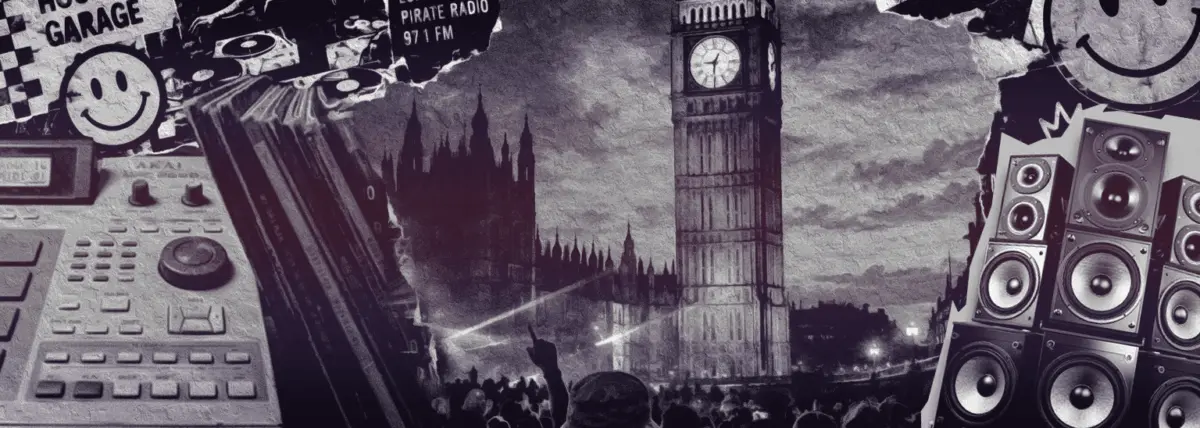
The global electronic music landscape is experiencing a profound, culturally rich renaissance driven by the swung, syncopated rhythms of UK Garage (UKG). Once confined to localized home studios, underground pirate radio frequencies, and rain-soaked inner-city record shops, these hypnotic grooves have scaled the heights of international mega-festivals, with modern torchbearers like Sammy Virji gracing the stages of Coachella. Yet, UKG has never been a monolithic genre. It operates as a broad, eclectic umbrella spanning pioneering US imports—such as Todd Edwards’ intricate vocal-splicing Sample Choir E.P.—homegrown 4×4 bassline anthems like Ripgroove, soulful 2-step crossovers like Movin’ Too Fast, and even wobbly, Teutonic club bangers like Timo Maas’ iconic remix of Dooms Night.
Among this rich tapestry, 2-step stands out as UKG’s most undeniably homegrown and culturally vital style. Much like jungle, drum and bass, and dubstep, 2-step illustrates the staggering innovation that occurs when British electronic music draws deeply from its own multicultural heritage rather than simply mirroring transatlantic trends.
This technical masterclass explores the DNA of 2-step production. Drawing inspiration from contemporary rollers—such as Rose Holland’s self-produced vocal tour-de-force Solid On The Ground—we break down the creation of tight, timeless, and relentlessly bouncy 2-step beats step-by-step. Designed for producers utilizing digital audio workstations like Ableton Live, this guide equips you with the structural knowledge, rhythmic intricacies, and mixing insights needed to bring authentic UKG bounce to your productions.
Detailed Chronology: The Anatomy of a 2-Step Beat
Constructing an authentic 2-step groove requires meticulous attention to micro-timing, velocity layering, and frequency management. Below is the systematic framework for building a dynamic, rolling 16-bar drum pattern that maintains listener engagement across every arrangement transition.
Production Pro-Tip: To prevent cognitive listening fatigue and maintain sharp creative focus, establish strict break timers during your sessions. If frequencies begin to blur together in your mix, step away, sleep on it, and return with fresh ears the following morning. Allowing a track to "breathe" over a few days is often the secret to unlocking objectivity.
Step 1: The Kick
Unlike four-on-the-floor house or techno, UK Garage kicks require short release tails and steering clear of deep, booming sub-frequencies. Instead, they punch purposefully in the upper bass and lower midrange. This crucial design choice leaves vital frequency real estate open for heavy, rolling basslines while giving the rhythmic swing and syncopation room to breathe.
Foundation Kick: Utilize Ableton Live’s Kick 70s 1 sample. The foundational pattern places two kicks per bar (striking on beats 1 and 1.3.3). Every fourth bar, introduce an additional kick on 4.4.3. Note the slightly elevated velocity on this fourth-bar hit to emphasize the skip in the rhythm. Apply a low-cut EQ filter around 100Hz–140Hz to trim unnecessary sub-frequencies.
The Skip Kick: Layer in additional syncopated momentum using Ableton’s Club Kick. This synthetic, punchy sound was a staple of classic 2-step records. Program these skips intuitively by ear, slightly off the strict grid, to capture that organic human bounce.
Level Balancing: Set the Club Kick volume approximately 10dB lower than the primary kick. This ensures Kick 70s 1 provides the physical weight of the rhythm while the Club Kick injects dynamic bounce, combining into a cohesive two-bar looping pattern.
Step 2: The Rim
The rhythmic engine of any 2-step beat relies heavily on the interplay between the kick and the rimshot. The rim sound does not necessarily require an acoustic rimshot sample; any short, knocking transient works effectively as long as it remains short, dry, and free of excessive high-frequency harshness.
Core Placement: Rim placement is remarkably consistent across classic 2-step tracks, falling squarely on every second beat. Because rim sounds carry distinct tonal qualities, layer two complementary samples: Rim 3k Sharp and Rim 90s MPC.
Variation: Delete every fourth instance of the Rim 90s MPC sample to introduce subtle rhythmic evolution across your two-bar groove.
Skippy Accents: To propel the rhythm forward, program fast, syncopated rim patterns using the Rim DMX Fatso 2 sample, pitched down by three semitones. Pair this with a secondary pattern utilizing the Rim LDre 2 sample, also pitched down three semitones. These alternating patterns create an engaging call-and-response dynamic that spans both one- and two-bar loops.
Production Pro-Tip: Skippy rim rhythms are frequently played melodically at varying pitches. Duplicate your skippy rim samples to new dedicated drum lanes, shift the pitch of the copied notes up or down by a single semitone, and selectively redistribute notes to the new lanes for added melodic interest.
Step 3: The Hats and Rattles
The distinct top-end texture of 2-step is built from a complex collage of closed hats, tambourines, shakers, and acoustic rattles. While producers historically sampled these directly from vinyl breaks, modern sound libraries—including Ableton’s core factory library—offer all the raw materials needed.
Hat Patterns: While some 2-step productions utilize straight or swung 16th-note closed hats, others favor offbeat hats, and many combine both. Crucially, sample length remains uniformly tight: even open hats are truncated to sound short and punchy.
Open Hat Layering: Begin with two short open hat samples—Hihat Open Ironman and High Open Machine Hard—both playing on the offbeat. Introduce one extended note and one short skip note to the High Open Machine Hard lane to further anchor the two-bar groove.
Tambourine and Shaker Textures: Introduce call-and-response phrasing using a tambourine sample (such as Tambourine Sampled at 86 bpm), tuned up by 8.44 semitones to sit correctly within your track’s tempo. Sprinkle in a curated selection of subtle shakers, reversed hats, and auxiliary percussion to fill the rhythmic gaps without cluttering the mix.
Production Pro-Tip: The secret to working with auxiliary shakers and hats is avoiding aggressive, sharp transients that clash with the percussive skippy rims and kicks. This is why short, reversed hat and shaker samples are so effective. Because the loudest peak of a reversed sample occurs later in its playback lifecycle rather than at the initial trigger point, you must shift reversed sounds slightly forward on the timeline to keep them tightly locked to the grid.
Step 4: The Edits
Just like any genre within club music, a compelling 2-step beat requires strategic variation and arrangement edits to prevent listener fatigue and elevate structural transitions.
Rolls and Drops: 2-step edits traditionally rely on dropping out kicks, snares, or hats at the end of four- or eight-bar phrases, or introducing accelerated kick rolls. Create velocity-building rolls with the Club Kick that accelerate over the course of a single bar, leaving a momentary breath of silence just before the drop of the next eight-bar section. Concurrently, drop out the main kick drum pattern during the roll.
Crashes and Rims: Place a bright, high-tuned 909 crash cymbal at the absolute start of every eight-bar phrase, accented by skippy crash hits at the phrase’s conclusion.
Production Pro-Tip: Bringing the core rim sample back in for the final beat of bar eight builds powerful psychological tension and listener expectation for the subsequent phrase. Audition your arrangement with and without this technique to fully appreciate its impact on momentum.
Supporting Context & Metrics: The Cultural Blueprint
UK Garage’s enduring dominance is deeply tied to its historical roots. Emerging in the late 1990s through institutions like the Velvet Rooms, Twice as Nice, and London pirate radio stations such as Rinse FM and Deja Vu, UKG proved that British club culture could synthesize American R&B and house influences into an entirely unique rhythmic language.
Tempo Range: The vast majority of 2-step and classic UKG productions sit comfortably within the 130 to 138 Beats Per Minute (BPM) range, balancing high-energy club pacing with enough rhythmic space for intricate swing algorithms.
The Swing Factor: Unlike rigid, quantized drum machine programming, 2-step relies on micro-timing offsets (frequently emulating hardware swing engines found on vintage MPC samplers) to achieve its signature "limp" or "skip."
Official Statements and Industry Insights
Reflecting on the genre’s evolution from pirate radio staples to global festival headlining slots, veteran producers and contemporary tastemakers alike emphasize the importance of restraint and rhythmic space.
Industry analysts tracking the electronic music sector note that the global revival of UKG—spurred by streaming platforms and modern sample-pack ecosystems—has democratized the production style. Producers no longer need an archive of obscure 90s vinyl to capture authentic textures; rather, modern software suites like Ableton Live offer comprehensive digital workstations capable of replicating hardware workflow nuances with surgical precision.
As electronic music continues to cycle through nostalgic and forward-thinking iterations, the foundational rules of 2-step remain stubbornly absolute: respect the space, master the swing, and let the rhythm breathe.
Future Outlook
The trajectory of 2-step and UK Garage points toward continued cross-pollination with adjacent genres such as bass house, hyperpop, and modern ambient techno. As younger generations of producers dissect the aesthetics of 90s pirate radio culture through advanced digital signal processing tools, the boundary between vintage hardware workflows and modern in-the-box production continues to blur.
For aspiring beatmakers, mastering the foundational 2-step groove is not merely an exercise in genre emulation—it is an essential masterclass in rhythmic psychology, groove dynamics, and mix clarity. Whether you are prepping tracks for peak-time festival sound systems or late-night underground listening rooms, the principles outlined in this guide ensure your low-end stays punchy, your top-end stays crisp, and your beats remain timelessly infectious.