The landscape of modern rock music is built upon a bedrock of foundational vinyl releases from the mid-1960s through the late 1970s. For visionary musicians who came of age during this turbulent creative era, 7-inch singles and 12-inch long-players were not merely passive forms of entertainment; they were blueprints, sonic textbooks, and catalysts for cultural change.
In a recent deep-dive conversation with music journalist Michael Heatley, celebrated guitarist Steve Hackett—renowned for his pioneering work with Genesis and his ongoing solo endeavors, including the album The Roaring Waves (InsideOutMusic)—opened his personal vault of musical memories. Hackett curated a definitive list of 10 seminal UK vinyl pressings that fundamentally shaped his artistic sensibilities.
Spanning the buoyant Motown optimism of 1964 to the avant-garde compositional maturity of Kate Bush in 1978, this curated collection offers a masterclass in musical evolution. It bridges the gap between rhythm and blues, folk revivalism, British Invasion pop, and the sprawling, theatrical architecture of progressive rock. This report examines these 10 definitive records, exploring their cultural footprint, technical brilliance, and enduring legacy through an authoritative, musicological lens.
Detailed Chronology: The Soundtrack of Formative Years
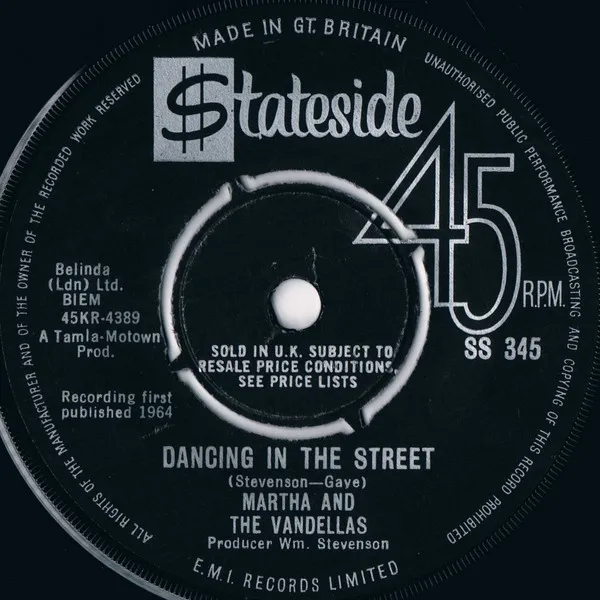
1. Martha & The Vandellas – Dancing In The Street
Label/Format: Stateside (SS 345, 7", UK, 1964)
Estimated Market Value: £20
The journey begins in the summer of 1964 at the Battersea Funfair. For a 14-year-old Steve Hackett, adolescence was marked by the awkward, rigid social choreography of mid-century British youth culture—boys standing on one side, girls on the other, paralyzed by the fear of interaction. Cutting through this teenage reticence came the kinetic, irrepressible blast of Martha & The Vandellas’ "Dancing In The Street."
Though framed as a global exhortation for international movement and unity, its immediate local impact was far more visceral. It was a clarion call to youth. Years later, when Hackett finally met Martha Reeves, he offered high praise, telling her it stood as the absolute pinnacle of the Motown catalog—a track that successfully "touched all the bases" of emotional and physical release.
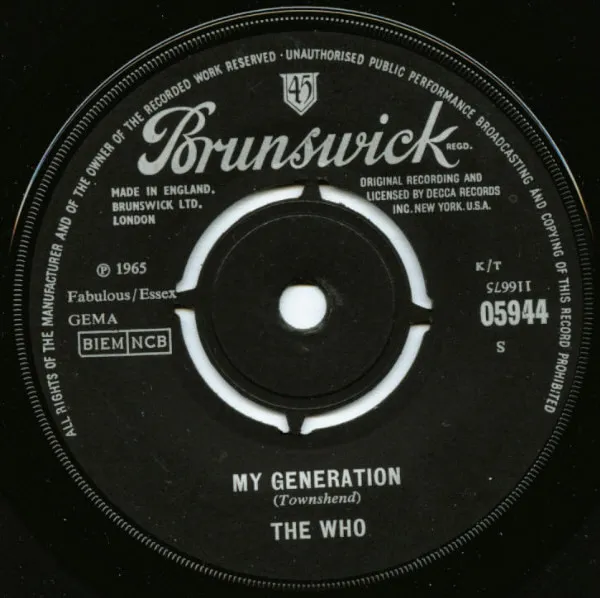
2. The Who – My Generation
Label/Format: Brunswick (05944, 7", UK, 1965)
Estimated Market Value: £20
By 1965, the British beat boom had evolved into a tougher, more aggressive countercultural stance. The Who’s "My Generation" delivered an unfiltered shot of raw, youthful defiance. For guitarists of Hackett’s generation, the track offered a masterclass in instrumental swagger.
A famous piece of rock lore surrounds the song’s ferocious solo: many aspiring guitarists spent countless hours trying to replicate what they assumed was a six-string workout, only to discover it was actually John Entwistle’s trailblazing, high-treble bass playing driving the mix. Hackett notes that while The Who flirted briefly with the Mod aesthetic, they wisely abandoned tribal labels early on to avoid artistic limitation. The song’s uncompromising attitude remains entirely timeless.
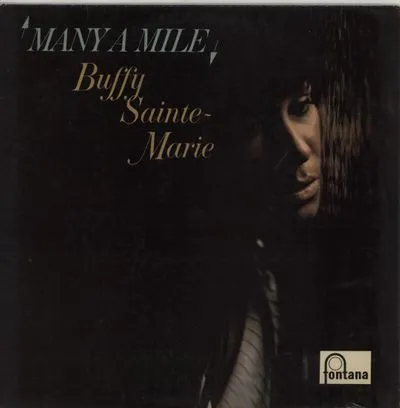
3. Buffy Sainte-Marie – Many A Mile
Label/Format: Fontana (TFL 6047, LP, UK, 1965)
Estimated Market Value: £5
Shifting away from high-octane rock and roll, the mid-60s folk revival captured the imagination of a 15-year-old Hackett via the haunting artistry of Buffy Sainte-Marie. Her second studio album, Many A Mile, introduced listeners to a unique synthesis of traditional lyricism and contemporary protest.
Hackett’s personal favorite track, "Must I Go Bound," showcased Sainte-Marie’s extraordinary vocal vulnerability. Delivered as an unbroken, emotional sob from the first note to the last, the performance was powerful enough to melt hearts. First glimpsed on the groundbreaking 1965 UK television program Heartsong—alongside contemporaries like Marianne Faithfull and Julie Felix—Sainte-Marie set a standard for emotional honesty in songwriting that left a lasting impression on the young guitarist.
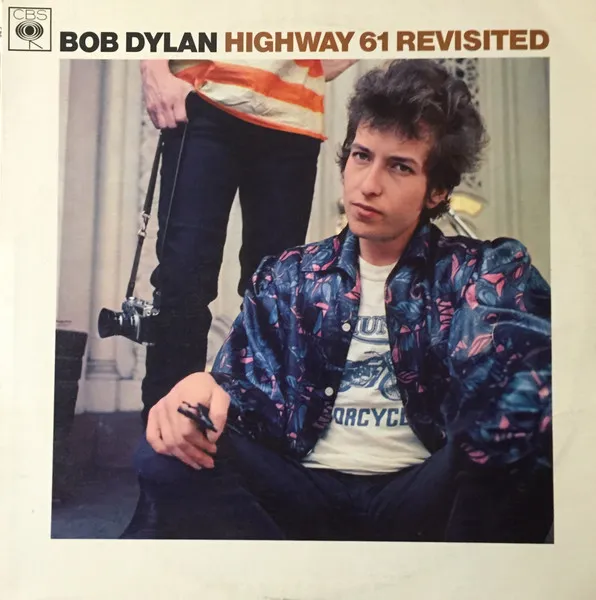
4. Bob Dylan – Highway 61 Revisited
Label/Format: CBS (BPG 62572, LP, UK, 1965)
Estimated Market Value: £80
Bob Dylan’s electric pivot polarized the folk purists, but it unlocked entirely new dimensions of popular music. Hackett recalls lively debates with a close friend—an avowed "Dylanologist"—who championed the bard’s acoustic minimalism while Hackett preferred the searing guitar work of Cream and Jeff Beck.
The turning point arrived with Highway 61 Revisited, anchored by a powerhouse backing band featuring Mike Bloomfield and Al Kooper. Through tracks like "Like A Rolling Stone," Dylan demonstrated how lyrical intensity could be married to blistering electric guitar and organ arrangements, proving that poetry and rock power were not mutually exclusive.
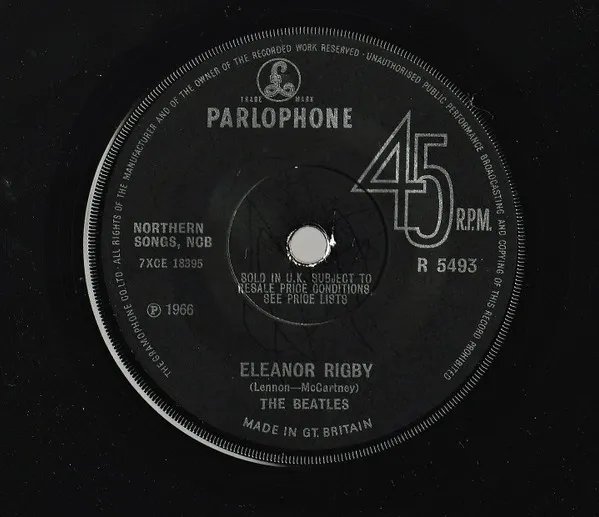
5. The Beatles – Eleanor Rigby
Label/Format: Parlophone (R 5493, 7", UK, 1966)
Estimated Market Value: £15
For many musicians, Eleanor Rigby represents the high-water mark of Western popular composition. Operating as a brilliant hybrid, it utilizes a stinging string octet arrangement while maintaining the punch of pop-rock storytelling.
Hackett describes the track as a "fly-on-the-wall mini-documentary" rich in lyrical color. It establishes the gold standard by which all narrative pop songs should be measured. This sentiment was echoed later when Hackett joined Genesis; in early creative discussions with Peter Gabriel—himself a prolific lyricist—they marveled at the sheer difficulty of crafting convincing narrative arcs within a pop format, universally acknowledging the peerless mastery of Lennon and McCartney’s 1966 masterpiece.
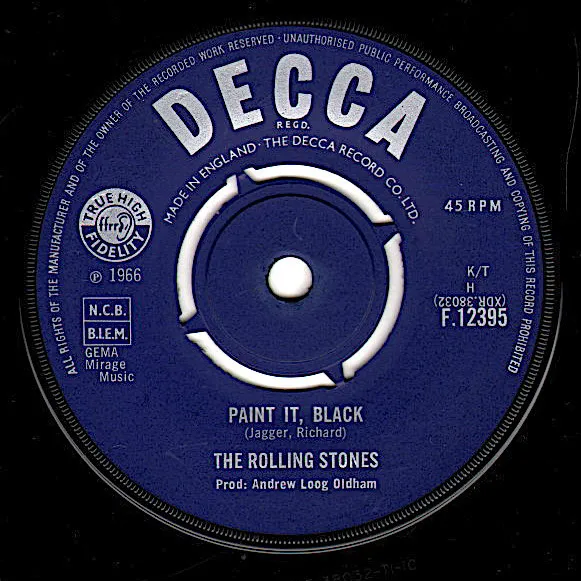
6. The Rolling Stones – Paint It, Black
Label/Format: Decca (F 12395, 7", UK, 1966)
Estimated Market Value: £15
The Rolling Stones’ dark, hypnotic 1966 smash single showcased Mick Jagger at the absolute peak of his vocal powers, delivering a performance steeped in dramatic urgency. Musically, the track functions as a brilliant two-part invention.
The interplay between the primary vocal line and Brian Jones’ exotic sitar creates a haunting texture, seamlessly blending verse and extended refrain without a traditional chorus. As a teenager, Hackett wore out the grooves on his bedroom turntable, painstakingly studying and practicing the intricate guitar licks shared by Brian Jones and Keith Richards.
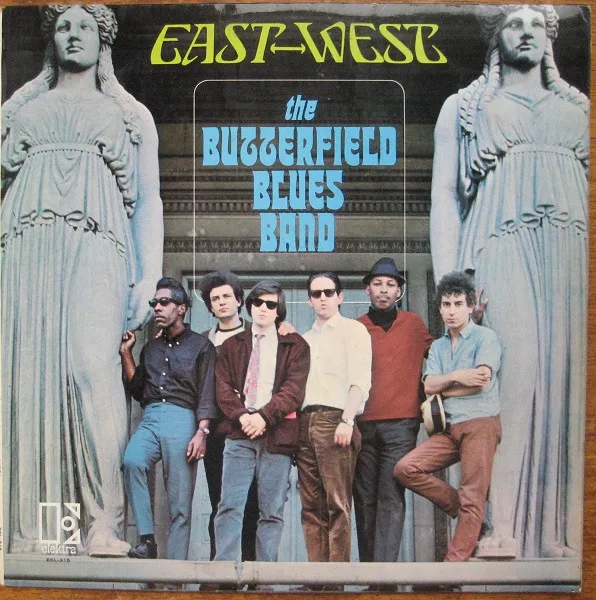
7. Paul Butterfield Blues Band – East-West
Label/Format: Elektra (EKL 315, LP, UK, 1966)
Estimated Market Value: £50
In 1966, an intimate audience of roughly 20 people gathered at Eel Pie Island to witness the transoceanic power of the Paul Butterfield Blues Band. Having played the harmonica his entire life, Hackett was utterly floored from the very first note executed by Butterfield.
The album’s monumental title track, penned by guitar virtuoso Mike Bloomfield, broke structural boundaries. Spanning several minutes, the song evolved through a kaleidoscopic fusion of Eastern, Western, Indian, and Mexican musical motifs. It was a pioneering blueprint for world music and extended instrumental improvisation, showcasing a rare moment where even the mighty Butterfield sounded delightfully pushed to his limits.
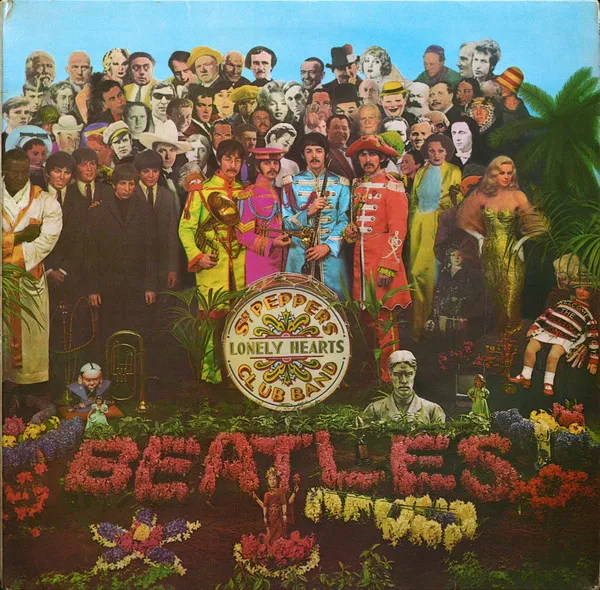
8. The Beatles – Sgt. Pepper’s Lonely Hearts Club Band
Label/Format: Parlophone (PCS 7207, LP, UK, 1967)
Estimated Market Value: £175
Few albums remapped the cultural landscape quite like Sgt. Pepper’s Lonely Hearts Club Band. The title track immediately subverts expectations, transitioning from the diegetic sound of an orchestra tuning up directly into a roaring rock band.
Paul McCartney’s assertive vocal delivery is punctuated by clever instrumental interjections that honor the album’s theatrical conceit. This restraint—knowing precisely when not to play—formed the bedrock of the Beatles’ surrealist magic realism. Furthermore, tracks like "She’s Leaving Home" explored domestic hopes and fears with the same cinematic depth, serving as a spiritual bookend to Eleanor Rigby.
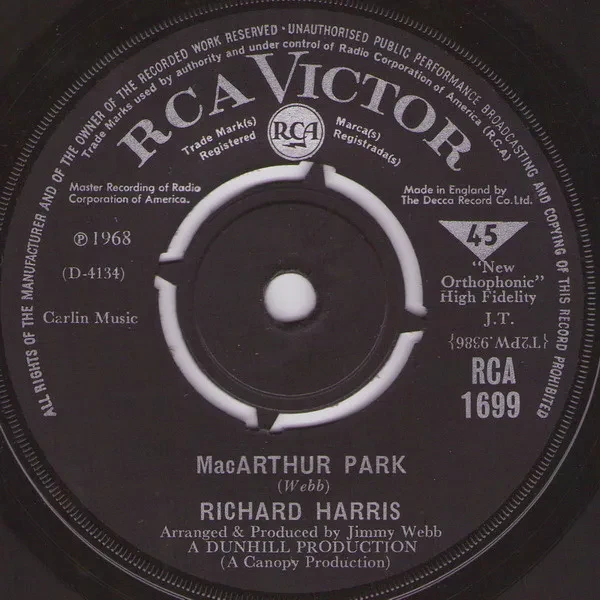
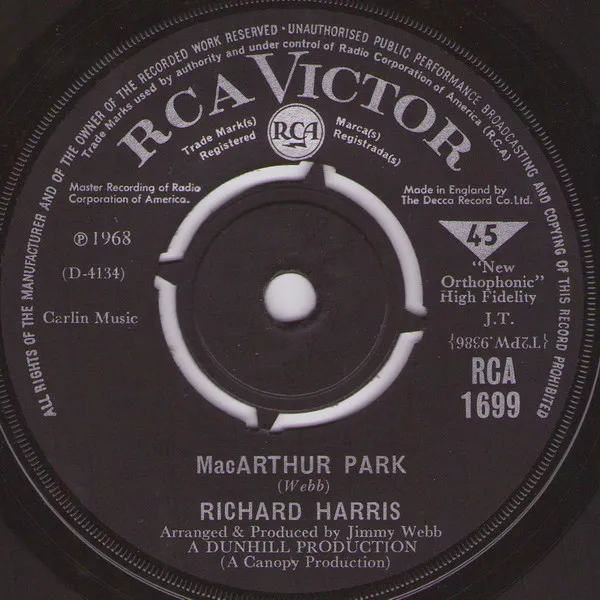
9. Richard Harris – MacArthur Park
Label/Format: RCA (1699, 7", UK, 1968)
Estimated Market Value: £3
Written by a youthful Jimmy Webb and brought to life by actor Richard Harris, "MacArthur Park" is a towering paean to lost love built upon intricate chord progressions and sweeping orchestral arrangements. Harris approached the eccentric lyricism not merely as a vocalist, but with the deep emotional commitment of a dramatic actor.
Clocking in at roughly seven minutes, its ambitious, multi-movement structure served as a direct template for the early ambitions of progressive rock titans like Genesis. For Hackett and his bandmates, this was the lodestar: storytelling that embraced unusual time and key changes, blending traditional orchestration with contemporary instrumentation.
10. Kate Bush – The Man With The Child In His Eyes
Label/Format: EMI (2806, 7", UK, 1978)
Estimated Market Value: £15
Concluding this chronological survey is Kate Bush’s stunning 1978 breakout ballad, lifted from her remarkable debut album, The Kick Inside. Written when Bush was just 13 years old, the song displays a compositional maturity that belies her chronological age.
Balancing fantasy with the tentative early stirrings of romantic awakening, the track leaves much of its emotional narrative to the listener’s imagination. Enhanced by tasteful, understated brass arrangements, it signaled the arrival of a generational songwriting talent who would continuously redefine the boundaries of British art-pop.
Supporting Context & Metrics
The valuation of original UK vinyl pressings from the 1960s and 1970s has evolved from a subcultural hobby into a robust niche economy. The records highlighted in Hackett’s collection reflect a fascinating spread in collector markets:
Artist
Album / Single Title
Format / Year
Original UK Label / Cat. No.
Estimated Value (GBP)
Martha & The Vandellas
Dancing In The Street
7", 1964
Stateside (SS 345)
£20
The Who
My Generation
7", 1965
Brunswick (05944)
£20
Buffy Sainte-Marie
Many A Mile
LP, 1965
Fontana (TFL 6047)
£5
Bob Dylan
Highway 61 Revisited
LP, 1965
CBS (BPG 62572)
£80
The Beatles
Eleanor Rigby
7", 1966
Parlophone (R 5493)
£15
The Rolling Stones
Paint It, Black
7", 1966
Decca (F 12395)
£15
Paul Butterfield Blues Band
East-West
LP, 1966
Elektra (EKL 315)
£50
The Beatles
Sgt. Pepper’s Lonely Hearts Club Band
LP, 1967
Parlophone (PCS 7207)
£175
Richard Harris
MacArthur Park
7", 1968
RCA (1699)
£3
Kate Bush
The Man With The Child In His Eyes
7", 1978
EMI (2806)
£15
These valuations illustrate that cultural impact does not always correlate directly with current secondary-market pricing. While pristine, first-press stereo copies of Sgt. Pepper command premium collector figures approaching £175, equally influential pieces of theatrical pop history, such as Richard Harris’s "MacArthur Park," remain accessible entry points for vinyl enthusiasts at a modest £3.
Official Statements & Industry Perspectives
Reflecting on the psychological and technical impact of these recordings, Steve Hackett emphasizes that the transition from standard three-minute pop formulas to expansive multi-part compositions was an inevitable evolutionary leap for his generation of musicians.
"When you look at what Jimmy Webb achieved with ‘MacArthur Park,’ or how Lennon and McCartney treated the human condition in ‘Eleanor Rigby,’ you realize that pop music was suddenly given permission to be literature, cinema, and high art all at once," notes Hackett. "We weren’t just trying to write catchy tunes for the charts; we were trying to capture emotional truth, spatial depth, and sonic texture."
Music historians point out that the cross-pollination of American rhythm and blues, British guitar experimentation, and European classical sensibilities created a unique greenhouse environment in mid-1960s London. This environment directly enabled the birth of progressive rock, turning bedroom practice sessions into conservatory-level studio explorations.
Future Outlook
As physical media undergoes a sustained resurgence in the 21st century, the reverence for foundational vinyl releases remains undiminished. Contemporary artists and legacy performers alike continue to draw inspiration from the analog warmth, structural audacity, and lyrical depth of the 1960s and 70s golden age.
Steve Hackett’s ongoing creative output—exemplified by recent projects such as The Roaring Waves on InsideOutMusic—proves that the exploratory spirit ignited by Paul Butterfield, Bob Dylan, and The Beatles continues to burn brightly. For modern collectors and aspiring musicians, these 10 records serve as a permanent compass, mapping a time when popular music boldly expanded its vocabulary and changed the cultural landscape forever.