For decades, lazy categorizations have plagued the ambient genre, bundling profound sonic architecture into a homogeneous category associated with passive background listening or new-age relaxation. Yet, to assume that all ambient music shares a single DNA is to remain entirely unacquainted with the staggering, shape-shifting catalogue of the late Japanese composer and electronic visionary Susumu Yokota. Spanning a monumental output of roughly 30 original albums—alongside a dizzying array of EPs, 12-inches, and cross-genre experiments under various aliases—Yokota’s work defies simple classification.
Born in Toyama City in 1960, Yokota was an artist of rare dualities: an intensely private creator who spent his days wandering Tokyo’s parks to converse with cats, yet a relentless, hyper-prolific musical architect who regularly dropped up to three albums a year during his peak periods. His compositions bridge the chasm between avant-garde minimalism, delicate acoustic textures, subterranean club culture, and vibrant natural soundscapes.
Today, this multifaceted legacy is receiving long-overdue institutional and commercial reappraisal. Independent tastemakers Lo Recordings are meticulously navigating Yokota’s vast back catalogue via an extensive reissue campaign. This initiative reaches a new milestone with the release of Skintone Volume Two, a comprehensive box set that rescues rare gems—such as the long-unavailable, copyright-entangled Laputa—from obscurity.
As contemporary artists from across the musical spectrum continue to cite his profound influence, this retrospective examines Yokota’s unlikely career trajectory, his idiosyncratic approach to sampling and sound design, and how his peerless body of work permanently redefined the boundaries of electronic music.
Detailed Chronology: From Joy Division Fan to Ambient Pioneer
The trajectory of Susumu Yokota’s musical life is anything but conventional. Unlike many contemporary electronic producers who step behind the decks or into the studio in their teens, Yokota’s entry into professional music-making was relatively late, preceded by formal academic pursuits and a distinct visual arts background.
Early Influences and Visual Foundations
During the early 1980s, a young Yokota was an economics major obsessed with post-punk icons Joy Division. However, his artistic inclinations soon pulled him away from the corporate world and into graphic design. This detour proved instrumental in shaping his artistic identity. When house music began infiltrating Tokyo’s burgeoning underground club scene later in the decade, Yokota naturally gravitated toward the decks.
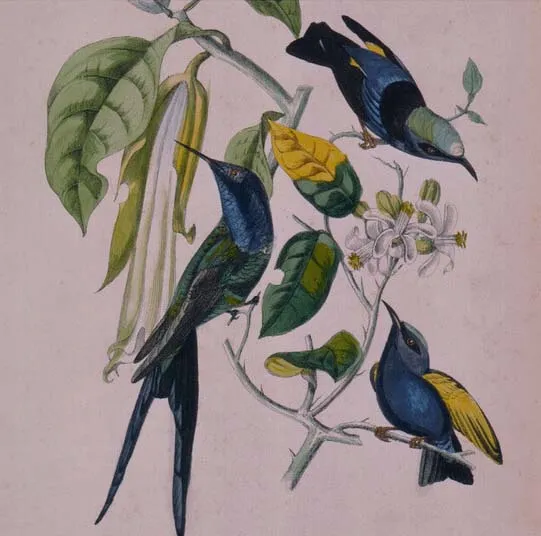
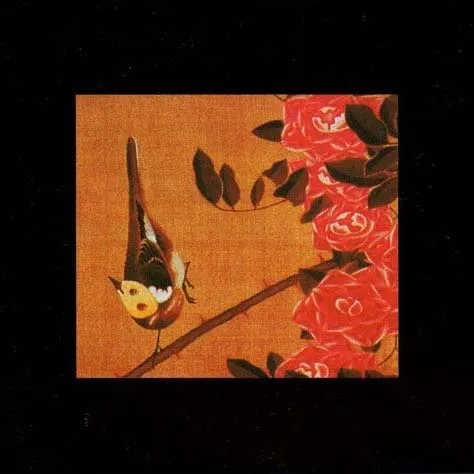
Crucially, his graphic design background allowed him to conceptualize his art as a complete audio-visual package. He began designing his own club flyers and, subsequently, the striking visual artwork for his own records. This seamless synthesis of sound and vision became a hallmark of his career, ensuring that every release possessed a distinct physical and atmospheric identity.
The 1990s: Proliferating Aliases and Techno Breakthroughs
By the early 1990s, Yokota’s creative engine shifted into hyperdrive. Operating under a kaleidoscopic array of monikers—including Tenshin, Ringo, Stevia, and Ebi—he released a relentless stream of EPs and 12-inch singles. Among these early artifacts, Tenshin’s hard-hitting 1992 Brainthump EP, issued via the German label No Respect, remains a cult favorite among connoisseurs of early techno and hardcore.
In 1993, working under his birth name, he released his debut full-length, The Frankfurt-Tokyo Connection, through Heinz Roth and Sven Väth’s influential Harthouse imprint. Yet, it was his 1994 masterpiece Acid Mt. Fuji, released via Sublime, that marked his true ambient breakthrough. In this seminal work, Yokota achieved a breathtaking reconciliation, weaving field recordings of birdsong into shimmering, atmospheric techno and establishing a blueprint for organic electronic music that he would refine over the coming decades.
The Leaf Label Era and The Sampling of Sacred Cows
As his reputation grew internationally, Yokota’s work caught the attention of UK-based independent powerhouses. While Lo Recordings championed him in Japan, Yorkshire’s prestigious Leaf Label issued some of his most celebrated and widely distributed works in the West. This run included the monumental 1998 retrospective compilation Image: 1983–1998, followed by two of his most definitive full-lengths: 1999’s Sakura and 2001’s Grinning Cat.
During this period, Yokota demonstrated a fearless approach to modern composition, liberally sampling minimalism’s "sacred cows"—notably American composers Harold Budd and Steve Reich. His engagement with Reich’s legacy even earned the ultimate institutional blessing: when presented with Yokota’s track "Lapis Lazuli" (which utilized samples from Different Trains) by the esoteric music publication The Wire during their regular "Invisible Jukebox" feature, Steve Reich himself expressed warm admiration for the re-contextualization of his work.
Supporting Context & Metrics: The Scale of Yokota’s Output
To fully comprehend the magnitude of Susumu Yokota’s contribution to recorded music, one must examine the sheer volume and operational velocity of his career.
The Prolific Peak (1994–1998): Between these four years alone, Yokota maintained an astonishing release schedule of approximately three full-length albums per year, alongside countless EPs and remix projects.
Total Catalogue: His primary discography encompasses roughly 30 distinct studio albums, each operating under a different conceptual framework, musical objective, and sonic palette.
The Sudden Silence: This relentless momentum came to an abrupt halt in 2012 with the release of his final album, Dreamer. In 2015, his family broke a long silence to announce his passing, revealing only that he had succumbed following "a long period of medical treatment."
Geographic Reach & Label Partnerships: Yokota’s career was defined by transatlantic and trans-Pacific collaborations, bridging Japanese underground labels (Sublime) with European electronic powerhouses (Harthouse, Lo Recordings, and The Leaf Label).
Despite this staggering output, Yokota remained an elusive figure. Eschewing the dim, smoke-filled nightspots of Tokyo’s nightlife sector, he preferred quiet introspection—walking through municipal parks and interacting with stray animals. This monastic dedication to his craft yielded an artistic archive that resists commodification, preferring quiet depth over commercial flash.
Official Statements and Peer Appraisals
The impact of Susumu Yokota’s artistry is best measured through the reverence held for him by fellow musicians, label heads, and composers who found inspiration in his genre-agnostic creations.
Upon announcing his passing, the team at Lo Recordings encapsulated his singular status in the electronic music pantheon:
"Yokota’s music was always completely individual, always esoteric yet never wilfully indulgent. His touch was that of a master craftsman, creating intricate musical jewels that sparkled like no others. There’s no doubt that if he had been in a position to play live concerts, his reputation would far exceed many of his contemporaries."
Danish musician Casper Clausen, frontman of the acclaimed band Efterklang—who famously collaborated with Yokota on a playful cover of David Bowie’s "Golden Years"—recalls the organic way he discovered the producer’s work:
"I remember listening to… Sakura in particular, but honestly it wasn’t til way later—like five years ago, during the pandemic—that we finally aligned and the music really hit me. A friend of mine put on Acid Mt. Fuji on a sunny spring day in Copenhagen, and I had that album spinning non-stop for the following weeks."
Ivor Novello-winning Northern Irish composer Hannah Peel was similarly magnetized by the visual and sonic harmony of Yokota’s releases:
"I knew just by the colours I was going to love this record. That connection to music and nature that he so vibrantly melds together, delicate and peaceful yet full of movement… there’s something really special about music that can paint pictures in your mind while listening, even more so when it’s 20 years on from the first discovery."
Welsh singer-songwriter and producer Cate Le Bon reflects on the liberating nature of his unpredictable discography:
"I was initially hooked by the playful, off-grid Eno-esque compilation Image 1983–1999. It was a relief to find that Yokota is prolific in his output and rarely repeats himself. Curious, mercurial and always forward-facing, each album feels like a skin shed."
Future Outlook: The Ongoing Reissue Campaign and Skintone Volume Two
Navigating the labyrinthine back catalogue of Susumu Yokota requires patience, yet the intellectual and emotional dividends are immense. For modern listeners, the primary vehicle for this exploration is Lo Recordings’ exhaustive, multi-year reissue initiative.
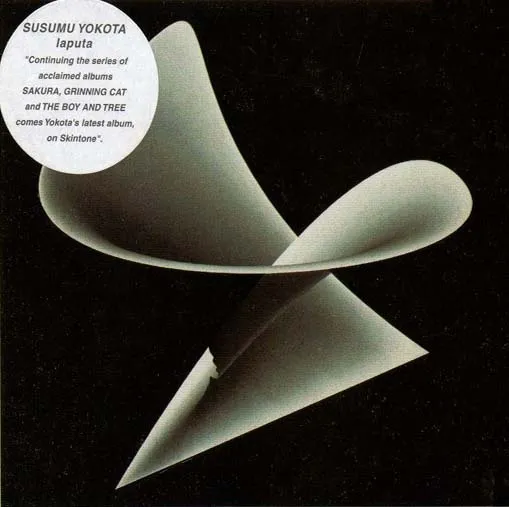
Following the success of previous archival waves, the campaign enters a vital new chapter with the arrival of Skintone Volume Two. This definitive box set gathers eight previously hard-to-find albums, spearheaded by the long-awaited vinyl and digital re-release of Laputa. Named after the fictional flying island in Jonathan Swift’s 18th-century satirical masterwork, Gulliver’s Travels, Laputa had previously remained unavailable in Western territories due to complex copyright and sample-clearing hurdles.
Musically, Laputa serves as a masterclass in atmospheric composition. It operates far outside the homogenized, frictionless confines that often afflict contemporary ambient music—a genre still occasionally weighed down by lazy associations with commodified new-age relaxation tapes. Instead, Yokota’s Laputa offers a multi-textured, deeply nuanced collage that is simultaneously dreamlike and mildly unsettling, evoking alternating currents of child-like wonder and existential paranoia.
While Susumu Yokota is no longer here to bear witness to the ongoing re-evaluation of his work—and in an era flooded with derivative ambient soundscapes, his critical voice would be a welcome antidote—his legacy is secure. Through comprehensive archival projects like Skintone Volume Two, a new generation of listeners can finally traverse the vast, brilliant sonic landscape of a true master craftsman, proving once and for all that ambient music, in the right hands, can be as varied, unpredictable, and profoundly human as life itself.