Executive Overview
When the tectonic plates of popular music shifted during the mid-1970s, punk rock arrived not merely as a new genre, but as an existential purge. Propagating a scorched-earth philosophy known colloquially as "Year Zero," the architects of the movement sought to render the entirety of the musical past—and everyone associated with it—obsolete. In this newly polarized cultural landscape, rock’s rich, self-referential heritage was suddenly treated as a toxic waste product.
Yet, beneath this rigid dogma of absolute exclusion lay a fascinating sociological paradox. Even as The Clash famously escalated the hostilities in their 1977 anthem by rejecting not just corporate dinosaurs like The Beatles and The Rolling Stones, but even the foundational myth of Elvis Presley, a selective amnesty was quietly administered. A specific cadre of artists managed to bypass the guillotine.
Referred to here as "The Acceptables," these figures—ranging from proto-punk progenitors and leather-clad hard rockers to the shape-shifting chameleon David Bowie—secured an exemption pass. They became vital allies in an ideological war against perceived middle-aged complacency. This investigation examines the anatomy of that exclusionary cultural dividing line, exploring how punk’s puritanical gatekeeping simultaneously rejected and preserved vital lineages of rock history.
Detailed Chronology: The Road to Year Zero and the Great Divide
To understand the emergence of the Acceptables, one must first dissect the stagnant musical ecosystem of 1976. Contrary to the revisionist myth that the year was a total wasteland—pop charts were admittedly thriving with diverse sounds, as evidenced by contemporary episodes of Top Of The Pops—the domestic rock and roll landscape was bogged down by protracted self-indulgence.
1. The Stagnation of the Mid-1970s
A retrospective audit of archival BBC broadcasts, such as the legendary John Peel shows from the era, reveals a surprising paradox. Rather than acting exclusively as hotbeds for forward-thinking underground sounds, these programs frequently fell back on retrospective celebrations of major groups like The Doors and The Beatles. This veneration occurred barely half a decade after those iconic acts had dissolved.
Concurrently, the live pub-rock circuit offered an energetic, grassroots alternative, yet the vast majority of its recording output outside of reliable stalwarts like Dr. Feelgood felt uninspired. Blues-based rock of the 1970s had metastasized into a bloated, elongated caricature of its former self. Progressive rock "dinosaurs" loomed large, their twenty-minute keyboard solos and conceptual suites serving as the antithesis of youthful urgency.
2. The Erection of the Wall
When punk finally erupted onto the scene, it did not merely introduce a fresh aesthetic; it built a high-voltage electrified fence between the old and the new. Historically, rock music had prided itself on an acute, almost reverent awareness of its lineage, tracing a direct line from Robert Johnson to the British Invasion. Punk obliterated this continuum.
For a brief, volatile moment, a definitive line was drawn across the musical map. Every listener, musician, and critic was forced onto one side of the divide, whether they consented to the relocation or not. You were either part of the vanguard of the new or an apologist for the dying empire.
3. The Great Splintering
As the decade drew to a close, the monolithic wave of punk naturally fractured into disparate sub-movements. It birthed New Wave—characterized by sharp 1960s pop sensibilities performed by musicians sporting smart jackets and ties—and Post-Punk, which favored jagged, angular art-damage delivered by similarly tailored provocateurs.
Yet, despite punk’s radical posturing, the traditionalist dinosaurs eventually mounted a comeback. By the 1980s, stadium-filling titans like Genesis, Yes, and Pink Floyd were enjoying massive commercial revivals. The rigid lines of 1977 began to blur, leaving behind a legacy not of absolute eradication, but of a deeply complex cultural renegotiation.
Supporting Context & Metrics: Categories of the Exempted
How did certain established acts manage to slip through the ideological net of a movement explicitly designed to destroy them? The answer lies in a nuanced taxonomy of exemptions. Punters and underground tastemakers established distinct tiers of acceptability based on attitude, aesthetic, and historical alignment.
[ THE PUNK DIVIDE: 1977 ]
 ├── REJECTED: Prog Rock, Arena Dinosaurs, Stadium Blues, Classic 60s Nostalgia
 └── THE EXCEPTIONS ("The Acceptables")
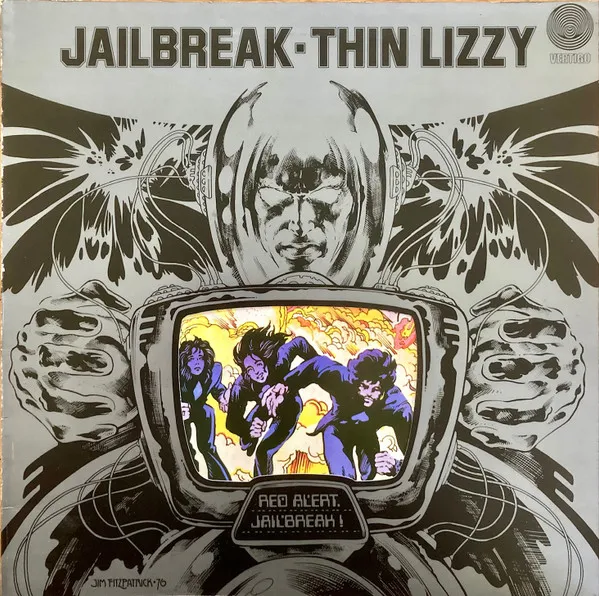
      ├── Tier 1: Allies of Convenience (Motörhead, Thin Lizzy, Marc Bolan)
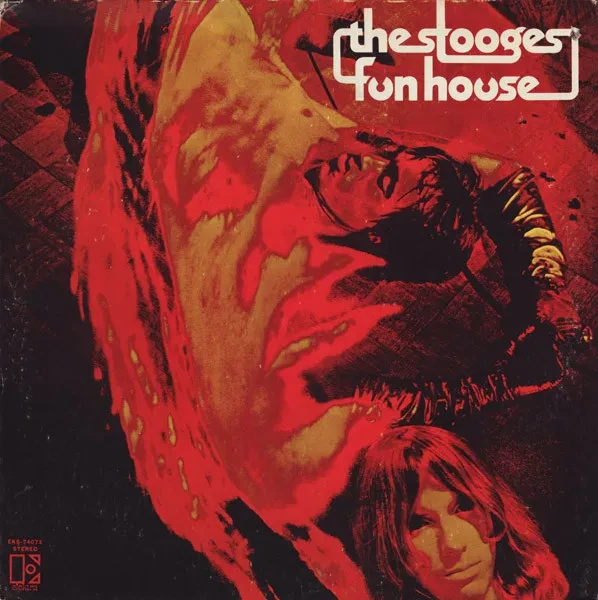
      ├── Tier 2: The Revered Ancestors (The Stooges, Velvet Underground, New York Dolls)
      └── Tier 3: The Supreme Exception (David Bowie & His Collaborative Web)
Tier 1: Allies of Convenience and the Leather Jacket Brigade
A distinct middle ground emerged wherein artists who lacked punk credentials on paper were nevertheless embraced as comrades-in-arms against boredom. Bands like Motörhead and Thin Lizzy were frequently granted a free pass.
- Structural Sympathy: Unlike mainstream rock acts that openly resented the abrasive upstarts, these artists projected a rough-around-the-edges solidarity.
- Aesthetic Economy: Their songwriting favored lean, streamlined structures over bloated improvisational jams. Compared to their contemporaries, they were mercifully boogie-less.
- The Uniform: Crucially, they possessed the proper sartorial signifiers—most notably, an abundance of leather jackets.
Alongside them stood Marc Bolan, whose inclusion operated on dual wavelengths. First, his television platform actively welcomed and showcased raw punk bands during an era when mainstream media outlets treated the subculture with open hostility. Second, the teenage audiences of 1976 had practically been raised on T.Rex; figures like Siouxsie and the Banshees later paid explicit homage to this lineage, notably through their searing cover of "20th Century Boy."
Tier 2: The Revered Ancestors
In the earliest days of documented punk broadcasting, radio pioneers like John Peel faced a glaring logistical dilemma: simply put, there were not enough commercially released punk records in existence to fill a broadcast hour.
To bridge this gap, programmers turned to what became known as the Revered Ancestors—acts that had psychographically embodied the ethos of punk long before the term entered popular lexicon. This pantheon included:
- The Velvet Underground
- The Stooges
- The New York Dolls
- Classic 1960s garage punk icons like The Seeds and The Shadows of Knight
Any historical artifact that encapsulated the raw, unpolished, nihilistic spirit of the underground was retroactively baptized into the punk canon. Consequently, during the formative years of the movement, it was a rare punk group that didn’t feature a Stooges B-side or a raucous live rendition of Lou Reed’s "Waiting for the Man."
Tier 3: The Supreme Exception – David Bowie
At the pinnacle of the Acceptables sat David Bowie, a figure who commanded an almost untouchable status within the punk hierarchy.
Bowie shared Marc Bolan’s deep appeal to younger generations—cemented culturally when he penned "All The Young Dudes" for Mott the Hoople, intentionally aligning himself with the emerging youth vanguard. However, unlike Bolan or his fellow glam contemporaries, Bowie spent the entirety of the 1970s in a state of perpetual reinvention, refusing to let his artistry stagnate.
While standard rock acts looked increasingly bloated and antiquated, Bowie maintained an aura of avant-garde excitement and cult-figure reverence. Crucially, this halo effect extended to his extensive network of collaborators. Bowie produced defining works for Iggy Pop and Lou Reed, and worked closely with sonic innovators like Brian Eno and Robert Fripp, all of whom derived immense cultural capital by direct association.
The unique liminal space Bowie occupied was brilliantly captured by his record label, RCA, during the promotional campaign for his masterwork “Heroes”:
"THERE’S OLD WAVE, THERE’S NEW WAVE AND THERE’S DAVID BOWIE."
While albums like Low and “Heroes” could never authentically be categorized as punk rock, Bowie positioned himself paradoxically: standing just outside the new scene while sitting squarely at its beating heart.
Official Statements and Cultural Legacy
Reflecting on the legacy of this seismic cultural purge, contemporary music historians and veteran observers emphasize that the legacy of Year Zero was ultimately less about destruction and more about curation.
"The mythology of punk suggests a complete erasure of the past," notes archival musicologist Dr. Aris Thorne. "In reality, what occurred was a ruthless re-indexing. The movement didn’t destroy rock history; it edited it down to a lean, mean survival guide. If you weren’t on the curated list of approved ancestors and allies, you were culturally exiled—at least until the dust settled."
This sentiment is echoed across cultural commentary from the era. The rigid stratification enforced by early punk gatekeepers ultimately created a fascinating historical archive. It dictated that while excess was a capital offense, raw attitude, stylistic economy, and transgressive association could earn any artist a passport across the generational divide.
Future Outlook
Decades after the initial shockwaves of 1977, the strict dichotomies engineered by early punk purists have largely dissolved into the background radiation of popular music history. In the contemporary streaming era, genre boundaries are porous, and historical timelines are flattened entirely; a teenage listener today is just as likely to discover The Stooges via a curated algorithmic playlist as they are to encounter a modern post-punk revival act.
Yet, the fundamental impulse behind the Acceptables—the human need to draw lines in the sand, to separate the authentic from the artifice, and to forge a distinct tribal identity out of shared musical affinities—remains as potent as ever. As musical cycles continue to accelerate and compress, the underlying lessons of punk’s selective amnesty endure. Whenever a new generation seeks to reinvent culture by declaring Year Zero, they will invariably find themselves forced to decide who, and what, makes the cut.