Executive Overview
More than two decades after the Royal Institute of British Architects (RIBA) and the Fawcett Society published their landmark 2003 study, Why Do Women Leave Architecture?, a sobering reality persists: the architectural profession has neither moved far enough nor fast enough to support women. Despite cosmetic updates and isolated pockets of progress, the foundational structures of the industry remain heavily tilted against female professionals.
The release of the Build It Together report, commissioned by RIBA, underscores that the barriers identified over twenty years ago are deeply entrenched. Pay inequality, pervasive sexism, exclusionary workplace cultures, and punishing expectations around working hours continue to define the day-to-day experiences of women in architecture and interior design.
This is not merely an isolated crisis within construction and design; it is a systemic symptom of a broader creative sector failure. As governments increasingly lean on the creative and cultural industries as vital engines of economic growth, the ongoing exclusion of women threatens to hollow out the talent pipeline at its core. If architecture and its sister disciplines cannot reconcile their patriarchal roots with modern realities, the cost will be measured not just in lost careers, but in a homogenized built environment devoid of diverse human perspective.
Detailed Chronology: Two Decades of Stalled Progress
To understand the current crisis, one must trace the timeline of accountability, institutional research, and public revelations that have exposed the gap between corporate rhetoric and structural reality.
2003: The Baseline Study
RIBA and the Fawcett Society publish Why Do Women Leave Architecture?. The research provides empirical proof that talented women are exiting the profession in droves, driven away by inflexible hours, male-dominated environments, and a profound lack of career progression pathways. It serves as a wake-up call for an industry slow to acknowledge its cultural flaws.
2024: Quantifying the Gap
National data released by RIBA highlights a persistent mean gender pay gap of 13.81%. Concurrently, alarming survey metrics reveal that 83% of women in the profession report that having children has negatively affected their career progression. The "leaky pipeline" is no longer a theoretical concept; it is quantified by hard data.
2025: Build It Together
RIBA commissions the Build It Together report, evaluating the contemporary landscape. The findings are stark: despite decades of awareness campaigns, the core structural drivers of female attrition—opaque pay structures, sexism, harassment, and an obsession with presenteeism—remain largely unchanged.
April 2026: The Pay Gap Spotlight
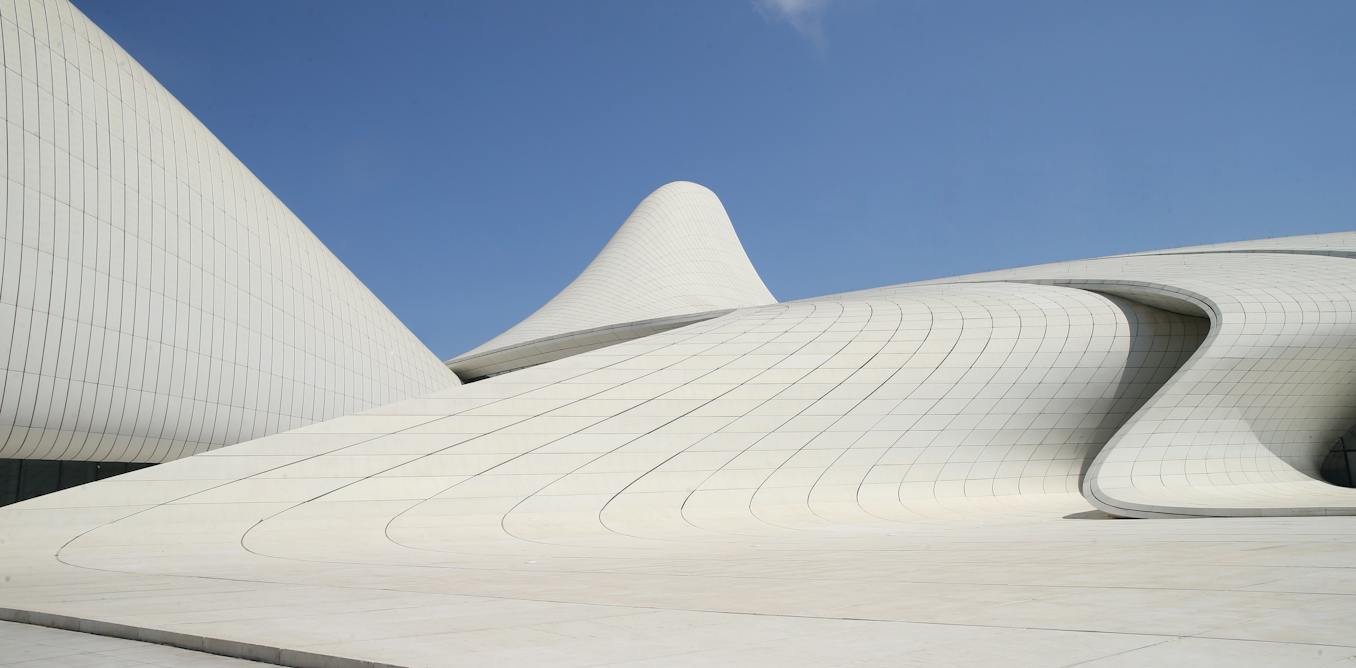
Online architecture magazine Dezeen publishes an investigation into UK architecture firms’ gender pay gap reports. While some firms, such as Foster + Partners, show incremental improvements, others move backward. Most notably, data from Zaha Hadid Architects (which later rebrands in June 2026 as ZHA) reveals that its gender pay gap has more than doubled year-on-year, sending shockwaves through the international design community.
Supporting Context & Metrics: The Anatomy of a Leaky Pipeline
The crisis in architecture is defined by a profound paradox: women enter design and architecture programmes in high numbers, yet their representation collapses long before they reach senior leadership or ownership roles.
The Statistics of Attrition
While women routinely comprise more than 50% of architecture students entering higher education, that demographic dominance vanishes upon graduation and registration. Data from the Architects Registration Board (ARB) and RIBA shows that women account for:
- 31% of architects registered with the ARB.
- 24.6% of RIBA Chartered Members.
This precipitous drop-off illustrates that the industry routinely loses women during their childbearing and caregiving years. When professional advancement is pegged to endurance, hyper-visibility, and unlimited overtime rather than creativity, technical competence, and innovation, the system structurally penalizes anyone who holds external caregiving responsibilities.
Cultural Barriers and Everyday Misogyny
The Build It Together report and independent academic research paint a troubling picture of daily workplace life. The vast majority of surveyed women report experiencing direct misogyny, microaggressions, or overt harassment.
Workplace cultures in architecture and interior design frequently mirror patriarchal power dynamics. Long, inflexible hours are worn as badges of honour, while hybrid working models are often viewed with suspicion by traditionalist leadership. Furthermore, opaque pay structures make wage transparency nearly impossible, allowing systemic inequalities to fester unaddressed behind closed doors.
Official Statements and Institutional Perspectives
The growing disconnect between institutional hand-wringing and meaningful structural reform has prompted sharp commentary from industry bodies, researchers, and iconic figures within the built environment.
The Institutional Reality
RIBA leadership and the Fawcett Society have continuously emphasized that policy guidelines are insufficient without cultural enforcement. Representatives note that while major practices are quick to publish corporate diversity statements, these documents rarely translate into everyday operational changes. Without mandatory diversity monitoring, transparent promotion pathways, and enforceable accountability measures, pay gaps will continue to widen rather than narrow.
Voices from the Field
The late, visionary architect Zaha Hadid frequently spoke out about the unique challenges faced by women navigating elite, male-dominated spaces. Reflecting on her status as a global pioneer, Hadid often remarked on the tightrope walk required to succeed in a field hostile to deviation from the norm.
Similarly, prominent designers and academics who have transitioned from practice to research highlight the systemic incompatibility between traditional design office cultures and sustainable family life. Many professionals recount leaving practice not out of a lack of passion for design, but because the foundational architecture of the workplace treats human beings as disposable inputs.
Future Outlook: Pathways to Transformation
If the creative industries are to anchor future economic strategies—as outlined in government industrial roadmaps—they can no longer afford to treat gender equity as an optional luxury. The cost of inaction is economic, social, and cultural. To secure a thriving future, the sector must transition from superficial interventions to deep cultural transformation.
1. Radical Transparency and Pay Equity
Organisations must move beyond voluntary disclosures and adopt universal, transparent Equity, Diversity, and Inclusion (EDI) policies. Pay structures, bonus allocations, and promotion criteria must be completely demystified and subjected to independent auditing.
2. Redefining Professional Norms
The worship of presenteeism and punishing work hours must be dismantled. Practices must embrace genuine, flexible, and hybrid working frameworks that accommodate parents and caregivers without stalling their career trajectories. Best-practice maternity, paternity, and parental leave policies must be standardized across the board.
3. Transforming Leadership Styles
The emergence of grassroots networks—such as Women in Architecture (WIA)—and the rise of female-led practices demonstrate that alternative leadership models are entirely viable. Transformational leadership styles that prioritize inclusivity, collaboration, empathy, and mental wellbeing must replace archaic, hierarchical management styles.
4. Mentorship and Collective Action
Strengthened mentoring programmes, particularly structured networks where women actively support and sponsor other women, are vital for navigating institutional gatekeeping. By interrogating workplace power dynamics and sharing lived experiences, professionals can build the collective consciousness necessary to force long-lasting reform.
Conclusion
The evidence is abundant, and the solutions are well-documented. What remains missing is the collective institutional will to enforce change. Women will continue to serve as powerful agents of transformation within architecture and across the broader creative sector—provided the profession finally musters the courage to dismantle the structural and cultural barriers that have held them back for far too long.