As the high-summer arts festival circuit reaches its zenith, Vache Baroque is preparing to unveil one of its most ambitious theatrical undertakings to date. For its flagship 2026 summer festival, the acclaimed early-music ensemble is mounting a lavish, highly collaborative production of William Shakespeare’s The Tempest. Rather than relying on a conventional modern text reading or a standard 20th-century operatic adaptation, the company has chosen to resurrect the 1674 Restoration "dramatick opera"—what modern scholars classify as a semi-opera—originally produced by Thomas Betterton at the historic Dorset Garden Theatre.
Running from August 29 through September 6, 2026, on the picturesque grounds of The Vache in Chalfont St Giles, this production bridges the chasm between spoken drama and baroque vocal performance. It features a stellar cast of vocalists—including Stephanie Hershaw, Isabelle Peters, Camilla Seale, Conor Prendiville, and Ross Cumming—alongside the physical and dramatic expertise of actors from the theatre company Out of Chaos. Direction is shared between theatre director Paul O’Mahoney and conductor Jonathan Darbourne, who leads the period-instrument Vache Baroque Band from the harpsichord and podium.
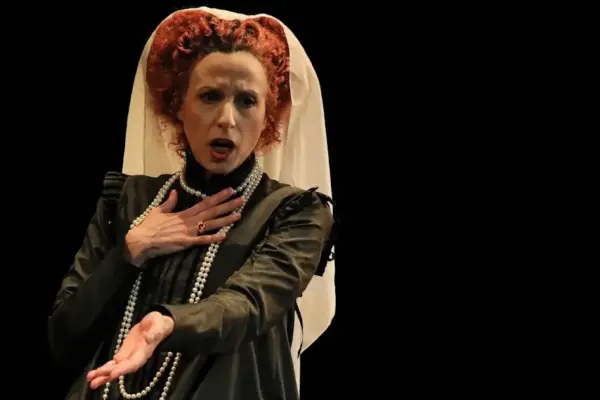
At the heart of this creative collision is mezzo-soprano Camilla Seale, who takes on the characteristically robust and comic role of Stephano. In an exclusive interview, Seale sheds light on the intricacies of blending 17th-century stagecraft with contemporary actor-singer collaboration, the inherent "groove" of baroque music, and the magical, site-specific alchemy of performing Shakespeare by a lakeside tent as the summer sun sets.
Detailed Chronology: From Dorset Garden to the Buckinghamshire Lakes
To understand the weight and uniqueness of Vache Baroque’s 2026 production, one must look back nearly three and a half centuries to the London theatre scene of the 1670s. Following the reopening of the theatres during the English Restoration, playwrights, producers, and managers sought ways to spectacle-feed an audience hungry for visual splendor, music, and machinery.
The 1674 Restoration Blueprint
In 1674, actor-manager Thomas Betterton adapted Shakespeare’s late tragicomedy The Tempest into a spectacular entertainment for the Dorset Garden Theatre. This version expanded the original narrative to include new characters, elaborate stage machinery, flying spirits, and extensive musical interpolations. While spoken dialogue carried the primary narrative weight, music functioned as the supernatural currency of Prospero’s island, manifesting in grand masques, songs, and instrumental interludes.
The musical landscape of this 1674 hybrid was a collaborative mosaic. Much of the foundational score was penned by prominent English baroque masters such as Henry Purcell, Matthew Locke, and Pelham Humfrey. Over the centuries, these semi-operas fell out of the standard performance repertoire due to their immense logistical demands, requiring a rare synthesis of acting virtuosity, operatic vocal power, and specialized period instrumentalists.

The 2026 Resurrection at The Vache
Vache Baroque’s revival revitalizes this historical blueprint for contemporary audiences. The rehearsal process, spanning several weeks in the bucolic Buckinghamshire countryside, has brought together diverse performance lineages. The integration of Out of Chaos theatre company with high-level classical singers has created a crucible of stylistic exchange.
The production incorporates the surviving 17th-century masterworks by Purcell, Locke, and Humfrey, supplemented by carefully selected works from other European baroque contemporaries. True to the folk-infused and improvisatory spirit of early modern performance, the score is further enriched with sea shanties, instrumental improvisations, and a fully realized masque by Purcell, providing a panoramic soundscape of the 17th-century maritime and magical imagination.
Supporting Context & Metrics: The Anatomy of a Semi-Opera
| Production Element | Detail / Personnel |
|---|---|
| Work | The Tempest (1674 Restoration Semi-Opera version) |
| Original Producers / Creators | Thomas Betterton (adapted from William Shakespeare); Music by Henry Purcell, Matthew Locke, Pelham Humfrey, et al. |
| Dates | August 29, 30, and September 5, 6, 2026 |
| Location | The Vache, Chalfont St Giles, Buckinghamshire |
| Ensemble & Orchestra | Vache Baroque Band (Directed by Jonathan Darbourne) |
| Theatre Collaboration | Out of Chaos (Directed by Paul O’Mahoney) |
| Principal Cast | Stephanie Hershaw, Isabelle Peters, Camilla Seale (Stephano), Conor Prendiville, Ross Cumming |
The Mechanics of Hybrid Performance
The term "semi-opera" or "dramatick opera" often confuses modern theatergoers, who expect either a continuous musical flow (opera) or spoken text with incidental music (play). In a Restoration semi-opera, the primary dramatic characters (Prospero, Miranda, Ferdinand) are largely spoken roles handled by actors, while the supernatural, allegorical, and lower-comic characters (such as Stephano, Trinculo, and the spirits of the island) express themselves through song and dance.
However, Vache Baroque’s 2026 staging intentionally blurs these boundaries. The vocalists are active physical participants in the dramatic staging, while the actors are consistently responsive to the emotional and rhythmic currents of the live band. The physical architecture of the venue—a specially constructed stage overlooking the estate’s lake, backed by open vistas of ancient trees—transforms the natural landscape into an active participant in the storytelling.
Official Statements & Cast Insights: In Conversation with Camilla Seale
Mezzo-soprano Camilla Seale, stepping into the role of the shipwrecked butler Stephano, brings a wealth of early music experience to the project, including her critically acclaimed turn as Dido in Purcell’s Dido and Aeneas with Barokksolistene at the Longborough Festival Opera in 2025. Here, she reflects on the creative tensions, joys, and philosophies driving Vache Baroque’s The Tempest.
Bridging Disciplines: Actors vs. Singers
Reflecting on the rehearsal room dynamics between the classical vocalists and the actors from Out of Chaos, Seale emphasizes the mutual enrichment of their artistic dialogue:

"It’s such a pleasure to be in a room with open, curious performers from different creative backgrounds—from the actors, to the band, to the singers. I can’t really say that any one person is only really of one discipline, and that’s how it should be. The actors bring so much intelligence and authenticity, and I think the music brings them a different kind of emotional input that has definitely provided some surprises in rehearsal."
The Text-Led Imagination of Henry Purcell
When questioned about the balance between music and text in a semi-opera, Seale notes that Purcell’s compositional style renders the separation nearly nonexistent:
"Yes, the role definitely feels like it’s 50:50. Even within the (musical) masque, Purcell as a composer has a very text-led musical imagination, so even for the instrumentalists, they are speaking and dancing rather than just playing beautiful musical lines. I don’t think though, even when singing pure opera, that I have ever let go of words and thoughts. Specifically in The Tempest, music has a clear role as magic on the island, so it fits like a glove here."
Metatheater and Nature by the Lake
Discussing the unique atmosphere of performing Shakespeare’s valedictory play outdoors as dusk falls, Seale connects Shakespeare’s thematic preoccupations with the physical setting of The Vache:
"Shakespeare loves a metatheatrical reference; Prospero tells Ferdinand ‘Be cheerful, sir. Our revels now are ended. These our actors, As I foretold you, were all spirits and Are melted into air […] And—like the baseless fabric of this vision […] shall dissolve’. Everything that we conjure together, players and audience, on Prospero’s island is created inside a bed of nature in the Vache grounds. The way the stage is constructed allows the audience to see across the lake and the surrounding trees through the back of the stage, as characters stumble through the island trying to find their way, with the second half gorgeously lit in the tent as the sun sets. It’s Shakespeare’s last play—he was thinking a lot about legacy and what we leave behind. And I think he was concerned with what it means to be mortal, and where joy can be found, and I hope that the audience catch something of that when they come to see the play."
The Groove and Community of Baroque Music
Drawing on her past work with Barokksolistene and her co-creation projects with the New Renaissance Collective (including an adaptation of Shakespeare’s Venus & Adonis), Seale highlights why early music remains fertile ground for radical theatrical experimentation:

"Something that Barokksolistene do so well is traverse between baroque and folk music, and both forms by their nature are meant to be shared within communities—whether through communal singing or dancing. Baroque music at its core comes from dance, which is a shared activity, expressively and socially. Personally when I go to see baroque concerts, I enjoy the grooviness in a way I don’t quite experience with later periods of classical music. And maybe other people are experiencing the same thing."
Reflecting on her formative days with the New Renaissance Collective, she adds:
"I think the time I spent with friends in research and development… allowed all of us to fearlessly and idiotically explore and create theatre in a way that I’ve surely held on to in every creative environment I’ve been in since. I can remember laughing so hard in some workshops that it hurt. I’ll be forever grateful for those experiences and friendships and perhaps both the empowerment and fearlessness it—and those people—inspired in me."
Future Outlook: Setting a New Standard for Period Performance
As Vache Baroque establishes itself as a vital incubator for innovative, site-specific early music theater in the United Kingdom, productions like The Tempest point the way forward for the genre. By dissolving the rigid boundaries that often separate classical vocal recitals, theatrical plays, and historical musicology, the company is proving that 17th-century masterworks are not museum pieces, but living, breathing theatrical vehicles capable of infinite reinvention.
The commercial and critical anticipation surrounding the four-night run at The Vache suggests a growing appetite for immersive, historically informed performance that embraces the outdoors, community participation, and interdisciplinary collaboration. For audiences fortunate enough to secure tickets for the final weekend of August and the first weekend of September 2026, Prospero’s island promises an unforgettable convergence of magic, music, and twilight nature.
Vache Baroque’s production of The Tempest opens at The Vache, Chalfont St Giles, on August 29, with further performances on August 30, September 5, and September 6, 2026. Full details, ticket information, and festival schedules are available via the official Vache Baroque website.