Executive Overview
Rarely does an operatic revival achieve the rare alchemy of seamlessly merging orchestral vitality, vocal virtuosity, and spoken dramatic delivery into a singular, cohesive theatrical ecosystem. Yet, this is precisely the triumph achieved during the August 25, 2026 performance of Wolfgang Amadeus Mozart’s Die Entführung aus dem Serail (The Abduction from the Seraglio) at the prestigious Glyndebourne Festival Opera.
Reviving David McVicar’s acclaimed 2015 production—under the watchful eye of assistant director Greg Eldridge—Glyndebourne offered audiences a visually arresting, psychologically nuanced exploration of a work that is too often reduced to a lighthearted, comedic romp. Featuring a stellar international cast, the period-instrument brilliance of the Orchestra of the Age of Enlightenment, and the rigorous, dynamic baton of conductor Evan Rogister, this production probed the deeper currents of freedom, cultural collision, and human emotion embedded within Gottlieb Stephanie’s libretto.
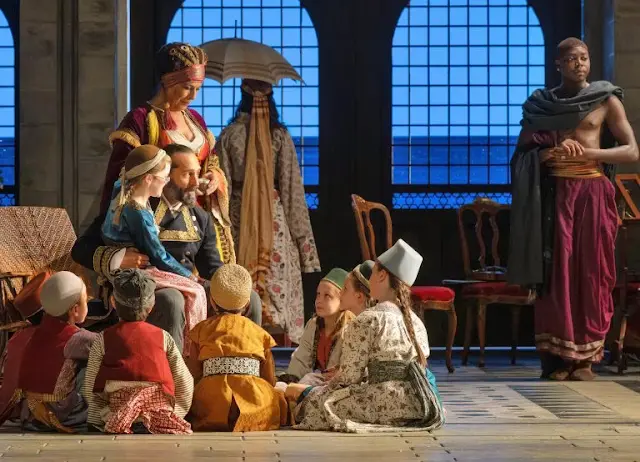
Rather than adopting the fashionable penchant for jarring modern-dress updates, McVicar and designer Vicki Mortimer anchored the production in its original Ottoman period setting. This choice paradoxically illuminated modern sociopolitical anxieties with striking clarity, elevating Pasha Selim’s household from a mere caricatured backdrop to a genuine, complex alternative society. The result was a magnetic evening of lyric theater that challenged preconceptions and deeply engaged both the intellect and the senses.

Detailed Chronology and Production Analysis
The Overture and Act I: Establishing Textural Brilliance
From the downbeat of the overture, conductor Evan Rogister signaled that this performance would pull no punches. Leading the Orchestra of the Age of Enlightenment, Rogister commanded an interpretation defined by architectural crispness, sharply punched accents, and a vibrant, unforced realization of the work’s signature "Turkish" percussion and wind elements. The instrumental textures were transparent, allowing rare details—such as the poignant deployment of the basset horns—to pierce through the sonic landscape with breathtaking clarity.
The theatrical engine ignited immediately with the opening scene between Belmonte (Anthony León) and Osmin (Michael Mofidian). Unlike many stagings where recitative and aria feel segmented, this production maintained an organic momentum, bleeding seamlessly from spoken dialogue into sung verse. León introduced Belmonte not as a static, lovelorn cipher, but as a charmingly hyperactive, intensely earnest romantic. Mofidian’s Osmin matched this energy with a formidable, bad-tempered authority. Eschewing cheap laughs, Mofidian grounded Osmin’s hostility in uncompromising rigidity; the comedy emerged naturally from the friction between characters rather than satirical mockery of the antagonist.
Act II: Eavesdropping, Complexity, and the Singspiel Balance
Act II tested the structural boundaries of the Singspiel format, relying heavily on spoken dialogue to advance the plot’s psychological architecture. Although no dialogue editor was officially credited, extensive preparatory work with the cast was evident. The spoken exchanges bristled with urgency, bridging the gap between Mozart’s early-career composition style—where the music does not yet shoulder the entire weight of narrative progression—and high-stakes drama.

Vicki Mortimer’s set, constructed of shifting screens and multi-layered walls, proved instrumental in facilitating the intricate choreography of eavesdropping, concealment, and espionage. It was within this dynamic physical space that the complex emotional geometry of the opera unfolded.
The libretto’s genius lies in its refusal to immediately pair the ostensible romantic leads. Instead, Act II invites audiences to witness two alternative, ultimately untenable pairings: Konstanze with Pasha Selim, and Blonde with Osmin.
- Konstanze and Selim: Franck Saurel returned to the role of Pasha Selim, portraying him as a magnetic, morally complex anti-hero. Through tense dramatic dialogue and subtle physical gestures, Saurel’s Selim offered a seductive, stable alternative to Belmonte. Liv Redpath’s Konstanze brilliantly mirrored this psychological torture; visibly torn, her loyalties wavered not out of weakness, but due to the genuine intellectual and emotional weight of Selim’s domestic sanctuary.
- Blonde and Osmin: In stark contrast, Julie Roset’s pert, indomitable Blonde engaged in a physical, high-stakes battle of wills with Mofidian’s towering Osmin. Roset’s vibrant physicality—including playfully leaping onto Thomas Cilluffo’s Pedrillo—provided an effervescent counterbalance to Osmin’s unyielding intolerance.
Act III and the Resolution: Freedom Examined
As the narrative rushed toward its climax, the production successfully unpacked the central philosophical query of the piece: What does true freedom mean?

McVicar’s staging underscored the divergent paths of the characters. Pasha Selim ultimately demonstrates his capacity for love and enlightenment by choosing to set his captives free, prioritizing emancipation over possession. Osmin, conversely, remains trapped by his own intolerance, incapable of reimagining his relationship with Blonde. When Mofidian’s Osmin finally laid down his sword and stalked off the stage at the final curtain, the gesture carried a profound, lingering tragicomic weight that left the audience deeply sympathetic to his isolation.
Supporting Context & Metrics
| Production Parameter | Details |
|---|---|
| Venue | Glyndebourne Festival Opera |
| Review Date | August 25, 2026 |
| Director | David McVicar (Assistant Director: Greg Eldridge) |
| Conductor | Evan Rogister |
| Orchestra | Orchestra of the Age of Enlightenment |
| Set & Costume Design | Vicki Mortimer |
| Key Cast Members | Liv Redpath (Konstanze), Anthony León (Belmonte), Michael Mofidian (Osmin), Julie Roset (Blonde), Thomas Cilluffo (Pedrillo), Franck Saurel (Pasha Selim) |
Contextualizing the Period Setting
While modern-dress productions of Mozart’s masterpieces—such as Le nozze di Figaro or Don Giovanni—have become the industry standard, directors tackling Die Entführung aus dem Serail frequently return to its period origins. Stephen Medcalf (English Touring Opera, 2019), John Copley (Grange Festival, 2018), and Elijah Moshinsky (Royal Opera House, 2001) all favored historical stagings.
McVicar’s 2015 Glyndebourne staging validates this trend. By placing the action within a visually opulent, historically evocative Ottoman context, the production avoids the distracting anachronisms that often plague intercultural narratives. Instead, the period frame allows the inherent power dynamics, colonial anxieties, and Enlightenment-era ideals of tolerance to be interrogated on their own terms.

Official Statements & Artistic Insights
Reflecting on the production’s core philosophy, designer Vicki Mortimer noted in the 2015 programme notes—carried forward into the current revival’s ethos—that the seraglio must be presented not merely as a prison, but as a fully realized, functioning domestic ecosystem. By showcasing Pasha Selim’s children, his wives, and his tender paternal affection, the production elevated the stakes of Konstanze’s captivity.
Conductor Evan Rogister emphasized in rehearsal notes the necessity of treating Mozart’s early score with the same rigorous historical awareness and rhythmic drive typically reserved for later, grander operas. By balancing the period instrument textures of the Orchestra of the Age of Enlightenment with dramatic punch, Rogister ensured that the score never devolved into decorative background noise.
Future Outlook
The resounding critical and audience success of this August 2026 revival underscores the enduring vitality of David McVicar’s directorial vision for Glyndebourne. As opera houses globally grapple with how to stage early repertoire without sacrificing psychological depth or modern relevance, the McVicar-Rogister collaboration serves as a masterclass in balance.

Looking forward, this production sets a formidable benchmark for future stagings of Mozart’s early Singspiels. It proves that fidelity to a period aesthetic, when executed with rigorous theatrical discipline, intelligent vocal characterization, and uncompromising musical standards, can yield a product that feels startlingly contemporary. Glyndebourne’s Die Entführung aus dem Serail will undoubtedly remain a touchstone for Mozart interpretation, demonstrating that within the framework of eighteenth-century comedy lie timeless meditations on mercy, autonomy, and the human heart.