Executive Overview
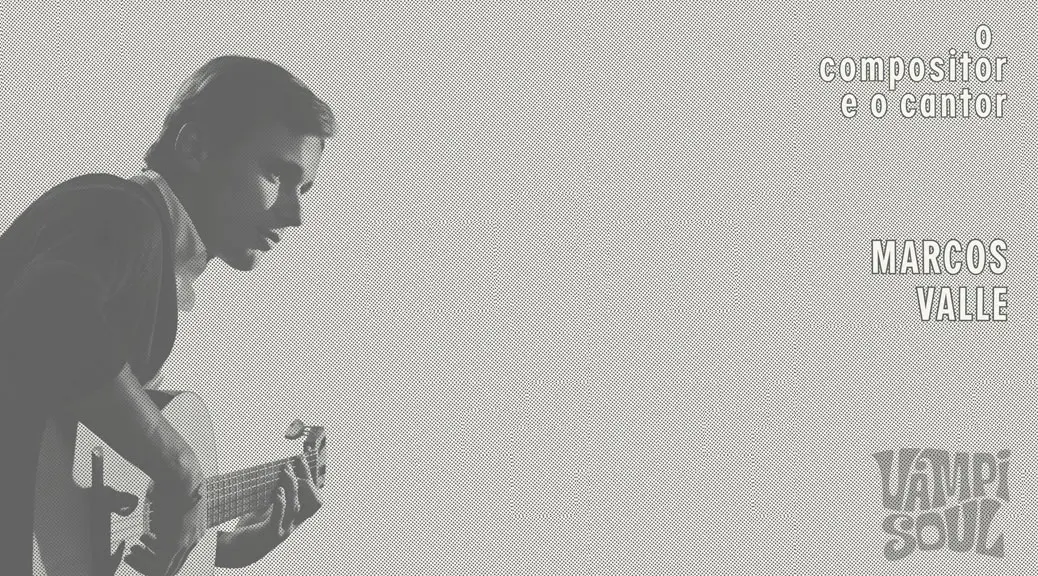
In September 1965, a twenty-two-year-old dropout from PUC-Rio’s law faculty stood on the precipice of international renown. Marcos Valle had already watched his compositions circulate through the cultural arteries of Rio de Janeiro and São Paulo via other people’s voices. Yet, his sophomore long-playing record—released by Odeon and featuring a pristine, sun-drenched collection of twelve tracks—captured a fleeting, golden moment in Brazilian music history. It was a cultural artifact created just before bossa nova mutated into international easy listening, before psychedelic tropicalia exploded into the nation’s political consciousness, and before Valle himself boarded a plane to the United States with Sérgio Mendes’s Brasil ’65.
Decades later, this seminal recording returns to the physical marketplace as a heavyweight 180-gram vinyl pressing. The reissue offers contemporary listeners a rare chance to experience the immaculate architecture of a record that defined the soundscape of mid-1960s Brazil. Far from a mere historical curio, the album remains an astonishingly sophisticated work of pop composition. It bridges the gap between sophisticated jazz harmonies, orchestral lushness, and the effortless, beach-side cool of carioca youth culture.
This article explores the historical genesis of the album, dissects its compositional mechanics across both vinyl sides, traces its rapid international transformation, and evaluates its enduring legacy in the global vinyl renaissance.
Detailed Chronology: From Law Halls to the Recording Studio
To understand the weight of Marcos Valle’s 1965 self-titled release, one must trace the rapid ascent of a young songwriter who discarded a conventional bourgeois future for the uncertainties of the artistic underground.
The Pre-Fame Catalyst (1963–1965)
Before Valle stepped behind the microphone to record his own material, his songs were already becoming touchstones for a burgeoning generation of Brazilian artists. In 1963, the legendary Tamba Trio recorded his composition “Sonho de Maria.” Soon after, a young and ferocious Elis Regina introduced “Preciso Aprender a Ser Só” at the Teatro Paramount in São Paulo. During that same pivotal performance, Valle stood beside Regina to debut “Terra de Ninguém,” a sharp protest song that would go on to open TV Record’s immensely influential television program, O Fino da Bossa.
Simultaneously, the instrumental track for what would become Valle’s signature composition, “Samba de Verão,” was cut by Os Catedráticos—the virtuosic studio group led by his brilliant young arranger, Eumir Deodato. Roberto Menescal, a foundational figure in bossa nova who heard the tune before almost anyone else, famously predicted it would be an explosion.
Stepping Into the Spotlight
Odeon Records recognized the mounting commercial momentum. When they brought Valle into the studio for his second album, the label understood that the composer himself needed to take the primary vocal helm.
The resulting twelve-song tracklist was evenly split: six songs per side. Ten of the tracks were written in close collaboration with his brother, Paulo Sérgio Valle. The sleeve notes and record labels fused the brothers into a single hyphenated credit—Marcos & Paulo Sérgio Valle—acknowledging a songwriting partnership as intuitively synchronized as Lennon and McCartney. The remaining two tracks came via contributions from his cousin Pingarilho and lyricist Luiz Fernando Freire.
Behind the glass and at the mixing desk, elite talents mobilized to shape the sound. Milton Miranda produced the sessions, veteran maestro Lyrio Panicali directed the overarching musical vision, and a young Eumir Deodato arranged the charts. Yet, in keeping with the conventions of Brazilian record production of the era, individual orchestral musicians and chorus members remained entirely uncredited on the sleeve.
Supporting Context & Metrics: The Anatomy of a Masterpiece
The structural integrity of Valle’s 1965 LP lies in its dual-sided conceptual design. Side A radiates the bright, sun-baked optimism of Rio’s coastal neighborhoods, while Side B delves into more introspective, sophisticated, and jazz-leaning territory.
+-----------------------------------------------------------------------+
|                    ALBUM TRACKLIST & STRUCTURE                        |
+-----------------------------------+-----------------------------------+
|               SIDE A              |               SIDE B              |
|          (The Sunshine)           |         (The Jazz-Pop Shift)      |
+-----------------------------------+-----------------------------------+
| 1. Gente                          | 1. Deus Brasileiro                |
| 2. Preciso Aprender A Ser Só      | 2. Dorme Profundo                 |
| 3. Seu Encanto                    | 3. Vem                            |
| 4. Passa Por Mim                  | 4. Mais Amor                      |
| 5. Samba De Verão                 | 5. Perdão                         |
| 6. A Resposta                     | 6. Não Pode Ser                   |
+-----------------------------------+-----------------------------------+
Side A: The Soundtrack of the Carioca Sun
Side A opens with “Gente,” a bright, brass-led invitation that immediately establishes an atmosphere of breezy sophistication. It quickly transitions into “Preciso Aprender A Ser Só,” which pulls back the instrumentation to focus purely on Valle’s voice and acoustic guitar. A swelling group of backing voices steps gracefully into the gaps whenever his vocal line pauses—a stylistic choice that helped propel the track to be named Song of the Year by Rádio Jornal do Brasil.
Tracks like “Seu Encanto” capture the quintessential 1960s aesthetic: a lush cinematic soundscape built on swirling strings, soaring saxophones, and delicate flutes that sound engineered to score a romantic television sequence. “Passa Por Mim” relies heavily on its gorgeous string arrangements, demonstrating that Odeon allocated a substantial budget for these sessions.

Then comes track five: “Samba De Verão.” It arrives with modest instrumentation—an organ, congas, and a muted trumpet—entirely devoid of fanfare. In hindsight, the understated delivery of a tune destined for global immortality is astonishing. Side A concludes with “A Resposta,” where Valle’s guitar opens with a captivating, standalone motif before the full band marches in behind him.
Side B: Introspection and Samba-Jazz
If Side A represents the sunlit beach, Side B captures the sophisticated twilight of Rio’s jazz clubs. It opens at an infectious, brisk pace with “Deus Brasileiro,” a track pulsing with the rhythmic vitality that was beginning to capture the attention of American audiences.
The record then settles into deeper emotional territory. “Dorme Profundo” is a tender ballad for voice, guitar, and sweeping strings. “Vem” introduces a lively swing driven by piano and saxophone, standing as the most explicitly jazz-oriented cut on the album. The sequence softens further with the gentle balladry of “Mais Amor” and the hushed, vocal-backed melancholy of “Perdão.”
The album closes with “Não Pode Ser,” featuring Valle’s voice rounded and pushed forward in the mix, while the band slowly lifts the tempo into a driving samba-jazz groove.
Official Statements & Industry Impact: Exporting Bossa Nova
The release of this album marked a critical inflection point where local Brazilian masterpieces were immediately ingested, translated, and exported to the global market.
Almost immediately upon release, the tracks began crossing international borders. “Samba De Verão” was rechristened as “So Nice” under Norman Gimbel’s English translation. Ray Gilbert quickly followed suit, transforming “Preciso Aprender A Ser Só” into “If You Went Away,” “A Resposta” into “The Answer,” and “Seu Encanto” into “The Face I Love.”
Several of these vocal compositions were swiftly re-recorded as lush instrumentals for Valle’s American breakthrough LP, Braziliance!. For many American jazz and easy-listening fans, their introduction to Marcos Valle came via these instrumental adaptations, stripping away the Portuguese lyrics to reveal the robust pop architecture underneath. Valle himself has frequently noted that the songwriting stemmed directly from his immediate reality: living near the beach, surfing daily, and absorbing the romanticized lifestyle of coastal Rio de Janeiro.
The Exodus to America
Later in 1965, Valle’s life shifted gears dramatically. He departed Brazil for a seven-month stint in the United States, performing alongside Sérgio Mendes’s legendary ensemble, Brasil ’65. The group played high-profile jazz clubs, university campuses, and even national television on The Andy Williams Show.
Simultaneously, Wanda Sá recorded the first English-language version of “Samba De Verão” alongside the Mendes trio, while organist Walter Wanderley turned it into a lounge-jazz standard. Marcos Valle’s songs were no longer exclusively his; they had entered the global pop consciousness.
Future Outlook: The Enduring Legacy of the 180g Audiophile Revival
The arrival of this newly minted 180-gram vinyl edition—the album’s first true appearance on the audiophile format in decades—invites a necessary critical re-appraisal. In an era dominated by streaming fragmentation, the self-contained arc of this 1965 release serves as a masterclass in album sequencing.
As contemporary reissue labels like Vampisoul continue to unearth and re-press Valle’s legendary catalog (such as his later masterpieces Garra and Marcos Valle 1970), this foundational 1965 release anchors the narrative. It demonstrates that long before Valle incorporated American funk, soul, and psychedelic rock into his repertoire, he had already perfected the art of sophisticated, cinematic Brazilian pop.
For modern crate-diggers, audiophiles, and students of Latin American music history, this heavyweight vinyl reissue is not merely a nostalgia trip. It is a vital transmission from a golden age of songwriting—a pristine blueprint of Brazilian cool that continues to resonate across generations and continents.