Executive Overview
In the grand pantheon of Brazilian popular music (MPB), few artists have navigated the shifting tides of musical innovation with the agility, grace, and enduring relevance of Marcos Valle. As the foundational architects of the 1960s bossa nova movement aged, stagnated, or retreated into safe commercial formulas, Valle continuously deconstructed and rebuilt his sonic identity. His masterwork from 1972, Vento Sul—a breathtaking collision of progressive rock, psychedelia, tropicalia, soul, jazz, funk, and foundational bossa nova—stands as a pinnacle of this restless creativity.
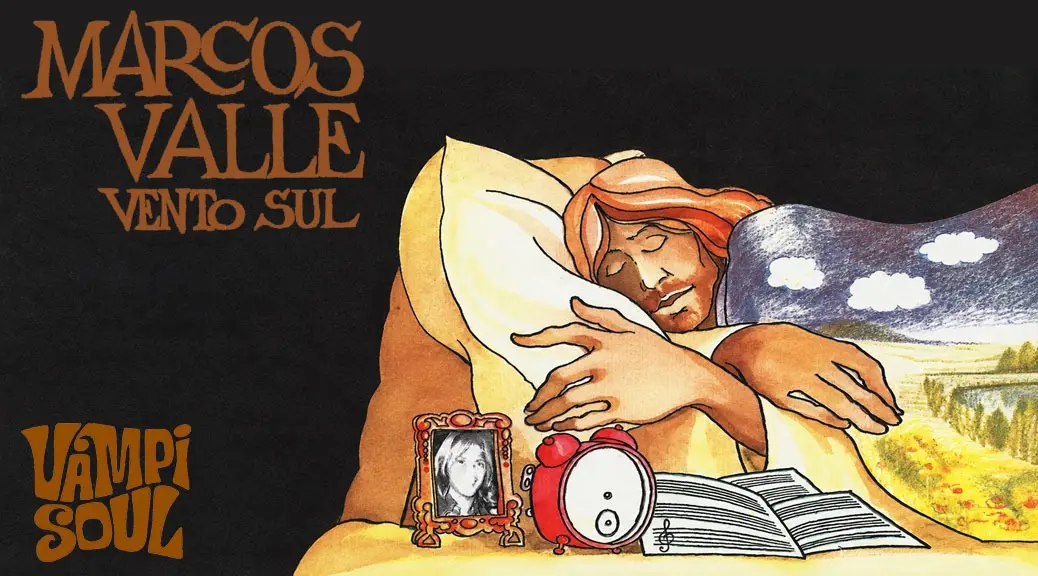
Now, through the meticulous archival efforts of Madrid-based reissue powerhouse Vampisoul, Vento Sul is once again receiving the critical and physical presentation it has long deserved. Available exclusively on heavy 180-gram vinyl, this pristine reissue follows a string of celebrated Vampisoul excavations of Valle’s catalog, including O Compositor e o Cantor (1965), his eponymous 1970 and 1983 records, and the critically adored 1971 milestone, Garra.
Featuring eleven impeccably curated tracks split across two sides of vinyl, this release does more than simply restore a rare collector’s item to the marketplace; it offers contemporary audiences a window into a pivotal era of South American artistic defiance. Despite facing commercial indifference upon its initial release in Brazil, Vento Sul has steadily ascended to holy-grail status among crate-diggers, jazz aficionados, and global groove enthusiasts. This extensive report examines the genesis of the record, the bohemian retreat that birthed it, its profound cultural footprint, and its enduring legacy within the global music landscape.
Detailed Chronology: From Bossa Nova Boy Wonder to Psychedelic Vanguard
The Bossa Nova Boom and the Youthful Optimism of the 1960s
To truly understand the disruptive nature of Vento Sul, one must trace Marcos Valle’s trajectory from the sun-drenched beaches of Rio de Janeiro to the vanguard of South American counterculture. Emerging as part of the second wave of bossa nova writers and performers alongside figures like Edu Lobo and Baden Powell, Valle quickly established himself as a prodigy. His early compositions captured the sophisticated, breezy, and harmonically rich ethos of a genre that revolutionized not just Brazilian music, but international jazz and pop standards as well.
During the early 1960s, Brazil experienced a surge of national confidence and economic modernization. Bossa nova was the sonic equivalent of this era: optimistic, forward-looking, and effortlessly cool. Valle’s early work functioned as an integral soundtrack to this burgeoning middle-class dream. However, unlike some of his contemporaries who remained trapped within the stylistic boundaries of acoustic guitar-led minimalism, Valle possessed an insatiable appetite for sonic exploration.
As the decade progressed, global musical currents shifted dramatically. The British Invasion led by The Beatles, the gritty soul revolution spearheaded by Motown icons like Marvin Gaye and Stevie Wonder, and the burgeoning American jazz-funk fusion movement began to seep into the consciousness of South America’s younger creative class. Valle absorbed these international influences voraciously, slowly melding them with his native samba roots. By the time he recorded his 1965 debut, O Compositor e o Cantor, the groundwork for a broader, more cosmopolitan sound was already being laid.
The Turning Point: Garra and the Path to Vento Sul
The transition from the sophisticated lounge aesthetics of early bossa nova to the gritty, urgent, and politically charged atmospheres of the early 1970s was neither simple nor comfortable. Brazil was enduring the oppressive weight of a military dictatorship, a sociopolitical reality that forced artists to deploy metaphor, abstraction, and stylistic hybridization to express their worldview.
Valle’s 1971 album, Garra, marked a seismic shift. It showcased an artist completely shedding his polite pop persona in favor of a sprawling, cinematic, and rhythmically complex sound. Yet, even as Garra cemented his reputation as an adventurous orchestrator, the intense pressures of the Brazilian commercial entertainment machine were rapidly closing in on him.
Throughout the late 1960s and early 1970s, Marcos Valle and his frequent collaborator and lyricist brother, Paulo Sérgio Valle, found themselves trapped in a grueling cycle of high-demand commercial songwriting. The brothers were regularly commissioned to write themes for popular television programs and lucrative telenovelas. While this work provided financial stability and household recognition, it drained the brothers of their creative autonomy. The commercial expectations, coupled with the stifling political climate of the military regime, created an urgent need for escape, renewal, and artistic detoxification.
The Búzios Retreat: Fishing Villages, Counterculture, and O Terço
Seeking refuge from the suffocating demands of the Rio de Janeiro television studios, Marcos and Paulo Sérgio Valle packed their belongings and retreated to Búzios. In 1972, long before it became an internationally glamorous resort town favored by jet-setters and Hollywood celebrities, Búzios was a sleepy, secluded fishing village located on a peninsula east of Rio de Janeiro.
At the turn of the 1970s, this remote coastal haven had become an accidental magnet for Brazil’s bohemian counterculture. A diverse ecosystem of artists, painters, writers, and musicians flocked to its shores, drawn by the unpaved roads, pristine beaches, and an atmosphere deeply saturated in global hippie ideals. For the Valle brothers, Búzios offered the ultimate psychological reset. Stripped of studio timetables, network executives, and urban anxieties, the brothers spent two months living a communal, unhurried existence.
It was within this tranquil, ocean-breezed environment that the songs for Vento Sul slowly materialized. The music composed in Búzios reflected the physical landscape—spacious, meditative, and organic—while simultaneously capturing the boundary-pushing ethos of the international counterculture movement.
Crucially, when it came time to record the material, Valle made a decisive break from the polished studio session players who had defined his previous records. Instead, he enlisted O Terço, one of Brazil’s pioneering progressive rock bands. Known for their intricate compositions, soaring guitar work, and heavy rhythmic interplay, O Terço injected Valle’s sophisticated chord progressions with an electrifying rock-band dynamic. The resulting chemistry turned Vento Sul into an organic band record, where every instrument breathed in unison, bridging the gap between delicate acoustic songcraft and explosive sonic architecture.
Supporting Context & Metrics: Decoding the Sonic Landscape of Vento Sul
Track-by-Track Breakdown and Musical Analysis
Issued by Vampisoul with their characteristic archival reverence, Vento Sul presents eleven finely crafted compositions distributed evenly across two sides of 180-gram vinyl (six tracks on Side A, five on Side B). The physical packaging mirrors the high fidelity of the audio restoration, ensuring that contemporary collectors receive a definitive edition of a historically elusive record.

Side A opens with an immediate statement of intent. The arrangements eschew conventional verse-chorus-bridge structures in favor of episodic journeys. Among the standout cuts on the first side are “Democóstico” and “Malena.”
- “Democóstico” is a masterclass in tension and release, featuring jagged guitar lines from O Terço that intertwine effortlessly with Valle’s intricate Fender Rhodes and acoustic piano chords. The percussion draws heavily on Afro-Brazilian rhythms while maintaining a sharp, funk-inflected backbone that would make any contemporary beat-head take notice.
- “Malena” showcases Valle’s classical understanding of counterpoint and sound sculpture. The vocal delivery is haunting yet tender, floating above an arrangement that shifts seamlessly from pastoral acoustic strums to cinematic, brass-augmented crescendos.
Throughout both sides of the record, the genre-blending is executed with a level of organic cohesion that prevents the album from feeling like a disjointed stylistic exercise. Elements of jazz improvisation sit comfortably alongside heavy rock breakdowns, while subtle bossa nova harmonies underpin complex psychedelic soundscapes.
The Evolutionary Bridge: From Vento Sul to Previsão do Tempo and Azymuth
The sonic breakthroughs achieved during the recording sessions for Vento Sul were not isolated experiments; they served as the direct incubator for one of the most important chapters in Brazilian jazz-funk history. The ethereal, spacious, and rhythmically hypnotic qualities developed on Vento Sul drifted naturally into Valle’s next masterwork, 1973’s Previsão do Tempo.
For Previsão do Tempo, Valle assembled a core rhythm section comprising keyboardist Jose Roberto Bertrami, drummer Ivan Conti, and bassist Alex Malheiros. This visionary trio, deeply attuned to Valle’s musical vocabulary, would soon adopt a moniker inspired by one of Valle’s own compositions: Azymuth.
The cosmic jazz-funk aesthetic that defined Azymuth’s legendary catalog—characterized by Fender Rhodes cascades, complex syncopated drum patterns, and deep, resonant bass grooves—was forged directly in the crucible of Valle’s early 1970s collaborations. Vento Sul stands as the missing link, the vital transitionary document where the singer-songwriter tradition of MPB collided irrevocably with the futuristic idioms of electric jazz and progressive rock.
Official Statements and Archival Perspective
Mark Jones, writing for UK Vibe, encapsulates the critical consensus surrounding Vampisoul’s ongoing preservation campaign:
"The 1972 album Vento Sul marked another unique example of Marcos Valle reinventing and reinvigorating his compositions and arrangements, weaving an exciting tapestry of progressive sound with elements of psychedelia, tropicália, soul, bossa nova, jazz, funk, and rock."
Jones further contextualizes the album’s lineage within Valle’s broader discography, noting how Vento Sul built directly upon the restless momentum of Garra:
"Vento Sul followed the stunning Garra, both showcasing the newly emerging sounds from home and abroad that Valle had incorporated into his own free-spirited musical adventure… Setting aside the session players heard on Garra, Valle made the record with the progressive rock band O Terço. The album is a great listen from start to finish, with all the varied elements seemingly fitting in harmony."
Label representatives from Vampisoul have consistently emphasized that reissuing records like Vento Sul is not merely an exercise in nostalgia, but an act of cultural reclamation. During an era when Brazil’s military dictatorship routinely censored, exiled, or marginalized forward-thinking artists, records that championed artistic freedom and stylistic synthesis served as quiet acts of cultural resistance. By pressing these works onto high-grade 180-gram vinyl with restored original artwork and comprehensive liner notes, Vampisoul ensures that the historical friction and creative brilliance of the era remain accessible to new generations of listeners.
Future Outlook: The Enduring Resonance of Marcos Valle
Despite its initial commercial failure in Brazil—where radio programmers and mainstream audiences struggled to categorize its eclectic mix of progressive rock and avant-garde MPB—Vento Sul has enjoyed a triumphant second act. In the decades following its release, the album migrated from dusty thrift store bins in Rio de Janeiro to the private collections of global crate-diggers, international DJs, and discerning hip-hop producers searching for high-end sample material.
Today, Marcos Valle is rightfully celebrated as a living legend whose influence stretches across generations and genres. From electronic music producers sampling his rhythm sections to modern jazz ensembles reinterpreting his chord progressions, Valle’s footprint on contemporary music is vast and indelible.
The Vampisoul reissue of Vento Sul arrives at a time of unprecedented global appetite for archival Latin American music. As listeners increasingly reject homogenous, algorithmically driven pop in favor of authentic, tactile musical histories, albums like Vento Sul offer a masterclass in artistic fearlessness.
Looking forward, the continued rediscovery of Valle’s 1970s output points toward a broader reassessment of the Brazilian underground of that era. Far from being a mere historical artifact, Vento Sul remains a vital, breathing testament to what can happen when an artist abandons commercial safety to chase the wind. For collectors, musicians, and casual listeners alike, this definitive vinyl pressing is an essential addition—a timeless reminder of a golden age when Brazilian music looked out at the entire world and reinvented it in its own image.