In the ever-evolving landscape of contemporary folk music, few artists possess the audacious vision to simultaneously honor historical provenance while aggressively dismantling its structural conventions. Enter London-based multi-instrumentalist, folk interpreter, and boundary-pushing composer Charlie Wheatley. With the release of his ambitious new four-track, twenty-five-minute EP, Live at the Chapel, Wheatley has officially thrown down the gauntlet, delivering a masterclass in acoustic reinvention that serves as a tantalizing teaser for a massive, three-part recorded odyssey.
Over the course of this unfolding multi-chapter project, Wheatley aims to unearth, reinterpret, and record roughly forty compositions—spanning centuries-old traditional manuscripts from across the British Isles alongside a curated selection of his own original works. What sets this ambitious undertaking apart, however, is not merely the sheer volume of music slated for revival, but Wheatley’s radical conceptual framework: for each subsequent chapter in the series, the artist plans to completely overhaul his backing lineup. By rotating musicians across chapters, Wheatley intends to mirror the organic, fluid, and perpetually mutating DNA of traditional folk music as it has been passed down through the ages.
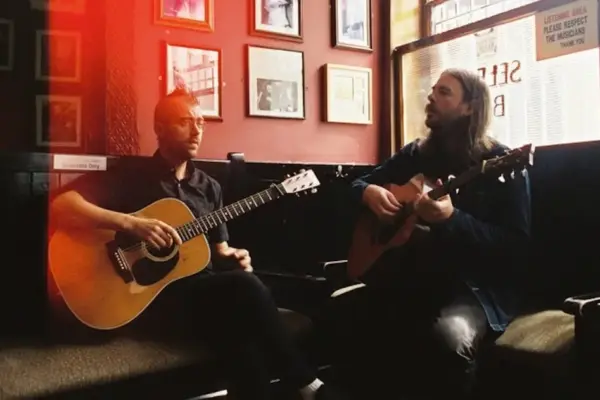
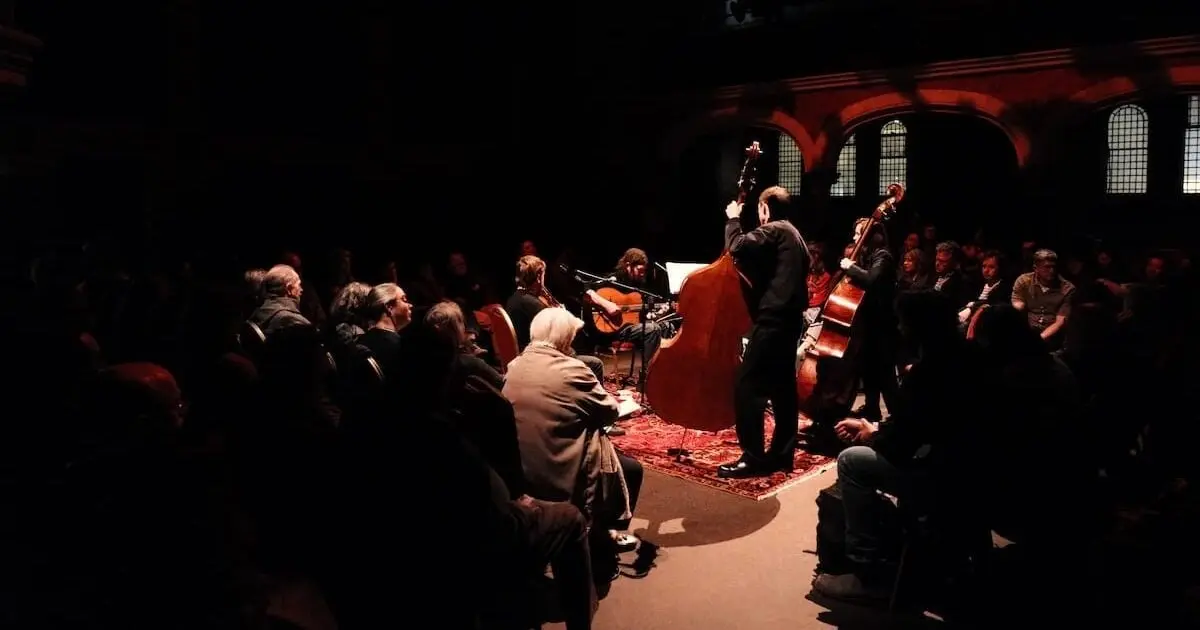
For this inaugural installment, recorded live within the cavernous, history-drenched confines of London’s Stone Nest—a nineteenth-century former Welsh church nestled in the heart of the West End—Wheatley assembled a truly unconventional ensemble. Flanked by Tom Moore on viola and a formidable low-end double-bass battery featuring both Nina Harries and Tom Wheatley, the artist constructed a sonic architecture defined by rich, enveloping sub-frequencies. This heavy, string-laden setup transforms the historical venue’s natural acoustic resonance into an active participant in the performance.
Live at the Chapel is not a museum piece; it is a living, breathing laboratory of sound. By weaving together the deep, resonant drone of triple-string low-end instrumentation with razor-sharp, Gypsy-jazz-infused flat-picking, Wheatley and his collaborators have managed to inject unprecedented darkness, ambiguity, and modern minimalism into century-old dance tunes, Morris melodies, and Irish jigs. Self-released on September 22, 2026, the EP signals the dawn of a landmark project in modern folk, proving that the genre’s deepest roots are best preserved when exposed to the winds of creative experimentation.
Detailed Chronology & Track Analysis
To truly understand the disruptive brilliance of Live at the Chapel, one must trace the chronological and stylistic trajectory of the EP’s four tracks, each of which showcases a distinct facet of Wheatley’s interpretive philosophy.
The Opening Gambit: Cotswolds & Oxfordshire Deconstructed
The journey begins with A Tune for Eadie / Old Molly Oxford / Idbury Hill, a medley that stitches together three distinct Morris dance traditions from the Cotswolds and Oxfordshire regions. Rather than leaning into the bright, bouncy meter typically associated with traditional Morris tunes, Wheatley and his ensemble open the piece with startling stealth.
For the first two minutes, the listener is submerged in an unexpected soundscape of plucked viola lines that skulk alongside low, bowed double-bass groans and cavernous thuds. This opening movement heavily leans into contemporary minimalism and improvised sound design. When the piece finally transitions into the more conventional rhythm of the dance tune, its fundamental character has been irrevocably altered. The lower bowed strings lock step with sharply picked guitar lines, introducing a dark, moody undercurrent that exploits every square inch of Stone Nest’s soaring vertical acoustics.
Rhythmic Subversion in the Irish Jig
Shifting gears in character, the second movement—Roman Wall / Paddy Carey’s—initially presents as a bright, highly spirited Irish jig. Here, the loud, punchy percussive attack of Wheatley’s Gypsy-jazz-inspired acoustic guitar takes center stage, driving the melody forward with kinetic energy.
However, Wheatley’s insatiable curiosity ensures that even the most joyful melodies are layered with complexity. Throughout the vibrant core of the piece, attentive listeners will notice subtle, odd percussive strikes emanating from one of the double basses. This persistent, micro-rhythmic detail introduces a serious, almost unsettling undercurrent beneath the jaunty surface melody. Simultaneously, Tom Moore’s viola largely shadows the guitar, yet punctates the arrangement with scattered, scratchy shards of notes that enhance the track’s overall atmospheric tension.
Hypnotic Drones and the Art of the Hornpipe
The chronological descent concludes with a mesmerizing dive into hornpipe and shanty territory via Bristol / Lemmie Brazil’s no.2 / Y Washael. On paper, these are sturdy, well-trodden working songs and dance numbers designed to keep sailors and pub crowds moving in time. In Wheatley’s hands, however, they become vehicles for hypnotic meditation.
The sheer textural weight of the three-piece string section functioning behind Wheatley’s rock-solid guitar melodies creates a gravitational pull. Listeners find themselves effortlessly drifting away from the primary melodic line into a lulling, continuous drone, only to be snapped back into focus as the tune resolves. It is a masterclass in dynamic tension and release, proving that folk music can simultaneously serve as high-energy dance accompaniment and ambient sonic art.
Supporting Context & Metrics
To contextualize the scale and significance of Live at the Chapel, it is helpful to examine the broader parameters of Charlie Wheatley’s ongoing project and the physical environments that shape his sound.
Project Metrics and Scope
- Total Project Target: Approximately 40 songs slated for recording and interpretation.
- Structural Division: A three-part recorded series released incrementally.
- EP Duration: 25 minutes across 4 expansive tracks.
- Ensemble Rotation: Complete lineup overhaul planned for each subsequent chapter.
- Release Date: September 22, 2026 (Self-Released via Bandcamp).
The Architecture of Sound: Stone Nest
The choice of venue for Live at the Chapel is far from accidental. Located in the heart of London’s West End, Stone Nest is a Grade II-listed former Welsh Baptist chapel featuring a magnificent neoclassical exterior and a cavernous, dilapidated-yet-grand interior. The building’s unique architectural geometry—characterized by high domed ceilings, hard stone surfaces, and vast vertical air volume—creates natural reverb tails that can quickly muddy conventional instrumentation.
Instead of fighting these acoustic hurdles, Wheatley leaned directly into them. By deploying a heavily weighted low-end configuration consisting of three distinct string instruments (acoustic guitar, viola, and a double-bass duo), Wheatley saturated the room’s physical space with low-frequency resonance. The building itself acts as a natural amplifier, ensuring that even the most delicate plucked string or micro-percussive tap carries physical weight and emotional gravity.
Official Statements & Artistic Vision
While traditional folk preservationists have often prioritized historical replication, Charlie Wheatley’s artistic manifesto champions constant metamorphosis. In reflections surrounding the conceptual genesis of Live at the Chapel, Wheatley has repeatedly emphasized his fascination with the organic, ever-shifting nature of folk traditions prior to the advent of recorded sound.
"Folk music was never meant to be frozen in amber," sources close to the production note of Wheatley’s overarching philosophy. "For centuries, these tunes survived precisely because every musician who played them changed them, dropped parts, added local flavors, and filtered them through their own immediate collaborators."
By deliberately altering his backing lineup for each chapter of the three-part project, Wheatley is putting this historical reality into active practice. The addition of players like Tom Moore (viola), Nina Harries (double bass), and Tom Wheatley (double bass) was designed specifically to test how traditional British and Irish manuscripts would react under extreme, non-standard orchestration.
"We didn’t want to just play the notes on the page," the ensemble’s collaborative ethos suggests. "We wanted to see what happens when you crowd a sacred, echoing chapel with massive low-end strings and let contemporary improvisation chew at the edges of centuries-old dance arrangements."
Future Outlook
With Live at the Chapel officially out in the wild via Bandcamp as of September 2026, the global folk community has been put on notice. The EP has successfully established a high-water mark for contemporary roots experimentation, blending academic-level historical research with avant-garde minimalism and raw, visceral performance energy.
As music critics and folk aficionados alike digest the twenty-five-minute opening salvo, attention naturally turns toward the horizon. What musical traditions will Wheatley target in Chapter Two? More importantly, which musicians will be drafted into the next iteration of his revolving-door ensemble, and how will those personnel shifts fundamentally rewrite the DNA of the next batch of traditional songs?
If Live at the Chapel is any indication, Wheatley is operating without a creative ceiling. The decision to treat folk manuscripts as malleable clay rather than fragile artifacts ensures that his forthcoming releases will remain some of the most anticipated events in modern acoustic music. For now, listeners are left to drift in the hypnotic, resonant drone of the chapel—eagerly awaiting whatever brilliant curveball Charlie Wheatley decides to throw next. More, please.