Executive Overview
The trajectory of modern independent music is defined by a constant tension between commercial viability and artistic authenticity. For Atlanta-formed, New York-based indie-rock outfit Lowertown—comprising the creative partnership of Olivia Osby and Avsha Weinberg—this tension has been more than a theoretical debate. It has been a lived, high-stakes reality that nearly broke the band apart before it had fully realized its potential.
Rising through the ranks of the underground after meeting in a high school math class, Osby and Weinberg quickly captured the attention of the broader music industry. As teenagers, they signed with Dirty Hit, the influential British independent label home to heavyweights such as The 1975, beabadoobee, and Rina Sawayama. Yet, the machinery of a major-label ecosystem proved suffocating. The financial pressures, corporate expectations, and administrative friction threatened to strip away the unvarnished purity that initially brought the duo together over shared playlists of indie acts like The Microphones and Alex G.
Now, following a decisive split from Dirty Hit in 2023, Lowertown has returned with Ugly Duckling Union, their first release via the Run For Cover imprint Summer Shade. Arriving on May 22, the album represents a triumphant reclamation of their artistic autonomy. Eschewing the hyper-polished sheen often demanded of young acts poised for crossover pop-rock stardom, Ugly Duckling Union is a gnarled, heady concept album born out of a rat-infested basement studio.
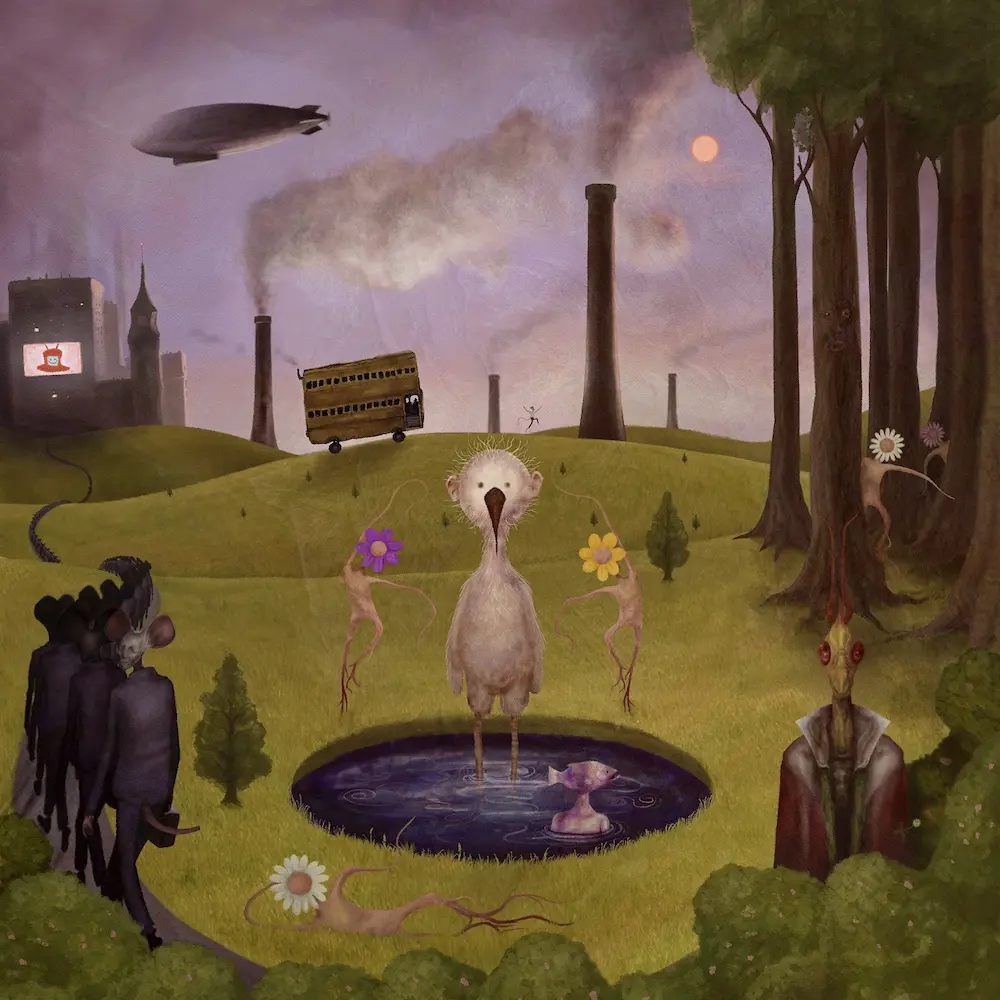
Equal parts sonic experiment and narrative world-building—complete with a playable Minecraft world, custom plush dolls, and comic art by Doctor Nowhere—the record cements Lowertown’s status as a band uniquely designed to thrive not in the sterile boardrooms of major labels, but deep within the vital, unpredictable shadows of the DIY underground.
Detailed Chronology: From High School Math Class to the New York Underground
1. The Genesis in Atlanta (2018)
The Lowertown origin story carries the romantic, accidental quality of rock-and-roll lore. Olivia Osby and Avsha Weinberg crossed paths inside a high school math classroom in Atlanta, Georgia. Capitalizing on stolen moments during lectures, Weinberg would sneak glances at Osby’s laptop screen, monitoring what music she was listening to.
Bound by a mutual appreciation for the fragile, evocative sounds of underground indie stalwarts like The Microphones and Alex G, the pair began writing and recording together. Formed officially in 2018, Lowertown operated with the spontaneous, insular energy characteristic of teenage creativity unburdened by commercial expectations.
2. The Major-Label Pivot and Industry Pressure
As their localized buzz grew, industry scouts took notice. While still teenagers, Osby and Weinberg signed a recording contract with Dirty Hit. On paper, the partnership placed them alongside some of the most innovative alternative acts of the decade. In practice, however, the reality of a "real-deal label" introduced structural and financial pressures that fundamentally altered the creative dynamic.
In subsequent interviews, including a comprehensive feature with Rolling Stone, the duo reflected candidly on the friction caused by capital infusion. The presence of significant money and corporate oversight made it dangerously easy to slip away from the pure, unfiltered essence that defined their early work. The administrative weight of the label arrangement pushed the band to the brink of dissolution, forcing Osby and Weinberg to reevaluate their trajectory and ultimately sever ties with Dirty Hit in 2023.
3. Relocation and the New York DIY Renaissance
Seeking a fresh start, Lowertown relocated to New York City, quickly embedding themselves within the city’s hyper-active underground rock scene. Here, they found the communal friction and anonymous creative space they had been missing.
The underground ethos was further cemented by live performances that prioritized visceral energy over production value. A notable example occurred on the Fourth of July, when the duo staged a surprise rooftop concert. Enmeshed in a mosh pit of sweat and vape smoke beneath sporadic fireworks, the performance captured the volatile, kinetic spirit of true DIY rock—culminating, fittingly, in the set being abruptly shut down by local law enforcement.
4. The Basement Sessions and the Birth of Ugly Duckling Union
Returning to a fundamentally scrappy methodology, the recording of their latest LP took place under decidedly unglamorous conditions: inside a basement studio owned by Weinberg, populated by scurrying rodents. Rather than viewing these limitations as obstacles, Lowertown leaned into them, using the physical constraints of their environment to shape the album’s raw, uncompromising sonic texture.
Supporting Context & Metrics: The Anatomy of Ugly Duckling Union
Conceptual Depth and World-Building
Ugly Duckling Union is not merely a collection of standalone tracks; it is an immersive concept album. According to promotional materials, the record’s narrative centers on a duckling named Dale and his eclectic band of allies as they attempt to dismantle a tyrannical media corporation known as LBH.
The lyrical landscape is deliberately tactile, saturated with urban grit: burnt rubber, basement rats, dry kibble, cigarette smoke, mirages, and recurring motifs of violence and blood. To ensure the concept extended far beyond traditional liner notes, Lowertown partnered with artist Doctor Nowhere and software developers to package the release with a playable Minecraft world, a physical handbook, and custom plush dolls, transforming the album into a multi-media universe.
Sonic Palette and Track-by-Track Breakdown
Musically, the album refuses to settle into a single genre box, cycling restlessly through decades of alternative rock touchstones:
- "Mice Protection": The album opens with this acoustic confession, establishing an immediate moral conflict via Osby’s trembling vocal performance ("Maybe I’m good, maybe I’m bad / Maybe I don’t know what I am"). The track’s title serves as a direct, tongue-in-cheek homage to the basement rats scurrying around Weinberg’s studio.
- "Big Thumb" & "(I Like To Play With) Mutts": The instrumentation mirrors the duo’s captivating clumsiness, transitioning effortlessly from folk-leaning pastoral arrangements on the former to eerie, jagged post-punk on the latter.
- "I Like You A Lot": Radiating a ditzy, infectious beauty, this track channels the eccentric, kaleidoscopic pop sensibilities of the historic Elephant 6 collective.
- "DIPSHIT": A chaotic weirdo-anthem that evokes the abrasive, art-punk textures of a lost Black Eyes B-side.
- "Cover You": A rare moment of meticulous, masterful musical control, this track combines past-era twee magic with dreamy, floating flute lines.
- "Worst Friend" & "Forgive Yourself": Serving as the emotional anchor of the record, "Worst Friend" is a timeless, warbly power ballad built on self-destruction ("Oh I’m my worst friend / It’s too difficult to see / But it’s not my responsibility"). This cathartic vulnerability carries directly into "Forgive Yourself," anchored by the devastatingly simple refrain: "It’s hard to forgive yourself."
Official Statements and Industry Perspective
Reflecting on their evolution in their recent Rolling Stone interview, Avsha Weinberg characterized Lowertown’s musical output succinctly: "eccentric, eclectic music."
The duo’s departure from Dirty Hit marked a definitive ideological shift. By acknowledging that capital injection can dilute artistic purity, Osby and Weinberg have drawn a hard line in the sand regarding their creative future. Industry analysts note that while many young indie acts view major-label acquisition as the ultimate destination, Lowertown’s calculated retreat into the underground highlights a growing counter-movement among contemporary artists who prioritize ownership, community ties, and uncompromised sonic experimentation over mainstream chart metrics.
Future Outlook
With the official release of Ugly Duckling Union on May 22 via Summer Shade (an imprint of Run For Cover), Lowertown stands at a fascinating crossroads. They possess the undeniable technical skill, melodic sensibility, and cultural cachet required to capture a much wider audience. Yet, their refusal to sand down their rough edges suggests they are entirely uninterested in playing the pop-stardom game on corporate terms.
As they continue to navigate the post-major-label landscape, Lowertown’s future points toward deeper exploration of multimedia art, uncompromising DIY touring circuits, and the kind of uninhibited basement-studio creation that birthed their best work to date. In an era where algorithms frequently dictate the homogenization of indie rock, Lowertown remains a thrillingly unpredictable anomaly—a band that sounds best when they are completely, gloriously out of place.
Appendix: Notable Album Releases for the Week of May 22
Lowertown’s Ugly Duckling Union drops during a massive week for global alternative, electronic, and underground music releases. Other notable projects arriving this week include:
- JPEGMAFIA – Experimental Rap
- fakemink – Terrified
- Bladee – Sulfur Surfer
- Bill Orcutt & Mabe Fratti – Almost Waking
- Ed O’Brien – Blue Morpho
- Balming Tiger – Gongbu
- Bleachers – everyone for ten minutes
- Future Islands – From A Hole In The Floor To A Fountain Of Youth
- LE SSERAFIM – ‘PUREFLOW’ pt.1
- Dua Lipa – Dua Lipa (Live From Mexico)
- Clark – Opponent Stims (EP)
- Ted Lucas – Images Of Life (Box Set)