Executive Overview
In modern music production, efficiency is often heralded as the ultimate virtue. Producers are routinely encouraged to approach their digital audio workstations (DAWs) with precise goals, detailed project timelines, and preconceived notions of the exact sonic landscape they intend to build. This structured methodology guarantees finished tracks and ensures strict adherence to commercial deadlines. Yet, it frequently strips the creative process of its most potent catalyst: unadulterated exploration.
Within an algorithmic music landscape dominated by market trends and iterative replicas of past commercial successes, intentional constraint and accidental discovery have become radical acts. True sonic innovation rarely emerges from a rigid design blueprint; rather, it is born in the margins of experimentation—by twisting knobs without a destination, pushing modules past their safe operating parameters, and embracing the unpredictable.

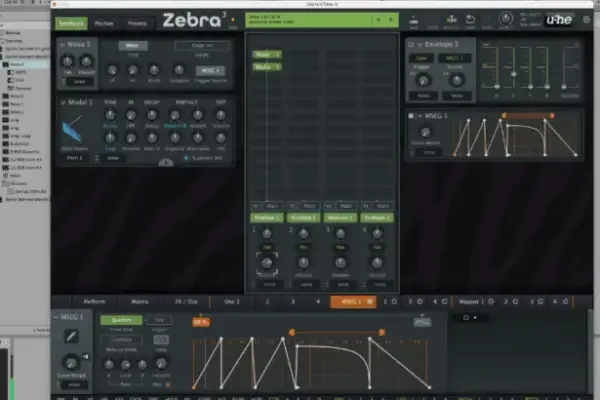
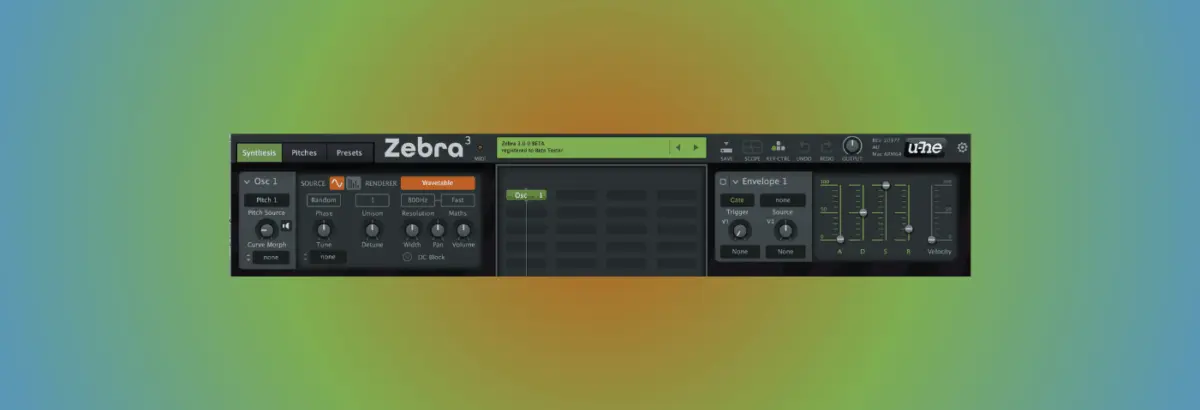
This tutorial-editorial hybrid chronicles a step-by-step masterclass in pure, unscripted sound design using Zebra 3, u-he’s long-awaited, ground-up successor to their legendary wireless modular soft synthesizer. By intentionally casting aside all preconceptions, project goals, and safety nets, we demonstrate how to transform a blank initialize patch into a dynamic, evolving, and rhythmically reactive electronic music instrument. Through a sequence of ten granular steps, this piece explores the vast expressive potential of Zebra 3’s state-of-the-art architecture, showcasing how cutting-edge sound design is fundamentally an act of play.
Detailed Chronology: A 10-Step Unscripted Patch Building Process
To fully appreciate the organic evolution of this patch, the journey must be documented chronologically. Readers are encouraged to load up Zebra 3 inside their DAW alongside the specified modules, experiment with their own parameter values, and resist listening to the baseline audio examples until each sequential hurdle has been cleared.

Step 1: Setting the Baseline (The Init Patch)
Every journey begins with a blank slate. To initiate the workflow, load an instance of Zebra 3 within your DAW using a pristine “Init” patch. Import the designated MIDI file (WhoKnows.mid) onto the instrument track, and supplement the project with a foundational audio loop (Kick.mp3). Anchor your project tempo to a steady 127 BPM and press play.
Out of the box, the default oscillator configuration yields a clean, static, and fundamentally sterile waveform. It is completely functional, highly predictable, and undeniably boring—serving as the ideal psychological springboard for radical sonic transformation.

Step 2: Introducing the FM Oscillator Module
To wrench the patch away from its mundane origins, we turn to Zebra 3’s powerful new frequency modulation (FM) oscillator modules. By routing the external modulation type to "Dry" and pivoting the FM architecture away from the classic linear DX style in favor of TZFM (Through Zero FM), the oscillator’s core behavior undergoes a radical shift.
Setting the modulation index to 8 immediately unlocks a spectrum of complex harmonics. Experimenting with various frequency ratios quickly reveals a sweet spot at 1.0 : 2.5. This specific ratio introduces a pronounced, metallic resonance that sounds remarkably compelling right out of the gate. While this singular state possesses enough character to anchor a minimal track, our mandate demands further escalation.

Step 3: Modulating the FM Parameter with an LFO
Static patches, no matter how harmonically rich, quickly wear out their welcome in dynamic electronic arrangements. To inject movement, we introduce a dedicated Low-Frequency Oscillator (LFO) to modulate the FM parameter, establishing a robust Mod Depth of 48.
Configuring the LFO time base to a 2/1 duration (spanning two full bars) with its trigger mode locked to "Single" establishes a sweeping, evolving timbral arc. Even when relying on a single sound generator, the inherent complexity of FM synthesis begins to shine. Cycling through the LFO’s waveform options—Triangle, Sine, and Square—yields distinct results. While the Square wave presents the most chaotic and abrasive behavior in its raw form, its untamed harmonic profile holds immense creative promise.

Step 4: Harnessing Feedback for Saturation and Resonance
Harmonic richness is vital, but thus far, the patch remains far too polite. To introduce grit and aggression, we turn to Zebra 3’s dedicated Feedback control.
As the feedback parameter is aggressively dialed upward, the synthesizer introduces a pleasing layer of crunchy digital distortion before shifting into self-oscillation. Around a value of 73, the feedback imparts a distinct, biting resonance reminiscent of vintage hardware like the EDP Wasp filter, instantly elevating the patch from a clinical exercise into an organic, snarling lead element.

Step 5: Integrating the Multimode Filter
While the resonances unlocked by the high feedback setting are deeply inspiring, they require careful taming to sit cohesively within a broader mix. Zebra 3’s newly redesigned multimode filter provides the ultimate toolset for shaping this unruly frequency spectrum. By inserting the filter module downstream from our oscillator chain, we open up a vast array of routing topologies and filter curves to sculpt the raw energy.
Step 6: Deploying "Old Time" Low-Pass Filtering
Among the filter’s various modes, the Old Time model paired with a classic 24 dB Low-Pass slope instantly infuses the sound with warmth and vintage character. However, leaving the filter wide open robs the patch of rhythmic articulation.

To regain control, the master filter cutoff is dialed down to a closed 8.18 Hz, effectively silencing the output. This prepares the circuit to be dynamically driven by an envelope generator, shifting the patch’s personality from a continuous drone into a snappy, plucked acoustic emulation.
Step 7: Crafting the Primary Amplitude and Filter Envelope
With the cutoff firmly anchored at the floor, we construct a percussive envelope profile: an instantaneous Attack (0ms), a Decay time of 1.25 seconds, a Sustain level of 31, and a long, smooth Release of 96.1ms.

Applying this envelope to the filter cutoff with a robust Modulation Depth of 105 transforms the instrument completely. To evaluate the patch within a real-world musical context, we introduce the auxiliary backing beat (Skippy_beat.mp3). Instantly, the synthetic plucks lock into the groove with uncanny precision. Furthermore, routing a send to Zebra 3’s internal algorithmic reverb injects a cinematic sense of space, laying the groundwork for subsequent micro-adjustments.
Step 8: Dynamic Overdrive via Envelope 3
While the patch now boasts tight transient control, it has sacrificed some of its initial bite. Reintroducing the filter’s Drive parameter restores this lost edge, though a static setting introduces an undesirable, fatiguing harshness directly on the transient clicks.

The solution is to assign a third, independent envelope to the Drive parameter. By dialing the baseline drive down to zero and pushing the envelope’s modulation depth to maximum, we create a circuit that blooms over time. Setting the envelope Decay to maximum threatens to reintroduce the harsh transients, but carefully introducing a subtle 40ms Attack time yields the best of both worlds: clean, pristine transients that smoothly bloom into rich, overdriven harmonic saturation.
Step 9: Injecting Velocity Sensitivity
The final behavioral tweak involves binding the velocity data of incoming MIDI notes to Envelope 3, pushing its sensitivity parameter to maximum.

This simple routing transforms the instrument into a truly expressive performance tool. Lighter keystrokes yield clean, dynamic plucks, while heavier, hard-hit MIDI notes trigger aggressive, overdriven bursts of harmonic energy, injecting an organic, humanized bounce into the sequence.
Step 10: Final Explorations and Arrangement Possibilities
With a fully realized, highly responsive patch now complete, the possibilities for further manipulation are virtually endless. Automating the primary filter cutoff across an eight-bar progression yields immense structural tension. Because multiple independent envelopes are assigned across various modules, users can independently manipulate release stages—such as stretching Envelope 1’s release out to 3.61 seconds—to create massive, atmospheric tails.

Finally, layering the original, sterile "Init" patch back into the mix—fortified by an 8-voice detuned Unison mode—creates a monolithic wall of sound that bridges the gap between clinical digital synthesis and raw, uninhibited analog warmth.
Supporting Context & Metrics: The Paradigm Shift in Soft Synth Design
To contextualize the significance of exercises like this, one must examine the broader trajectory of software synthesizer development over the past decade. The industry has increasingly trended toward preset culture—where producers rely heavily on factory banks, cloud-based sample subscriptions, and AI-driven patch generators. While these tools maximize short-term studio efficiency, industry surveys indicate a growing fatigue among electronic music producers regarding homogenized sonic palettes.

| Production Methodology | Primary Advantage | Inherent Risk / Disadvantage |
|---|---|---|
| Preset-Driven Workflow | High speed, predictable commercial results | Sonic homogenization, creative stagnation |
| Blueprint-Based Design | Precision engineering, exact replication | Reduced serendipity, mechanical execution |
| Unscripted Exploration | Maximum novelty, unique artistic voice | Time-intensive, unpredictable outcomes |
Synthesizers like u-he Zebra 3 are specifically engineered to bridge the gap between structured sound design and chaotic discovery. By expanding modular routing capabilities, introducing advanced Through-Zero FM, and offering deeply flexible envelope and filter structures, developers are actively encouraging users to step off the beaten path. Unscripted sound design sessions serve as vital cognitive exercises for producers, reinforcing fundamental synthesis concepts while forging a distinct, unmistakable sonic identity in an oversaturated market.
Official Statements and Industry Perspectives
The philosophy of unscripted sound design is championed by many of the industry’s most respected DSP developers and sound architects. Urs Heckmann, founder and lead developer at u-he, has frequently emphasized the importance of serendipity in musical instrument design:

"When we built Zebra 3, our goal wasn’t just to increase wavetable counts or add sterile digital effects. We wanted to create an ecosystem where modulation paths could intersect in ways that even we, as developers, couldn’t fully anticipate. True musical character lives in the grey areas—where filters self-oscillate, feedback loops cross boundaries, and the user stops programming and starts reacting to the instrument."
Prominent modular sound designers echo this sentiment, noting that the most memorable patches in modern film scores and underground club tracks rarely stem from methodical drafting tables. Instead, they are the byproduct of "happy accidents"—controlled chaos harnessed by producers who understand how to listen to what a synthesizer is telling them, rather than forcing it to conform to a rigid agenda.

Future Outlook: The Evolution of Experimental Sound Design
As artificial intelligence begins to permeate digital audio workstations—offering predictive EQ, automated mixing assistants, and generative melody engines—the human element of music production is undergoing a profound identity crisis. When software can effortlessly generate commercially viable chord progressions and standard patches in seconds, the true value of human creativity shifts away from mechanical execution and toward curation, chaos management, and raw artistic expression.
The future of electronic music production will likely see a bifurcated landscape. On one side, hyper-efficient, AI-assisted tools will streamline the production of commercial pop and background media. On the other, a vibrant underground movement of producers will lean heavily into hardware-emulated chaos, modular experimentation, and unscripted synth programming.

Workflows like the one outlined with Zebra 3 represent an essential defense against creative stagnation. By abandoning the blueprint, embracing random parameter adjustments, and treating the synthesizer as an unpredictable organism rather than a static tool, producers can reclaim the element of surprise that initially drew them to electronic music. In an industry obsessed with the destination, learning to love the journey of getting lost remains the ultimate creative superpower.