Executive Overview
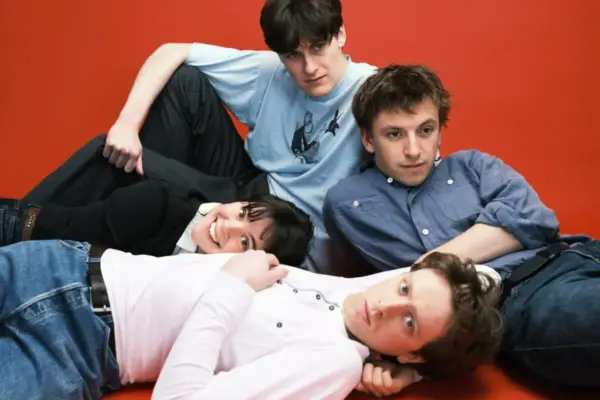
To witness Ceremony live is to experience a masterclass in kinetic momentum and emotional whiplash. Over the course of two decades, the band has transformed from a blistering teenage hardcore outfit into a shape-shifting post-punk institution. Yet, defining them as an "institution" implies a dangerous stasis—a word antithetical to everything Ceremony stands for. Formed in 2004 when its members were still navigating high school hallways in Rohnert Park, California, the group penned canonical hardcore works before they were legally old enough to vote. Today, they inhabit a rare space in modern rock music: an outfit that bridges the chasms between aggressive powerviolence, icy new wave, and sophisticated indie rock without ever disowning their younger selves.
This artistic duality culminates in Tell Me Your Dream, their first full-length album in seven years, slated for release on August 7 via Relapse Records. Marking a reunion with legendary producer and musician John Reis, the record acts as both a mirror reflecting the band’s storied history and a lens focusing on their unpredictable future. Far from a nostalgic exercise in genre pastiche, Tell Me Your Dream captures an adult band channeling the fire of their youth through the lens of sophisticated artistry, literary lyricism, and relentless sonic exploration.
Detailed Chronology: From Rohnert Park High School Halls to the Hollywood Palladium
The Genesis: Teenage Disgust and Hardcore Canonical Works
The narrative of Ceremony begins in the suburban Bay Area enclave of Rohnert Park. In 2004, a group of teenagers coalesced around a shared appetite for blistering, uncompromising noise. Among their earliest creative statements was "Kersed," a hyper-concise, 72-second anthem of pure disgust. It quickly cemented itself as a foundational pillar of modern hardcore.
During those formative years, Ceremony operated alongside contemporaries like Trash Talk, defining an era where crowded, claustrophobic rooms were routinely transformed into seething whirlwinds of flying limbs and chaotic catharsis. Yet, even in their infancy, the seeds of their eclectic future were sown. The band’s moniker itself was lifted from a New Order song, signaling an early affinity for post-punk textures that would eventually bloom decades later.
Stabilization and the Pivot to Post-Punk
As the members aged out of adolescence and into early adulthood, their musical horizons broadened. Unlike many of their peers who abandoned their childhood projects to explore new genres, Ceremony chose to evolve within the context of the band they built as teenagers.
A critical milestone in this evolution occurred in 2011 with the integration of former Paint It Black guitarist Andy Nelson, solidifying a line-up that has remained steadfastly unchanged ever since. This continuity allowed them to bridge disparate worlds. Powerviolence bands rarely venture into new wave territory, and new wave bands practically never dabble in fast, aggressive hardcore. Ceremony managed to inhabit both extremes simultaneously.
Albums like 2015’s The L-Shaped Man marked a dramatic leap into Joy Division-style sparkle-mope, pushing the atmospheric tendencies that had previously haunted the edges of their records directly into the spotlight. Meanwhile, members maintained a vigorous output through side projects: singer Ross Farrar and drummer Jake Casarotti forged acclaimed Dischord-style post-hardcore with Spice, while guitarist Anthony Anzaldo released multiple solo LPs, including a complete, note-for-note cover of Prince’s Dirty Mind.
The Rohnert Park Anniversary and the Hollywood Palladium Milestone
In a rare nod to retrospective celebration, Ceremony recently decided to honor the 14th anniversary of their 2010 masterpiece, Rohnert Park, by performing the album in its entirety for a one-night-only engagement. The event sold out the legendary Hollywood Palladium, resulting in an audiovisual triumph that captured the enduring relevance of their mid-era catalog. A live-album recording of the performance, released earlier this year, served as a vital bridge toward their next major creative statement.
Supporting Context & Metrics: Dissecting Tell Me Your Dream
Sonic Architecture: Where Hardcore Meets Art-Pop
Tell Me Your Dream serves as the ultimate sonic synthesis of Ceremony’s expansive history. The record mirrors the erratic, high-octane energy of their live shows, placing fiery, mantra-like punk anthems directly alongside sprawling genre experiments.
Consider the sequence of tracks opening the album’s aggressive core: the feral single "Other Hells" is punctuated by unexpected, wobbling new-wave synth lines that subvert traditional hardcore expectations. Immediately following is "Madness," a spidery, funky track heavily reminiscent of dance-punk pioneers !!!, which burns with an undeniable, feverish pulse.
The John Reis Connection and Collaborative Synergy
The album’s cohesive volatility is amplified by a familiar creative catalyst: John Reis. A luminary of the underground scene through his work in Drive Like Jehu, Rocket From The Crypt, Hot Snakes, and Pitchfork (the band, not the website), Reis previously produced The L-Shaped Man.
On Tell Me Your Dream, Reis returns to lend his signature guitar work to the Devo-infused thrasher "Deep Down Where I Belong." Furthermore, Reis contributes backing vocals throughout the record, joined by Tørsö bassist and former Ceremony touring member Jasmine Watson. Their presence injects a distinct rock ‘n’ roll swagger into tracks like the longing, bittersweet groove of "Dark Summer."
Poetic Inquiry and Literary Depth
Outside of his frontman duties, Ross Farrar is a celebrated poet who completed post-graduate work at Syracuse University, placing him in the same literary lineage as acclaimed author George Saunders. This background deeply informs the lyricism on Tell Me Your Dream, moving away from the ultra-direct, tattoo-ready slogans of their early days toward a style that is intensely insular and elliptical.
Tracks like "Madness" are layered with dense cultural references that demand unpacking, ultimately culminating in staggering moments of profound insight. As Farrar observes on the track:
"Being young’s like being rich / You have this thing that everyone wants, and you couldn’t care less… And you waste it."
Later, on the spartan art-pop excursion "10 Planets," he barks a stark existential truth:
"When everything is lost, you’re gonna find that you can’t eat that money."
Official Statements & Industry Context
While traditional corporate press releases have been sparse, the creative team surrounding Relapse Records and the band members themselves have framed Tell Me Your Dream not as a comeback, but as an ongoing dialogue with their own legacy.
In recent interviews surrounding the lead-up to the album’s August 7 release, the band has emphasized that their stylistic shifts are driven entirely by genuine creative necessity rather than boredom or commercial strategy. The integration of veteran collaborators like John Reis underscores an ethos of community and mutual respect within the independent music ecosystem—a community further highlighted by the crowded release calendar accompanying their drop.
The Historic August 7 Release Week Landscape
Ceremony’s Tell Me Your Dream drops during a remarkably saturated and diverse release week across the global music industry. The expansive slate of notable releases arriving alongside Tell Me Your Dream features:
- Indie and Alternative: Man/Woman/Chainsaw (Cannonball), The Mountain Goats (Days), Slow Fiction (dollhouse), Really Good Time (Affirmations), Margaret Glaspy (I Am Both), Public Opinion (The Curse Of Public Opinion).
- Electronic and Dance: Overmono (Pure Devotion), Marlon Hoffstadt (Das Ist Daddy), KIASMOS (II Reworked), Arthur Feynman (Orphans).
- Hip-Hop and R&B: Inspectah Deck (Dragon’s Breath), FLO (Therapy At The Club), Ravyn Lenae (Blue Island), Derez De’Shon (I’m Not OK But…).
- Metal and Heavy Variants: Hulder (Verbolgen), Electric Callboy (TANZNEID), God Of War (Molly Picture), Xandria (Eclipse).
- Global and Experimental: Karol G (No Me Arrepiento de Sentir Tanto), Stray Kids (This & That), John Carpenter (Cathedral), Maya Ongaku (Nothing Space Music).
This staggering breadth of concurrent releases highlights just how unique Ceremony’s trajectory remains. While contemporary acts chase micro-trends or settle into comfortable legacy acts, Ceremony continues to command a singular, unclassifiable corner of the musical landscape.
Future Outlook
As Ceremony prepares to unleash Tell Me Your Dream upon the world on August 7 via Relapse Records, the primary question surrounding the band is not whether they can still play fast—their ongoing live pedigree answers that emphatically—but rather how far their artistic evolution will ultimately stretch.
Whether Tell Me Your Dream serves as a grand finale or merely another chapter in an ongoing saga, its impact is undeniable. It functions simultaneously as an accessible entry point for new listeners and a rich, rewarding text for longtime devotees who have tracked the band’s journey from suburban Rohnert Park to international critical acclaim. In an industry obsessed with youth and rapid obsolescence, Ceremony’s refusal to stop searching—and their ability to make music that sounds vital decades into their career—remains a rare and inspiring phenomenon.