Executive Overview
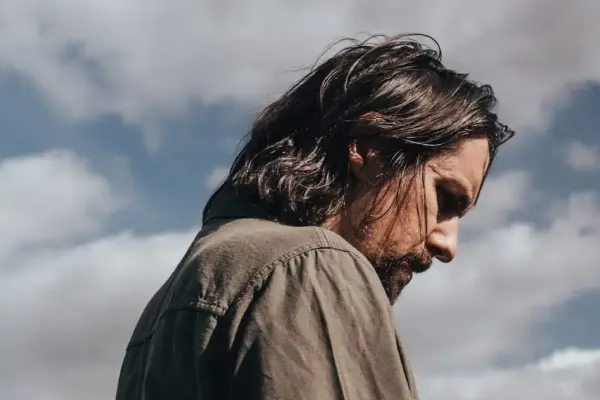
The adage “never meet your heroes” is rooted in a fundamental cynicism: the protective assumption that human reality can never sustain the Himalayan peaks of projected affection. For many, Will Oldham—recording under the sprawling, shape-shifting moniker Bonnie “Prince” Billy—has long occupied a realm far beyond standard celebrity. He represents a touchstone of contemporary songwriting, an artist whose back catalog functions less as a collection of commercial releases and more as an open-source manual for navigating sex, mortality, carnal humor, and defiant vulnerability.
When Domino Records announced the September 18, 2026, release of Oldham’s latest dispatch, Ghosts of American Psychonauts, it signaled more than just another entry in an already prolific discography. Captured live over a charged Valentine’s Day weekend in 2025 at the historic Pico Union Project in Los Angeles, the album documents a singular convergence of master musicianship, ecological urgency, and communal catharsis.
This review-analysis explores the anatomy of Ghosts of American Psychonauts, evaluating how an expanded, horn-heavy ensemble reimagines Oldham’s spectral canon. From the apocalyptic re-engineering of tracks like Trees of Hell—refracted through the trauma of recent California wildfires—to the mesmerizing, genre-defying resurrection of his defining anthem I See A Darkness, this record captures an artist operating at the height of his powers. Written from the unique vantage point of a former touring drummer who spent years staring at Oldham’s backside from the stage, this piece examines the kinetic energy, the rigorous reinvention, and the rare, invisible targets hit only by true genius.
Detailed Chronology: From 1999 to the Pico Union Project
To understand the weight of Ghosts of American Psychonauts, one must chart the trajectory of an artistic obsession. For a generation of listeners discovering alternative folk and Americana at the turn of the millennium, Oldham’s 1999 masterwork I See A Darkness was nothing short of scripture. Studied with the fervor of academic examinations, its lessons in emotional excavation left indelible marks on susceptible minds.
Four years after first absorbing those lessons from afar, that discipleship took a surreal, physical turn: standing behind a drum kit, staring at Oldham’s back on stages across the globe. Witnessing Oldham perform night after night reveals the mechanics of his artistry. He is the great trapeze artist of the human experience, walking the highwire between the breastbone and the solar plexus with the kinetic urgency of a performer who must entirely reinvent his compositions in real time.
On stage, tempos, rhythms, and melodies are dismantled and rearranged before the audience’s eyes. It is the sleight-of-hand of a musical magician who shows the listener their card just before it vanishes into thin air. This absolute porousness to the fluctuating dynamics of any given room is what keeps his music vital, contributing in no small part to the inscrutable nature of his enduring charisma.
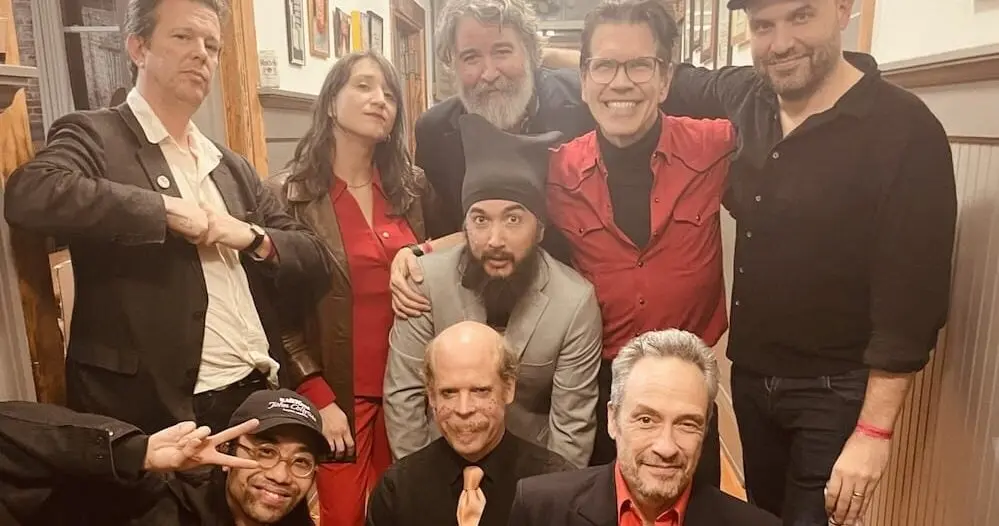
Fast forward to the Valentine’s Day weekend of 2025. Gathered inside the hallowed, acoustically resonant halls of the Pico Union Project in Los Angeles, Oldham convened a formidable assembly of players. His core touring lineup of Jacob Duncan (saxophone, flute) and Thomas Deakin (electric guitar, clarinet) was significantly augmented. Longtime collaborators Emmett Kelly (bass) and D.V. DeVincentis (saxophone) returned to the fold, joined by Ryder McNair (piano), Patrick Shiroishi (saxophone), and the distinctively monikered London May (drums).
Captured in front of an intimate audience during those freezing-hot Los Angeles nights, these performances formed the raw material for Ghosts of American Psychonauts. Rather than serving as a standard, pristine live-in-concert document, the record functions as an alchemical laboratory where past compositions are subjected to intense, contemporary pressures.
Supporting Context & Metrics: The Ensemble and Ecological Undercurrents
While assembling an ensemble featuring four woodwind and brass players might initially suggest a top-heavy sonic footprint, the arrangements on Ghosts of American Psychonauts achieve a terrifying, breathtaking equilibrium. This dense orchestration is deployed with surgical precision, most notably on tracks that grapple with the ecological precarity of the modern American landscape.
The Apocalyptic Re-imagining of Trees of Hell
On the studio version of Trees of Hell, the track simmers with a subdued, psychological menace. In the hands of the Pico Union Project ensemble, however, the song undergoes a catastrophic metamorphosis. Fueled by an intimidating wall of brass and woodwinds—spewing sonic magma across the mix—the track transforms into an apocalyptic memorial for the recent, devastating wildfires that swept through the Californian hills.
Bassist Emmett Kelly anchors the proceedings with a relentless, hypnotic refrain, providing the tectonic plates upon which the brass section erupts. Amidst this squall, Oldham assumes the posture of a hallucinating evangelical preacher, warning listeners against the environmental perils born of human folly. It is a striking example of art mirroring planetary trauma, capturing the smell of smoke and the panic of displacement within a folk-rock framework.
Downstream and the Gentle Rhythms of Precarity
Similar themes of ecological vulnerability course through Downstream, though approached through a much gentler, pastoral lens. Jacob Duncan laces the arrangement with gorgeous, weeping flute lines that weave effortlessly around Oldham’s world-weary vocal delivery.
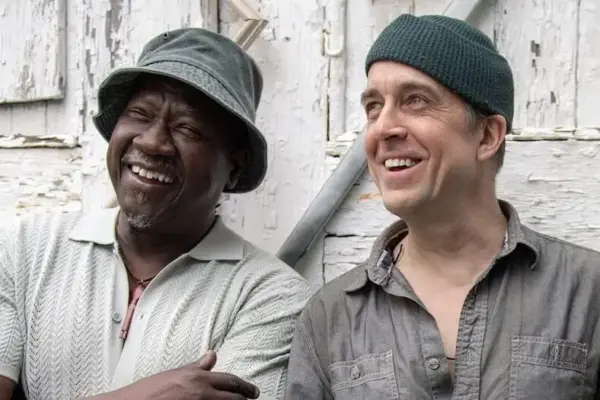
Adding further depth to the track is Nashville country music stalwart David “Ferg” Ferguson. Ferguson not only provides lush, grounding harmonies but steps up to take a verse himself, delivering his lines with a gnarled, stentorian grace that evokes the timeless, weathered durability of the American roots tradition.
The Self-Interrogation of London May
Reality bends further inward on the aptly titled London May. Driven by the drumming of the man himself, the song is a brooding, hypnotic interrogation of selfhood and identity. As the rhythm section locks into a trance-inducing groove, the composition steadily mounts toward an emotional climax. It ultimately dissolves into a transfiguring message of affirmation—“Yes, you may!”—belted out amidst ascending, triumphant waves of saxophone and piano.
Similarly, Shorty’s Ark operates as a cinematic taxonomy of the earth’s creatures. The arrangement builds to a lathering, overwhelming crescendo, mimicking the spooling of film in the projection room of one’s memory. Oldham coos the unforgettable lines:
“Human beings, cockatoos, elephants and bees / Your mom’s and dad’s, your penguin birds, your first best friend and me.”
It is a grand, inclusive cataloging of life, death, and interconnectedness that only Oldham could deliver with such unironic, disarming sincerity.
Official Statements & The Peak of Genius
To dismiss this deep dive into Oldham’s ecosystem as mere hagiography or nepotism is to misunderstand the historical lineage of artistic devotion. Think of it instead through the philosophical lens that prompted Plato to take dictation at the sandals of Socrates. To observe a master from the inside—to describe the tornado from its very interior rather than cowering in the safety of the storm-shelter—offers a perspective unclouded by detached academic critique.
As the album builds toward its emotional zenith, it arrives at a moment that bridges Oldham’s storied past with his restless present. The final track on Ghosts of American Psychonauts is a definitive, spellbinding reading of his most celebrated composition: I See A Darkness.
Having performed this specific piece alongside Oldham on numerous occasions across the globe, one bears witness firsthand to its undeniable, almost supernatural enchantment. It is a song that fundamentally altered the vernacular of modern music, introducing a dark, psychological gravity into contemporary songwriting. It transcends the traditional boundaries of a song; it is a trembling, defiant fist shaken directly in the face of death.
On this live recording, the track builds with monumental patience. It begins humbly, with delicately plucked acoustic guitar strings, before swelling with symphonic, cinematic emotion. Accompanied by elegiac saxophone, minimalist piano, and crepuscular harmony vocals that sound like ghosts singing from the wings, it marches toward its devastating lyrical pay-off:
“My best, unbeaten brother, this isn’t all I see… Oh no, I see a darkness.”
The philosophical divide between mere proficiency and true greatness was perhaps best summarized by the old adage: “Talent is hitting a target no one else can hit. Genius is hitting a target no one else can see.” The fact that Will Oldham has continuously eviscerated, reassembled, and recapitulated his own legendary songbook over decades—always aiming at unseen, shifting targets—stands as definitive proof of his genius.
Future Outlook & Release Information
Ghosts of American Psychonauts is far more than a contractual live album or a retrospective victory lap. It is a vital, breathing addition to an ongoing, lifelong project of artistic self-actualisation. By pulling his classic compositions into the turbulent present and arming them with an expanded, fearless ensemble of brass, woodwinds, and rhythm, Oldham proves that his music is a living organism, capable of absorbing the trauma of wildfires, the passage of time, and the weight of collective memory.
For longtime devotees and neophytes alike, this release promises to recalibrate expectations of what live archival recordings can achieve. It challenges the listener to step out of the storm-shelter, look the darkness in the eye, and embrace the disquieting beauty of a master artist at work.
May this ongoing exploration of the human psyche never cease.
Album Details & Pre-Order Information
- Ghosts of American Psychonauts
- Release Date: September 18th, 2026
- Label: Domino Records
- Pre-Order Links: DomMart Physical Exclusive | Digital Pre-Save