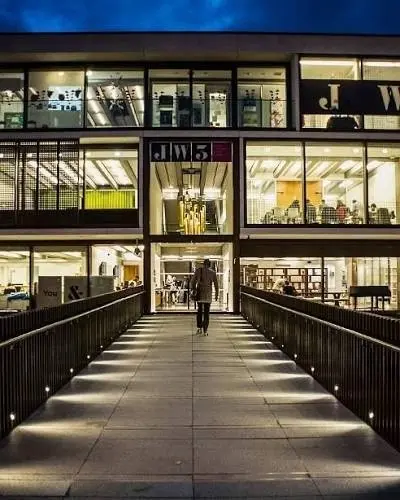
North London’s premier cultural nexus, JW3 (Jewish Community Centre London), has officially launched the fourth season of its critically acclaimed classical music series. Located at 341–351 Finchley Road, the vibrant arts, culture, and educational hub—whose moniker cleverly plays on its NW3 postal district as "a new postcode for Jewish life"—continues to cement its reputation as a major player in the capital’s live classical performance ecosystem.
Curated by renowned cellist David Waterman, a founding member of the legendary Endellion Quartet, the current season promises an intimate, high-caliber musical journey. Opening to a capacity audience on September 30, 2026, with an electrifying recital by celebrated Russian-Israeli pianist Boris Giltburg, the series marks a milestone as the cultural center reflects on over a decade of community engagement and artistic excellence.
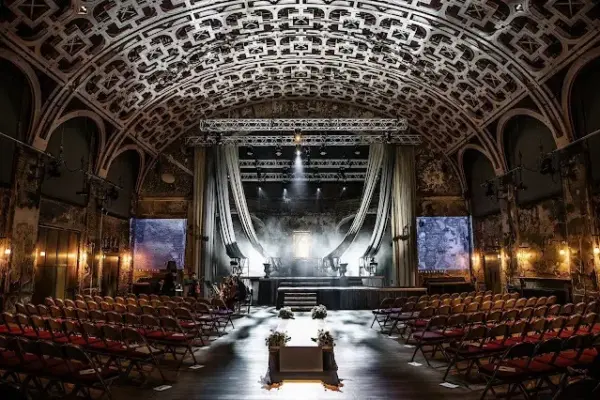
Rather than leaning into identity-driven programming, Waterman’s curatorial philosophy remains rigorously focused on quality. The series operates on the premise that exceptional musicianship transcends cultural markers, resulting in meticulously curated programmes that bridge historic masterworks with virtuosic execution. Designed to seat up to 250 patrons in an intimate, acoustically vibrant recital hall, the venue offers a unique proximity between artist and audience—a rare commodity in London’s sprawling classical landscape.
Detailed Chronology of the 2026/2027 Concert Series
The current classical season at JW3 is characterized by carefully plotted thematic arcs, pairing monumental chamber works with unexpected, sparkling miniatures designed to leave audiences invigorated.
Opening Night: Boris Giltburg (September 30, 2026)
The season commenced with high drama and technical brilliance as pianist Boris Giltburg took to the stage. Playing to a full house, Giltburg—known for his profound interpretive depth and luminous tone—set a soaring benchmark for the months ahead. His performance immediately reaffirmed JW3’s recital hall as a serious destination for world-class soloists seeking an intimate connection with their listeners.
The Joy of Schubert and Beethoven (October 28, 2026)
Following the blockbuster opening, the second installment of the autumn series turns toward the rustic, communal warmth of chamber masterpieces. The programme features Franz Schubert’s beloved Trout Quintet (Piano Quintet in A major, D. 667), a work famously suffused with buoyancy and festive charm.
Curator David Waterman contrasts this with Schubert’s usual reputation for tragic, deeply moving utterances, noting that the Trout is unadulterated joy. The ensemble for this performance is led by the brilliant Russian-Vietnamese violinist Aylen Pritchin, an artist whom Waterman regards with immense admiration. Pritchin and Waterman have previously shared stages at prestigious institutions such as Wigmore Hall and Prussia Cove.
Complementing the Trout Quintet is Ludwig van Beethoven’s String Trio in G major, Op. 9, No. 1. Waterman champions this piece as every bit the equal of Beethoven’s celebrated string quartets, noting its charm and comparative under-representation in modern concert halls. The evening will round off with Camille Saint-Saëns’ virtuosic Introduction and Rondo Capriccioso for violin and piano—a vehicle engineered to showcase Pritchin’s dazzling technical prowess.
An Evening of Duos and Trios: Kadesha, Hunter, and Greenberg (November 17, 2026)
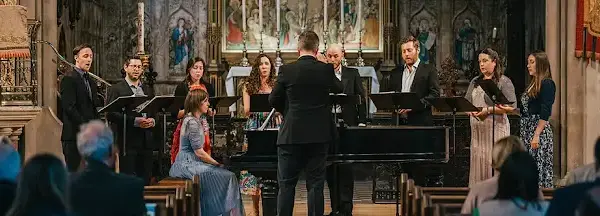
The momentum continues deep into the autumn with a multifaceted chamber concert on November 17. The performance brings together an exceptional trio of international musicians: Greek-Albanian violinist Jonian Ilias Kadesha, his wife and acclaimed cellist Vashti Hunter, and London-based Israeli pianist Noam Greenberg.
Kadesha, praised by Waterman as an extraordinary and erudite performer, will join his colleagues for an eclectic and demanding repertoire. The evening features Bohuslav Martinů’s rhythmically arresting Duo No. 2 for Violin and Cello, Claude Debussy’s impressionistic Sonata for Violin and Piano, and Beethoven’s stately Variations for Cello and Piano on "Bei Männern, welche Liebe fühlen" from Mozart’s The Magic Flute. The programme is rounded out by masterworks of the piano trio genre, including selections from Joseph Haydn and Robert Schumann’s expressive Phantasiestücke.
Post-Christmas Highlights: The Aviv Quartet (January 2027)
Looking ahead to the winter solstice and the dawn of the new year, the series will resume in January 2027 with a landmark appearance by the internationally renowned Aviv Quartet. Their programme promises a rigorous exploration of masterworks spanning the Classical and Romantic eras, featuring seminal compositions by Haydn, Felix Mendelssohn, and Beethoven.
Supporting Context & Metrics: Architecture, Audience, and Curation
The Venue Dynamics and Acoustic Intimacy
A critical factor in the enduring success of JW3’s classical series is its physical architecture. The recital hall’s flexible configuration accommodates up to 250 patrons, positioning it as a boutique performance space compared to the cavernous halls of South Kensington or the Barbican.
This spatial intimacy fundamentally alters the dynamic between performer and listener. Every seat offers unobstructed sightlines and a palpable sense of shared space. For artists accustomed to vast auditoriums, the immediacy of the JW3 audience provides a refreshing, almost salon-like environment. For the audience—largely drawn from the local north London community—the experience is devoid of the clinical detachment often associated with major concert venues.

The Curation Philosophy
Curator David Waterman brings decades of chamber music experience to his role, most notably as a founding cellist of the acclaimed Endellion Quartet. When JW3 approached Waterman with the brief to design a classical music series, the parameters were clear: uncompromising quality above all else.
Waterman has intentionally steered away from identity-driven programming. While JW3 is inherently a Jewish community hub, the classical series features no mandatory quotas for Jewish composers or performers. Instead, the guiding metric is artistic integrity. This philosophy has allowed the venue to attract premier international talent while cultivating a discerning, highly attentive local listenership.
Waterman’s involvement extends beyond administrative curation; he actively participates as a performing artist in approximately half of the concerts each season, while introducing and contextualizing the remaining performances. This hands-on approach bridges the gap between the stage and the stalls, fostering an environment where dialogue and musical appreciation flow freely.
Official Statements & Industry Perspectives
Reflecting on the challenges and rewards of promoting classical music in contemporary London, David Waterman offers a candid assessment of cultural economics and shifting public tastes.
Speaking on audience reception, Waterman notes that while the vast majority of concerts resonate deeply with attendees, live event promotion remains an unpredictable art. "Things go in fashions," Waterman explains, observing that public appetite for specific genres—such as Lieder recitals or string quartet programmes—ebbs and flows over time.
Navigating these currents requires a delicate balancing act. Promoters, according to Waterman, must possess unwavering conviction in their programming while remaining attuned to the realities of the market. "As a promoter, you have to believe in what you are doing and persist, though sometimes you cannot fight the trend."
Crucially, Waterman refuses to compromise artistic standards for the sake of guaranteed box office returns. While acknowledging that it would be mathematically straightforward to curate a safe, homogenous series that sells out instantly, he admits such a project would leave him entirely uninspired.
"It would be easy enough to create a series that would sell out," Waterman remarks, "but which I would be totally uninterested in attending myself! And that is not the way he wants to go."
This refusal to pander to lowest-common-denominator programming has earned JW3’s classical series a fiercely loyal following. The audience is frequently described as exceptionally well-behaved, deeply engaged, and remarkably enthusiastic—a testament to the symbiotic relationship fostered between curator, performer, and listener.
Future Outlook & Strategic Direction
As JW3 celebrates its 13th year as a pillar of north London’s cultural landscape, the classical music series enters its fourth year with robust momentum. The venue has successfully transitioned from a nascent community hub into an established, authoritative voice in London’s cultural discourse.
Looking forward, the strategic trajectory for the classical programme centers on deepening community ties while expanding its reach across the capital. By maintaining a tight curation of world-class chamber musicians and soloists—such as Boris Giltburg, Aylen Pritchin, Jonian Ilias Kadesha, and the Aviv Quartet—JW3 ensures that high art remains accessible, intimate, and vibrant.
The delicate interplay between commercial viability and uncompromising artistic vision will undoubtedly remain a challenge, but under Waterman’s steady hand, the series has proven resilient. By refusing to compromise on quality, JW3 has carved out a distinct, highly respected niche in London’s musical geography—proving that small-scale venues can deliver outsized cultural impact.
For complete ticketing information, full programmatic notes, and upcoming seasonal schedules, patrons are encouraged to visit the official JW3 Classical Music Series Portal.