Executive Overview
The release of the disaster-action comedy parody Stop! That! Train! marks an intriguing intersection between mainstream Hollywood spoof culture and the ever-expanding universe of modern drag performance. Channeling the frantic, gag-a-second energy of 1980s and 1990s classics like Airplane! (1980), The Naked Gun (1988), and Hot Shots! (1991), the film transplants the familiar blueprint of high-stakes, low-brow disaster cinema into the realm of queer camp.
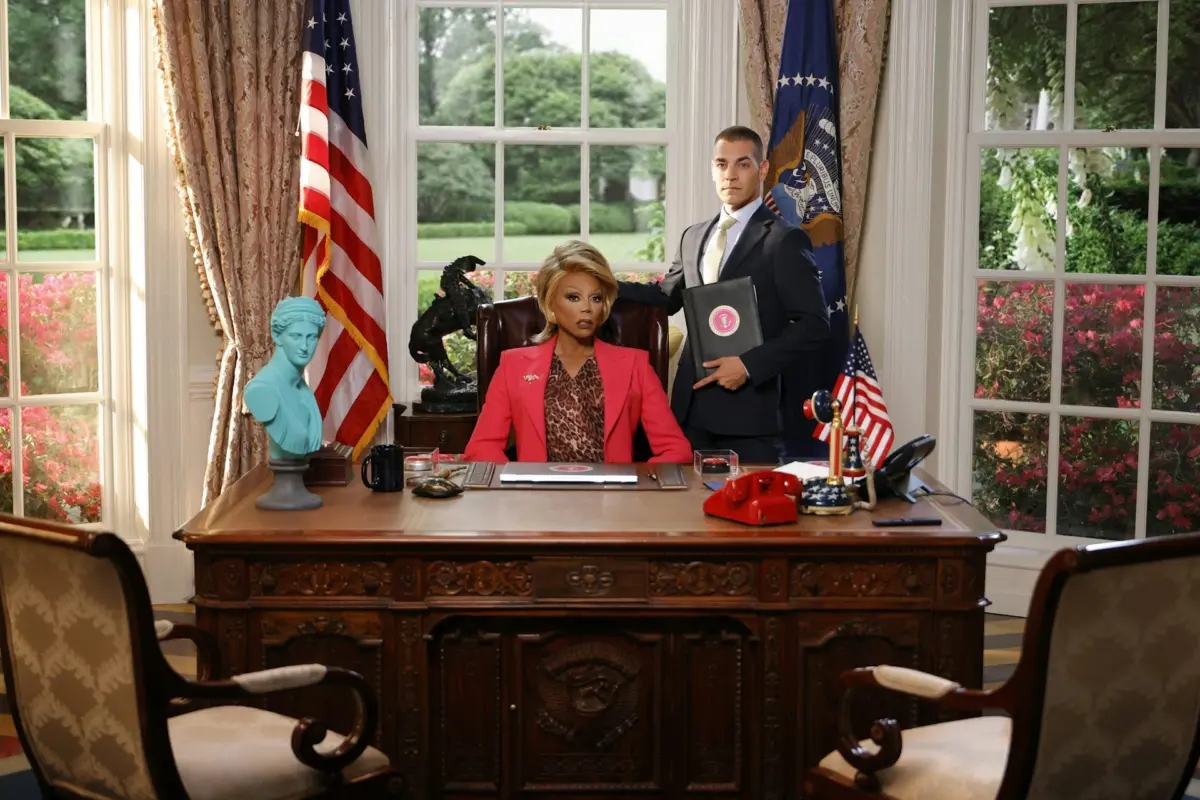
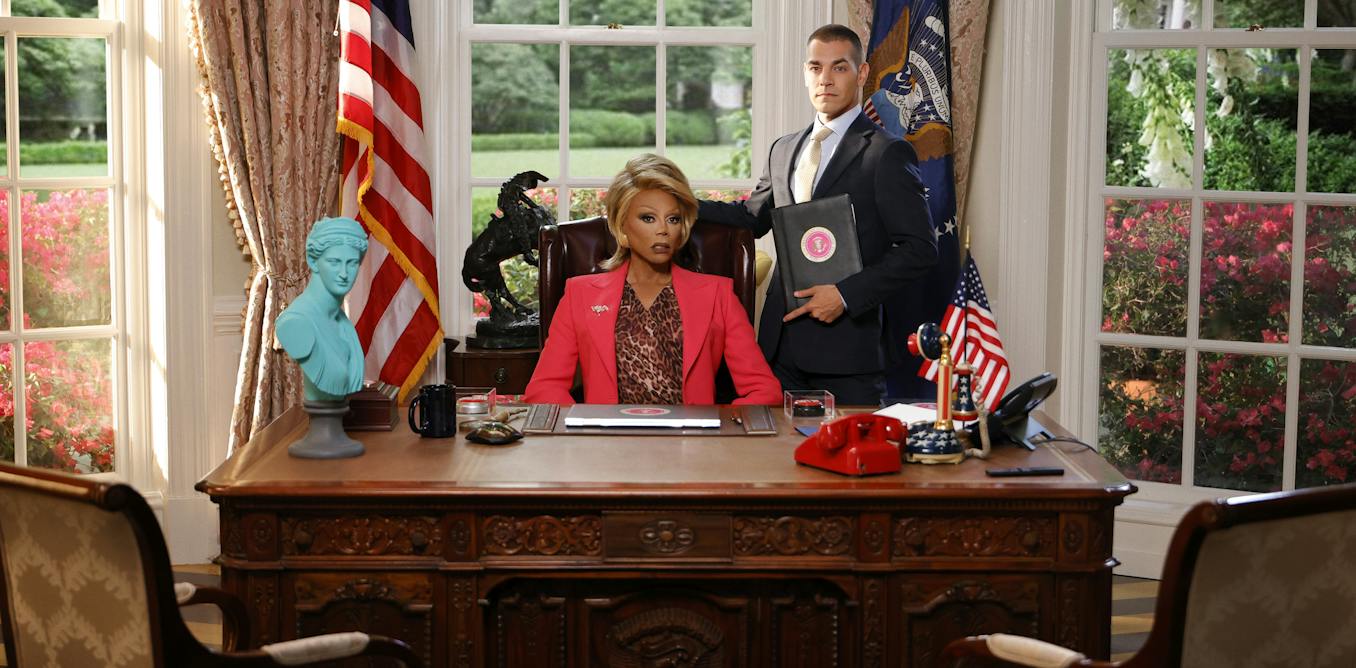
At its core, the narrative follows Tess and DeeDee—two plucky, downtrodden train stewardesses working for the notoriously budget-conscious Stank Rail. Played with uninhibited glee by RuPaul’s Drag Race alumni Ginger Minj and Jujubee, the duo stumbles upon a chance to escape their dismal working conditions and infiltrate the elite ranks of the luxurious Glamazonian Express. Yet, between them and their upward mobility stands a gauntlet of obstacles: snooty first-class "mean girl" stewardesses, demanding passengers, malfunctioning brakes, and a catastrophic, unprecedented meteorological anomaly known only as "Stormaganza." To survive the journey, they must forge an unlikely alliance with the nation’s commander-in-chief, President Gagwell, portrayed by the grand master of the Drag Race franchise himself, RuPaul Charles.
While the film delivers an avalanche of fast-paced, brightly colored entertainment—bolstered by a dizzying array of celebrity cameos, including Sarah Michelle Gellar and The Real Housewives fixture Lisa Rinna as a proudly billed "Sceney Celebrity"—it invites deeper critical scrutiny. Beneath its glossy veneer of pastiche, Stop! That! Train! raises poignant questions about the political potential of camp in contemporary cinema. As anti-drag rhetoric and legislative attacks reach unprecedented levels globally, critics and audiences alike are left wondering whether modern parody can afford to remain politically toothless, or if the current cultural moment demands a sharper, more subversive edge from queer-led media.
Detailed Chronology: The Evolution of the Spoof Genre Meets Drag History
To understand the mechanics of Stop! That! Train!, one must trace the lineage of the disaster spoof and its adoption into the queer cultural lexicon.
The Golden Age of Pastiche (1980s–1990s)
For decades, the cinematic spoof reigned supreme through the Zucker-Abrahams-Zucker (ZAZ) directorial team and their successors. Films like Airplane! established a template built on relentless visual gags, breaking the fourth wall, and deadpan performances delivered amidst chaotic circumstances. These films relied heavily on recognizable formulas—usually drawn from serious disaster epics like Airport or The Poseidon Adventure—and systematically dismantled them through absurd exaggeration.
The Drag Race Phenomenon and Mainstream Crossover
Fast-forward to the 21st century, and the stylistic markers of camp have been catapulted into the global mainstream, largely catalyzed by RuPaul’s Drag Race. What was once an underground, subversive theatrical tradition has transformed into a globally syndicated reality television powerhouse. As drag queens transitioned from local clubs to mainstream television, film studios naturally sought ways to harness their distinct brand of high-energy performance.
Stop! That! Train! operates much like a drag queen lip-syncing to a legendary diva’s signature track: the lyrics and vocal runs are historically fixed, leaving room for interpretation within a tightly constrained framework. Much of the narrative momentum and structural joke-delivery is lifted directly from Airplane!, updated with modern pop-culture references and queer sensibilities. As RuPaul famously advises contestants facing a high-stakes lip-sync for the crown: "Good luck, and don’t fuck it up!"
The Journey of Tess and DeeDee
In Stop! That! Train!, this aphorism serves as the foundational ethos for Ginger Minj and Jujubee. Their characters navigate an escalating series of absurd crises aboard a doomed locomotive. From battling the meteorological fury of Stormaganza to sparring with pompous elites, the narrative progresses through a rapid-fire sequence of sketches rather than a strictly cohesive plot. The inclusion of Brian Jordan Alvarez as Cal—a remarkably sculpted, delightfully dimwitted co-conductor—provides a focal point for the film’s gender-flipping commentary, turning the traditional objectification of female characters on its head by mercilessly lampooning the "himbo" archetype of straight male action heroes.
Supporting Context & Metrics: Camp, Culture, and Resistance
The Mechanics of Camp and Subversion
To evaluate Stop! That! Train! fairly, one must examine the theoretical definitions of camp. American cultural critic Susan Sontag, in her seminal 1964 essay Notes on Camp, famously defined the phenomenon as a love of "artifice and exaggeration." However, in the decades since Sontag’s writing—and particularly in the hyper-politicized landscape of the 2020s—camp has increasingly evolved into a tool of active resistance.
Recent academic research underscores the socio-political weight carried by drag performers. According to studies highlighted in political science journals and media research, drag has transitioned beyond mere entertainment to become a vital force in destigmatizing the LGBTQ+ community. When political landscapes witness coordinated legislative and cultural attacks on queer expression, artistic forms that weaponize humor and subversion acquire heightened importance.
| Analytical Dimension | Traditional 1980s Spoof (Airplane!) | Stop! That! Train! (Modern Queer Pastiche) |
|---|---|---|
| Primary Target | Earnest disaster films and Hollywood clichés | Institutional rigidity, celebrity culture, and heteronormativity |
| Aesthetic Approach | Absurdist, slapstick, rapid-fire gag delivery | Hyper-stylized, campy, drag-infused theatricality |
| Socio-Political Edge | Generally apolitical; focused purely on escapism | Surface-level critique of fame, with intermittent moments of sharp gender inversion |
| Star Power | Veteran dramatic actors playing it straight in absurd situations | Professional drag entertainers and pop-culture icons |
The Limits of Sanitized Satire
Despite the inherent potential for systemic critique, Stop! That! Train! largely pulls its punches. While the film features flashes of bawdy, unapologetic edge—particularly in its ribbing of traditional heteronormative tropes—its broader social commentary remains remarkably shallow.
Critics note a parallel between the film and its parent television franchise, RuPaul’s Drag Race. Both properties have achieved commercial success by smoothing out the rougher, counter-cultural edges of drag to make them palatable to mainstream, risk-averse audiences. While the movie offers brilliant, larger-than-life performances from its leads, it stops short of transforming pastiche into a robust weapon of social critique. It asks viewers not to take themselves seriously, but in doing so, it occasionally absolves itself of the responsibility to say anything substantive about the very culture it satirizes.
Official Statements & Critical Reception
The film has elicited a fascinating spectrum of responses from cultural critics, film historians, and queer media analysts. While general audiences have embraced its breezy, nostalgia-fueled escapism, cultural commentators have engaged in a robust debate over its artistic ambitions.
- On the Film’s comedic efficacy: Industry reviewers have universally praised the chemistry between Ginger Minj and Jujubee. A spokesperson for the film’s production noted that the project was conceived as "a love letter to both the golden era of disaster spoofs and the unstoppable cultural force of modern drag."
- On the missed opportunities for satire: Academic voices writing on queer media have voiced a nuanced critique. Dr. Ella Greenhalgh, a noted researcher in queer performance studies, observed: "Good queer and camp humor possesses the unique capacity to take rigid social norms and marginalizing stereotypes, exaggerate them, and weaponize them against power structures. When modern pastiche strips away that political bite in pursuit of mainstream sanitization, it risks neutralizing the very resistance that gives drag its cultural pulse."
- On star cameos and celebrity culture: The inclusion of figures like Lisa Rinna—billed playfully as a "Sceney Celebrity"—has been highlighted as a high point of self-awareness. However, critics point out that while the film pokes fun at the machinery of fame, its critique of celebrity worship never penetrates beneath the surface layer of makeup and glamour.
Future Outlook: The Rebirth of the Spoof in the 21st Century
As Hollywood continues its relentless mining of 1980s and 1990s intellectual property—evidenced by recent revivals such as the upcoming The Naked Gun reboot slated for 2025—the disaster spoof subgenre is undergoing a tentative renaissance.
The central question facing filmmakers operating in this space is whether nostalgia alone is sufficient to sustain audience interest in an increasingly cynical media ecosystem. While films like Adam McKay’s Don’t Look Up (2021) demonstrated that disaster comedy can successfully tackle systemic global anxieties, lighter parodies often retreat into safe, apolitical territory.
For queer-led cinematic parodies like Stop! That! Train!, the path forward offers immense potential. If future installments or similar projects can marry the breathless, chaotic joy of traditional ZAZ-style slapstick with the razor-sharp, politically conscious edge inherent to authentic drag culture, they could redefine what the spoof genre is capable of achieving. Giving 21st-century pastiche some genuine teeth—dragging it firmly into the modern sociopolitical conversation rather than leaving it trapped in nostalgic imitation—may well be the key to ensuring these films resonate long after the credits roll.