Executive Overview
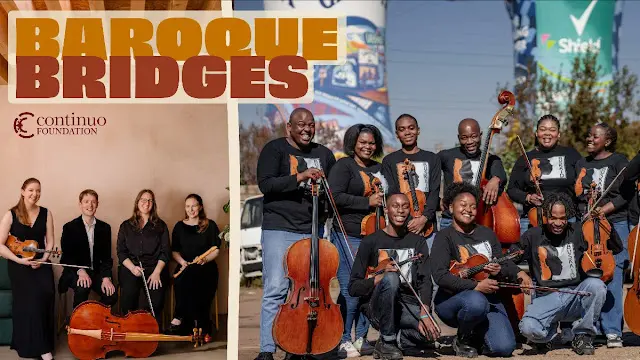
In a rare and culturally significant collaboration, the UK-based period instrument specialist group Ensemble Hesperi has joined forces with South Africa’s renowned Buskaid Soweto String Ensemble for an unprecedented concert series entitled Baroque Bridges. Spanning venues across the United Kingdom this August, this partnership represents far more than a simple meeting of musical styles. It is an ambitious synthesis of historical European performance practice and the vibrant, resilient traditions of South African township music.
The collaborative tour features marquee performances at St Mary’s Church in Bathwick, Bath (August 18) and St Giles Cripplegate in London (August 20), complemented by a dedicated showcase by the Buskaid ensemble titled Music Hath No Borders at London’s historic Foundling Museum on August 21. Together, these dynamic ensembles bridge centuries of musical heritage, geographical boundaries, and cultural divides, creating a sonic landscape that honors classical European masters while amplifying pioneering composers of African descent and the irrepressible energy of South African street music.
This initiative is the culmination of decades of artistic dedication, cross-continental mentorship, and social advocacy. By bringing together the meticulous historical research and period instrumentation of Ensemble Hesperi with the breathtaking technical virtuosity and deep-rooted rhythmic vitality of the Buskaid musicians, the tour offers audiences a powerful reminder of music’s capacity to unite diverse communities. This comprehensive report explores the origins, collaborative program, historical context, and cultural impact of the Baroque Bridges tour.
Detailed Chronology of the Tour and Repertoire
The Baroque Bridges tour is structured as a carefully curated journey through time and geography, designed to highlight the unexpected intersections between 17th- and 18th-century European art music and the living traditions of the global African diaspora.
Performance Itinerary
- August 18, 2024: Baroque Bridges premiere at St Mary’s Church, Bathwick, Bath. Set in a venue renowned for its acoustic warmth, the joint ensemble opened the series with a program designed to showcase the expressive versatility of period strings, recorder, and harpsichord alongside rich, resonant lower strings.
- August 20, 2024: Baroque Bridges central London performance at St Giles Cripplegate. Located in the heart of the Barbican, this historic church provided a dramatic backdrop for the cross-cultural dialogue between European baroque aesthetics and South African performance traditions.
- August 21, 2024: Music Hath No Borders at the Foundling Museum, London. This intimate concert spotlighted the standalone brilliance of the Buskaid Soweto String Ensemble, offering London audiences a deep dive into the repertoire that has made the ensemble an international sensation.
A Program Bridging Centuries and Continents
The musical programme for Baroque Bridges is an adventurous pastiche of familiar masterpieces, overlooked historical treasures, and exhilarating folk-infused arrangements. The setlist features foundational works by European baroque masters such as Johann Sebastian Bach, Georg Philipp Telemann, George Frideric Handel, Henry Purcell, and Jean-Philippe Rameau. These pieces are performed with historical awareness by Ensemble Hesperi, utilizing period-appropriate bowing, tuning, and ornamentation.
Crucially, the programme expands the traditional European classical canon by incorporating works by two pioneering 18th-century composers of African descent:
- Joseph Bologne, Chevalier de Saint-Georges: Often celebrated as the "Black Mozart," Bologne was a prolific classical composer, virtuoso violinist, and fencing master in pre-revolutionary France whose symphonic and chamber works are increasingly recognized for their elegance and structural ingenuity.
- Ignatius Sancho: Born on a slave ship in the Atlantic in 1729, Sancho rose to become a British composer, actor, and writer, notable as the first Briton of African descent to vote in a parliamentary election. His refined country dances and keyboard miniatures reflect the cosmopolitan musical tastes of 18th-century London.
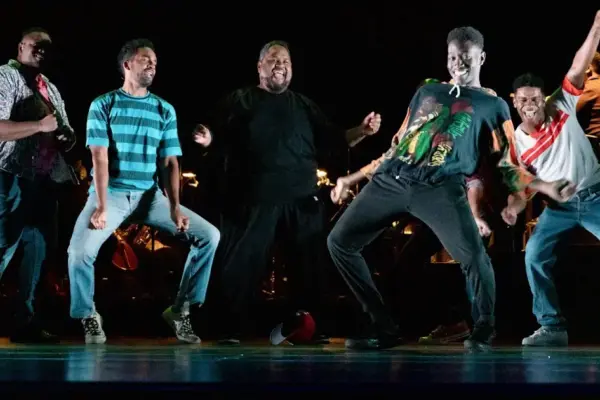
The climax of each Baroque Bridges concert shifts the sonic center of gravity firmly to the southern hemisphere. The evening concludes with high-octane Kwela music—an improvised genre of street music deeply rooted in traditional South African township culture and anti-apartheid protest movements. Arranged specifically for the ensemble, these performances are elevated by choreography, featuring intricate dance moves executed by members of the Buskaid ensemble while playing their instruments. This seamless integration of movement and sound encapsulates the joyous, defiant spirit that defines the Buskaid ethos.
Supporting Context & Metrics: The Genesis and Evolution of Buskaid
To fully appreciate the significance of the Baroque Bridges collaboration, one must examine the extraordinary origins of the Buskaid Soweto String Project. The initiative was born out of a moment of international solidarity during the twilight of South Africa’s apartheid regime.
The 1991 "Busk" That Sparked a Movement
In 1991, British violist Rosemary Nalden learned through media reports of the profound challenges facing a group of young string players striving to practice under oppressive socioeconomic conditions in Diepkloof, a township in Soweto, Johannesburg. Recognizing both their talent and their urgent need for resources, Nalden mobilized her professional network in the United Kingdom.
In a coordinated act of grassroots cultural activism, 120 of Nalden’s professional musical colleagues took part in a simultaneous "busk" across sixteen British Rail stations in a single day. Armed with instrument cases and open hearts, these classical musicians raised £6,000—a vital injection of capital that provided immediate financial relief and equipment for the young township musicians. Archival footage of this remarkable mobilization can still be viewed on YouTube, serving as a testament to the power of artistic community building.
Establishing Roots in Soweto
The success of the 1991 fundraiser laid the groundwork for a permanent institutional commitment. In 1997, Rosemary Nalden made a life-changing move, relocating permanently from the United Kingdom to South Africa. Her mission: to establish the Buskaid Soweto String Project.
Two years later, in 1999, the dedicated Buskaid Music School was constructed in Diepkloof. Since its inception, the school has operated as a safe haven and a rigorous academy, offering children from underprivileged backgrounds access to world-class instrumental training. What began as an elementary after-school string group has evolved over the decades into the Buskaid Soweto String Ensemble, a globally acclaimed musical body celebrated for its technical precision, stylistic versatility, and infectious energy.
.jpg)
A Repertoire Without Boundaries
The training regimen at the Buskaid Music School is uniquely comprehensive. While students receive a rigorous foundation in Western classical technique, their performance palette is remarkably diverse. The ensemble effortlessly transitions across genres, performing:
- Western Classical Masterworks: Ranging from Bach concertos to Romantic miniatures.
- Classic Pop and Afro-Pop: Reimagining contemporary chart hits through a classical string lens.
- Traditional Township Vibe: Capturing the syncopated rhythms and communal warmth of South African community life.
- Amapiano: The latest evolution of South Africa’s house music culture, expertly adapted for acoustic string instruments.
This eclectic approach ensures that Buskaid musicians are not merely reproducers of European high culture, but culturally agile artists capable of speaking multiple musical languages with equal fluency.
Official Statements & Industry Perspectives
The convergence of Ensemble Hesperi and the Buskaid Soweto String Ensemble has drawn widespread praise from critics, musicologists, and cultural institutions alike.
Artistic directors from both organizations have emphasized that Baroque Bridges is built on a foundation of mutual respect and a shared belief in music’s democratic potential. By pairing the intimate, historically informed performance practice of Ensemble Hesperi—known for uncovering neglected 17th- and 18th-century British and European repertoires—with the fiery, visceral execution of the Buskaid players, the collaboration challenges traditional hierarchies within classical music.
Music critics have noted that hearing baroque counterpoint performed alongside the polyrhythmic drive of South African township music offers a profound revelation. Rather than feeling like a forced juxtaposition, the programme highlights the underlying structural and emotional commonalities between disparate musical traditions. Both baroque ornamentation and Kwela improvisation rely heavily on dialogue, ornamentation, rhythmic vitality, and collective interaction among ensemble members.
Furthermore, cultural commentators have highlighted the political and social resonance of the collaboration. At a time when arts funding face mounting pressures globally and debates over cultural appropriation versus cross-cultural exchange are intensely scrutinized, Baroque Bridges sets a gold standard for ethical, equitable artistic partnerships. It honors the historical contributions of Black composers who were historically marginalized within the European classical canon while directly supporting a grassroots South African institution that has transformed hundreds of young lives through music education.
Further details regarding Ensemble Hesperi’s ongoing curatorial projects and partnerships can be accessed via their official artist page on Continuo Connect.
Future Outlook: Legacy and the Path Forward
As the final notes of the Baroque Bridges tour echo across British venues this August, the impact of this collaboration is expected to resonate far beyond the summer concert season.
Educational and Institutional Legacies
The ongoing success of the Buskaid Soweto String Project serves as an enduring blueprint for how targeted philanthropic and educational interventions can alter life trajectories. By demonstrating that young musicians from townships like Diepkloof can master the intricate demands of both European baroque performance and complex indigenous genres, Buskaid continues to dismantle elitist barriers surrounding classical music.
Collaborations like Baroque Bridges validate these educational efforts on international stages, providing young South African musicians with invaluable touring experience, cross-cultural networking opportunities, and global platform visibility. For Ensemble Hesperi, the partnership has expanded their artistic horizons, proving that period-instrument ensembles do not need to remain confined to museum-like recreations of the past. Instead, historical instruments can become active participants in contemporary global conversations.
Potential for Future Collaborations
Industry insiders and fans are already speculating on the future of this partnership. Discussions are reportedly underway exploring the possibility of reciprocal touring, wherein Ensemble Hesperi would travel to South Africa to perform joint educational workshops and concerts in Soweto and Johannesburg. Such an initiative would further democratize the exchange, allowing European musicians to immerse themselves directly in the acoustic and cultural ecosystem that shapes the Buskaid sound.
In an era characterized by geopolitical fragmentation and cultural siloes, Baroque Bridges stands as a triumphant counter-narrative. It proves that when artists cross time, borders, and musical genres with open ears and mutual respect, they do not just build bridges—they construct entirely new worlds of sound and understanding.