By Danai Molocha
Published: October 22, 2026
Executive Overview
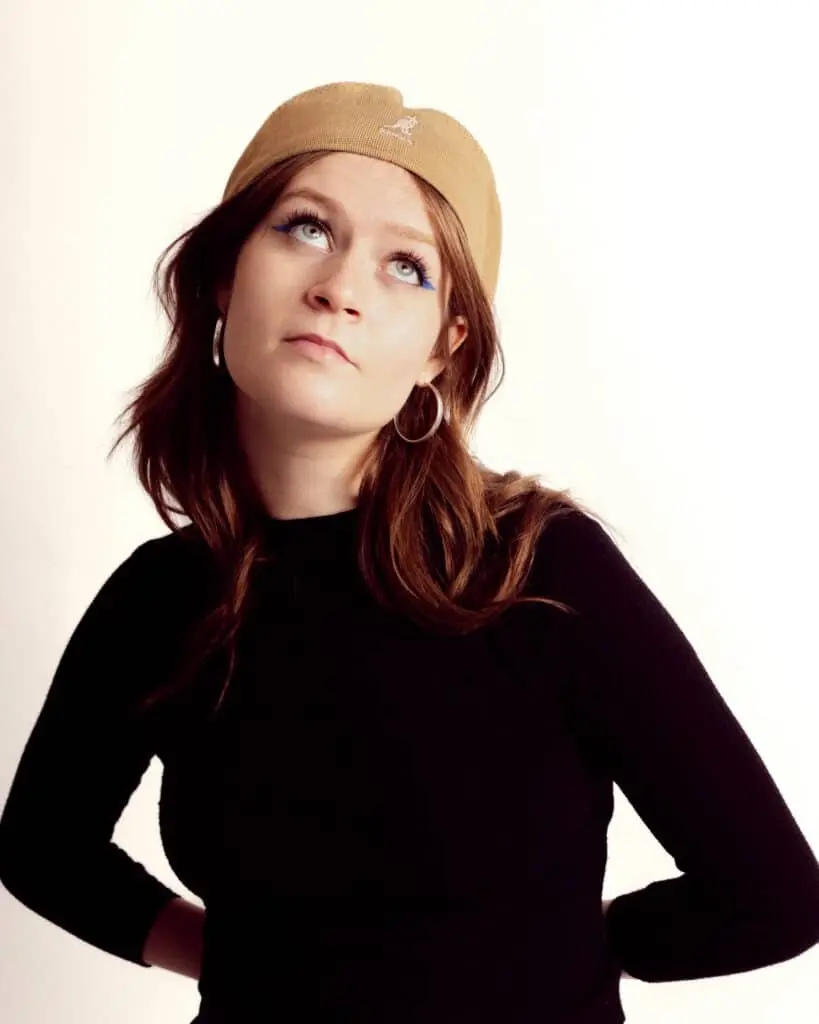
There is a distinct kind of creative alchemy that occurs when the mundane reality of urban life collides with the timeless warmth of a jazz arrangement. For London-based singer-songwriter Daisy Veacock, the inspiration for her sophisticated blend of jazz-pop rarely arrives in the pristine vacuum of a secluded writing studio. Instead, it is born from the grit and glamor of the British capital—whether it’s a night of binge-drinking in a nondescript corner of Clapham that mutates into a horn-fuelled, ear-catching chorus (“cool, confused, clapham”), or the sudden, balmy breeze of a bossa nova cadence soundtracking a late-night exit from a high-rise (“Highrise”).
Veacock’s artistic trajectory has been steadily ascending since her breakout on TikTok in 2022 with “Pickle Juice,” a floaty, discursive ballad that deftly bridges the observational storytelling of Lily Allen with the sophisticated, late-night harmonic language of classic jazz. A proud alumnus of the BRIT School—where her formative years were spent obsessing over the canonical works of Elvis and Beethoven before she ever attempted penning her own tracks—Veacock represents a new guard of independent artists. They are navigating an increasingly precarious industry through sheer graft, intimate audience engagement, and an unyielding commitment to live instrumentation.
As she prepares to launch her aptly titled upcoming headline run—The “Isn’t this just London, Manchester & Glasgow? Tour”—this November, Veacock sat down to discuss the realities of fronting a big band, the emotional toll of turning lived experience into art, and why the geography of the modern city remains the primary character in her songbook.
Detailed Chronology & Background: From the BRIT School to the Bus Stops of London
To understand Daisy Veacock’s singular sonic footprint, one must trace her lineage—both familial and educational. Growing up surrounded by the mechanics of large-scale musical production (her father is a seasoned saxophonist performing in Jools Holland’s renowned rhythm and blues orchestra), Veacock developed an early, visceral appreciation for the acoustic power of a big band.
The Making of an Old Soul
While her peers were exclusively consuming contemporary hyper-pop and trap, Veacock’s childhood soundscape was enriched by classic 2000s luminaries who injected organic instrumentation into mainstream pop consciousness:
- Norah Jones: Whose seminal record Come Away With Me—discovered at her grandparents’ house—left an indelible mark on her melodic sensibilities, mirroring the comforting, whimsical chord structures found in Randy Newman’s Toy Story soundtrack.
- Lily Allen: Known for seamlessly blending biting, colloquial British wit with infectious reggae and brass-heavy arrangements.
- Amy Winehouse: The quintessential London icon whose supple, emotionally mutable vocals could effortlessly pivot from blissful optimism to devastating wistfulness.
Despite this classical and jazz-adjacent foundation, Veacock’s entry into professional songwriting was forged during the isolating, directionless crucible of the COVID-19 pandemic. Navigating grueling one-and-a-half-hour commutes across a locked-down city, she describes that period with characteristic dry humor: "I don’t think I’ve ever been more tired or carried more things in my life!"

The Breakthrough: a drunk thought from a night bus in november
The culmination of these early writing sessions eventually materialized in her breakout catalog, characterized by playful lyricism and deeply intimate heartache. Her 2022 viral hit, "Pickle Juice," introduced listeners to her signature conversational delivery (“…baby you don’t get to pick or choose”), establishing her as a chronicler of twenty-something modern romance, or what can aptly be described as "situationships and the city."
From Tottenham to New Cross via Shoreditch, young London life permeates every bar of her music. Street corners, pubs, bus stops, and high-rise apartments do not merely serve as backdrops; they operate as active participants in the narratives she constructs.
Supporting Context & Metrics: The Economics of Big Bands and the Independent Hustle
In an era where streaming economics and minimalist bedroom-pop setups dominate the independent landscape due to sheer financial viability, Daisy Veacock is swimming against the tide. She routinely enlists a full horn section and expansive string arrangements for her live performances and studio recordings—a logistical and financial puzzle that leaves industry peers baffled.
Funding the Impossible: Chemistry Over Capital
When asked how an independent artist at her level manages to finance an expansive live band, Veacock offers a pragmatic, down-to-earth solution: "I don’t know! I cook them dinner?! I try to be really nice to them."
The camaraderie within her musical collective is palpable. Describing her recent rehearsals with her horn section, she emphasizes the irreplaceable energy generated when multiple virtuosos breathe life into a chart arrangement simultaneously. However, the economics of touring dictate hard compromises. While fans in her primary market of London will experience the full, cinematic breadth of her large ensemble, economic realities mean her upcoming northern dates in Manchester and Glasgow will feature a stripped-back, highly intimate setup centered around keys and backing vocals with collaborator Owen.
The Emotional Cost of Exposure
Veacock’s lyricism often leans heavily on personal vulnerability, a trait that can project an "old soul" aura—a persona occasionally highlighted in tracks like "Big Lonely House." Written during a turbulent year marked by family bereavement and her father’s cancer diagnosis, the song juxtaposes profound, mature grief with the mundane anxieties of a romantic relationship.
Reflecting on the psychological weight of sharing such deeply personal milestones with the public, Veacock pushes back against the notion that artists must inherently be vain to seek recognition:

"You’re not just putting a bit of art out in the world; you’re putting a bit of yourself into the ether, and that can feel really scary sometimes. I’ve definitely had songs I’ve put out and been like, ‘I don’t know about this, I’m a bit nervous!’ But that’s part of the power of it."
Official Statements & Insights: Inside the Songwriting Ritual
In her exclusive interview with Ticketmaster Discover, Veacock offered a rare, behind-the-scenes glimpse into her idiosyncratic creative processes, her sonic evolution, and her philosophy on stagecraft.
The Inverted Writing Process
While most contemporary songwriters begin with a foundational chord progression, a vocal hook, or a definitive opening verse, Veacock relies on a counterintuitive ritual:
"I don’t know why I do it, I always write the second verse first. Always! I speak to songwriters about this, like, ‘Do you guys do this?’ They’re like, ‘No, that’s the hardest bit!’ I think because it’s the hardest bit of the song, it almost feels like, by writing the second verse, you know imagery-wise where you need to get to. And then once you’ve got the chorus, you can link it with the second verse."
Sonic Expansion: Embracing the Strings and Sadness
Looking toward her future musical output, Veacock reveals a deliberate shift in her sonic palette. Driven by introspection and the melancholy of the previous year, her upcoming material leans deeper into orchestral textures:
"I’m very intrigued by the strings at the moment… I’m doing a lot more string-based stuff because the next music I’ve written, it’s slowed a little bit. It’s just because I was a bit sad last year, I guess! But I’m also back on the bossa nova, and it’s got more jazz. It just felt like the natural progression, and it felt silly to push against that if my brain was taking it that way."
Surviving the "Worst Gig" Nightmare
No emerging artist’s journey is complete without the initiation rite of a disastrous live performance. Veacock recalls a harrowing support slot that tested her resilience to its absolute limits:
"I was doing a support and I got there; I travelled for about six hours, didn’t have a dressing room, couldn’t find any water. Didn’t have anywhere to get changed or put my stuff down, and it was freezing cold. I went on stage, and I just thought, ‘This is just completely wrong!’ Cause it was a pretty big audience. But I was like, ‘They don’t get me, and I don’t get them. And that’s okay.’… But I went out for a really nice curry afterwards. A win’s a win!"
Future Outlook: The Road Ahead and The Tour
As the music industry continues to grapple with shifting audience retention metrics and the challenges of live touring infrastructure for mid-tier and emerging acts, Daisy Veacock remains remarkably clear-eyed.
Her immediate horizon is dominated by The “Isn’t this just London, Manchester & Glasgow? Tour”, kicking off in early November. True to her self-deprecating wit, she acknowledges the irony inherent in the burgeoning artist touring circuit:
"It’s really funny that I feel like every small artist does the same first tour. Our scene in London is heaps bigger than our scene elsewhere in the country, so we’re doing a really big London show and everything else is intimate and small… I just thought it was hilarious to call it The isn’t this just London, Manchester and Glasgow? Tour because it’s like, calling it a tour, but it’s three places!"
Beyond the immediate confines of this three-date run, Veacock harbors grander, cinematic ambitions. Having already experienced the hallowed stage of the Royal Albert Hall as a supporting act shortly after RAYE’s historic debut album cycle—reminiscing with awe, “Oh my god, how am I supposed to stand on that stage and do something as groundbreaking as this?!”—her ultimate career trajectory points toward headlining the legendary venue backed by a full live orchestra.
For an artist who balances the intricate storytelling of urban romance with the grand, sweeping traditions of big-band jazz, the stage is set. Whether navigating the complexities of modern dating, surviving freezing backstage dressing rooms, or marshaling a horn section through sheer force of charm and home-cooked meals, Daisy Veacock is proving that authenticity, dedication, and uncompromising musicianship remain the ultimate currency in modern pop.
Tickets for Daisy Veacock’s upcoming November tour across London, Manchester, and Glasgow are available now via Ticketmaster.