Executive Overview
To the mathematician and the computer scientist, an algorithm is a monument of clarity: an explicit, finite, and rigorous procedure valued for its elegance, efficiency, and logical precision. It is a set of instructions designed to solve a problem or complete a task, humming quietly beneath the architecture of modern software. Yet, outside the sterile confines of academia and Silicon Valley server rooms, the word has undergone a profound semantic mutation. Today, “algorithm” rarely evokes abstract logic or formal mathematics; instead, it summons images of hypnotic social media feeds, hyper-targeted digital advertising, and opaque institutional gatekeeping.
Through the rapid, ubiquitous expansion of digital platforms and artificial intelligence—which is, fundamentally, a dense mesh of algorithms interacting at scale—mathematics has transformed into a culturally visible force behind deeply opaque, and frequently unsettling, societal processes. Public familiarity with what algorithms do has outpaced public comprehension of the mathematical principles they embody. This widening chasm between specialist definition and general discourse has fundamentally altered public conversations around agency, technology, and power.
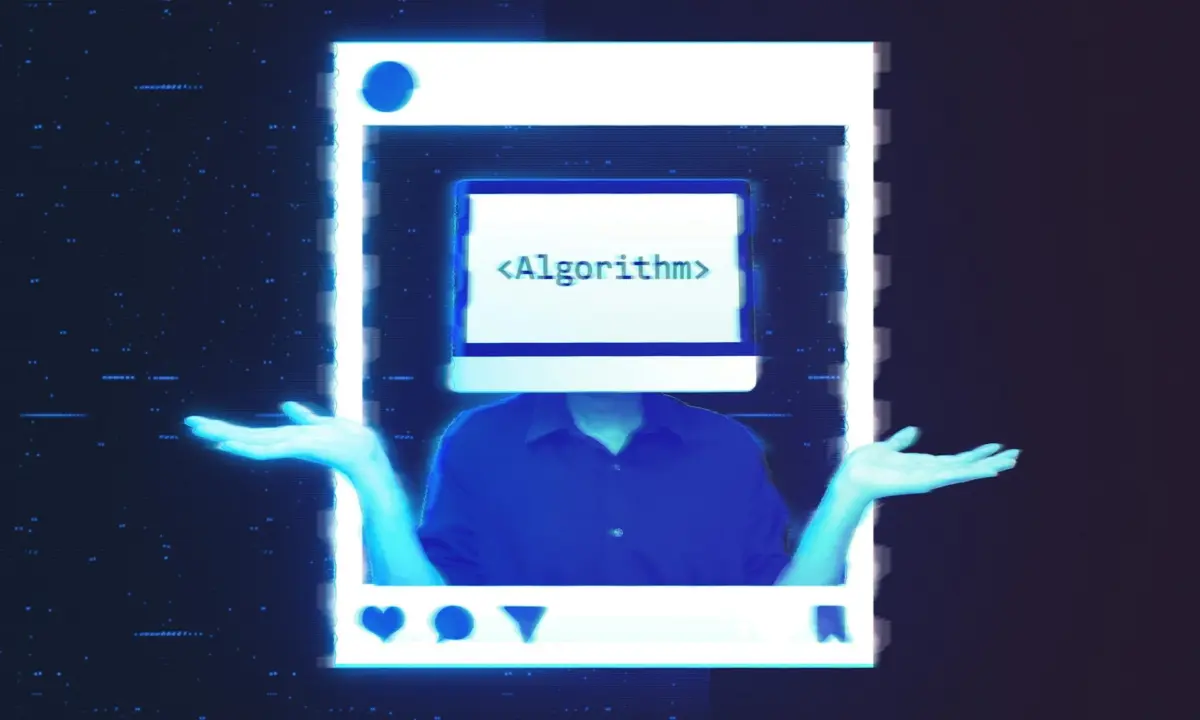
Nowhere is this cultural shift more visible than in modern linguistic habits. People speak of algorithms with a paradoxical duality: on one hand, algorithms are treated like the weather—ambient, impersonal forces that surround us, producing sweeping societal consequences while remaining entirely outside individual control. On the other hand, individuals routinely refer to “my algorithm,” employing a possessive pronoun that implies an intimate, almost symbiotic relationship. From Instagram’s built-in tools designed to “tune my algorithm” to the personalized shock of seeing an advertisement for an obscure product just discussed out loud, the lexicon of computing has crossed over into deeply personal territory.
This investigative report explores the fascinating evolution of the word “algorithm,” tracing its roots from 9th-century Baghdad to Alan Turing’s 20th-century codebreaking, and finally into the contemporary socio-technical landscape. By examining the shifting etymology, the sociological implications of "personal" computing, and the widening chasm between mathematical abstraction and public perception, we reveal how a simple technical term became the defining metaphor for modern institutional power.
Detailed Chronology: From Al-Khwarizmi to the Turing Era
To understand the current friction surrounding computational systems, one must first deconstruct the history of the word itself. Contrary to popular belief, the concept—and the terminology—pre-dates modern digital computers by centuries, evolving through a fascinating dialogue between mathematics, translation, and linguistics.
[9th Century] ➔ [12th Century] ➔ [20th Century] ➔ [21st Century]
 Al-Khwarizmi    "Algorism"      Alan Turing      "My Algorithm"
 (Baghdad)       (Latinization)  (Rigid Logic)    (Personalized AI)
The 9th Century: The Mathematical Foundations of Al-Khwarizmi
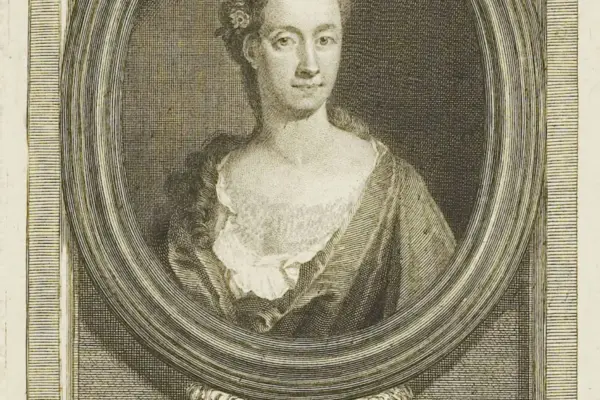
The etymological journey of the algorithm begins in the golden age of Islamic mathematics in Baghdad. The word is derived from a Latinized corruption of the name of Muhammad ibn Musa al-Khwarizmi, a Persian mathematician, astronomer, and geographer who worked in the House of Wisdom during the early 9th century.
Al-Khwarizmi wrote a groundbreaking treatise on Hindu-Arabic numerals, translated into Latin in the 12th century as Algoritmi de numero Indorum. Initially, the resulting term—algorism—did not refer to abstract computation in general, but rather to the specific rules-based techniques used for performing arithmetic operations using the decimal positional system. For hundreds of years, to practice “algorism” meant simply to calculate using Arabic numerals rather than cumbersome Roman letters.
The Mid-20th Century: Alan Turing and the Formalization of Computation
As mathematics matured through the Enlightenment and into the industrial age, the scope of rules-based procedures broadened. However, the modern definition of the algorithm was truly forged in the crucible of mid-20th-century mathematical logic and cryptography.
Faced with fundamental questions about the limits of human knowledge—most notably David Hilbert’s Entscheidungsproblem ( Entscheidungsproblem, or decision problem)—mathematicians needed a rigorous, universal definition of what constitutes a "step-by-step procedure."
Enter Alan Turing, Alonzo Church, and Kurt Gödel. In 1936, Turing introduced the concept of the "Universal Turing Machine," establishing that any mathematical computation could theoretically be broken down into discrete, mechanical steps carried out by a machine. This breakthrough stripped the algorithm of its arithmetic origins, elevating it to a foundational concept in computer science: a finite, unambiguous, rigorous procedure that can be executed mechanically to yield a predictable result.
Ironically, just as the global mathematical community arrived at this precise, highly technical definition of the algorithm, popular culture was about to steer the word in the diametrically opposite direction.
Supporting Context & Metrics: The Shift Toward Opacity
Throughout living memory, algorithms were experienced largely as uniform, bureaucratic procedures. If you applied for a bank loan in the 1980s, the institution’s credit-scoring algorithm evaluated your financial history against a rigid, standardized rubric. The output was mechanical, highly predictable, and applied broadly across populations with similar demographic markers.
Today, the landscape has been entirely reconfigured by machine learning, neural networks, and Big Data.
+-----------------------------------+-----------------------------------+
| TRADITIONAL ALGORITHMS            | MODERN MACHINE LEARNING SYSTEMS   |
+-----------------------------------+-----------------------------------+
| • Rule-based, deterministic logic | • Data-driven, probabilistic logic|
| • Uniform outputs for groups      | • Highly personalized outputs     |
| • Transparent to creators         | • Opaque even to their creators   |
| • Experienced as institutional    | • Experienced as intimate/ambient |
+-----------------------------------+-----------------------------------+
Modern algorithms—particularly those deployed by social media behemoths, search engines, and e-commerce platforms—do not merely execute static rules; they ingest unfathomable quantities of individual user data to dynamically update their own parameters. This shift has radically transformed how citizens experience computational power:
- The Scale of Data Ingestion: Contemporary recommendation engines process billions of behavioral data points per second—ranging from dwell-time on a specific video to micro-movements of a mobile device’s gyroscope.
- The Opacity Index: Because deep-learning models rely on multi-layered neural networks with millions of adjustable weights, understanding why a specific output was generated is frequently impossible, even for the engineers who built the system. This phenomenon is known as the "black box" problem.
- The Personalization Paradox: Where early computational systems sought to standardize treatment across large cohorts, modern algorithms aim to hyper-segment reality, crafting a bespoke digital environment for every individual user.
This dynamic explains the emergence of the possessive phrase “my algorithm.” When a user proclaims that their algorithm is showing them too many cooking videos or an unsettling surplus of advertisements for a specific brand, they are not claiming legal ownership of the underlying source code. Instead, they are acknowledging a deeply psychological relationship. The possessive pronoun names a system that feels uniquely calibrated to their personal psychology, desires, and anxieties, while remaining entirely outside their democratic authority or individual control.
Official Statements & Industry Perspectives
The growing disconnect between the technical reality of algorithms and their public perception has not gone unnoticed by sociologists, platform architects, and regulatory bodies.
Dr. Elena Vance, a leading sociologist of technology at the Oxford Internet Institute, notes that the linguistic shift surrounding the word is a direct symptom of disenfranchisement:
"When people talk about ‘their’ algorithm, they are engaging in a coping mechanism for powerlessness. They recognize that an invisible, corporate-owned entity knows their habits better than their closest friends do. The possessive pronoun is ironic—it mimics ownership to mask a profound lack of control. It is the language of subjects attempting to domesticate an unmanageable digital sovereign."
Conversely, platform representatives and software architects often emphasize the utility and user-centric nature of these personalization mechanisms. In a recent technical briefing addressing feed customization tools, an engineering lead at a major social media enterprise defended the architecture of modern recommendation systems:
"Our objective with algorithmic tuning tools is to empower the user. When we provide interfaces that allow individuals to ‘reset’ or ‘fine-tune’ their feeds, we are demystifying the process. We want users to feel that the computational environment reflects their active intent, rather than a passive subjection to automated corporate priorities."
Critics, however, argue that such tools are cosmetic interventions designed to distract from systemic opacity. Regulatory bodies across the European Union and the United States have increasingly focused on this tension, pushing for algorithmic transparency legislation. The European Union’s Artificial Intelligence Act (AI Act), for instance, categorizes algorithmic systems based on risk, explicitly targeting systems that manipulate human behavior or evaluate creditworthiness without adequate human oversight or explainability.
Future Outlook: Navigating the Era of Ambient Computation
As we look toward the future, the cultural trajectory of the algorithm shows no signs of slowing down. With the rapid integration of generative artificial intelligence into everyday workflows, education, healthcare, and governance, the boundary between human agency and algorithmic mediation is blurring further.
We are entering an era of ambient computation, where algorithms will no longer reside merely inside glowing rectangular screens in our pockets, but will be embedded directly into the physical infrastructure of cities, vehicles, workplaces, and homes. Autonomous traffic management, predictive healthcare diagnostics, automated legal sentencing, and algorithmic resource allocation will increasingly govern the material conditions of human life.
This reality presents a profound educational and democratic challenge. If the general public continues to view algorithms either as mystical, infallible oracles or as capricious, unmanageable weather patterns, democratic accountability over these vital systems will become impossible.
Bridging this gap will require a multi-pronged approach:
- Educational Reform: Curricula in computer science and mathematics must expand to include digital literacy and the sociology of technology, ensuring that citizens understand not just how code is written, but how data ecosystems shape public discourse.
- Mandatory Explainability: Software developers and corporate entities must be legally required to design systems that provide interpretable rationales for high-stakes decisions—moving away from unaccountable "black box" neural networks toward transparent, auditable architectures.
- Linguistic Reclamation: Society must consciously interrogate the metaphors it uses for technology. Moving away from magical or passive language ("the algorithm decided") toward precise accountability frameworks ("the corporation deployed a system that prioritized engagement over truth") is a crucial step in reclaiming democratic agency.
Ultimately, the strange journey of the word "algorithm"—from al-Khwarizmi’s arithmetic rules to Alan Turing’s logical machines, and finally to the deeply personal, opaque feeds of the modern internet—reflects our evolving relationship with technology itself. For the first time in human history, we live alongside mathematical processes that are simultaneously universal and intimate: systems that feel deeply personal while remaining relentlessly institutional. Navigating this paradox will define the character of modern civilization for generations to come.