Executive Overview
Step back in time to the humid, electricity-charged streets of Saigon before 1975—a metropolis caught in the crossfire of geopolitical turmoil, yet pulsing with an astonishingly vibrant cultural underground. In the sticky tropical heat, the sonic backdrop of the city was a dizzying collage: traditional Cải Lượng folk opera echoes from neighborhood theaters, heartfelt nhạc vàng (yellow music) boleros drift from household radios, and, cutting through the murmurs of the night markets, American GI bars bleed fuzzed-out rock, surf guitar, and heavy-grooved twist anthems.
This bygone era—where East met West in a haze of psychedelic distortion and melancholic longing—was effectively erased following the end of the Vietnam War. Western-influenced pop, surf rock, and soul known collectively as nhạc kích động were banned outright, while gentler, traditional ballads went underground or were heavily restricted.
Enter Saigon Soul Revival. Formed in Ho Chi Minh City in 2016 after a group of inquisitive musicians stumbled upon the compilation Saigon Rock & Soul: Vietnamese Classic Tracks 1968–1974 via Seattle-based label Sublime Frequencies, the band realized a startling historical truth: nobody was playing this blistering, culturally rich music live anymore. What began as an archeological covers project has since transformed into a pioneering creative force. Over the course of a decade, they have evolved from playing vintage homages into crafting original, genre-bending anthems that marry traditional Vietnamese instrumentation with contemporary psych-rock grit.
Now, as part of the Musical Road to WOMEX series, Saigon Soul Revival is taking this suppressed sonic history to the global stage, heading toward a high-profile showcase at WOMEX in Las Palmas de Gran Canaria, followed by an extensive UK and European tour this autumn. This is not merely a nostalgia act; it is an act of cultural reclamation, sonic archaeology, and a passionate plea for younger generations to reconnect with their roots.
Detailed Chronology: From Archives to International Acclaimed Stages
The resurrection of Saigon’s lost musical identity is a narrative defined by serendipity, stubborn archival dedication, and international boundary-pushing.
1. The Discovery and Genesis (2016)
In 2016, a collective of international and local musicians based in Ho Chi Minh City discovered the Sublime Frequencies compilation Saigon Rock & Soul: Vietnamese Classic Tracks 1968–1974. Stunned by the raw, unadulterated energy of tracks that had been scrubbed from public consciousness post-1975, the musicians realized that the visceral, Western-influenced nhạc kích động scene of wartime Saigon had virtually vanished from modern living memory. They formed Saigon Soul Revival initially as a tribute act, dedicated to mastering the vintage tone, fuzzed-out guitars, and driving rhythms of the late 1960s and early 1970s.
2. Lineup and Instrumentation
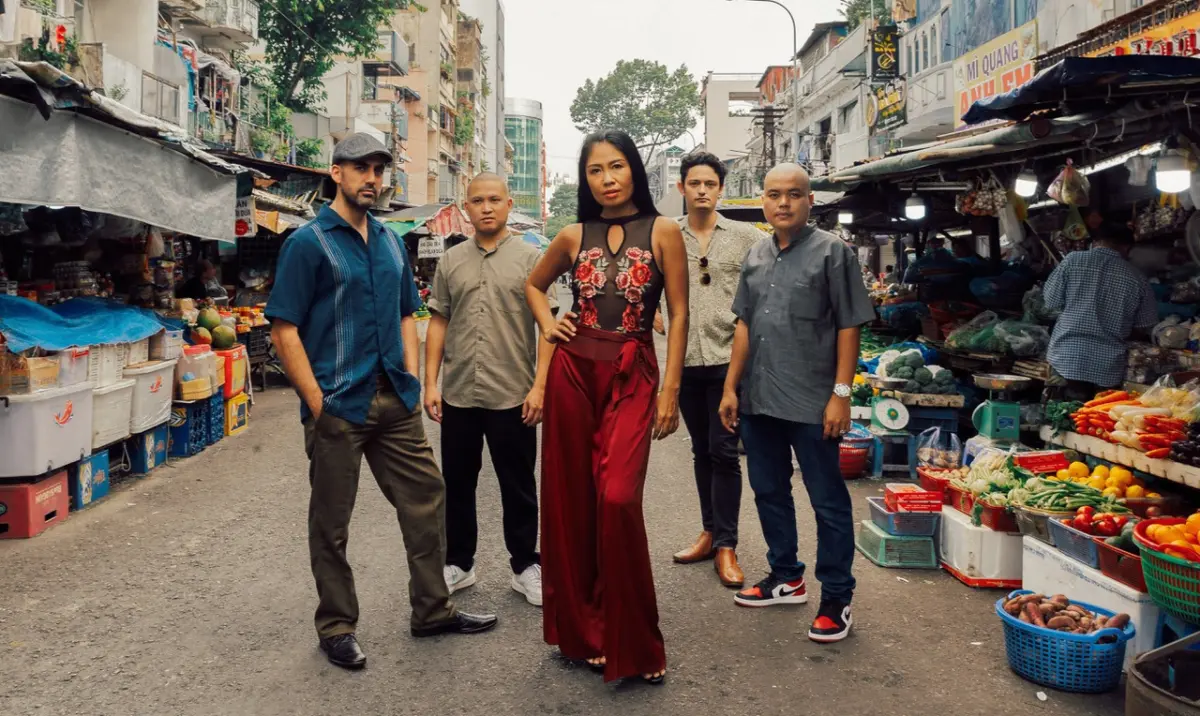
The band boasts a formidable cross-cultural and multi-instrumental lineup designed to bridge eras:
- Nguyễn Anh Minh (Vocals)
- Indy Jeremy Vinh Laville (Guitar and đàn nguyệt—the traditional Vietnamese two-string moon lute)
- Nguyễn Hoàng Bảo Hiếu (Drums)
- Gabriel Kaouros (Bass and Percussion)
- Đặng Nguyễn Khoa (Keys)
- Nguyễn Thảo Hải Phương (Guest traditional player on đàn tranh zither and đàn bầu monochord across their studio records)
3. Critical Breakthrough and International Airwaves (2019–2024)
Moving swiftly past covers, the band began penning their own original material, which anchored traditional Vietnamese pentatonic scales and folk instruments firmly within contemporary psychedelic rock frameworks.
- 2019: Released their critically acclaimed debut album, Hòa Âm Xưa, which caught the attention of global tastemakers, earning airplay on Iggy Pop’s BBC 6 Music show and France’s Radio FIP.
- 2024: Released their sophomore album, Mối Lãng Duyên. Its standout single, "Đám Cưới Nhà Em," achieved mainstream cultural resonance when it was selected to soundtrack a pivotal scene in HBO’s critically acclaimed historical miniseries The Sympathizer.
- December 2024: Cemented their reputation as a ferocious live act by recording a live session for the legendary KEXP at l’Antipode in Rennes during the TransMusicales festival.
4. The Third Album and Upcoming European Conquest (2025–2026)
Carrying forward their momentum, the band’s third album, Chân Ta Vầy (translating roughly to "the place we return to"), drops via Saigon Supersound. The record expands their sonic palate by integrating the T’rưng bamboo xylophone and the sáo trúc bamboo flute, alongside guest performances by multi-instrumentalist Đinh Nhựt Minh and saxophonist Trần Mạnh Tuấn.
Following their showcase at WOMEX in Las Palmas de Gran Canaria, the band embarks on an extensive UK and European tour:
- 24 October: Musicport Festival, Whitby
- 25 October: The Jazz Cafe, London
- Late October: Bristol and Manchester dates
- 6 November: A major headline date in Berlin, continuing through mainland Europe.
Supporting Context & Metrics: The Sociological Impact of Banned Melodies
To fully understand the weight of Saigon Soul Revival’s work, one must examine the socio-political ecosystem of South Vietnam during the Vietnam War.
The Musical Landscape of Wartime Saigon (1968–1974)
The urban center of Saigon during this era was a pressure cooker of existential dread and vibrant hedonism. The juxtaposition of a brutal, protracted war and the omnipresence of American military personnel created a strange cultural incubator. In neighborhoods operating under a curfew, nightlife flourished in clandestine and open-air venues alike:
- Traditional Opera: Grandmothers and grandfathers frequented Cải Lượng theaters, engaging with centuries-old folk traditions.
- Domestic Ballads: Parents embraced nhạc vàng (yellow music), characterized by sentimental, emotional narratives delivered in a signature Vietnamese bolero style.
- The Underground Fusion: Younger generations gravitated toward ballrooms spinning cha-cha-cha, while GI bars and night markets blasted distorted garage rock, surf rock, twist, and soul performed by local Vietnamese bands attempting to mirror Western radio hits while infusing them with native vocal cadences and poetic inflections.
When the Vietnam War concluded in 1975, the incoming government instituted sweeping cultural reforms. Western-leaning genres like nhạc kích động were categorized as decadent, counter-revolutionary, and representative of American imperialism, leading to a sweeping ban. While traditional folk forms and sanitized ballads survived, an entire chapter of Vietnamese musical innovation was consigned to dusty cassette tapes and smuggled vinyl records.
Global Resonance and Metrics of Success
Saigon Soul Revival’s footprint on the global music scene demonstrates a burgeoning appetite for non-Western psych-rock revivalism:
- BBC 6 Music & Radio FIP: Early validation from legendary curators like Iggy Pop proved that the band’s heavy, humid grooves transcend language barriers.
- HBO Integration: Their inclusion in The Sympathizer introduced their sonic world to millions of mainstream television viewers worldwide.
- KEXP Live Session: Their viral performance on KEXP expanded their digital footprint, amassing hundreds of thousands of views from global music aficionados hungry for authentic, unpolished world-fusion sounds.
Official Statements: In the Band’s Own Words
In an exclusive interview with Rhythm Passport, members of Saigon Soul Revival reflected on the philosophy driving their art, the realities of reviving suppressed sounds, and their aspirations for the global stage.
On Recreating the Vibe of 1960s Saigon
"Imagine being a teenager in Saigon, Vietnam in the late 1960s. Your grandparents are at a Cải Lượng theater watching a traditional form of folk opera, your parents are singing along to a heartfelt nhạc vàng record in a typical Vietnamese bolero style, your auntie is going to a ballroom to dance the cha-cha-cha and on your way to the night market you pass by an American GI bar where a Vietnamese band is playing fuzzed out rock and twist songs for a young lively audience. All this while there is a war raging in the country with no end in sight. As a band we try to capture the essence of this period and imagine what it may have been like if the music of that time continued to develop without interruption until the present day."
On Recovering Erased History
"Many classic nhạc vàng songs survived after 1975 and are popular to this day in Vietnam, but the more western influenced dance music, nhạc kích động, which were commonly in the styles of rock, surf, twist and soul were strictly banned and therefore were mostly unknown. When some of the members of SSR came across the compilation ‘Saigon Rock & Soul: Vietnamese Classic Tracks 1968-1974’ we were blown away by the heavy raw sound and were amazed that these old songs were not being performed live to our knowledge, at least not the old versions. This inspired us to look more into such old recordings and start a tribute band to bring that energy back to the stage."
On Transitioning from Covers to Original Composition
"Though we started as a tribute band playing cover versions of these old 1960s/70s recordings and trying to really achieve that vintage sound, we eventually started making our own interpretations and ended up writing our own music entirely. In fact most of the songs on our albums are original compositions, many of which incorporate traditional Vietnamese instrumentation and fuse different styles in a very contemporary fashion. We always try to be true to our original inspiration and there are some old songs that are too good not to play, however our live shows and releases mainly consist of original material which we are happy to say has been received very positively."
On Bridging Heritage and Modern Youth Culture
"We live in a very modern technological age where young people are increasingly valuing superficial entertainment and material wealth more than real culture. We hope to encourage the youth around the world to see the value in live performances and we especially wish to inspire our younger Vietnamese listeners to feel proud of their heritage, to appreciate and seek the roots of their culture. That is truly something worth valuing."
On the Concept Behind Chân Ta Vầy
“Chân Ta Vầy does not only refer to a literal home or country. The songs on the album tell different stories including ones of love, loss, resilience and acceptance. It’s not so much a matter of identity but a reference to finding our internal peace and our place in this world, no matter what the circumstances.”
An Invitation to Las Palmas
“¡Ahul a toda la gente linda de las Islas Canarias! It’s not everyday you get to hear a Vietnamese band that fuses traditional ethnic sounds with heavy contemporary grooves and psychedilia. We will take you on a journey like no other. ¡Dale! Let’s get loose and show us how you party in Las Palmas!”
Future Outlook
As Saigon Soul Revival prepares to step onto the prestigious showcase stage at WOMEX 2026 in Las Palmas de Gran Canaria on 21 October, the band stands at a historic crossroads. Vietnam remains a territory largely underrepresented within the circuits of the international commercial music industry. By stepping into this global arena, Saigon Soul Revival is doing more than just performing; they are acting as cultural ambassadors for a generation of artists daring to unearth, honor, and rewrite history.
With their third album, Chân Ta Vầy, dropping on September 11 via Saigon Supersound—introducing deeper explorations of indigenous instrumentation like the T’rưng and sáo trúc—the band is proving that their project is not a fleeting nostalgia trip. It is a living, breathing, evolving musical ecosystem.
Following their European tour, which hits iconic venues like London’s Jazz Cafe and Berlin, the band plans to continue expanding their global footprint, diving deeper into songwriting, and collaborating with international artists who share their passion for psych-rock archeology. For audiences in the Canary Islands, the UK, and across mainland Europe this autumn, Saigon Soul Revival offers an urgent, undeniable reminder: music once silenced can be buried, but if the groove is deep enough, it will always claw its way back to the light.