Executive Overview
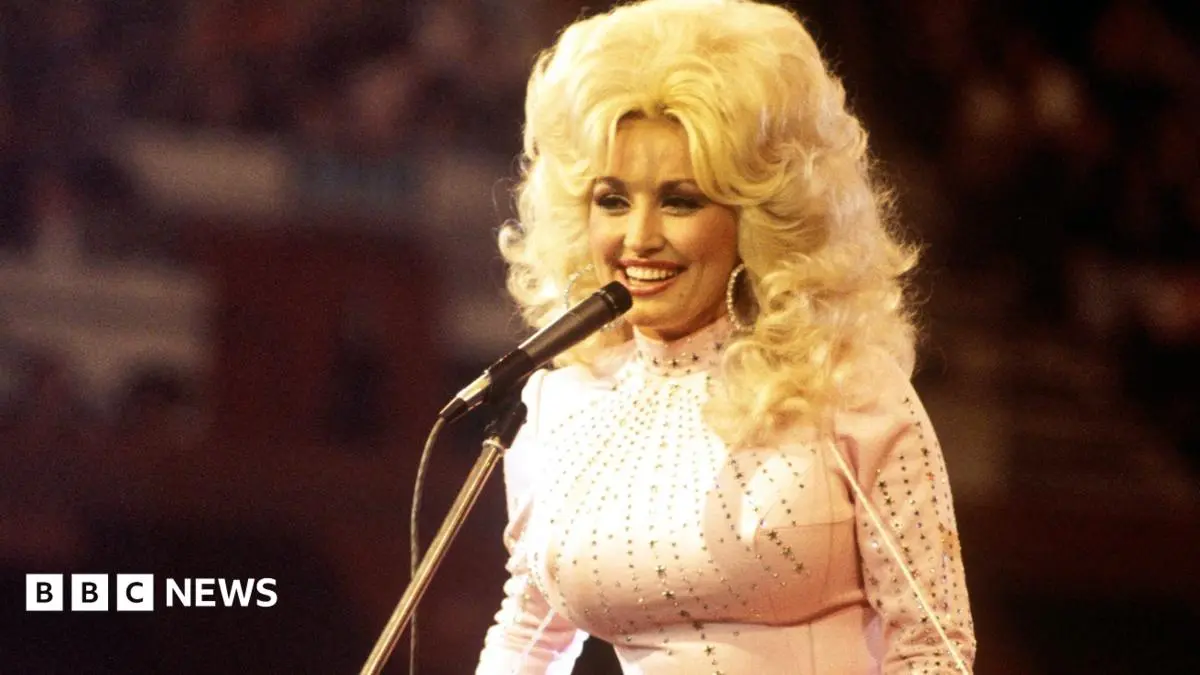
The global music community and cultural landscape mourn the loss of one of the most enduring, influential, and beloved figures of the modern era. Dolly Parton, the legendary country music singer-songwriter, philanthropist, actress, and businesswoman whose career spanned seven remarkable decades, has passed away at the age of 80. Her family announced the heartbreaking news through a statement published across her official social media channels, plunging millions of fans—affectionately known worldwide as part of her extended family—into deep sorrow.
Parton’s death marks the end of an era not only for country music, but for the entire entertainment industry. Rising from abject poverty in the Great Smoky Mountains of East Tennessee, she ascended to global superstardom, breaking down gender barriers, challenging industry norms, and redefining what it meant to be a self-made artist in America. Over the course of her monumental life, she accumulated an astonishing array of accolades, including 10 Grammy Awards, more than 100 million in global record sales, and an unmatched catalog of over 3,000 recorded and written songs.
Yet, to reduce Dolly Parton solely to her commercial metrics and chart-topping statistics is to misunderstand the very essence of her impact. She was a master storyteller, a pop-culture pioneer, an astute corporate strategist who fiercely guarded her intellectual property, and a tireless humanitarian. Her signature blend of self-deprecating wit, formidable business acumen, and unyielding authenticity cemented her status as a treasured global icon. As tributes flood in from world leaders, fellow artists, and everyday admirers alike, the world reflects on a life lived with extraordinary grace, resilience, and boundless creativity.
Detailed Chronology: From Sevier County to Global Stardom
The Appalachian Roots (1946–1964)
Born on January 19, 1946, in a tiny, two-room cabin on the banks of the Little Pigeon River in Pittman Center, Tennessee, Dolly Rebecca Parton was the fourth of twelve children born to Robert Lee Parton and Avie Lee Owens. Growing up in rural Appalachia during the post-World War II era, the Parton family lived in severe financial scarcity. In her later memoirs and signature tracks, such as "Coat of Many Colors," Parton frequently recounted how her mother stitched together a winter coat from scraps of fabric given to them by a family friend—an act of love that taught her early lessons about wealth, dignity, and self-worth.
Music was woven into the fabric of daily life in the Smoky Mountains. Parton’s mother played the guitar and sang traditional mountain ballads, while her grandfather was a Pentecostal preacher. Dolly began singing in church at a very young age and received her first handmade guitar when she was just eight years old. By age ten, she was performing on local radio and television stations in East Tennessee, signaling to anyone who would listen that her ambitions stretched far beyond the borders of Sevier County. The day after graduating from high school in 1964, she packed her bags and moved directly to Nashville, Tennessee, determined to conquer Music City.
The Nashville Breakthrough and Porter Wagoner Years (1965–1973)
Upon arriving in Nashville, Parton initially established herself as a formidable songwriter, penning tracks for other artists alongside her uncle, Bill Owens. However, her distinct, vibrato-laden soprano voice soon caught the attention of Monument Records, where she recorded several bubbling-under singles.
The true turning point of her early career arrived in 1967 when country music star Porter Wagoner invited her to join his immensely popular syndicated television program, The Porter Wagoner Show. As the resident "girl singer," Parton captivated millions of weekly viewers with her soaring vocals and magnetic television presence. While her partnership with Wagoner propelled her into the national spotlight, it also presented creative constraints; audiences frequently viewed her as a subordinate partner rather than a primary artist.
Navigating this dynamic required immense diplomatic skill and fierce determination. In 1974, after years of tension and a desire for creative autonomy, Parton made the difficult decision to leave Wagoner’s show and launch her solo career in earnest. The parting was famously commemorated through one of her most enduring masterpieces, "I Will Always Love You"—a song she wrote directly for Wagoner as a heartfelt farewell and an assertion of her artistic independence.
Pop Crossover and Global Dominance (1974–1999)
The late 1970s and 1980s witnessed Parton’s calculated, highly successful evolution from a traditional country darling into a mainstream pop-culture phenomenon. She began producing crossover hits that dominated both country and pop charts, including "Jolene," "Love Is Like a Butterfly," and "9 to 5," the title track for her critically acclaimed and commercially triumphant 1980 film debut alongside Jane Fonda and Lily Tomlin.
Her transition into Hollywood expanded her cultural footprint. Parton earned Academy Award and Golden Globe nominations for her work, proving that her talents extended far beyond the recording studio. In 1986, she cemented her entrepreneurial vision by opening Dollywood, her signature theme park in Pigeon Forge, Tennessee. The park revitalized the local economy, providing thousands of jobs to the region where she grew up and demonstrating that her business instincts were just as sharp as her artistic sensibilities.
Throughout the late 1980s and 1990s, Parton continued to reinvent her sound. Notably, she collaborated with fellow legends Emmylou Harris and Linda Ronstadt on the multi-platinum, Grammy-winning Trio albums (1987 and 1999), reminding the music world of her deep-rooted reverence for traditional bluegrass and Appalachian harmony.
The Elder Stateswoman and Modern Renaissance (2000–2026)
In the 21st century, Parton achieved the rare status of a universally revered cultural treasure. Younger generations embraced her not only for her timeless catalog, but for her progressive values, unwavering advocacy for the LGBTQ+ community, and transparent, self-effacing humor.
She continued to release critically lauded bluegrass and Americana records, such as Little Sparrow and Halos & Horns, earning additional Grammy Awards well into her golden years. In 2022, after initial hesitation regarding whether she deserved the honor, she was inducted into the Rock and Roll Hall of Fame—an achievement she embraced by releasing a high-energy rock album, Rockstar, in 2023, featuring collaborations with rock royalty ranging from Paul McCartney and Elton John to Mick Fleetwood and Steven Tyler.
Supporting Context & Metrics
The Architectural Blueprint of a Legend
To understand the magnitude of Dolly Parton’s career is to examine the sheer scale of her productivity and commercial footprint. Over a recording career spanning nearly seven decades, her statistics remain almost peerless within the annals of popular music:
- Grammy Recognition: Parton garnered 10 competitive Grammy Awards out of 50 nominations, alongside a prestigious Grammy Lifetime Achievement Award received in 2011.
- Chart Dominance: She amassed 25 number-one singles on the Billboard Hot Country Songs chart—a record for a female artist that stood unbroken for decades.
- Songwriting Output: Parton wrote in excess of 3,000 songs, a prolific output that placed her in the upper echelon of American songwriters alongside luminaries like Bob Dylan and Paul McCartney.
- Global Record Sales: She sold more than 100 million records worldwide, encompassing physical albums, singles, and digital streams.
- Cross-Industry Accolades: Parton was one of the rare artists to receive nominations for or wins from the Oscars, Grammys, Emmys, and Tonys (EGOT proximity), while also receiving the prestigious Kennedy Center Honors (2006) and the Presidential Medal of Freedom (2024).
The Songwriter Above All Else
Despite her immense fame as a visual icon—famous for her flamboyant wigs, sparkling stage costumes, and larger-than-life persona—Parton consistently maintained that her truest identity lay in the quiet act of composition. In numerous interviews throughout her life, she emphasized that writing was her primary emotional outlet.
"It’s my way of expressing myself," Parton often noted when discussing her creative process. "It’s my therapy."
She treated songwriting with rigorous discipline, often waking up before dawn in her tour bus or home studio equipped with a notebook and a cassette recorder. Whether capturing the heartbreak of abandonment in "I Will Always Love You," the systemic fatigue of the American working class in "9 to 5," or the innocence of youth in "Coat of Many Colors," Parton’s lyrics possessed a universal emotional resonance that transcended genre boundaries. Whitney Houston’s soaring 1992 cover of "I Will Always Love You" transformed Parton’s country ballad into one of the best-selling physical singles of all time, proving the timeless structural integrity of her compositions.
A Masterclass in Business and Autonomy
Beyond her artistic contributions, Parton was a visionary businesswoman in an industry historically dominated by male executives. Early in her career, she recognized the financial traps that ensnared many recording artists, particularly the loss of publishing rights.
In 2007, she made the decisive move to purchase her music catalog back from previous management, securing full ownership of her master recordings and publishing rights through her company, Velvet Apple Music. This shrewd financial maneuver ensured that her life’s work remained entirely under her control. Furthermore, her stewardship of Dollywood and her production company, Sandollar Productions, generated hundreds of millions of dollars, establishing her as one of the most successful self-made female entrepreneurs in the entertainment business.
Official Statements
The announcement of Parton’s passing reverberated instantly across international media networks, prompting emotional responses from family, collaborators, political figures, and cultural icons.
In a poignant video announcement shared across her social media platforms, Parton’s nephew, Brian Seaver, addressed the global community on behalf of the family:
"Sadness lies with us, not with Dolly," Seaver stated, his voice thick with emotion. "She gave us a lifetime of music, laughter, and love. While our hearts are heavy today, we take comfort in knowing that her spirit, her songs, and her immense generosity will echo through the mountains and across the world forever. She asked us to celebrate her life, not to mourn her departure."
Tributes poured in from the highest levels of government and culture. A spokesperson for the White House released a statement highlighting Parton’s unmatched contributions to American culture:
"Dolly Parton was more than a national treasure; she was the very embodiment of the American dream. Through her music, her business brilliance, and her extraordinary philanthropy—most notably her Imagination Library, which has gifted hundreds of millions of books to children worldwide—she touched the lives of every single American. Her legacy of kindness, inclusivity, and uncompromising authenticity will endure for generations."
Fellow music legends also expressed their grief. Longtime friend and collaborator Emmylou Harris shared a brief, heartfelt tribute:
"There is no one quite like Dolly, and there never will be again. She sang with the angels on earth, and now she is one of them. Rest well, my dear friend."
Future Outlook: Preserving the Legacy of an Icon
As the world processes the profound loss of Dolly Parton, attention inevitably turns toward the preservation and continuation of her monumental legacy. The impact she leaves behind extends far beyond recorded music and film archives; it is embedded in the ongoing philanthropic initiatives she championed throughout her life.
Chief among these is the Dollywood Foundation and the Imagination Library, a visionary literacy program founded by Parton in 1995. Inspired by her father’s inability to read and write, the program mails free, high-quality books each month to children from birth until they begin school, operating globally across the United States, Canada, the United Kingdom, Australia, and the Republic of Ireland. Having distributed well over 200 million books by the time of her passing, the Imagination Library will continue its vital mission, heavily endowed by Parton’s estate and sustained by ongoing donations and institutional support.
In East Tennessee, Dollywood and its surrounding resort properties will remain living monuments to her entrepreneurial vision, continuing to employ thousands of regional workers and welcoming millions of visitors annually. Additionally, her extensive archive of unreleased recordings, handwritten lyric sheets, and personal memorabilia—housed securely in Nashville and her native Sevier County—will be curated by historians and musicologists to ensure future generations understand the depth of her artistic evolution.
Special exhibitions, tribute concerts, and academic retrospectives are already being planned by major cultural institutions, including the Country Music Hall of Fame and Museum and the Library of Congress. Yet, the most enduring memorial to Dolly Parton requires no museum walls or bronze plaques. It lives on every time a young girl picks up a guitar in the Appalachian foothills, every time a listener finds solace in the three-minute poetry of a country ballad, and every time someone chooses kindness, humor, and resilience in the face of adversity.
Dolly Parton may have left the physical stage, but her voice—rich, resonant, and eternally defiant of sorrow—will continue to ring out across the mountains and valleys of human experience for all time.