Executive Overview
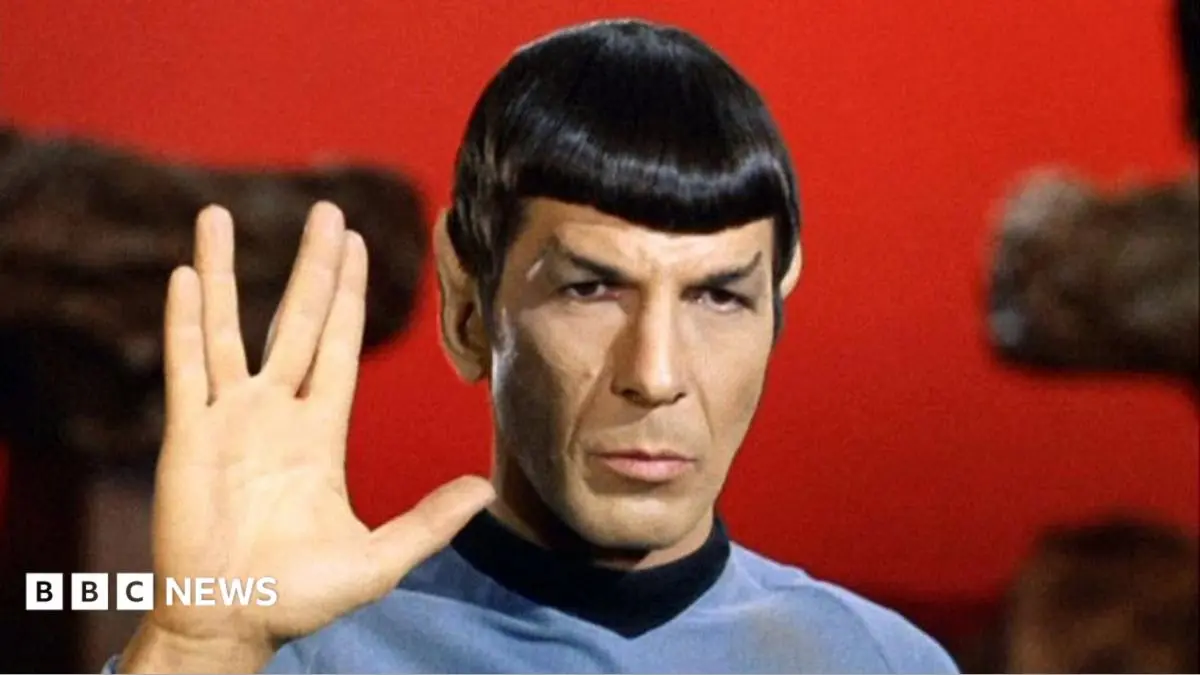
In what promises to be a monumental gathering of science fiction enthusiasts, hundreds of devoted Star Trek fans are set to converge upon London’s prestigious Science Museum on September 8. Their mission: to officially establish a brand-new Guinness World Record for the largest simultaneous Vulcan salute ever recorded in human history. The event, strategically timed to coincide with the globally celebrated "Star Trek Day," will see participants unite to flash the iconic, split-finger gesture immortalized by the late Leonard Nimoy’s character, Mr. Spock, nearly six decades ago.
Beyond the historic record attempt, the gathering serves as a cultural celebration of a franchise that has continuously bridged the gap between speculative fiction and real-world scientific inquiry. Glyn Morgan, the principal curator at the Science Museum, views the convergence of pop culture and institutional science as a natural alignment. For 60 years, the iconic space-faring franchise has captured the imaginations of millions, prompting profound questions regarding technology, ethics, and the future of humanity among the stars—themes that remain central to the museum’s educational mission.
Moreover, this landmark event offers attendees a final, exclusive opportunity to experience the museum’s acclaimed Star Trek Warp Trail. Included in the event ticket, the trail features iconic wardrobe pieces and props from across the franchise’s rich television and cinematic history, including costumes worn by Simon Pegg and Sir Patrick Stewart. As official adjudicators stand by to verify the headcount, this comprehensive report explores the history of the salute, the institutional significance of the upcoming record attempt, the broader cultural footprint of the franchise, and what this means for the enduring legacy of Gene Roddenberry’s creation.
Detailed Chronology
The Genesis of a Gesture: 1967
To fully appreciate the magnitude of the upcoming record attempt, one must journey back to the production of the original Star Trek television series. The Vulcan salute—distinguished by the hand held upright with the palm facing forward, and the middle and ring fingers parted to create a ‘V’ shape—first appeared on television screens in a 1967 episode entitled "Amrok Time," written by Theodore Sturgeon and directed by Joseph Pevney.
However, the physical mechanics of the salute have roots deeply embedded in Leonard Nimoy’s personal history. Raised in an Orthodox Jewish household, Nimoy witnessed the Birkat Kohan (Priestly Blessing) performed during synagogue services. The gesture forms the Hebrew letter Shin (ש), which symbolically represents El Shaddai (Almighty God). Years later, when Nimoy was tasked with creating a distinct, non-verbal greeting for the emotionless, logical Vulcans, he recalled the striking visual of the priestly blessing and introduced it to the production crew. It instantly resonated, transforming into a universal symbol of peace, goodwill, and fandom unity.
The Evolution of a Franchise: From 1960s Television to Modern Streaming
The journey of Star Trek from a struggling 1960s television experiment to a multi-billion-dollar global phenomenon is one of the most remarkable narratives in entertainment history. Following the cancellation of the original series in 1969, the franchise experienced a massive resurgence through syndication and a critically acclaimed animated series in the 1970s. This paved the way for a lucrative feature film franchise beginning in 1979.
The 1980s and 1990s marked the golden age of syndicated television for the IP. Star Trek: The Next Generation, which debuted in 1987 under the leadership of Captain Jean-Luc Picard (played by Sir Patrick Stewart), redefined the parameters of modern science fiction television, tackling complex philosophical, moral, and sociological dilemmas. It was subsequently followed by critically lauded spin-offs:
- Star Trek: Deep Space Nine (1993–1999), starring Avery Brooks, which pioneered serialized storytelling and explored the nuances of interstellar politics, religion, and warfare.
- Star Trek: Voyager (1995–2001), led by Captain Kathryn Janeway (played by Kate Mulgrew), which charted a pioneering path as the first series with a female captain as the primary protagonist.
In the 21st century, the franchise underwent a cinematic reboot under director J.J. Abrams in 2009—introducing a fresh iteration of the original crew featuring Chris Pine, Zachary Quinto, and Simon Pegg as chief engineer Montgomery "Scotty" Scott. Concurrently, the streaming era birthed a new wave of television content, headlined by Star Trek: Discovery, Star Trek: Strange New Worlds, and Star Trek: Picard, the latter of which concluded its acclaimed three-season run in 2023.
The Path to September 8, 2024: Star Trek Day
"Star Trek Day" is celebrated annually on September 8, commemorating the exact date in 1966 when the very first episode—"The Man Trap"—was broadcast on American television. Over the decades, the date has evolved from an informal community observance into an international celebration of fandom, community outreach, and institutional reflection.
The decision by London’s Science Museum to host the world record attempt on this specific date elevates the observance to new heights. By bringing together hundreds of fans in an environment dedicated to scientific discovery, the museum is creating a physical manifestation of the dialogue between science fiction and scientific reality. Participants will gather beneath the historic architecture of South Kensington, transforming a museum gallery into a sea of raised, parted fingers in an attempt to etch their names into the annals of the Guinness World Records.
Supporting Context & Metrics
Breaking Down the Record Attempt
Setting a Guinness World Record is a meticulously regulated administrative process. Because no official category currently exists for the "largest simultaneous Vulcan salute," the event at the Science Museum will establish a foundational benchmark that future challengers must beat.
According to guidelines set forth by Guinness World Records adjudicators, several strict criteria must be met for the attempt to be officially certified:
- Quantitative Threshold: A minimum number of participants—in this case, hundreds of verified individuals—must be gathered within a securely monitored, enclosed area.
- Duration of Hold: Participants must hold the gesture simultaneously, correctly formed, and uninterrupted for a specified duration (typically 30 seconds to a full minute).
- Independent Verification: Trained adjudicators, alongside impartial independent witnesses, will oversee the counting, entry, and execution phases, utilizing rigorous check-in procedures and video surveillance to ensure absolute accuracy.
+-----------------------------------------------------------------+
|               GUINNESS WORLD RECORD VERIFICATION PIPELINE       |
+-----------------------------------------------------------------+
|  1. Pre-Registration & Ticketing Validation                     |
|         │                                                       |
|         ▼                                                       |
|  2. Enclosed Perimeter Access Control                           |
|         │                                                       |
|         ▼                                                       |
|  3. Simultaneous Execution (Strict 30-Second Hold)              |
|         │                                                       |
|         ▼                                                       |
|  4. Adjudicator Audit & Video Evidence Review                   |
|         │                                                       |
|         ▼                                                       |
|  5. Official Certificate Awarded (Inaugural Benchmark)          |
+-----------------------------------------------------------------+
The Star Trek Warp Trail: Artifacts of a Legacy
The record attempt is just one facet of the immersive experience planned for September 8. Ticket holders will also be granted a final opportunity to walk the Star Trek Warp Trail—an exhibition designed to showcase the tangible heritage of the franchise.
Following the immense popularity of the museum’s "Star Trek Lates" event earlier this year, the museum decided to extend access to these rare artifacts. Among the centerpiece items on display are:
- The Scotty Uniform: Worn by actor Simon Pegg during his portrayal of the beloved chief engineer in the 2009 feature film Star Trek. The costume highlights the meticulous craftsmanship and modernized aesthetic brought to the classic Starfleet engineering division.
- The Picard Command Uniform: Worn by legendary British actor Sir Patrick Stewart throughout the critically acclaimed run of Star Trek: Picard (2020–2023). This garment represents the evolution of the character from a Starfleet captain to a seasoned admiral confronting the twilight of his career.
These artifacts serve as material testaments to the longevity of the franchise. They demonstrate how costumes transition from functional production items into cherished cultural touchstones, drawing parallels between the historical scientific instruments housed within the Science Museum and the futuristic apparatuses dreamed up by science fiction writers.
Official Statements
The intersection of institutional prestige and popular culture has elicited profound reflections from the leadership at the Science Museum, highlighting why a historic museum of science and technology is opening its doors to a science fiction universe.
Glyn Morgan, the principal curator at the Science Museum, articulated the underlying philosophy of the institution’s involvement during a press briefing ahead of the event:
"For 60 years, Star Trek has connected bold storytelling with big questions about science, technology, and what might be possible in the future, themes that sit at the heart of the Science Museum."
Morgan further emphasized the museum’s enthusiasm for welcoming the community back following the success of their previous sci-fi programming. Noting the overwhelming public response to the Star Trek Lates earlier in the year, he highlighted the importance of giving fans one final, dedicated space to immerse themselves in the Warp Trail before the exhibition concludes its run.
From the perspective of the broader cultural landscape, representatives from fan organizations and cultural historians have lauded the initiative. Dr. Aris Thorne, a media studies professor specializing in science fiction paradigms, noted:
"When a venerable institution like the Science Museum hosts a world record attempt for a fictional greeting, it validates the profound cultural impact of speculative fiction. Star Trek didn’t just predict technologies like tablet computers and communicators; it cultivated a generation of engineers, astronauts, and scientists who looked at the stars and asked ‘how can we get there?’ By uniting fans to perform Spock’s salute, the museum is honoring the philosophy of infinite diversity in infinite combinations."
Future Outlook
The Enduring Relevance of Roddenberry’s Vision
As Star Trek approaches its seventh decade of continuous production, its foundational ethos—often summarized by the acronym IDIC ("Infinite Diversity in Infinite Combinations")—remains startlingly relevant. In an era marked by geopolitical polarization, rapid advancements in artificial intelligence, and ecological uncertainty, the optimistic futurism of Gene Roddenberry offers a reassuring counter-narrative.
The Science Museum’s record attempt is not merely a nostalgic exercise for aging devotees; it is a vibrant manifestation of intergenerational community. Grandparents who watched William Shatner and Leonard Nimoy on cathode-ray tube televisions in the 1960s will stand shoulder-to-shoulder with millennials and Gen-Z fans who discovered the universe through streaming platforms like Paramount+. This cross-generational continuity is the lifeblood of modern fandom and ensures that the cultural capital of Star Trek will continue to appreciate well into the future.
Institutional Synergies: Science Fiction Inspiring Science Fact
Looking forward, museums worldwide are increasingly recognizing the vital role that popular culture plays in science literacy. By anchoring pop culture within physical spaces dedicated to empirical science, institutions like the London Science Museum are breaking down traditional barriers between academic rigor and public entertainment.
Exhibitions like the Star Trek Warp Trail act as a gateway drug to scientific curiosity. A young visitor gazing at Simon Pegg’s engineering uniform may be inspired to research warp field mechanics, plasma dynamics, or quantum computing. The fantasy of today frequently lays the psychological and intellectual groundwork for the technological breakthroughs of tomorrow.
Final Preparations in South Kensington
As the logistical countdown to September 8 ticks down, organizers in South Kensington are finalizing security, crowd-control, and verification protocols. Volunteers are being briefed, adjudicators are reviewing the rulebooks, and hundreds of fans across the United Kingdom and beyond are practicing the precise finger-separation technique that has become synonymous with peace and long life.
When the signal is finally given on Star Trek Day, and hundreds of hands rise simultaneously beneath the soaring ceilings of the Science Museum, it will be more than just an attempt to break a Guinness World Record. It will be a collective reaffirmation of humanity’s capacity for wonder, a celebration of storytelling that transcends generations, and a resounding global declaration to live long and prosper.