Executive Overview
In the heart of West London, where the rhythmic hum of urban life is permanently shadowed by the towering, skeletal grief of Grenfell Tower, art has always served as a vital mechanism for survival. It is within this crucible of social disparity, systemic neglect, and localized activism that the multidisciplinary artist Behkam has forged his latest and most ambitious work to date: Manchester Drive.
Named after a residential street in North Kensington—mere stonesthrow from where the 2017 Grenfell Tower fire claimed 72 lives—the project began as an auditory manifestation of the chants echoing through Ladbroke Grove: "Justice for Grenfell, Justice for Gaza." What started as a visceral response to community protests has since blossomed into a multi-format cultural artifact encompassing a critically acclaimed theatrical production, a powerful lyric-driven title track, and a raw, unvarnished live performance captured at the legendary Steeze Factory studio.
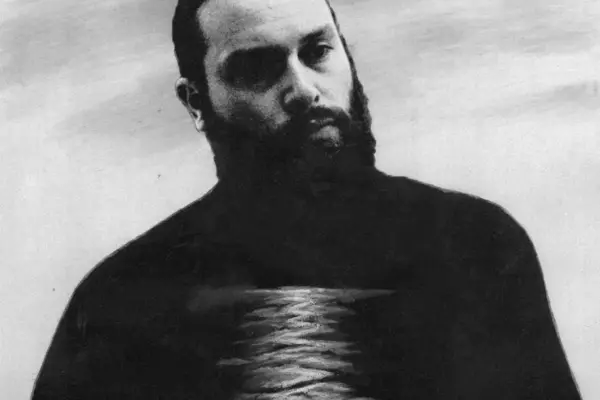
Behkam’s creative output defies easy categorization. He moves fluidly between the intimate vulnerability of the piano and the aggressive cadence of UK rap, translating the geopolitical anxieties of the modern era into a deeply personal narrative framework. By drawing parallels between the economic segregation of his home neighbourhood—where extreme affluence brushes shoulders with profound poverty—and the devastation unfolding in Gaza and the West Bank, Behkam has positioned himself as an uncompromising voice for the marginalized.
This deep-dive investigative feature explores the genesis of Manchester Drive, examining its roots in classical Persian literature, its successful theatrical run at the Peckham Fringe, its intimate recording sessions with renowned producer Toddla T, and its broader cultural implications for British music and theatre in an era of heightened political consciousness.
Detailed Chronology: From the Streets of North Kensington to the Stage
The Genesis in Ladbroke Grove
The story of Manchester Drive is inextricably linked to the geography and sociopolitical landscape of West London. Growing up in Ladbroke Grove, Behkam absorbed the contradictions of an area undergoing rapid, often violent gentrification. He often describes himself wryly as a "Lad Broke"—a clever linguistic subversion of his neighbourhood’s name that highlights the glaring economic divides where multi-million-pound townhouses overlook neglected council estates.
The spark for the project, however, was ignited by the streets themselves. In the wake of the 2017 Grenfell tragedy, a disaster that laid bare the lethal consequences of institutional indifference toward working-class communities and people of colour, protests became a fixture of local life. Over the years, as global crises intersected with local grievances, these demonstrations expanded their scope. The rallying cries morphed from localized demands for accountability into a broader global solidarity movement, linking the charred facade of Grenfell with the rubble of Gaza.
Hearing the chant "Justice for Grenfell, Justice for Gaza" reverberating down Ladbroke Grove planted the seed for what would become Behkam’s maiden theatrical play and its eponymous title track. Rather than viewing these struggles as disparate, Behkam recognized a shared thread of displacement, institutional silencing, and resilience.
Translating Trauma into Art: The Play Manchester Drive
Transitioning from musical experimentation to dramatic storytelling, Behkam wrote Manchester Drive as a contemporary exploration of fame, compromise, and geopolitical empathy. The protagonist of the play, Ardz—played by Behkam himself, who splits his time between rapping and playing live piano—is a medical student whose parents run a quintessential local corner shop.
Ardz’s life is upended when a video of him freestyling goes viral, thrusting him into the dizzying heights of the UK music industry. However, this sudden ascendance brings a moral reckoning. When Ardz uses his newly minted platform to post about political injustices, his corporate management steps in, attempting to sanitize his image and muzzle his social commentary. He is forced into an agonizing Faustian bargain: choose the lucrative, compliance-driven trajectory of a pop star, or risk it all to retain his authentic voice.
Compounding this internal struggle is a romance with Shirin, a photojournalist embedded in the West Bank. Through Shirin’s lens, the play broadens its geographical scope, connecting the personal alienation of a viral artist in London with the harrowing daily realities of occupation and conflict in Palestine.
Crucially, the narrative architecture of Manchester Drive is not entirely modern. Behkam cleverly adapted the framework of Layli o Majnun, the legendary 12th-century Persian love story penned by the master poet Nezami Ganjavi. By superimposing this timeless tale of tragic, all-consuming love and societal obstruction onto a modern narrative of a medical-student-turned-rapper and a West Bank photojournalist, Behkam bridges centuries of artistic tradition, proving that the themes of longing, truth, and persecution are eternal.
From Page to Stage: The Peckham Fringe Debut
The theatrical realization of Manchester Drive reached a milestone in May, when the production ran at the Peckham Fringe—the celebrated performing arts festival curated by Theatre Peckham—hosted at the Canada Water Theatre.
Under the sharp direction of Amari Harris, and supported by a talented ensemble cast featuring Rima Georges and Wesley Bozonga, the play received critical acclaim for its raw energy and seamless integration of live music and dramatic narrative. For Behkam, the stage debut was the culmination of rigorous artistic development. Having trained extensively through the prestigious Lyric Hammersmith Springboard programme and the Theatre Peckham Rep, and having previously made his theatrical debut as Bacchus in a radical staging of The Bacchae at the Lyric, Behkam brought a seasoned performative discipline to a deeply personal story.
Supporting Context & Metrics: The Steeze Factory Sessions
Toddla T, Gumtree Pianos, and Unfiltered Audio
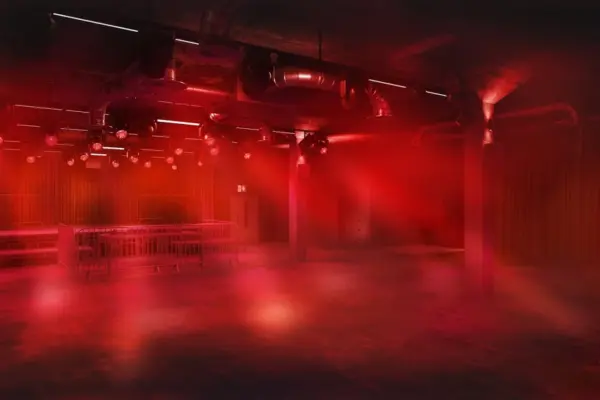
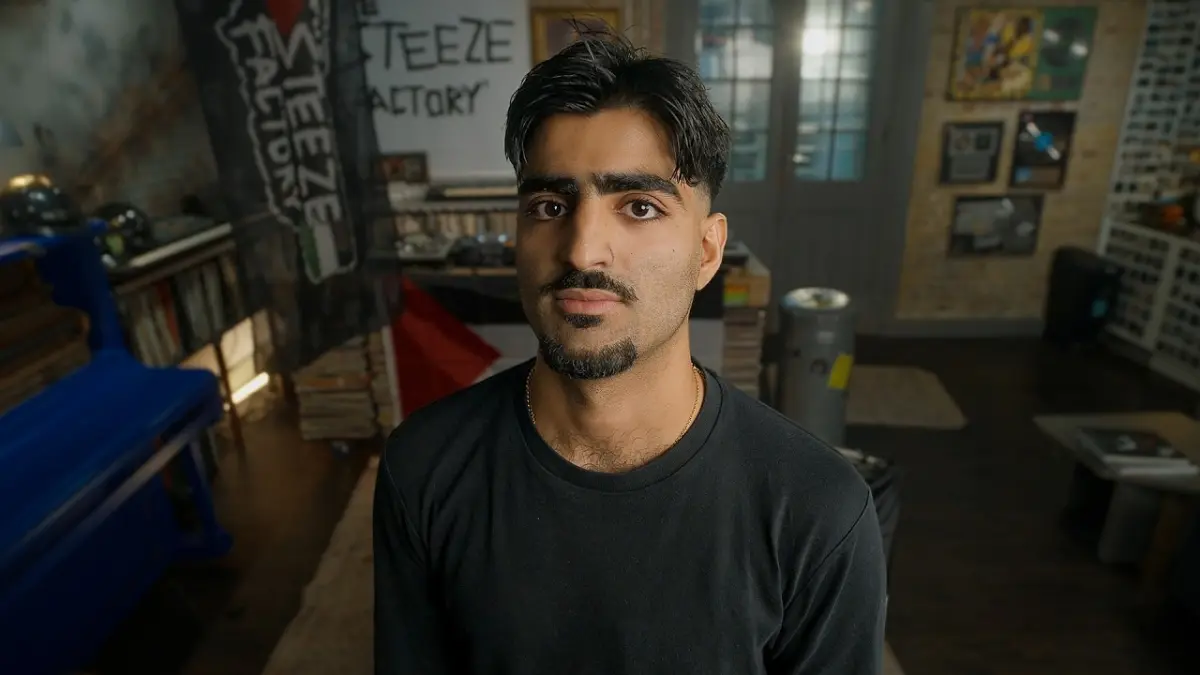
While the theatrical production of Manchester Drive proved Behkam’s chops as a dramatist and actor, the song itself required a sonic home that matched its unpolished, urgent ethos. Enter the Steeze Factory—the West London studio domain of renowned Sheffield-born producer Toddla T.
Toddla T, a heavyweight in the British music scene who has shaped records for luminaries like Skepta, Wiley, Roots Manuva, and Ms. Dynamite, operates the Steeze Factory with an intentional rejection of sterile, high-end corporate recording environments. Located in a single room rented within an industrial complex, the studio is designed to capture lightning in a bottle.
There are no soundproof isolation booths here. Instead, vocalists stand out in the open room alongside the producer. The atmosphere is deliberately lived-in: the air conditioning hums softly, the kettle is perpetually whistling for tea, and the room’s sonic anchor is an upright piano Toddla purchased off Gumtree for a mere £50.
It was in this unorthodox, highly intimate environment that the live performance version of "Manchester Drive" was captured on film. Stripped of digital gloss, the performance relies entirely on Behkam’s raw vocal delivery, biting lyricism, and the resonant chords of a secondhand piano. The Steeze Factory ethos—which frequently hosts cyphers, jam sessions, and parties bridging the generational gap between seasoned MCs and emerging talent—provided the ideal amplifier for Behkam’s message.
A Twist of Fate: The Corner Shop Connection
The collaboration between Behkam and Toddla T runs deeper than mutual artistic respect; it is rooted in the very social fabric of West London commerce.
Toddla first crossed paths with Behkam through a mutual friend, struck by the young artist’s distinctive perspective and creative drive. It was only later, through casual conversation, that Toddla made a startling realization: Behkam is the son of the proprietors who run the red corner shop situated right on the famous Notting Hill Carnival route—the very same corner shop where Toddla had been stopping for years to pick up his iced coffees.
This biographical overlap mirrors the narrative arc of Manchester Drive’s protagonist, Ardz, whose parents similarly anchor their family in the daily grind of a neighbourhood storefront. This convergence of real-life working-class roots and creative ambition infuses every bar Behkam spits with authentic lived experience.
Official Statements and Lyrical Analysis
Dissecting the Verses of "Manchester Drive"
To truly understand the impact of Behkam’s work, one must examine the lyrical content of "Manchester Drive," which serves as the emotional anchor of both the play and his musical output.
The track opens with hyper-local signifiers. Behkam introduces himself as a “Lad Broke,” immediately subverting the glamorized real estate perceptions of Ladbroke Grove. He paints a portrait of a fractured community living under the shadow of systemic neglect, where extreme wealth disparity creates an environment of constant tension.
From there, the song pivots seamlessly to the geopolitical stage, addressing the ongoing atrocities in Gaza. In one of the track’s most devastating verses, Behkam raps about the psychological toll of speaking out, detailing the systemic efforts to silence pro-Palestinian voices in the West. He captures the surreal, apocalyptic reality of modern warfare through the eyes of a child, delivering a haunting line where a young boy asks if an object falling from the sky is food, only to be told it is a bomb.
Behkam does not stop at critiquing the violence itself; he levels a scathing critique at Western hypocrisy. He contrasts the rapid, compassionate mobilization of European nations opening their homes to Ukrainian refugees with the cold, racialized indifference that leaves Black and brown migrants to drown in the Mediterranean.
When Behkam signs off the track with the defiant refrain, "Reporting live from Manchester Drive," he collapses the distance between North Kensington and the Middle East. To Behkam, the fight against structural oppression, erasure, and apathy is universal.
Peer Reception and Cultural Dialogue
The resonance of Behkam’s Steeze Factory session has extended far beyond standard YouTube metrics, sparking vital cultural conversations across the UK music scene.
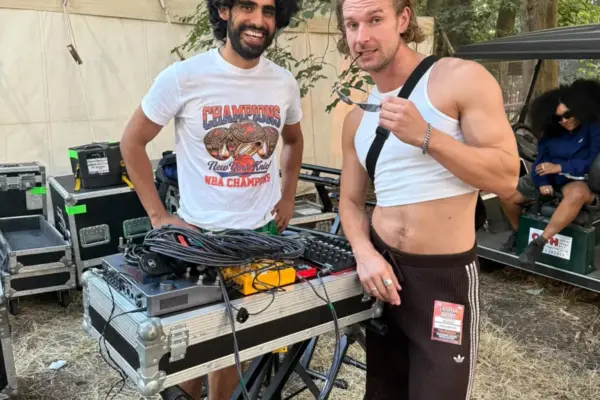
Following the release of the live performance video, producer Toddla T sat down with Jordan Stephens—one half of the celebrated Brighton rap duo Rizzle Kicks and a regular collaborator on the Steeze Factory’s reaction video series—to dissect and respond to Behkam’s performance.
Stephens, known for his own outspoken advocacy around mental health, social justice, and the realities of navigating the British entertainment industry, praised Behkam’s fearlessness. The reaction video highlighted a growing appetite within the UK creative community for art that refuses to separate political reality from artistic expression. In an industry often pressured to produce sanitized, algorithm-friendly pop commodities, Behkam’s willingness to risk his career for his convictions—both in the fictional narrative of Manchester Drive and in his real-world music—serves as a touchstone for a new generation of politically engaged artists.
Future Outlook: The Resurgence of Politically Conscious British Art
As Manchester Drive continues to find new audiences through its digital footprint and theatrical life, it signals a significant cultural shift. For over a decade, the commercial dominant strains of UK rap and grime have frequently leaned heavily into lifestyle branding, luxury signifiers, and hyper-individualistic success narratives. While these themes remain valid reflections of social mobility, the socio-economic shocks of the post-pandemic era, the housing crisis, the cost-of-living crunch, and cascading global conflicts have created an urgent hunger for art with teeth.
Behkam represents a vanguard of multidisciplinary artists who refuse to silo their creativity. By seamlessly fusing West London hip-hop, classical Persian storytelling traditions, grassroots political activism, and live theatre, he demonstrates that contemporary British art can be simultaneously localized and globally minded.
Looking ahead, the success of Manchester Drive at the Peckham Fringe and its enthusiastic reception within underground institutions like the Steeze Factory point toward a promising future for independent, message-driven performance. Whether Behkam chooses to expand Manchester Drive into larger theatrical venues, tour his live musical setup, or continue releasing blistering singles from the heart of North Kensington, one thing is certain: his voice will not be easily silenced.
In an era where institutional powers frequently attempt to sanitize dissent, Behkam remains firmly planted on his block, pen in hand, piano keys striking, reporting live from the intersections of local grief and global resistance.
Key Production & Performance Credits
- Artist / Writer / Playwright: Behkam (@behkam675)
- Producer (Steeze Factory): Toddla T (Bandcamp)
- Director (Manchester Drive Play): Amari Harris
- Cast (Manchester Drive): Behkam, Rima Georges, Wesley Bozonga
- Studio Location: Steeze Factory, West London (@steezefactory)
- Reactor / Collaborator: Jordan Stephens (Rizzle Kicks) (@jordanfstephens)
- Theatrical Venue: Canada Water Theatre / Theatre Peckham (Peckham Fringe)