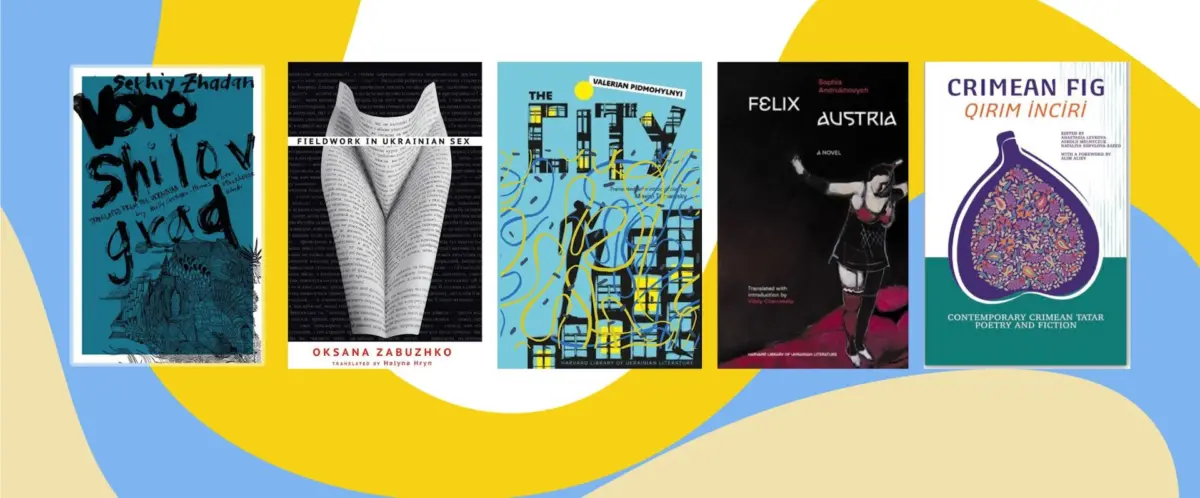
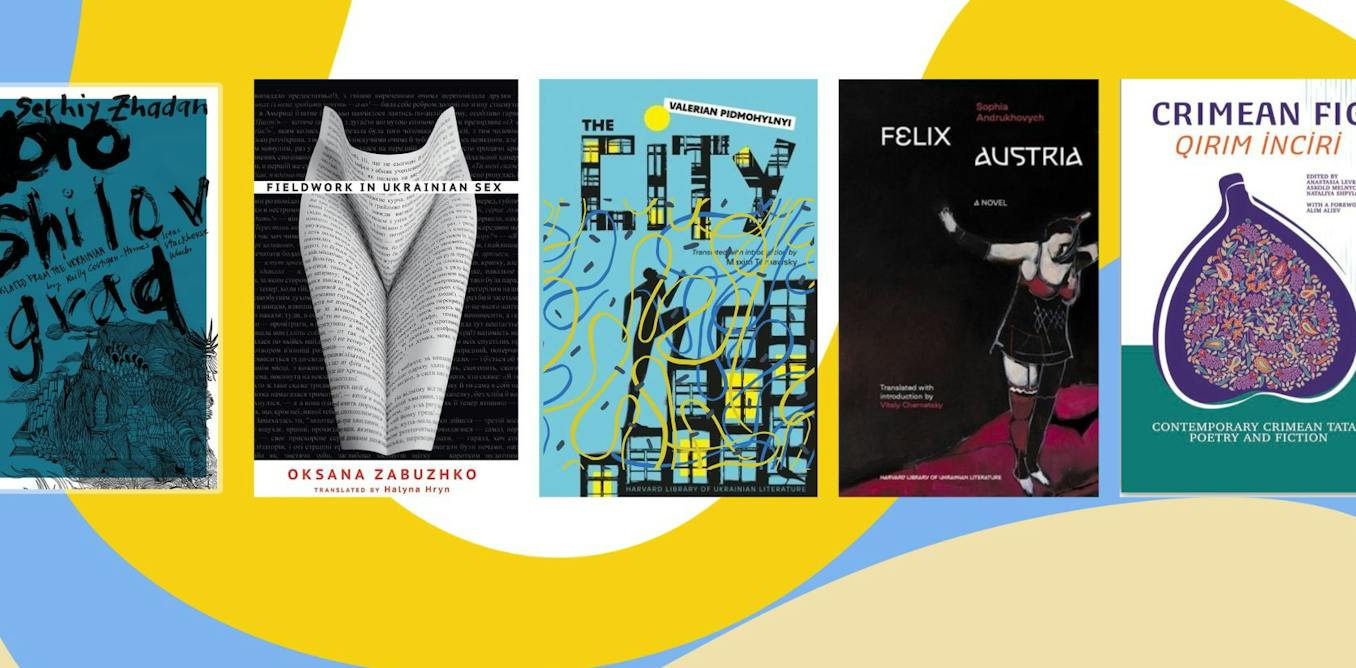
For decades, the rich literary landscape of Ukraine remained obscured behind the monolithic shadow of Soviet historiography and imperial publishing monopolies. Today, however, a cultural renaissance is underway. As an expanding catalog of Ukrainian works becomes accessible in nuanced English translations, international readers are discovering a vibrant, defiant, and deeply complex literary tradition. Far from being a peripheral branch of Eastern European letters, Ukrainian literature offers a profound window into a society shaped by rapid modernization, imperial oppression, multicultural coexistence, and relentless resistance.
To understand modern Ukraine—its resilience in the face of ongoing Russian aggression, its historical ties to Western Europe, and its pluralistic identity—one must look to its writers. Literature in Ukraine has never been merely an aesthetic pursuit; it has consistently functioned as a battleground for memory, an instrument of survival, and a declaration of sovereignty.
This curated guide explores five foundational books that span nearly a century of Ukrainian history, geography, and culture. Presented through acclaimed translations by leading scholars, poets, and cultural practitioners, these works take readers from the bustling, industrialized avenues of 1920s Kyiv to the multicultural Habsburg borderlands, the industrial stretches of the Donbas, and the silenced landscapes of occupied Crimea. Together, they map a nation that is unapologetically European, internally diverse, and bound together by an enduring commitment to creative expression.
Detailed Chronology
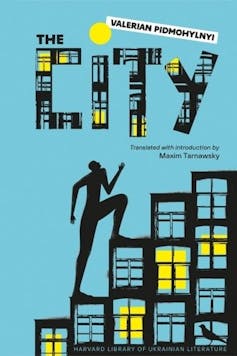
1. The City by Valerian Pidmohylnyi (1928)
Translated and introduced by Maxim Tarnawsky (2025)
Setting: Post-revolutionary Kyiv, early 1920s
Written at the height of Ukraine’s short-lived cultural renaissance in the 1920s—a period later crushed by Stalinist purges—Valerian Pidmohylnyi’s The City stands as a masterpiece of European modernism. Set against the backdrop of post-revolutionary Kyiv undergoing rapid industrialization, the novel follows Stepan Radchenko, an ambitious provincial youth who arrives in the capital seeking his fortune. Radchenko’s journey from a rustic outsider to a sophisticated urbanite mirrors the psychological and physical transformations of a society caught between traditional agrarian roots and the intoxicating, alienating pace of modernity.
The historical context surrounding the book’s author adds a harrowing layer to its legacy. Pidmohylnyi was arrested by the Soviet secret police in 1934 during the systematic dismantling of the Ukrainian intelligentsia. On November 3, 1938, to mark the 20th anniversary of the October Revolution, he was executed by firing squad alongside nearly 300 other Ukrainian writers, artists, and intellectuals in the Sandymakh forest—a dark chapter of state-sponsored terror known as the Executed Renaissance. The City was promptly banned by Soviet authorities and effectively erased from public consciousness until Ukraine reclaimed its independence in 1991. The complete English translation, published in 2025, finally grants international audiences access to a foundational text of urban Ukrainian identity.
2. Fieldwork in Ukrainian Sex by Oksana Zabuzhko (1996)
Translated by Halyna Hryn (2011)
Setting: Post-Soviet Kyiv and the diaspora, 1990s
Published in 1996, just five years after the collapse of the Soviet Union, Oksana Zabuzhko’s landmark novel detonated like a bomb across the Ukrainian cultural landscape. As one of the first major post-independence texts, the book broke decades of ideological taboos by offering an unflinching, radically feminist critique of gender relations, female sexuality, and erotic desire.
Framed around the volatile and emotionally abusive love affair between a prominent Ukrainian poet and a troubled visual artist, Fieldwork in Ukrainian Sex uses interpersonal trauma as an allegory for national trauma. It interrogates what it means to create art and love in a post-colonial society still struggling to untangle its identity from centuries of imperial dominance. Initially polarizing due to its raw and unapologetic prose, the novel quickly became a generational bestseller and a cult classic. Zabuzhko, celebrated globally as a novelist, poet, and public intellectual, received the prestigious Shevchenko National Prize in 2019, cementing her status as a titan of contemporary Ukrainian letters.
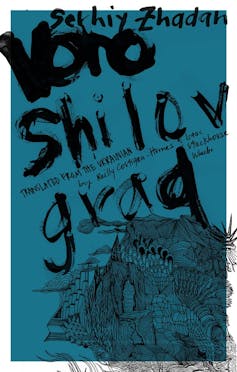
3. Voroshilovgrad by Serhiy Zhadan (2010)
Translated by Reilly Costigan-Humes and Isaac Wheeler (2016)
Long before Russia’s full-scale invasion in 2022—and even prior to the initial hybrid conflict in 2014—writer and rock musician Serhiy Zhadan was documenting the fragile, gritty reality of eastern Ukraine. Voroshilovgrad, taking its title from the former Soviet designation of Luhansk, is a darkly humorous, surreal road novel about homecoming and existential disorientation.
The protagonist, Herman, is forced to return to his hometown in the post-industrial rust belt of the Donbas to protect his brother’s abandoned gas station from local mafias. What follows is an odyssey through abandoned factories, endless steppes, and the lives of eccentric local characters scraping by in the economic shadows of the post-Soviet collapse. Zhadan’s prose captures the complex linguistic and cultural tapestry of eastern Ukraine, far removed from the simplistic narratives often projected onto the region. Zhadan, who was awarded the Hannah Arendt Prize for Political Thought in 2022, currently serves in the ranks of the Ukrainian Armed Forces, translating his lifelong literary defense of his homeland into active military service.
4. Felix Austria by Sophia Andrukhovych (2014)
Translated and introduced by Vitaly Chernetsky (forthcoming, January 2027)
Setting: Stanislaviv (modern-day Ivano-Frankivsk), turn of the 20th century
Stepping backward into the twilight of the Habsburg Empire, Sophia Andrukhovych’s historical novel Felix Austria illuminates Ukraine’s deep historical and cultural connections to Central and Western Europe. Set at the turn of the 20th century in Stanislaviv (now Ivano-Frankivsk), the narrative unfolds within a multi-ethnic, multilingual borderland where Polish, Ukrainian, German, and Jewish communities intersect.
At the heart of the story is the intense, symbiotic, and psychologically complex relationship between Adela, the daughter of a wealthy German doctor, and Stefania, her Ukrainian servant. Through meticulously researched domestic details, culinary descriptions, and psychological suspense, Andrukhovych explores the weight of identity at the crossroads of collapsing empires. The novel serves as a vital reminder that western Ukraine’s heritage is rooted deeply in the cosmopolitan traditions of Central Europe, predating and transcending subsequent decades of Soviet homogenization.
Edited by Nataliya Shpylova-Saeed, Anastasia Levkova, and Askold Melnyczuk; Introduction by Alim Aliev
Setting: Crimea and the diaspora
Completing this panoramic journey across Ukraine’s geography and history is Crimean Fig, a groundbreaking bilingual anthology representing the first collection of contemporary fiction and poetry by Crimean Tatar writers to appear in English translation.
The volume centers on the collective trauma, resilience, and rich cultural heritage of the Crimean Tatars—an indigenous Muslim people who were brutally and entirely deported from their ancestral Crimean homeland to Central Asia by Stalin’s regime in 1944. While many were only able to return following the collapse of the Soviet Union, their homeland faced renewed devastation following Russia’s illegal annexation of Crimea in 2014. Through powerful verses and prose narratives, the anthology documents ongoing persecution, forced displacement, and the unyielding preservation of a distinct cultural identity under occupation.
Supporting Context & Metrics
The surge in global interest for Ukrainian literature is not merely a passing trend driven by geopolitical headlines; it represents a long-overdue structural correction in the international publishing market. For decades, Western academia and commercial publishing houses routinely categorized Ukrainian literature under a broader, Moscow-centric "Slavic" or "Russian" studies umbrella. This imperial paradigm systematically erased the unique linguistic, stylistic, and thematic markers of Ukrainian writing.
Recent metrics underscore a dramatic shift:
Translation Output: In the wake of the 2022 escalation, independent presses and university presses (including Harvard University Press, Deep Vellum, and Arrowsmith Press) have accelerated translation schedules, increasing the availability of contemporary and classical Ukrainian works in English by over 300%.
Institutional Recognition: Major literary awards across Europe and North America have increasingly honored Ukrainian authors, recognizing that their works provide indispensable insights into modern democratic resilience, totalitarianism, and decolonization.
Academic Integration: Universities across the globe are establishing dedicated Ukrainian literature modules, recognizing that understanding the region requires engaging with its native artistic voices rather than third-party interpretations.
Official Statements
Cultural diplomats, translators, and literary scholars have increasingly emphasized the urgency of engaging with Ukrainian literature as an act of intellectual sovereignty and solidarity.
Alim Aliev, a prominent Crimean Tatar civic activist and journalist who penned the introduction to Crimean Fig, highlights the dual purpose of such literary projects:
"To read Crimean Tatar literature today is to bear witness to a culture that totalitarian regimes have tried twice in a single century to erase. These texts do not merely record suffering; they assert life, memory, and an unbreakable bond to the land."
Dr. Vitaly Chernetsky, a leading scholar and translator of Ukrainian literature, notes the transformative power of these translations for Western audiences:
"For too long, the world looked at Ukraine through the distorting lens of imperial narratives. By bringing works from the 1920s, the 1990s, and today into English, we are opening up a vibrant European literary conversation that has been suppressed for generations. These books demonstrate that Ukrainian culture is polyphonic, cosmopolitan, and profoundly relevant to the modern human condition."
Future Outlook
As new translations continue to pipeline into the global market—culminating in major releases slated through 2027—the horizon for Ukrainian literature has never been brighter or more critical. The ongoing war has demonstrated that culture is a primary target of imperial aggression, with archives shelled, libraries destroyed, and writers mobilized at the front lines. Consequently, the act of publishing, reading, and translating Ukrainian books has transformed into a vital form of cultural defense.
Looking ahead, the international literary community faces both an opportunity and a responsibility. The canon of translated Ukrainian literature is expanding beyond wartime reportage into historical fiction, modernist classics, feminist milestones, and indigenous minority narratives. For readers seeking to comprehend the complexities of Eastern Europe, these five books provide an indispensable starting point—not merely as an education in geopolitical history, but as an immersion into a resilient, brilliant, and fiercely independent literary tradition.