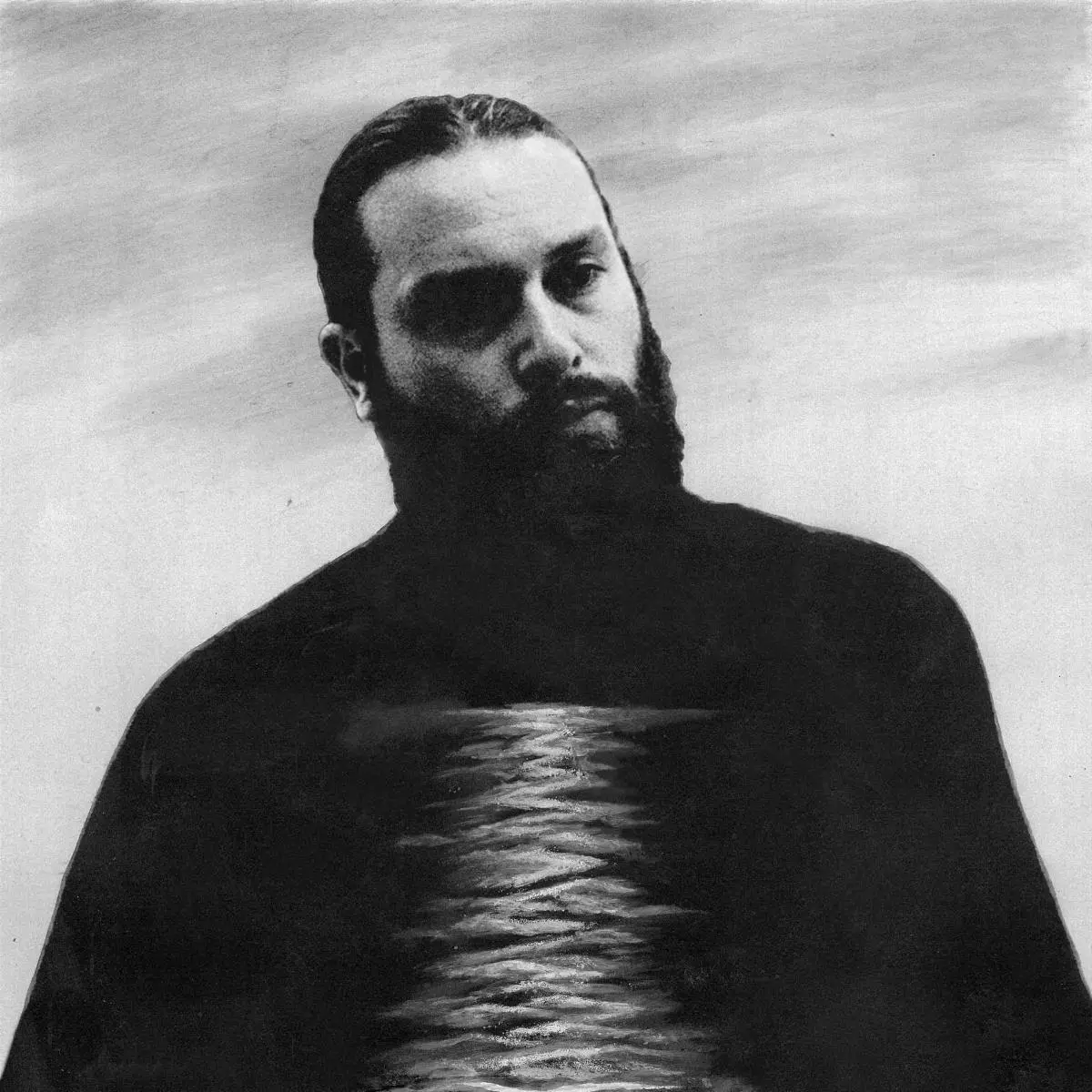
Executive Overview
In contemporary popular music, genres are increasingly treated as fluid, porous boundaries. Yet, few artists navigate this liminal space with the quiet, transformative authority of Nick Hakim. Nominally categorized as a purveyor of soul music, the Queens-based multi-instrumentalist, vocalist, and producer operates closer to the realm of spirit music—crafting atmospheric compositions that feel less like produced tracks and more like seances.
Over the past decade, Hakim has cemented his status as a critical cornerstone of modern independent music. A trusted collaborator for artists as diverse in aesthetic as indie-folk luminary Adrianne Lenker and hip-hop boundary-pusher Lil Yachty, Hakim’s distinct sonic signature has elevated records across the stylistic spectrum. However, his most profound artistic statements remain anchored in his solo catalog. With his latest full-length album, I Can See—released via Earseed—Hakim offers his most fully realized vision to date: a collection of spectral R&B songs boasting sound design so immaculate, immersive, and texturally rich that the production itself functions as a primary instrument.
Arriving four years after his acclaimed 2022 release, Cometa, I Can See is the product of a rigorous, half-decade incubation period. Some of the album’s material dates back to eras preceding Cometa, reflecting Hakim’s meticulous approach to studio craftsmanship. Across these tracks, he manages a rare alchemy: capturing the raw, unvarnished intimacy of bedroom demos while elevating them through breathtakingly sophisticated sonic engineering. Working alongside a tight-knit core of longtime collaborators, Hakim summons subtle, subterranean grooves out of the ether, blurring them into shimmering, holographic mirages.
The resulting record is simultaneously beautiful and haunting, representing a major evolutionary leap in contemporary soul and experimental R&B. By merging organic instrumentation with otherworldly electronic soundscapes, I Can See captures the weight of personal loss, the haze of memory, and the transcendent calm found on the other side of grief.
Detailed Chronology: The Five-Year Evolution of I Can See
The genesis of I Can See stretches back across a tumultuous half-decade in Hakim’s personal and professional life. Following the release of Cometa—a record celebrated for its woozy, whisper-quiet intimacy and smooth textures—Hakim found himself facing significant life disruptions, including the termination of a long-term record deal and the dissolution of a long-term relationship. Rather than rushing to capitalize on momentum, Hakim retreated inward, using the studio as both a sanctuary and a laboratory.
The Incubation Period (2019–2022)
Portions of the material that ultimately comprise I Can See were conceptualized and demoed well before Cometa hit shelves in 2022. During this period, Hakim embraced a slow-cooking methodology, allowing songs to naturally evolve over years of touring, collaboration, and private reflection. This extended gestation accounts for the remarkable cohesion of the album, despite being recorded across disparate, highly contrasting environments.
Tracking Across Landscapes
The recording sessions for I Can See spanned multiple geographies, taking the ensemble from the storied expanse of the legendary Texas recording compound Sonic Ranch to various lavish high-end facilities in New York City, as well as intimate home studios. Despite the shifting locations, the sonic architecture remains remarkably uniform. Where Cometa prioritized close-up, whispery clarity, I Can See achieves a spatial paradox: the tracks sound simultaneously as though they were captured within the quiet confines of an abandoned ancestral home and transmitted from the other side of a veil by a divine presence.
Co-Production and Sonic Breakthroughs
A critical catalyst in this sonic evolution was co-producer and mixer Andrew Sarlo. A veteran of some of the most adventurous indie-adjacent music of the past ten years—having helped shape the careers of artists like Dijon and Bon Iver—Sarlo specializes in pushing musicians to use the studio environment as a distinct compositional tool.
While Sarlo’s previous notable credits, such as Big Thief’s Baby and Bon Iver’s i,i, frequently leaned into deconstructed, avant-garde electronic textures, I CanSee takes a radically different route. Here, the studio is harnessed to achieve a celestial, organic feel. It is a masterclass in the convergence of the utterly natural and the supernatural, mapping out the architecture of human memory in real time.
Supporting Context & Metrics: Anatomy of a Masterpiece
To understand the sonic weight of I Can See, one must examine the intricate web of musicianship, songwriting credits, and thematic underpinnings that construct its universe.
The Ensemble and Instrumentation
While Hakim handles a vast array of duties—frequently taking charge of piano, synthesizers, MPC programming, and his own virtuosic, fluttering falsetto vocals—the album relies on a steadfast core unit of players:
- Drums & Percussion: Vishal Nayak and Abe Rounds
- Guitars: Joe Harrison and Dylan Day
- Bass: Kyle Miles
- Piano & Organ (Guest Appearances): Jake Sherman
This ensemble operates with telepathic intuition, capable of generating gentle, undulating grooves that feel perpetually on the verge of dissolving into mist.
Cross-Pollinated Credits
The album’s liner notes feature a series of fascinating sonic juxtapositions. On the grainy, guitar-forward track "The Reason," Hakim is joined by guest vocalists Moses Sumney and June McDoom, whose ethereal tones blend seamlessly with the track’s vintage warmth. More surprising, however, are the songwriting credits shared with Julian Pratt of the experimental hardcore outfit Show Me The Body—including a striking collaboration that places Pratt’s name alongside legendary avant-garde composer and guitarist Arto Lindsay. These unexpected intersections highlight Hakim’s unique ability to draw from disparate subcultures, folding the raw grit of punk and the sprawling abstraction of no-wave into the tender folds of modern R&B.
Thematic Resonance: Grief, Memory, and Loss
Lyrically, I Can See is haunted by the ghosts of what used to be. On the mesmerizing track "Real Here Now," Hakim leans directly into themes of mortality, legacy, and supernatural communion:
"My sister, she’s been learning magic / She claims, she talks to grandpa in the attic,"
Hakim intones over weightlessly floating chords. Yet, true to the album’s emotional complexity, the specter haunting the narrator shifts fluidly from familial ancestors to an old romantic flame:
"I hear laughing, and it sounded just like you / I hear singing, that song you always love to do."
This deep mournfulness is counterbalanced by Hakim’s overarching pursuit of grace. Writing through the dual trauma of a broken contract and a broken heart, he transforms heavy emotional burdens into music that feels as light as air.
As Hakim sings on the sweeping opening title track:
"It all comes back / In a mist / Then it fades away like before."
Official Statements and Artistic Vision
While Nick Hakim has historically preferred letting his immersive soundscapes speak for themselves, the thematic and emotional transparency of I Can See offers a clear window into his current artistic philosophy. Speaking on the impulses that drove the five-year creation of the album, close associates and industry observers note that the project represents a deliberate step away from the commercial pressures of the modern music industry toward pure, uncompromised sonic world-building.
The album’s title track, "I Can See," establishes this ethos immediately, showcasing a vocal delivery that recalls the dynamic, soaring agility of prime Michael Jackson filtered through a modern, avant-soul lens. Hakim’s lyrics across the record serve as a meta-commentary on his own production style and psychological state:
"Love our late night noise parade / The source feels far away / And it shifts like soft wet clay / But always stays the same."
This tension between distance and intimacy, permanence and impermanence, defines the album’s official statement to the world. Hakim is not merely documenting heartbreak; he is engineering a sonic space where listeners can process their own grief, memory, and longing. In an era dominated by hyper-compressed, immediate streaming fodder, I Can See demands patience, deep listening, and emotional surrender.
Future Outlook: The Cultural Footprint of I Can See
With I Can See arriving via Earseed, Nick Hakim stands at a fascinating crossroads in his career. Having already established himself as an indispensable, behind-the-scenes collaborator across hip-hop, indie-rock, and experimental R&B, this new record solidifies his position as a singular auteur whose influence will likely ripple across the contemporary musical landscape for years to come.
As listeners and critics unpack the dense, multi-layered production of tracks like "The Reason," "Real Here Now," and "Endlessly Waiting," the album is poised to redefine the parameters of what soul music can achieve in the 2020s. By proving that electronic beatscapes and dusty vinyl warmth can coexist with pristine acoustic instrumentation and spectral vocals, Hakim has opened up a new stylistic corridor for future artists to explore.
For those navigating their own dark nights of the soul, I Can See offers neither easy answers nor cynical escapism. Instead, it provides a transcendent calm—a reminder that even the heaviest emotional burdens can be alchemized into something beautiful, fleeting, and divine. As Hakim so aptly captures in his lyrics: "My ears can’t believe what they’re seeing." For audiences fortunate enough to step inside his sonic world, neither will theirs.
I Can See is available now via Earseed.