Executive Overview
For fourteen years, the avant-garde contemporary jazz trio Twin Talk has cultivated a reputation as one of American improvised music’s best-kept secrets. Comprising tenor saxophonist Dustin Laurenzi, bassist and vocalist Katie Ernst, and drummer Andrew Green, the ensemble has steadily built a dedicated following through a string of critically acclaimed releases. Yet, despite their individual footprints touring alongside high-profile indie-rock and alternative icons like Bill Callahan and Iron & Wine, the trio’s music has strangely remained anchored to North American shores.
That dynamic is shifting. On November 1, Twin Talk crossed the Atlantic for the very first time, marking their inaugural European live appearance at the prestigious Jazzfest Berlin.
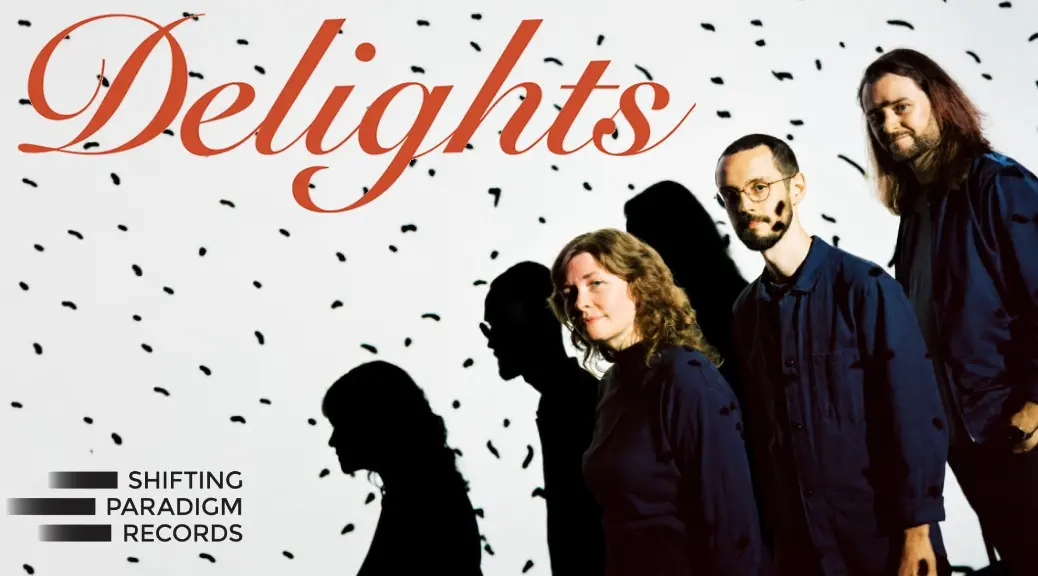
The timing of this milestone coincides with the release of Delights, their fifth studio album and their second consecutive outing via the Minneapolis-based imprint Shifting Paradigm Records. Comprising eleven meticulously crafted tracks, Delights is a masterclass in modern jazz composition, balancing structural discipline with explosive, convention-defying improvisation. Named after cryptophasia—the secret, idiosyncratic language sometimes invented by twins—Twin Talk operates with a telepathic synergy where lead roles pass seamlessly among the instruments. As Delights demonstrates from its opening notes, this is a unit that refuses to be neatly pigeonholed into traditional genre boxes, offering an uncompromising sonic journey that rewards repeated, attentive listening.
Detailed Chronology: From Conception to the European Stage
To understand the weight of Twin Talk’s European debut, one must trace the ensemble’s fourteen-year evolution through the American underground jazz and indie scenes.
The Formative Years and Early Releases
The trio’s genesis dates back to 2012 in the vibrant, cross-pollinated music scene of Chicago. Laurenzi, Ernst, and Green found an immediate chemistry, bonding over a shared desire to blur the lines between structured contemporary composition and freewheeling improvisation. The moniker "Twin Talk"—borrowed from the psychological phenomenon of twin infants communicating in a private tongue—became an apt metaphor for their interplay.
In 2013, the trio formally announced themselves to the recorded music world with Sightline, released under their three individual surnames. The album established their foundational template: chamber-jazz intimacy paired with a muscular, rhythmic drive. Following a self-titled sophomore release that further refined their dynamic, Twin Talk returned in 2019 with Weaver. This album expanded their sonic palette, incorporating subtle vocal elements from Ernst and shifting rhythmic textures courtesy of Green’s multifaceted drumming.
The Shift to Shifting Paradigm and Twin Talk Live
As the COVID-19 pandemic reshaped the live music industry, Twin Talk shifted their focus toward capturing their volatile stage energy on tape. This effort culminated in 2024 with Twin Talk Live, which marked their debut on the Minneapolis-based label Shifting Paradigm Records. The live record served as a bridge, reminding audiences of the sheer visceral power the trio commands on stage—a reputation that ultimately caught the attention of international festival programmers.
Delights and the Berlin Breakthrough
Arriving hot on the heels of their live album, Delights represents the apex of Twin Talk’s studio craft. Of the eleven compositions featured on the record, Dustin Laurenzi penned eight, Katie Ernst contributed two, and Andrew Green authored one. Issued on a standard single-vinyl LP, the album showcases a remarkable economy of space alongside a sprawling emotional landscape.
The culmination of this fourteen-year trajectory manifested at Jazzfest Berlin on November 1. Performing material from Delights to an international audience for the first time, Twin Talk validated years of underground acclaim, proving that their intricate musical dialogue translates powerfully across cultural and geographic boundaries.
Supporting Context & Metrics: The Dual Lives of the Trio
What makes Twin Talk’s trajectory particularly fascinating is the dual existence of its members. While the trio functions as a singular, tightly wound creative organism, its individual parts are deeply embedded in the upper echelons of the American indie-rock and experimental scenes. This cross-pollination heavily influences Twin Talk’s unique aesthetic, bridging the gap between sophisticated jazz structures and the visceral immediacy of indie music.
The Members Behind the Music
- Dustin Laurenzi (Tenor Saxophone): A fixture of the modern creative music community, Laurenzi’s horn work is characterized by a muscular tone and harmonic depth. Beyond Twin Talk, he is widely recognized for his touring and recording work with iconic singer-songwriter Bill Callahan, bringing a keen sense of narrative phrasing from the singer-songwriter tradition into avant-garde jazz.
- Katie Ernst (Bass and Vocals): Serving as the gravitational anchor of Twin Talk, Ernst manages the dual responsibilities of holding down complex low-end harmonic foundations while occasionally weaving wordless, ethereal vocal lines into the mix. Outside of the trio, Ernst is a trusted member of indie-folk royalty Iron & Wine’s touring band, a role that demands a pristine sense of groove and melodic sensitivity.
- Andrew Green (Drums): Operating at the intersection of Chicago’s rigorous jazz traditions and its boundary-pushing indie circles, Green is a percussionist who treats his kit as both a time-keeping device and a melodic workshop. His ability to shift from polyrhythmic assaults to delicate textural shading provides Twin Talk with its unpredictable momentum.
Track-by-Track Breakdown of Delights
A closer examination of Delights reveals an album constructed with architectural precision, designed to subvert expectations from the very first needle drop.

-
Side A: Subverting Norms
The album opens with "Red Cent," a Laurenzi composition that immediately shatters conventional jazz norms. Driven by Laurenzi’s commanding tenor and Green’s powerhouse drumming, it sets a confrontational yet deeply engaging tone. This gives way to "Heavy Nice," a choppy, volatile piece where the instruments intertwine relentlessly over a pounding percussive foundation.Calmer waters arrive with "Northwest," the first of Ernst’s contributions. Here, Ernst utilizes wordless vocals while maintaining a locked-in groove on the bass, supported by her bandmates in a display of telepathic listening. "Super Official" pares the arrangement back down, utilizing agogo bells and a hypnotic bassline to let Laurenzi dial back his aggression into cooler, more cerebral spaces. Side A concludes with "Shanty," a standout track that honors its nautical-leaning title through Ernst’s glorious, foundational bass work from start to finish.
-
Side B: Texture, Space, and Spirituality
Side B opens with Green’s percussion-focused interlude, "Mississippi," where the drummer coaxes a myriad of rattling and striking sounds from his kit. "Both And" re-establishes a driving marching rhythm, effectively serving as a manifesto for the trio’s stylistic identity.The mood darkens with "Teel," where Green works his cymbals with mallets before Ernst’s bass and voice emerge in the final quarter to claim the spotlight. "Fifths" leans heavily into the interlocking rhythmic patterns that have become a hallmark of the Twin Talk sound.
The emotional peak of the album arrives with Ernst’s "Shadow Kid," the closest Delights comes to transcendent spirituality. Here, bowed bass and vocals weave an orchestral ambience, allowing Laurenzi’s saxophone to glide and climb effortlessly. The album closes with "Similar Grit," a testament to the pristine recording quality of the record, where every note, scrape, and stroke is rendered with razor-sharp clarity.
Official Statements and Critical Reception
The arrival of Delights and the band’s historic European dates have generated significant buzz among contemporary jazz critics and industry insiders alike. While the band members have historically preferred to let their music speak for itself, the critical consensus surrounding their output highlights a rare artistic maturity.
Jazz critics have universally praised the group’s resistance to easy categorization. Reviewers have noted that while Delights is anchored by rigorous compositional structures—meaning it avoids the chaotic self-indulgence sometimes found in purely free-improvisation projects—the performers handle their instruments with such fluid intuition that the music feels constantly on the verge of breaking into entirely uncharted territory.
In contemporary reviews, critics have marveled at the record’s emotional resonance, issuing a shared challenge to listeners: while this complex, daring music may not pander to commercial radio-friendly formulas, anyone willing to surrender to its logic will find profound comfort in its writing, palpable excitement in its execution, and deep gratitude for its existence.
Future Outlook: The Next Stage of Evolution
With their successful baptism at Jazzfest Berlin, Twin Talk has officially stepped onto the international stage. For a group that has spent over a decade quietly refining its craft in the American Midwest, the European debut marks the crossing of a major threshold.
Looking ahead, the implications of Delights point toward an increasingly expansive future. Industry observers are already speculating whether this international exposure will lead to more extended European and global tour routing. Musically, the trajectory from Sightline to Delights suggests an ensemble that grows progressively bolder with each release. As the trio continues to test the boundaries between composed chamber jazz and spontaneous group invention, their next phase of development seems poised to venture into even freer, more expansive territory.
For now, Twin Talk stands as a vital reminder of what can be achieved when three distinct musical minds spend over a decade developing their own private language—one that is finally, thankfully, being broadcast to the rest of the world.