Executive Overview
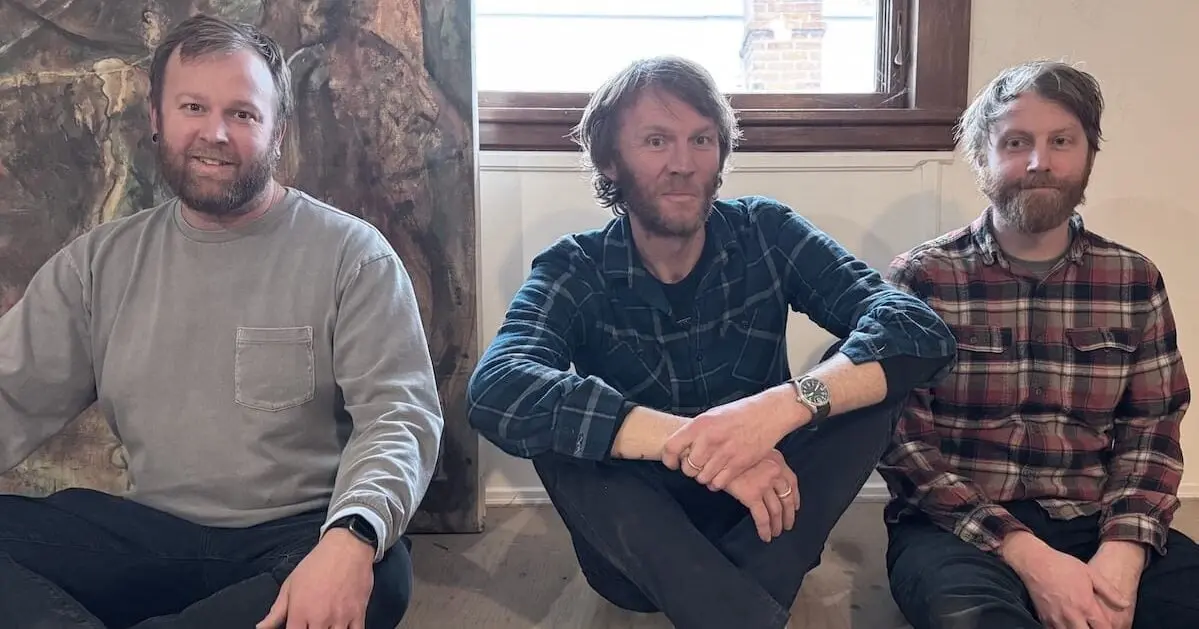
In the sprawling, hyper-commercialized landscape of modern contemporary music, true sonic alchemy remains a rare and elusive pursuit. Enter Andrew, Mark, and Peter—collectively known as the Verdin Brothers. Operating across the geographic and atmospheric divide between Minnesota and the mist-shrouded coasts of Newfoundland and Labrador, this fraternal trio has spent a lifetime shaping a singular, idiosyncratic sonic dialect. Since stepping into the commercial recording sphere in 2023, the Verdins have systematically deconstructed historical American and global folk idioms, filtering them through an eccentric, esoteric lens.
Their latest masterwork, The Crooked Serpent—slated for release via Debacle Records on October 16, 2026—serves as the apex of this subterranean journey. Building upon the spectral foundations laid by last year’s critically acclaimed Endless Night on the River Dirge, the new album pushes the boundaries of acoustic experimentalism. By fusing delta blues, Creole dance rhythms, Appalachian bluegrass, and avant-garde drone music with a genuine, unsettling fascination for the occult, the Verdin Brothers have crafted an album that feels less like a collection of songs and more like an invocation.
This comprehensive investigative feature explores the intricate mechanics of The Crooked Serpent. We analyze its unorthodox production methodologies, dissect its sprawling stylistic geography—from American Primitive guitar workouts to New Orleans jazz-inflected processions—and examine the occult philosophy driving one of the most adventurous independent releases of the decade.
Detailed Chronology: The Evolution of the Verdin Sound
To understand the weight and complexity of The Crooked Serpent, one must first retrace the creative trajectory that brought the Verdin Brothers to this precise stylistic juncture.
The Formative Years and the Genesis of 2023
Though the brothers had spent decades quietly trading cassette loops, improvising in basement studios, and archiving forgotten field recordings, their formal entrance into the public consciousness did not occur until 2023. This early output—portions of which have been retroactively woven into the fabric of their current releases—established their foundational interest in transmuting archaic genres. Rather than playing historical genres as museum pieces, the Verdins treated them as pliable, living materials susceptible to decay, hauntology, and sonic manipulation.
Endless Night on the River Dirge (2025)
The blueprint for The Crooked Serpent was definitively mapped out during the recording sessions for Endless Night on the River Dirge. Released to underground acclaim, that record introduced listeners to the brothers’ signature stylistic pastiche: misty, ghost-like echoes of bottleneck blues, Eastern modal scales, and weather-beaten field recordings. Critics praised the album for its immersive, cinematic quality, noting how the trio could evoke the swamplands of the American South and the freezing shores of the North Atlantic within the span of a single track. Yet, as ambitious as Endless Night was, it functioned primarily as a survey of the brothers’ disparate influences. The Crooked Serpent, by contrast, unifies these disparate threads into a cohesive, highly focused narrative.
The Unveiling of The Crooked Serpent (October 2026)
Announced for an October 16, 2026 release through Debacle Records, The Crooked Serpent represents a quantum leap in the trio’s compositional maturity. The album synthesizes the maximalist tendencies of their folk explorations with the minimalist, psychological terror of their ambient tape-loop experiments. It is an album that demands active, multi-layered listening, rewarding audiophiles and occult enthusiasts alike with hidden sonic details embedded deep within the mix.
Supporting Context & Metrics: The Mechanics of Esoteric Audio
What elevates The Crooked Serpent above standard contemporary folk or Americana records is its fearless embrace of unorthodox production techniques and conceptual depth. Two primary elements define the album’s technical architecture: the shadow of The Great Work and the rigorous instrumental interplay between Andrew, Mark, and Peter.
The Shadow Companion: The Great Work
Central to the mystique of The Crooked Serpent is a companion piece recorded concurrently with the main album, titled The Great Work. In the album’s liner notes, the brothers reveal that this separate recording was intentionally subjected to extreme manipulation. Fed repeatedly through analog tape machines, degraded, and then subtly re-entwined with the master tracks of The Crooked Serpent, The Great Work operates as a psychological alter ego for every single song on the album.
This technique introduces a profound sense of ambiguity and spectral presence. When listening to quieter passages across the record, listeners are frequently greeted by ghostly whispers, faint analog hums, and swirling loops that seem to breathe independently of the primary instrumentation. It is a brilliant, high-concept execution that turns the physical medium of the recording into a spiritual medium.
Instrumental Breakdown and Stylistic Range
The album’s sonic palette is vast, utilizing a dizzying array of traditional and folk instruments executed with virtuosic precision:
- Acoustic and Fingerstyle Guitars: Steeped in the American Primitive tradition—evoking the complex, open-tuned explorations of legendary pickers like Jack Rose—the guitar work provides both rhythmic anchor and melodic wanderlust.
- Hammered Dulcimer: Bringing a distinct, crystalline sparkle to the arrangements, the dulcimer cuts through the darker, murkier ambient tones with bright, percussive clarity.
- Double Bass (Pete Verdin): Providing the physical weight and gravitational pull for the compositions, the double bass navigates intricate modal shifts with nimble, rubbery grace.
- Banjo and Traditional Percussion: Serving dual purposes of rustic celebration and manic tension, these elements drive the record’s more maximalist moments.
- Brass Sections: Adding a sudden, bombastic theatricality reminiscent of cinematic jazz arrangements.
Track-by-Track Analysis: Navigating the Serpent’s Labyrinth
To fully appreciate the scope of The Crooked Serpent, one must examine how these disparate concepts and instruments manifest across specific compositions on the record.
1. The Opening Salvo: "Lark in the Morning" and "DuBois’ Folly"
The album opens with a masterclass in atmospheric tension on the traditional tune Lark in the Morning. The track begins not with a melody, but with an odd, immersive tangle of field recordings. Slowly, the faint call of a lark emerges, underpinned by a rolling acoustic guitar and a sweet, dancing hammered dulcimer part.
Just as the listener settles into this pastoral dreamscape, the track violently bursts into life. Crackling, driving percussion and a harmonium-like drone swell into a robust, euphoric chordal arrangement. This massive wall of sound is maintained for roughly five minutes before seamlessly dissolving into DuBois’ Folly—a brisk, remarkably intricate miniature Irish jig played entirely on banjo. The transition highlights the trio’s ability to pivot effortlessly from massive, cinematic soundscapes to intimate, razor-sharp traditional playing.
2. American Primitive Precision: "The Trepanned Head"
Leaning heavily into the darker, more austere side of their output, The Trepanned Head is a tour de force of guitar-fronted American Primitive styling. Featuring sturdily thumbed bass strings and an unyielding, hypnotic rhythm, the track feels like a journey across desolate, frost-bitten terrain.
However, it is what happens in the margins of the mix that defines the track’s true brilliance. Beneath the primary acoustic guitar, faint whispers and ghostly loops swirl just at the threshold of human hearing. These sonic apparitions become fully audible during the song’s quieter interludes, demonstrating the profound atmospheric impact of the aforementioned Great Work tape manipulations.
3. Modal Mysticism: "Equinox"
Acoustic instrumental mastery takes center stage on Equinox. Built upon a foundation of neatly picked acoustic guitar, hammered dulcimer, and Pete Verdin’s heavy, anchoring double bass, the song is framed by an eerie, high-frequency drone in the background.
Musicologists and fans of avant-garde acoustic music will immediately detect stylistic nods to the late Jack Rose, while the marriage of the sustained drone and intricate fingerstyle guitar directly echoes legendary recordings like Yaman Blues from Opium Musick. The double bass supplies a deliberate, weighty momentum, while the sparkling high-end of the dulcimer prevents the track from sinking entirely into the abyss.
4. Carnival of the Macabre: "Where the Sun Goes to Bed (Skeleton Song)"
Perhaps the most theatrical moment on the record, Where the Sun Goes to Bed transports the listener to the shadowy, fog-drenched streets of New Orleans. The track begins as a lively, jaunty affair, driven by sharply picked guitar, nimble banjo, and playful percussion.
After a couple of minutes, the atmosphere shifts dramatically as a bombastic, swaggering brass section enters the fray. Particular praise must be directed at the bass performance here: the player’s fingers snake playfully around the brass section, executing slippery, bending notes before snapping effortlessly back into the core rhythm. It is darkly whimsical, delightfully eccentric, and practically begs to be featured in a lost Tim Burton jazz-animation sequence.
Official Statements and Artistic Vision
While the Verdin Brothers famously maintain a reclusive media presence, preferring to let their intricate liner notes and dense soundscapes speak on their behalf, representatives close to the trio and Debacle Records have shared insights regarding the philosophy underpinning The Crooked Serpent.
In a brief promotional dispatch accompanying the album announcement, the label emphasized the painstaking dedication poured into the project:
"The Crooked Serpent is not merely an album; it is an archeological dig through the subconscious of American and global folk traditions. Andrew, Mark, and Peter have spent years refining a language that bridges the gap between the earthly roots of traditional instrumentation and the ethereal, terrifying unknown of the occult. This is high art executed with absolute uncompromising vision."
Furthermore, internal production notes obtained from the recording sessions reveal that the brothers approached the sequencing of the album as a ritualistic journey. Every abrupt shift from quiet, meditative drone pieces to euphoric, maximalist folk outbursts was deliberately engineered to disorient the listener, mirroring the psychological disorientation traditionally sought in esoteric and occult practices.
Future Outlook: The Ascendancy of Esoteric Folk
As the music industry continues to grapple with algorithmic homogenization, the arrival of The Crooked Serpent on October 16, 2026, serves as a vital reminder of the power of uncompromising artistic vision. The Verdin Brothers are carving out a distinct, fiercely independent niche that rejects easy categorization, proving that genres as disparate as Delta blues, Irish folk, and avant-garde tape music can coexist under the dark canopy of the occult.
What Lies Ahead for the Trio?
With The Crooked Serpent set to drop via Debacle Records, anticipation within underground and experimental music communities is reaching a fever pitch. Industry analysts project that the album will significantly expand the brothers’ international footprint, particularly among aficionados of contemporary American Primitive guitar, hauntology, and experimental folk.
Looking forward, rumors within the underground circuit suggest that the trio is exploring the possibility of translating these multi-layered, tape-manipulated studio recordings into a strictly limited series of immersive, live ritual performances. Whether or not those plans materialize, one thing is certain: the Verdin Brothers have established themselves as essential architects of modern sonic mystery. The Crooked Serpent is a landmark achievement—a singular work of painstaking detail, profound ambiguity, and high artistic triumph that will echo through the underground for years to come.