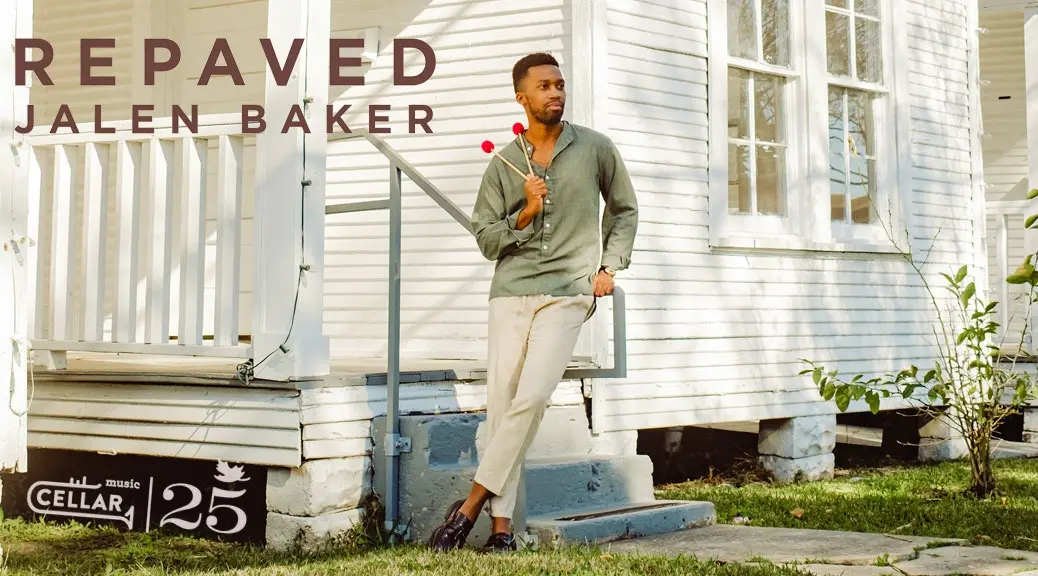
In the contemporary landscape of modern jazz, few instrumentalists wield the vibraphone with the narrative depth and harmonic sophistication of Jalen Baker. Hailing from Houston, Texas, Baker has quietly established himself as one of the most compelling composers and bandleaders of his generation. Following his critically acclaimed releases This Is Me, This Is Us (2021) and Be Still (2023), Baker returns with his third and most ambitious studio project to date: RePaved.
This latest suite represents a watershed moment in the artist’s career. Eschewing the conventional boundaries of small-ensemble jazz, RePaved serves as both an intimate personal reflection and a grand sociological study. At its core, the album is a deeply textured exploration of Houston’s historic 3rd, 4th, and 5th wards—neighborhoods that shaped Baker’s upbringing but are now undergoing rapid, complex transformations through gentrification. Rather than offering a simplistic lament or an uncritical celebration of urban development, Baker uses his music to interrogate how a city can honor its storied past while navigating an uncertain, rapidly shifting future.
Musically, RePaved is a masterclass in scale and texture. Baker bridges the divide between an acoustic jazz quintet and a classical string quartet, assembling a dynamic nine-piece ensemble that operates with telepathic synergy. Recorded almost entirely in live takes, the album avoids the sterile perfection of modern digital overdubbing in favor of a raw, human pulse. Drawing inspiration from jazz titans like Wynton Marsalis and Duke Ellington, Baker has crafted an expansive, cinematic sonic tapestry that cements his place as an essential voice in modern improvised music.
Detailed Chronology: From Houston’s Wards to the Global Stage
To fully appreciate the artistic triumph of RePaved, one must trace the evolutionary trajectory that led Jalen Baker to this point. His early artistic identity was forged in the rich cultural crucibles of Houston’s historically Black neighborhoods. These districts—steeped in rich traditions of blues, gospel, and community resilience—provided the foundational rhythm of Baker’s early life.
The Foundation: This Is Me, This Is Us (2021)
When Baker stepped onto the national scene with his debut album, This Is Me, This Is Us, he introduced listeners to a fluid, articulate vibraphone voice that drew equally from the lineage of Milt Jackson and Bobby Hutcherson. The album established his technical mastery and introduced his distinct penchant for storytelling through melody. It was a deeply personal statement that laid the groundwork for his future explorations of identity and community.
Deepening the Craft: Be Still (2023)
Building upon the momentum of his debut, Baker’s sophomore release, Be Still, showcased a growing maturity in his compositional voice. The album leaned into contemplative, spiritual dimensions, testing the limits of harmonic space and dynamic restraint. Critics praised its emotional resonance and the telepathic interplay among his core band members. It became clear that Baker was an artist who viewed each album not merely as a collection of songs, but as a chapter in an ongoing artistic evolution.
The Zenith: The Conception and Creation of RePaved
RePaved represents the culmination of this artistic journey. Inspired in part by historic musical suites such as Duke Ellington’s Black, Brown and Beige and Wynton Marsalis’s Black Codes From The Underground, Baker set out to push his musical chops beyond conventional comfort zones. He wanted to channel the weight of history into his writing.
The recording process for RePaved was as ambitious as its conceptual framework. Eschewing standard tracking methods where instruments are layered sequentially in a studio, Baker assembled a nine-piece collective featuring a core jazz quintet—himself on vibes, Gabriel Goody on bass, Gavin Moolchan on drums, Paul Cornish on piano, and Alexandria DeWalt on flute—alongside a full string quartet.
In a technical feat of modern production and performance, the quintet and string quartet were joined via a live video link during recording sessions, capturing simultaneous, unedited live takes. This approach injected the session with an invaluable "human edge" and vital honesty. Baker intentionally surrounded himself with musicians who not only understood his vision but shared deep personal connections with him; notably, he has known pianist Paul Cornish for the majority of his life.
Supporting Context & Metrics: Themes, Tracks, and Influences
RePaved is an intensely programmatic album, with each track serving as a narrative vignette examining the historical and contemporary layers of Houston’s urban landscape.
The Spiritual Roots: "Antioch" and "John Henry"
The album’s opening tracks immediately ground the listener in the spiritual and labor histories of Houston’s Black communities. "Antioch" acts as a sonic portal, depicting the profound influence of the Black church on the development of the city’s neighborhoods. The ethereal, striking interplay between Alexandria DeWalt’s flute and Baker’s vibraphone sets a reverent, contemplative tone.
This gives way to the second track, "John Henry," whose brief, shimmering vibraphone textures intentionally recall the late 1960s output of Gary Burton, blending folk-tradition resilience with modernist jazz voicings.
Urban Transformations: "Dowling/Emancipation" and "City On The Water"
As the suite progresses, the tempo and mood shift to reflect the physical and social restructuring of Houston. "Dowling/Emancipation" starts with a low, rumbling undercurrent before exploding into a celebratory party atmosphere. The track directly confronts the city’s complex history, acknowledging the street originally named after a Confederate general and its subsequent renaming to Emancipation Street in honor of Juneteenth. It is a musical manifestation of reclaiming public space and honoring ancestral freedom.

In stark, poignant contrast, "City On The Water" functions as a cinematic lament. Written in response to the devastating destruction wrought by Hurricane Harvey in 2017, the piece utilizes the string quartet to pan across a desolate sonic horizon. Its thoughtful, measured pace provides a heavy, reflective anchor amidst the more joyful, driving sections of the album.
Harmonic Intersections and Funk Legacies
One of the album’s most brilliant structural shifts occurs on "Bemsha Blues." Here, the flute and strings step aside, reducing the ensemble to a razor-sharp quartet. Baker performs a dazzling compositional mashup, fusing Thelonious Monk’s "Bemsha Swing" with Duke Ellington’s "C James Blues."
The interplay within this reduced ensemble is breathtaking. Baker’s bright, crystalline vibraphone lines are counterbalanced by bassist Gabriel Goody’s taut power and tonal warmth. Drummer Gavin Moolchan miraculously slices through the harmonic intervals, while pianist Paul Cornish delivers an extended, cascading solo that effortlessly slips back and forth between Monk’s angular modernism and the deep-rooted tradition of the blues.
The album also pays homage to localized musical legends on "Kashmere." This track honors the elite performing band from Kashmere High School, located in Houston’s 5th ward, which dominated local music education from the late 1960s through the late 1970s before their archival recordings were rediscovered and released in 2003. Baker captures the massive, driving funk of those high school phenoms, leaning closer to the breezy, sophisticated vibes of Roy Ayers than Milt Jackson, perfectly balancing strings, flute, and percussion.
Official Statements and Artistic Philosophy
Reflecting on the motivations behind RePaved, Jalen Baker has been vocal about his desire to stretch the boundaries of the jazz idiom while honoring those who laid the groundwork before him.
"I wanted to challenge my musical chops and become more open to wide sources of inspiration," Baker notes when discussing the conceptual shift from his previous recordings. By investigating the gentrification of Houston’s historic 3rd, 4th, and 5th wards, Baker sought to address a deeply urgent contemporary issue without falling into cynicism. His stated goal was to create music that acknowledges and celebrates these neighborhoods as vibrant cultural entities, ensuring that the histories that formed them are never lost to the relentless march of modern real estate development.
Baker also acknowledges the profound impact of his mentors and musical forebears. Beyond the structural influences of Ellington and Marsalis, he frequently cites modern masters like trumpeter Jeremy Pelt and drummer Jonathan Blake as critical guiding lights in his career. It is their unwavering commitment to their craft and their uncompromising artistic integrity that Baker strives to emulate in his own daily practice and compositional output.
Regarding the ensemble chemistry on RePaved, Baker emphasizes the necessity of live interaction over digital assembly:
"All nine players fly at the same time… I was interested in the human edge and the vital honesty of musicians who get what I’m going for."
This commitment to organic, unvarnished group expression is what elevates RePaved from a mere academic exercise in suite-writing into a living, breathing document of human collaboration.
Future Outlook: Taking Houston to the World
With the release of RePaved, Jalen Baker has successfully cemented a reciprocal artistic relationship with his hometown: he has left an indelible mark on the city of Houston, just as the city has left an enduring, formative mark on him. The album expands the technical and emotional capabilities of the vibraphone within modern jazz, proving that the instrument is uniquely suited for grand, narrative-driven compositions.
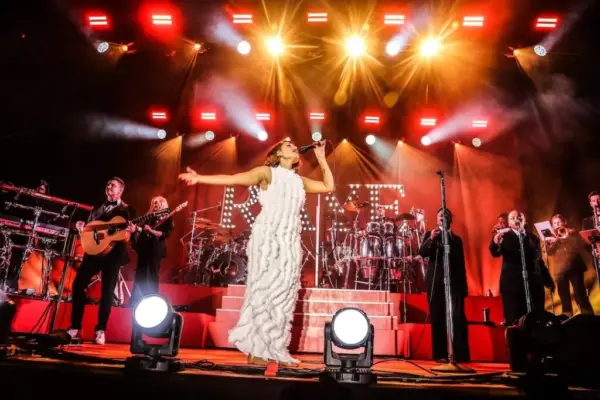
As Baker transitions from the studio to the international stage, his trajectory points toward even broader horizons. He is currently taking the complex, multi-layered soundscapes of RePaved on the road, bringing a profound piece of Houston’s cultural history to global audiences. Notably, UK audiences will have the rare privilege of experiencing this nine-piece vision translated to the live setting, with Baker scheduled for an eagerly anticipated performance at London’s legendary Ronnie Scott’s jazz club on September 29th.
For jazz enthusiasts and cultural historians alike, RePaved is not merely an album to be listened to; it is a landscape to be explored. It signals that Jalen Baker is not just a master of his instrument, but a vital cultural archivist and a fearless visionary charting the future of improvised music.