The Wexford Festival Opera has officially unveiled its highly anticipated 2027 programme under the visionary guidance of Artistic Director Rosetta Cucchi. Demonstrating a bold commitment to artistic discovery, historical reclamation, and gender equity, the upcoming season centers on a powerful overarching theme: a tribute to the extraordinary courage, resilience, and creative power of women. This curation breaks new ground by highlighting works that feature a female composer, a female librettist, and pivotal, commanding female protagonists.
The main stage lineup for 2027 comprises three fascinating, infrequently performed operas representing distinct European musical traditions: Carolina Uccelli’s Italian bel canto rarity Anna di Resburgo, Bedřich Smetana’s Czech masterpiece Tajemství (The Secret), and Camille Saint-Saëns’ monumental French classical drama Déjanire. In a testament to Wexford’s nurturing ecosystem, the three leading female roles across these productions will be performed by talented alumni of the prestigious Wexford Factory training program.
Beyond the main stage, the 2027 festival expands its cultural footprint with a diverse array of musical offerings. These include a mid-century "Pocket Operas" triple bill featuring works by Samuel Barber, Gian Carlo Menotti, and Douglas Moore, alongside a collaborative large-scale community and factory production of Mozart’s Le nozze di Figaro. Through this meticulously planned season, Wexford Festival Opera continues to solidify its reputation as an essential global destination for operatic archeology and world-class performance.
Detailed Chronology and Production Breakdown
The 2027 main stage program takes audiences on a sweeping historical and geographical journey across the 19th century, exploring neglected masterpieces that push the boundaries of dramatic storytelling and musical innovation.
Déjanire by Camille Saint-Saëns
Camille Saint-Saëns’ Déjanire boasts one of the most intriguing and unique genesis stories in the operatic canon. The work traces its roots to a play written by the distinguished French librettist Louis Gallet (1835–1898), whose formidable list of credits included Bizet’s Djamileh, Massenet’s Le Cid and Thaïs, and several works for Saint-Saëns himself.

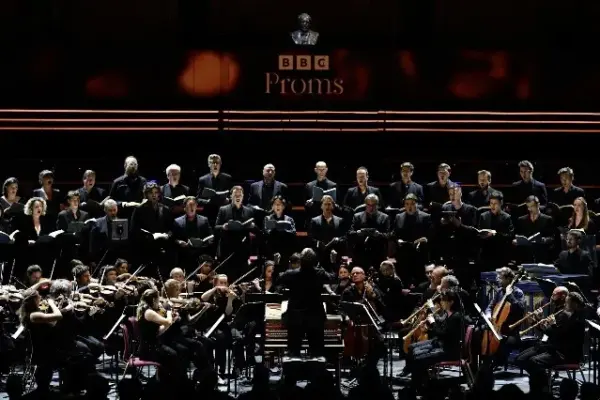
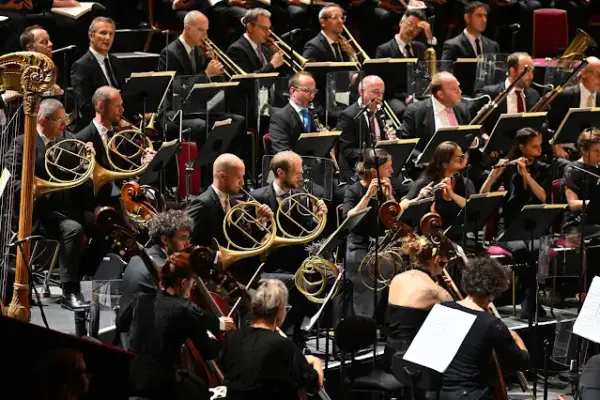
In 1898, Gallet’s play Déjanire was mounted in a newly constructed outdoor arena in Béziers—a venue primarily utilized for bullfights. Though Saint-Saëns was initially skeptical of the venue, he was tempted by the prospect of conducting a gargantuan musical ensemble. This included a choir of hundreds, massed military bands, and an orchestra featuring 18 harps and 25 trumpets. The resulting open-air reception was nothing short of ecstatic.
Twelve years later, following Gallet’s passing, Saint-Saëns transformed the play into a full-scale opera for the Opéra de Monte-Carlo, directed by Raoul Gunsbourg. This marked the last of Saint-Saëns’ twelve operas, arriving more than three decades after his most famous masterpiece, Samson et Dalila. The work subsequently traveled to the Paris Opera and crossed the Atlantic to the United States in 1915.
Today, Déjanire is vanishingly rare; its most recent major staging prior to Wexford is believed to have been at the Festival de Radio France et Montpellier in 1985, under the baton of Serge Baudo. Based on Sophocles’ The Trachiniae and sharing a tragic narrative arc with Handel’s Hercules, the Wexford production will be steered by conductor and director George Petrou, whose previous work includes the acclaimed 2025 Wexford staging of Handel’s Deidamia.
Tajemství (The Secret) by Bedřich Smetana
While Bedřich Smetana is a towering figure in Czech classical music, contemporary audiences often overlook the fact that he composed nine operas in total, seven of which were written after his beloved breakthrough, The Bartered Bride (1866–1870).
Composed in 1878, Tajemství (The Secret) represents the second of Smetana’s four collaborations with the trailblazing Czech feminist author, lyric poet, literary critic, and translator Eliška Krásnohorská (1847–1926). Krásnohorská and Smetana’s creative partnership had previously yielded The Kiss, their most enduring joint effort.

The plot for The Secret originated with Krásnohorská, drawing inspiration from multiple sources, including La Fontaine’s Les femmes et le secret. Musically, Smetana bucked contemporary avant-garde trends by returning to a more traditional structural framework comprising choruses, duets, arias, and ensemble pieces, anchored by a vibrant potpourri overture.
Following the composer’s death, the opera experienced a period of neglect before returning triumphantly to Prague in 1922, where it has maintained a secure place in the standard repertoire ever since. Internationally, the UK premiere was conducted by Jack Westrup in Oxford in 1958, followed by a staging at the Camden Festival in 1972. For the 2027 Wexford production, Polly Graham will direct, with Sasha Scolnik Browe taking up the conductor’s baton.
Anna di Resburgo by Carolina Uccelli
The least-known work in the 2027 main stage trio is Carolina Uccelli’s Anna di Resburgo (1835). Born in 1801 to a minor Florentine noble family, Uccelli married a prominent Pisa-based surgeon who steadfastly supported her artistic ambitions. She made her compositional debut with the sacred opera Saul at Florence’s Teatro della Pergola in 1830, penning both the music and the libretto herself.
Her follow-up opera, Anna di Resburgo, premiered in Naples in 1832. Its libretto, by Gaetano Rossi, had famously been set previously by Giacomo Meyerbeer in 1819 as Emma di Resburgo. Tragically, Uccelli’s version ran for a mere two performances. Historians attribute this premature closure largely to the plot’s unfortunate similarity to Gaetano Donizetti’s Lucia di Lammermoor, which had premiered in Naples just a month prior to overwhelming acclaim.
Although Uccelli composed a third opera, Eufemio da Messina (1833)—the score of which is now lost—her career was cut short by societal expectations, and she failed to achieve the widespread recognition her raw talent merited. After Anna di Resburgo, she retreated to her aristocratic social circles, focusing on smaller-scale compositions, chamber vocal music, and recitals in Paris alongside her soprano daughter.

Thanks to a surviving manuscript score preserved in the Conservatory of Naples, and a modern US revival staged by Teatro Nuovo in 2024, contemporary audiences will finally experience this bel canto rarity. At Wexford, Anna di Resburgo will be directed by Rodula Gaitanou and conducted by Sieva Borzak.
Supporting Context & Metrics
The 2027 festival also branches out into intimate chamber works and large-scale community collaborations, demonstrating remarkable stylistic range:
- The Pocket Operas Triple Bill: A mid-century exploration featuring Samuel Barber’s A Hand of Bridge, Gian Carlo Menotti’s The Telephone (both utilizing librettos by Menotti), and Douglas Moore’s Gallantry, set to a libretto by Arnold Shurgard. Dating from the late 1940s and 1950s, these works showcase American and English-language operatic development. Douglas Moore, who studied under Vincent d’Indy and Ernst Bloch, composed 17 stage works, most notably The Ballad of Baby Doe (1956). Gallantry, written two years later, has long been a staple of North American university opera programs.
- Community & Factory Collaboration: In a landmark joint effort, the Wexford Factory Opera and the Community Opera will join forces to stage Mozart’s timeless masterpiece Le nozze di Figaro. This production will be directed by Artistic Director Rosetta Cucchi and conducted by Karen Ní Bhroin. Hailing from Ferns in County Wexford, Ní Bhroin made history last year by becoming the first Irish woman to conduct at London’s prestigious Royal Albert Hall.
Official Statements and Artistic Vision
Artistic Director Rosetta Cucchi has framed the 2027 festival not merely as a collection of musical performances, but as an ideological statement honoring the indomitable spirit of women across history. By deliberately selecting works shaped by female creators—such as Carolina Uccelli and Eliška Krásnohorská—and highlighting complex female characters across disparate cultural traditions, Cucchi seeks to challenge traditional operatic tropes of victimhood.
Furthermore, by casting Wexford Factory alumni in all three leading female roles, the festival actively invests in the next generation of operatic talent. This initiative reinforces Wexford’s dual mission: rescuing forgotten masterpieces from historical obscurity while serving as an indispensable launching pad for rising international artists.
Future Outlook
As the Wexford Festival Opera looks ahead to 2027, the organization continues to cement its unique standing in the global cultural landscape. By balancing high-profile rediscoveries like Anna di Resburgo and Déjanire with accessible community programming and mid-century chamber gems, the festival ensures a rich, multi-layered experience for critics, scholars, and casual opera lovers alike. Full details, ticketing information, and schedule updates are available directly through the official Wexford Festival Opera website.