Executive Overview
To modern observers wandering the British countryside, the European rabbit (Oryctolagus cuniculus) is an omnipresent fixture of the rural landscape—so thoroughly integrated into the ecosystem that it feels as permanent as the hills and hedgerows. Yet, this familiarity masks a volatile ecological and social history. Long before they earned their modern reputation as one of the British Isles’ most environmentally destructive and economically costly invasive species—inflicting billions of pounds in agricultural damage—rabbits were exotic, fiercely guarded status symbols.
The early history of the rabbit in Britain is not merely a tale of biological introduction; it is a captivating mirror reflecting the tumultuous social changes, class struggles, and cultural anxieties of the Middle Ages. Evolving from a rare, royal luxury gifted exclusively by monarchs and the Norman aristocracy, the rabbit transitioned into a commonplace commodity driven by the demographic shockwaves of the Black Death. As living standards for the surviving peasantry rose, so too did their consumption of rabbit meat and their use of rabbit fur.
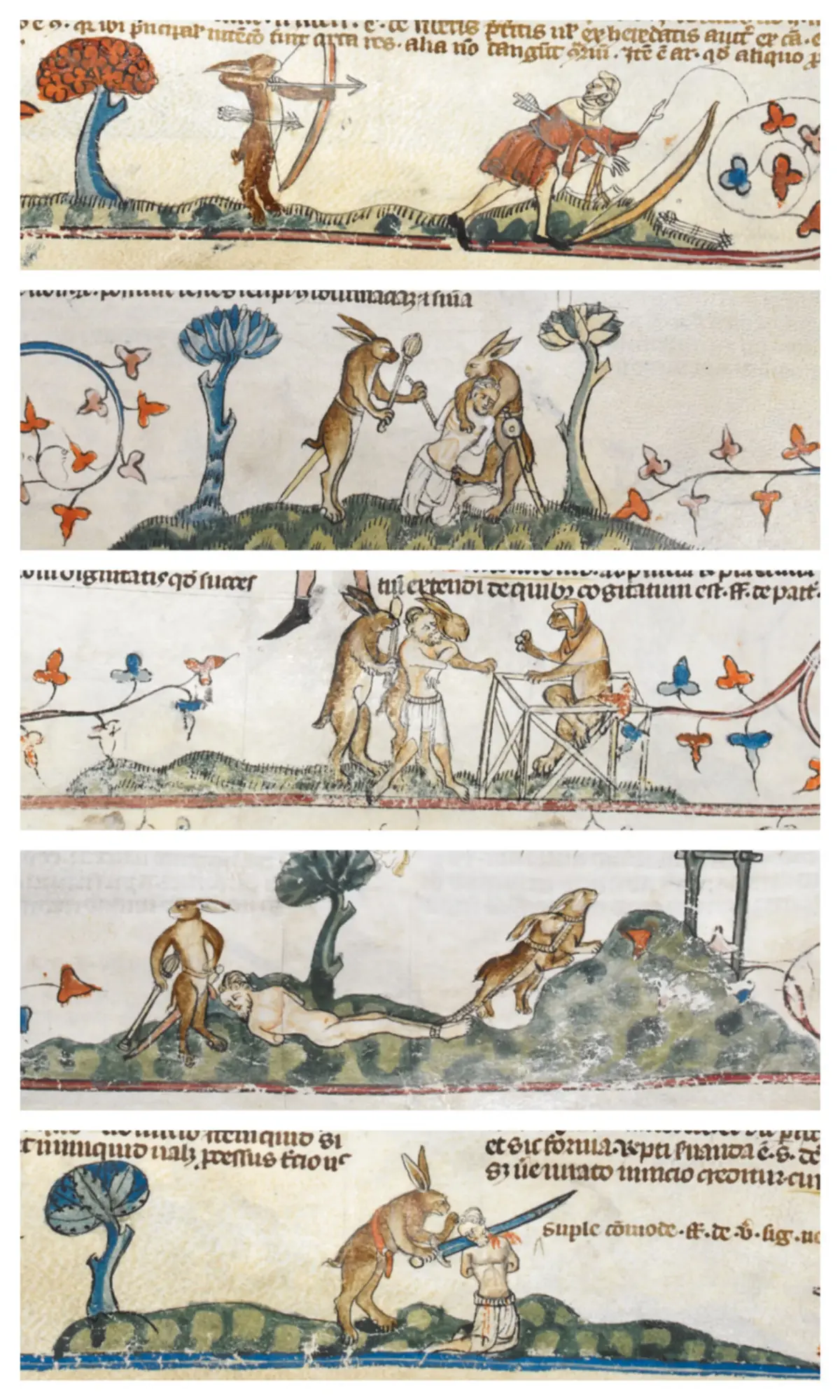
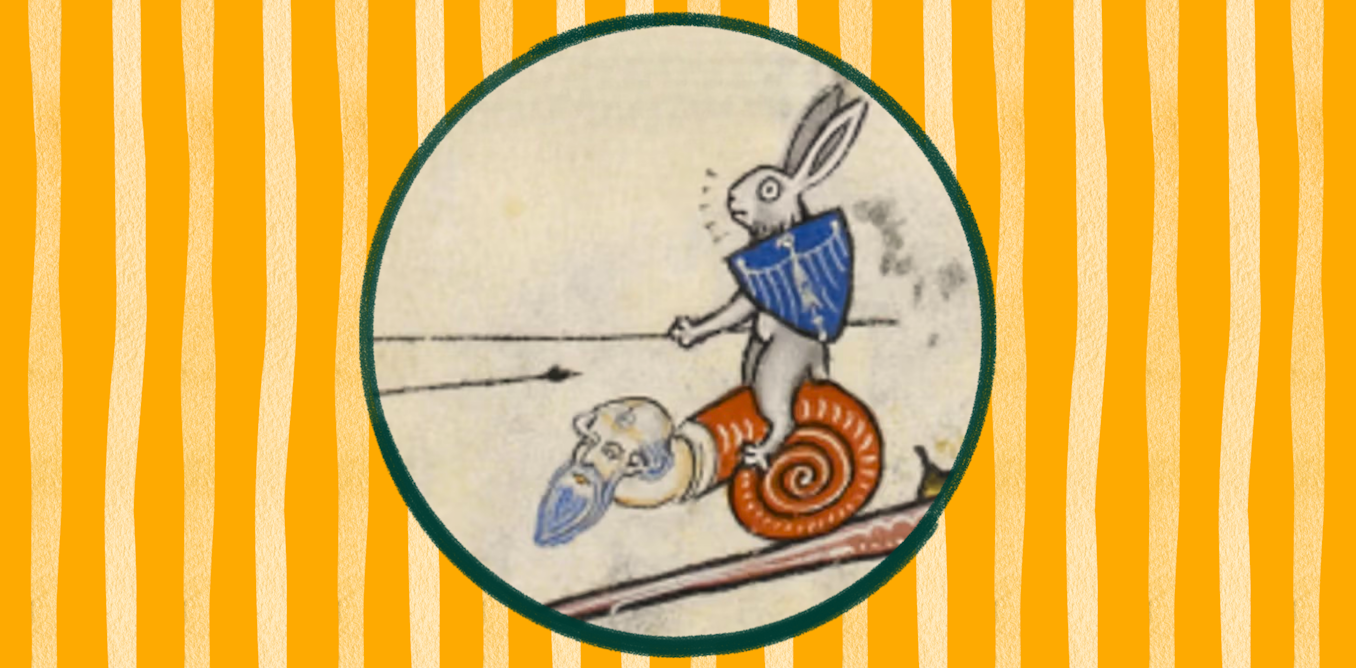
This upward social mobility sparked intense legislative backlash from a ruling class desperate to maintain traditional hierarchies. Concurrently, the cultural footprint of the rabbit expanded into the margins of medieval manuscripts, where illuminators weaponized the creature’s growing presence. Through biting satire, medieval artists depicted bunnies turning the tables on their human and canine oppressors—jousting on snails, holding mock trials, and executing their hunters. Far from being mere whimsical doodles, these illustrations captured a profound "gallows humor" of social inversion that resonates as strongly today as it did seven centuries ago.
Detailed Chronology: From Roman Curio to Medieval Commodity
The trajectory of the European rabbit within the British Isles is marked by punctuated phases of introduction, royal protection, democratization, and legislative containment.
[Roman Period] Initial, isolated introductions (e.g., Fishbourne Palace)
       │
       ▼
[12th Century] Norman establishment; 1176 Scilly Isles tithe dispute
       │
       ▼
[13th Century] Royal monopolies; Henry III gifting live stock & adding to feasts (1240)
       │
       ▼
[14th Century] The Black Death (1346–1353); peasant wage increases; democratization of fur/meat
       │
       ▼
[Late 14th Century] 1363 Sumptuary Laws & 1390 Anti-Poaching Legislation to curb social rebellion
       │
       ▼
[16th Century] Ecological saturation; Conrad Gesner notes England as Europe's most rabbit-dense nation (1555)
Phase I: Antiquity and the Norman Arrival
While nineteenth- and twentieth-century historians long credited the Norman Conquest of 1066 with the definitive introduction of the rabbit to Britain, modern archaeology has complicated this neat narrative. Excavations have occasionally unearthed isolated rabbit bones from Roman Britain—most notably a skeleton discovered at Fishbourne Palace in West Sussex. These finds suggest that Roman elites may have imported live rabbits into controlled, enclosed environments as culinary novelties or exotic garden fauna. However, these early Roman colonies failed to establish a self-sustaining wild population.
The true foundational era of the British rabbit population began with the Normans. Documentary evidence firmly anchors the spread of rabbits from the twelfth century onward. One of the earliest surviving legal references emerges from the Scilly Isles in 1176, concerning a tithe—the mandatory tenth of agricultural produce owed to the Church. Landowner Richard de Wyka admitted to withholding tithes on his rabbits because he genuinely believed that "tithes were not payable on things of this kind." De Wyka’s confusion underscores a crucial historical reality: in the late twelfth century, rabbits were an absolute novelty, existing in a legal and economic gray area outside traditional agrarian categories like cattle, sheep, or poultry.
Phase II: The Royal Monopoly of the Thirteenth Century
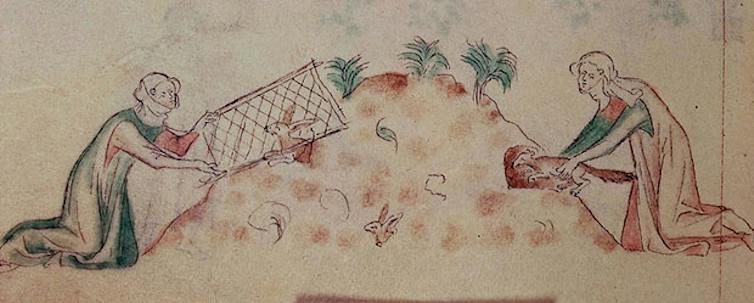
Throughout the thirteenth century, rabbits remained sufficiently rare, vulnerable, and valuable to command the direct personal attention of the English crown. Because they were not yet naturalized in the wild, rabbits were kept in specialized, walled enclosures known as "warrens." These artificial habitats required significant capital investment, stone lodges, watchtowers, and round-the-clock guards to prevent rampant poaching and predation by stoats, foxes, and birds of prey.
The royal archives offer vivid glimpses into how monarchs treated these prized mammals. In 1235, King Henry III authorized a gift of ten live rabbits from his royal park at Guildford to Geoffrey Despenser, a prominent English landowner and the Lord of Martley in Worcestershire. A few years later, Henry III ordered his foresters to capture 30 or 40 rabbits from the same Guildford warren, explicitly instructing them to do so only if the warren was sufficiently well-stocked—a clear indication that the crown was anxious not to deplete the foundational breeding stock.
For the early Plantagenet court, rabbits were prized for both their tender, pale meat and their dense, insulating fur. Henry III’s meticulous household rolls document frequent requisitions of venison, wild boars, freshwater fish, swans, peacocks, hens, eggs, and hares for royal feasts. Notably, it was not until his grand Christmas feast of 1240 that Henry III officially added rabbits to his requisition list, marking their debut at the apex of medieval haute cuisine. At the time, rabbits were an exorbitant luxury, costing four to five times as much as an ordinary chicken.
Phase III: The Demographic Shock of the Black Death
The social exclusivity of the rabbit was permanently shattered by one of the most catastrophic mortality events in human history: the Black Death, which swept through the British Isles between 1346 and 1353. Killing between one-third and two-thirds of the European population, the pandemic inadvertently triggered a profound socioeconomic restructuring.
With the labor force drastically reduced, agricultural land suddenly became freely available, and surviving laborers and artisans were able to command significantly higher wages for their work. For the first time in generations, ordinary peasants and urban craftsmen had disposable income. Many seized the opportunity to adopt the consumption habits and lifestyles of those higher up the rigid medieval social ladder.
Rabbits became a prime barometer of this sweeping social mobility. Throughout the fourteenth and fifteenth centuries, rabbit meat began appearing on the tables of wealthier peasants, while the fur—once reserved strictly for the nobility—was utilized by aspiring craftsmen and tradespeople. The fur of the common grey rabbit provided essential warmth during harsh winters, but specialized warrens also began breeding rarer silver-grey and black mutations. The appeal of these pelts even reached the highest office in the land; centuries later, King Henry VII famously had his bespoke night attire tailored using plush black rabbit fur.
Phase IV: Legislative Backlash and the Fear of Subversion
The rapid democratization of luxury goods terrified the traditional feudal elite. In response to what parliamentarians viewed as an intolerable blurring of class lines, the Crown introduced the Sumptuary Laws of 1363. This sweeping legislation explicitly sought to restrict what individuals could wear according to their strictly defined social station. The preamble to the statute justified its introduction by citing "the excess of dress of people beyond their estate, to the very great destruction and impoverishment of the land."
As rabbit populations naturally spilled out of private warrens and multiplied in the wild, manorial accounts began filling up with bitter complaints from lords regarding crop destruction, ruined pastures, and compromised estate boundaries.
Simultaneously, the act of hunting rabbits and other game transitioned from a harmless aristocratic pastime into a potent symbol of political subversion. In the wake of the devastating Peasants’ Revolt of 1381—a major popular uprising against heavy taxation and serfdom—the English Parliament grew deeply paranoid. In January 1390, lawmakers introduced aggressive new legislation criminalizing poaching and hunting by laborers, servants, and artisans. The ruling class genuinely feared that under the innocuous guise of hunting game, ordinary citizens would covertly "make plots and conspiracies of rebellion" against the king.
King Richard II readily consented to the legislation, expanding the legal prohibition to encompass the use of "hounds and ferrets, hays, nets, hair-pipes, cords and all other devices to take or destroy beasts of the forest, hares or rabbits, or other sport of gentlefolk."
By the mid-sixteenth century, the ecological transformation of Britain was complete. Writing in 1555, the renowned Swiss naturalist Conrad Gesner observed with astonishment that while "there are few countries wherein coneys do not breed, the most plenty of all is in England." What had begun as an exotic, royal curio in a Roman garden or a Norman park had successfully colonized the British countryside, permanently altering both the landscape and the nation’s cultural imagination.
Supporting Context & Metrics
To fully comprehend the historical trajectory of the rabbit in medieval Britain, it is essential to examine the economic metrics and social conditions that governed its rise:
- Economic Disparity (13th Century): During the reign of Henry III, a single domesticated rabbit cost approximately four to five times the market price of a standard domestic chicken, placing it firmly out of reach for the peasantry and cementing its status as an elite dietary luxury.
- Demographic Collapse (1346–1353): The Black Death eradicated an estimated 33% to 66% of the population in the British Isles, drastically altering the labor-to-land ratio and empowering surviving workers to demand higher wages.
- Legislative Interventions: Key parliamentary statutes—including the Sumptuary Laws of 1363 and the stringent Anti-Poaching Act of 1390—were directly enacted to curb the consumption of luxury goods (such as rabbit fur) and the unauthorized use of hunting tools (such as ferrets and nets) by the lower estates.
- Ecological Milestone (1555): By the mid-sixteenth century, just two centuries after the Black Death, Swiss naturalist Conrad Gesner formally documented that England possessed the densest rabbit population in all of Europe.
Cultural Reflections: Satirical Imagery and the World Turned Upside Down
Perhaps the most enduring legacy of the medieval rabbit does not lie within dusty estate ledgers or parliamentary rolls, but rather in the illuminated margins of medieval manuscripts. These artistic expressions reveal a rich, subversive vein of humor that directly foreshadows modern satirical traditions, including the legendary "Killer Rabbit of Caerbannog" from Monty Python and the Holy Grail (1975).
Medieval monastic and secular manuscripts are frequently populated by playful, highly ironic illustrations. Artists took great delight in painting rabbits jousting on the backs of slow-moving snails—a gentle, self-mocking critique of the lofty, unyielding chivalric ideals espoused by the knightly class.
However, some illuminators pushed this ironic inversion much further, tapping into dark, retaliatory fantasies. The Smithfield Decretals, an exquisite manuscript illuminated in London during the 1340s, contains one of the most elaborate and famous examples of this artistic trope. In its margins, rabbits are depicted completely turning the tables on their human masters and hunting hounds. The illustrations show bunnies boldly capturing their hunters, binding them in ropes, holding formal mock trials in woodland clearings, and ultimately executing both human poachers and their prized greyhounds.
+-------------------------------------------------------------+
|                THE MEDIEVAL WORLD UPSIDE DOWN               |
|                                                             |
|   Traditional Order:           Inverted Reality (Art/Satire):|
|   • Humans hunt rabbits        • Rabbits capture humans     |
|   • Knights embody chivalry    • Rabbits joust on snails    |
|   • Dogs command the field     • Hounds are tried & executed|
+-------------------------------------------------------------+
Historians note that these striking visual motifs fit snugly within the broader medieval cultural phenomenon of "inverting society"—the concept of the world turned upside down (mundus inversus) utilized for communal comedic relief and psychological release. Similar institutionalized traditions included the election of a choirboy as a temporary bishop for the day in Durham, or the appointment of a raucous "Lord of Misrule" during festive May Day games. By projecting power, agency, and lethal competence onto one of the era’s most heavily guarded commodities, medieval artists allowed ordinary observers to quietly laugh at the absurdities and rigid oppressions of the feudal system under which they lived.
Future Outlook
Today, as ecologists, conservationists, and agricultural economists grapple with the multi-billion-pound toll that invasive species inflict on the United Kingdom, the rabbit is rarely viewed through the romantic lens of its medieval introduction. Modern land management strategies focus heavily on warren control, myxomatosis and rabbit hemorrhagic disease virus (RHDV) monitoring, and mitigating the severe soil erosion caused by unchecked burrowing.
Yet, looking backward through the lens of medieval social history offers a vital reminder: the ecological landscape we inhabit is deeply entangled with human ambition, economic shifts, and cultural evolution. From the walled warrens of Henry III to the satirical margins of The Smithfield Decretals, the rabbit has spent nearly a millennium acting as a catalyst for human storytelling, class anxiety, and social transformation. Understanding this complex past enriches our appreciation of the British countryside, revealing that even its smallest and most ubiquitous inhabitants carry the weight of a remarkable history.