Executive Overview
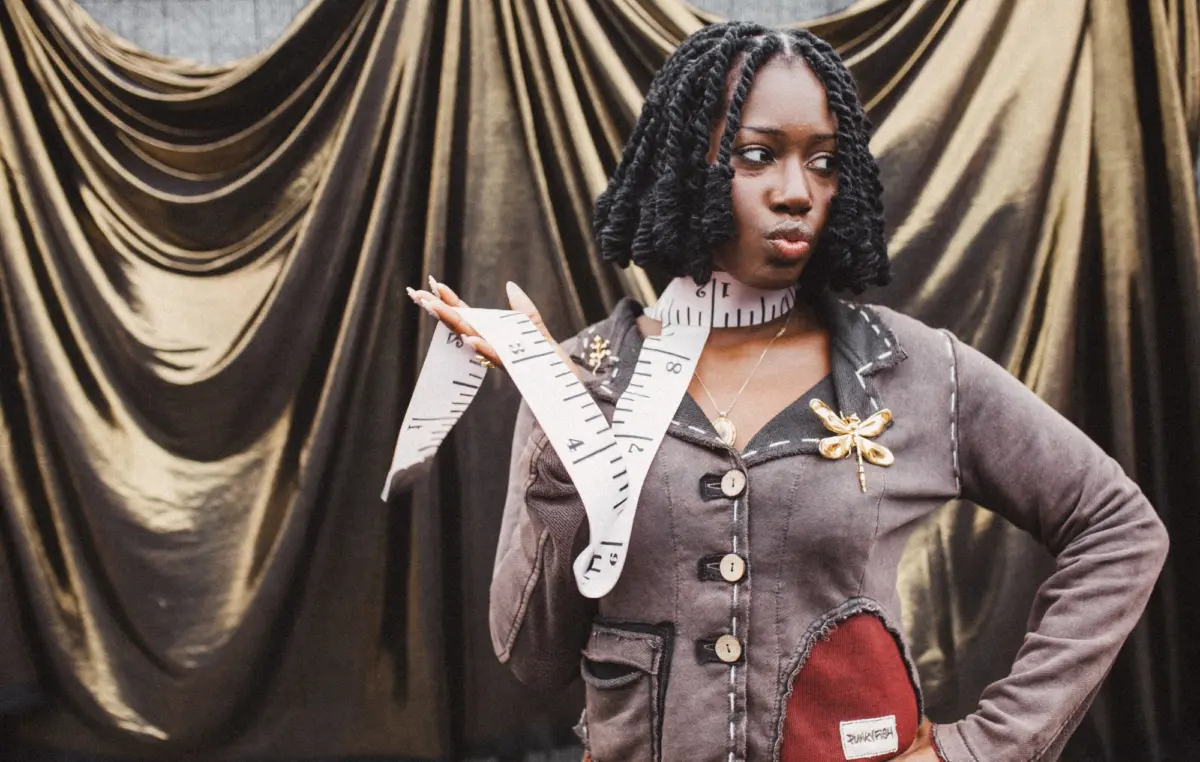
On August 29, 2026, the Canopy Stage at the Reading Festival became the latest proving ground for one of South London’s most compelling new voices: Sade Olutola. Stepping onto the stage amidst a wave of industry anticipation, the alternative pop singer-songwriter delivered a performance that solidified her status as a breakout star of the 2026 festival season.
Following her set, Olutola sat down backstage with NME to unpack the rapid trajectory of her career, the release of her critically acclaimed debut EP Arrow Heart, and the deeply personal, often idiosyncratic creative processes that govern her work.
Olutola’s ascent is a masterclass in modern, grassroots artist development. Her debut EP, which arrived in February 2026, is built on a foundation of childhood ambition, heavily influenced by the stadium-sized branding of a young Ed Sheeran. Over the course of the summer of 2026, she has transitioned from playing intimate London rooms to supporting major international acts and commanding festival audiences.
By dissecting her childhood inspirations, analyzing the historical metaphors of her songwriting, and examining the grueling logistics of the UK touring circuit, this profile offers an authoritative look at an artist poised to reshape the landscape of British pop.
Detailed Chronology: The Evolution of Arrow Heart
The journey to the Canopy Stage did not begin in a high-tech studio, but rather in a South London bedroom over a decade ago. To understand the thematic architecture of Olutola’s debut EP, Arrow Heart, one must trace a timeline that spans more than ten years of creative incubation.
+------------------------------------------------------------------------+
|                          SADE OLUTOLA TIMELINE                         |
+------------------------------------------------------------------------+
|                                                                        |
|  [Circa 2015] ----------------------------------------------------->   |
|  Discovers Ed Sheeran at age 11; writes "Arrow Heart" in journal.      |
|                                                                        |
|  [February 2026] -------------------------------------------------->   |
|  Releases debut EP 'Arrow Heart' to critical acclaim.                  |
|                                                                        |
|  [June 2026] ------------------------------------------------------>   |
|  Sells out debut headline show at London's iconic venue, The Grace.    |
|                                                                        |
|  [Summer 2026] ---------------------------------------------------->   |
|  Opens for Lexa Gates at KOKO & performs at Harry Styles' Meltdown.    |
|                                                                        |
|  [August 29, 2026] ------------------------------------------------>   |
|  Makes triumphant festival debut on the Canopy Stage at Reading 2026.  |
|                                                                        |
+------------------------------------------------------------------------+
The Sheeran Phase (Circa 2015)
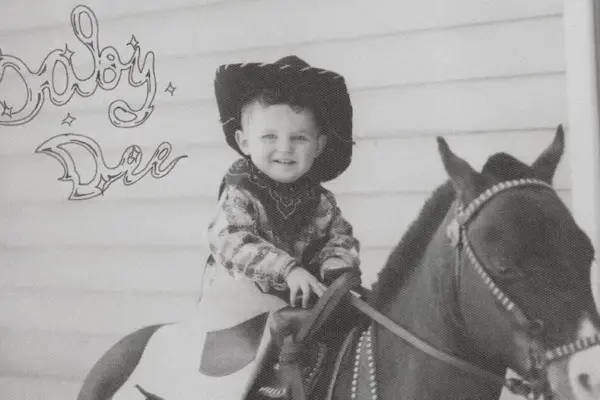
At eleven years old, Olutola was introduced to the music of Ed Sheeran by her childhood friend, Ella. During this era, Sheeran was dominating global charts with his Multiply (x) and Divide (÷) campaigns—eras defined not just by their acoustic hooks, but by a highly calculated visual branding system. Sheeran’s practice of painting mathematical symbols on his signature Martin guitars and giving his instruments distinct names captured the imagination of the young Olutola.
Emulating her idol, she named her own acoustic guitar "Mexi," drew an "arrow heart" icon on the body, and drafted a fictional tracklist at the top of her songwriting notebook. Though she lacked the resources to record or distribute music at the time, this childhood manifesto established the creative blueprint she would return to years later.
The EP Release and Live Ascent (February – June 2026)
In February 2026, Olutola officially released Arrow Heart. The project served as both a tribute to her eleven-year-old self and a display of her evolution as a producer and lyricist.
By June, the buzz surrounding the EP culminated in her first headline show at The Grace in Islington, London. The performance was a critical milestone; selling out the historic venue proved that her digital streaming audience was ready to translate into physical ticket sales.
The Summer of Support Slots (July – August 2026)
Before arriving at Reading, Olutola spent her summer sharing stages with established tastemakers. She secured a support slot for Brooklyn rapper-singer Lexa Gates at KOKO in Camden, followed by an appearance alongside Fousheé at the Southbank Centre. The latter show was part of the highly publicized, indie-centric Meltdown Festival, curated in 2026 by global superstar Harry Styles. These high-profile bookings exposed Olutola to diverse crowds and refined her stagecraft ahead of her festival debut.
Deconstructing the Music: Time Travel, Heartbreak, and "2099"
At the core of Olutola’s appeal is her willingness to embrace dramatic, unconventional narrative structures. Nowhere is this more evident than on Arrow Heart’s opening track, "2099." The song features a lyrical narrative in which Olutola time-travels from the year 1625 to 2099 to process her anger over a partner’s infidelity.
       [ 1625: Historical Betrayal ]
                     │
                     ▼
       "They would burn me like a witch" (Metaphor for destructive rage)
                     │
                     ▼
       [ 2099: Futuristic Resentment ]
                     │
                     ▼
       "I would still be really mad" (The permanence of emotional pain)
During her conversation backstage at Reading, Olutola laughed at the sheer scale of the song’s concept:
"That song makes no sense. When I’m writing songs, I translate my emotions into pictures and imagery. Right in that moment, I had just found out that my partner had been unfaithful to me, so I was feeling very angry."
This anger manifested in a historical metaphor. Olutola explained that her immediate emotional response was so intense that she associated it with fire and destruction:
"I associated that anger with fire, and then I was like, ‘Oh, if it was the 1600s, they would burn me like a witch because I’m so mad that I want to kill everyone.’ It’s so dramatic; I don’t know why I did that. Anyway, I wrote that verse, and then I was like, ‘Hmm, we’ve gone in the past; let’s go to the future now.’ And then it was like, if it was 2099, I would still be really mad."
By framing personal betrayal through the lens of a 17th-century witch trial and a futuristic dystopia, "2099" bypasses standard heartbreak tropes. The track highlights Olutola’s ability to ground surreal, high-concept fiction in raw, relatable human emotion.
Supporting Context & Metrics: The Mechanics of a Breakout Summer
Behind the glamour of festival main stages lies a grueling logistical reality for emerging artists. The transition from club venues to festival stages requires significant physical preparation, financial investment, and psychological stamina.

The Reality of the Festival Set
For an emerging artist, a festival appearance is often a high-stakes, low-duration sprint. Olutola noted the sharp contrast between the weeks of rehearsals and the brevity of the performance itself:
"It’s interesting the amount of preparation that goes into this, and then I’ve done a 20-to-30 minute set, and it’s over. It’s like, ‘OK, we go home now, but it’s really stressful before that.’ I’ve grown to appreciate my team a lot more."
This "stress-to-stage" ratio is a common challenge for new acts. A 25-minute set leaves no room for error. Soundchecks are brief, monitor mixes are rushed, and artists must win over transient crowds who may only be passing by the stage.
The Live Circuit Pipeline
Olutola’s summer trajectory reflects the classic UK live music pipeline, moving through distinct tiers of the live industry:
| Venue / Event | Capacity (Approx.) | Role | Strategic Value |
|---|---|---|---|
| The Grace (Islington) | 150 | Headliner | Established core fan base and ticket-buying power. |
| KOKO (Camden) | 1,410 | Support (for Lexa Gates) | Introduced her to a dedicated alternative hip-hop/indie audience. |
| Meltdown (Southbank Centre) | 2,900 (Royal Festival Hall) | Support (for Fousheé) | Provided major industry visibility under Harry Styles’ curation. |
| The Canopy Stage (Reading) | Multi-thousand | Festival Performer | Reached broad, mainstream music consumers and festival bookers. |
Securing a spot on Harry Styles’ curated Meltdown lineup was a major endorsement. The event has historically served as a tastemaker showcase, elevating independent artists to national prominence. For Olutola, performing alongside Fousheé—an artist known for blending punk, soul, and pop—was a validation of her own genre-fluid style.
Official Statements: Backstage at Reading 2026
Speaking backstage with NME shortly after leaving the Canopy Stage, Olutola reflected on her rapid rise and her performance philosophy.
On Her Childhood Dreams
Reflecting on her support slots for Lexa Gates and Fousheé, Olutola expressed a sense of childlike wonder:
"I am the biggest Lexa Gates fan. Me and my producer bonded over our love for Lexa Gates. I love Fousheé. I’m just excited. I feel like I’m a little girl just living out her dream. My inner child is happy."
On Selling Out Her First Headline Show
Addressing her sold-out show at The Grace in June, Olutola admitted the emotional weight of the milestone caught her off guard:
"These were hard tickets—everybody there, I knew that they came specifically to see me. I was just so grateful for that, and honestly, in disbelief that it sold out. I didn’t expect that. Tears were shed, but I was very happy."
On Her Performance Philosophy
Despite her growing profile, Olutola maintains a grounded approach to her live shows. She explained that she approaches every crowd with the assumption that she has to win them over from scratch:
"I always treat everybody like they don’t know me. Because I’m used to having that mindset of, ‘Nobody here knows me’, I’m always trying to think about the most entertaining thing I could do, like crowd interactions and stuff. So I bring that over into my own shows."
This strategy has served her well on the festival circuit, where audiences are notoriously fickle and easily distracted by competing stages.
Future Outlook: The Trajectory of Sade Olutola
As Reading & Leeds 2026 continues with heavyweight performances from headliners and established stars like Dave, Raye, Gunna, Viagra Boys, and Jade, Sade Olutola’s debut marks the arrival of a fresh competitor in the British pop arena.
With her debut EP Arrow Heart established as a strong proof of concept, the music industry will be watching to see how Olutola capitalizes on this momentum. The transition from a breakout EP to a debut full-length album is a critical step, but Olutola possesses several distinct advantages:
- A Clear Visual Identity: Her focus on cohesive branding, inspired by Ed Sheeran’s early career, gives her a distinct presence in a crowded market.
- Strong Live Fundamentals: Her background on demanding London stages ensures she can deliver reliable, engaging live performances.
- A Unique Narrative Voice: Her ability to blend historical fiction, futuristic imagery, and raw emotional honesty sets her apart from traditional pop acts.
Having successfully navigated the summer festival circuit, Olutola has proven she has the work ethic, the team, and the songwriting talent to back up her online momentum. As she returns to the studio to write the next chapter of her career, the young girl who once drew an arrow heart on her acoustic guitar has officially claimed her place on the UK stage.