Executive Overview
The modern music industry is a sprawling, multi-billion-dollar ecosystem driven by streaming algorithms, global sync deals, and a relentless 24-hour content cycle. Yet, for all its visible glamour—stadium tours, viral TikTok hits, and chart-topping releases—one of its most vital economic engines remains largely misunderstood by the public and newcomers alike: music publishing.
While master recordings capture headlines, publishing governs the underlying compositions—the songs themselves. Behind every streamed track, live performance, and broadcast lies a complex web of royalty collection, data handling, and legal rights management. Navigating this labyrinth requires a rare blend of rigorous financial tracking, technical database fluency, and deep, unyielding creative advocacy.
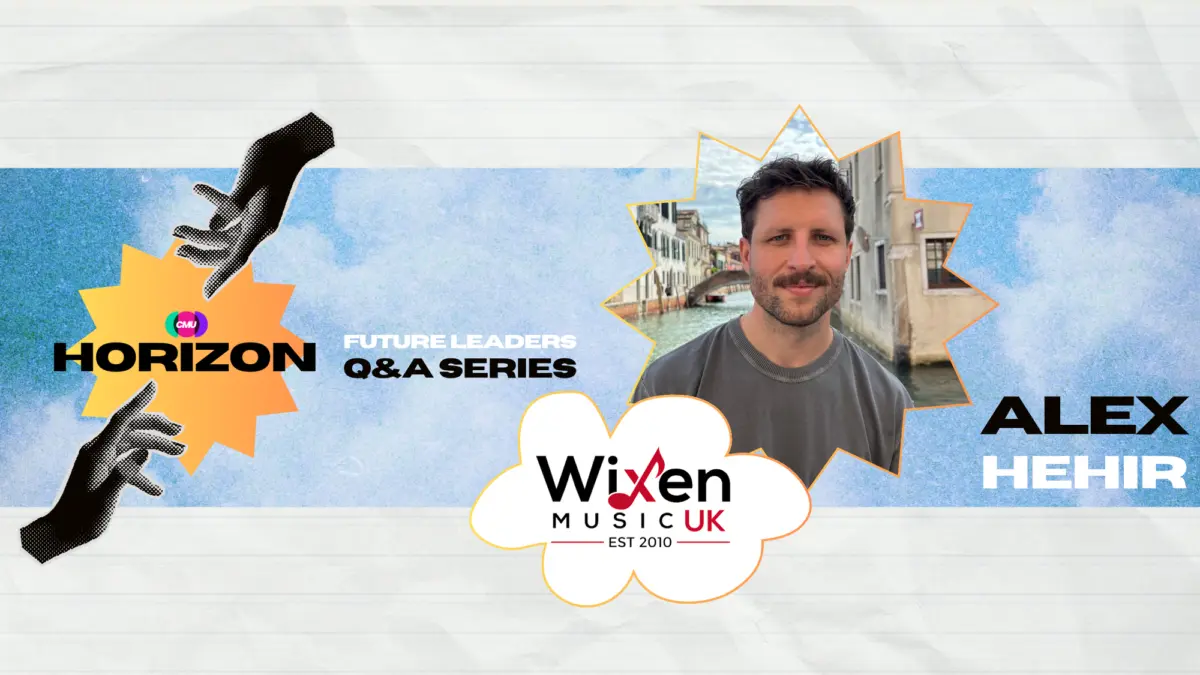
In this installment of the Horizon interview series—which connects with the music industry’s current and next generation of leaders—we sit down with Alex Hehir, Managing Director of Wixen Music UK. Operating under the umbrella of one of the world’s most respected independent music publishers, Hehir oversees a compact yet globally connected team handling client relationships, intricate royalty investigations, data operations, and artist repertoire (A&R).
Hehir’s journey to the helm of Wixen Music UK is anything but conventional. Far from taking a straight-line corporate path, his career evolved from loading gear at grassroots grassroots venues and managing chaos at DIY punk shows to cutting his teeth in festival operations with major promoters like Vision Nine. This ground-level immersion instilled in him a pragmatic philosophy: success in the music business is rarely about knowing every answer offhand; rather, it is about knowing who to call, building deep trust, and relentlessly chasing down every single penny owed to your clients.
This comprehensive profile examines Hehir’s career trajectory, the mechanics of modern music publishing, the shifting landscape of industry opportunities, and his candid advice for the next generation of music executives.
Detailed Chronology: From DIY Venues to Managing Director
To understand how Alex Hehir approaches the complex demands of running an independent publishing house today, one must look backward to the raw, unpolished environments where his music industry education truly began.
The Grassroots Foundations
Hehir’s entry point into the industry was not born of corporate ambition, but rather a simple, ravenous hunger to be close to live music as a fan. Like many industry veterans, his earliest education took place in the gritty, intimate spaces of the local grassroots circuit—specifically at a beloved local venue in Southampton, the now-defunct White Rabbit.
"My very earliest experiences didn’t feel like skill-building at the time, but were just born out of a hunger to be close to music as a fan," Hehir reflects. Long before he understood the intricacies of performance rights organizations or mechanical royalties, he was learning the foundational art of industry networking by simply showing up, lending a hand, and embedding himself in the local creative community.
The University Chapter and Baptism by Fire
Pursuing formal education, Hehir enrolled in a music business degree. While he acknowledges that the program provided a broader structural framework of how the industry operates—even if music publishing was largely relegated to a minor sidebar—the true value of his university years lay outside the lecture hall. It was during this chapter that he collaborated with peers to book bands under the banner of Above The Waves Promotions.
This endeavor yielded an immediate, high-stakes test of resourcefulness. On the eve of their very first promoted show, the venue owner went AWOL and abruptly shut down the establishment without warning. Rather than folding, Hehir and his team engineered a brilliant, chaotic pivot: they repurposed a friend’s house and hosted two punk bands who performed chaotic, unforgettable sets straight out of the kitchen.
Looking back, Hehir describes it as "the silliest, most-fun gig in the world, but a real baptism of fire into the chaotic world of live events." It taught him a lesson that would serve him well in corporate boardrooms years later: adaptability, composure under pressure, and collective problem-solving are non-negotiable survival traits in the music business.
Stepping into Major Operations
Following his grassroots promotion days, Hehir transitioned into professional event logistics by securing an internship with major UK event and festival company Vision Nine. Working as an operations assistant, he gained a panoramic view of large-scale entertainment production, contributing to prominent UK festivals like Boardmasters and NASS.
"Seeing everything from who booked the headliners through to who planned where the fences would be placed on the site-map was eye-opening," Hehir notes. This operational grounding exposed him to the complex machinery powering the live sector, expanding his commercial literacy far beyond the boundaries of local gig promotion.
Ascending at Wixen Music UK
Hehir’s path ultimately converged with music publishing when he joined Wixen Music UK, an independent publisher renowned for its fierce artist-first ethos. Founded by industry luminary Randall Wixen, the company provided Hehir with a masterclass in global rights management and client advocacy. Learning from some of the most dedicated minds in publishing, Hehir climbed the ranks to assume the role of Managing Director.
Today, as MD, his mandate is multifaceted: he oversees client relations, data architecture, royalty audits, and A&R strategy, while ensuring his core team of six is fully supported across all operational fronts.
Supporting Context & Metrics: The Anatomy of Modern Publishing
Despite generating billions of dollars globally, music publishing remains one of the least understood sectors of the music business. While a casual observer might view the music industry through the lens of recorded track streams and physical vinyl sales, the underlying composition—the melody, chords, and lyrical text—operates under an entirely separate legal and financial infrastructure.
The Publishing Pipeline Explained
For newcomers looking to break into the sector, Hehir cuts straight to the point regarding where true competency begins:
"The universally helpful knowledge in publishing is understanding the pipeline from a song being written to a writer getting paid, then deepen your familiarity with the sources of that income."
The publishing pipeline is a complex multi-stage journey:
- Creation & Registration: A songwriter pens a composition. The work must be meticulously documented, cataloged, and registered with the appropriate collection societies (such as PRS for Music and PPL in the UK, ASCAP, BMI, and SESAC in the US, alongside international counterparts).
- Licensing & Usage: Whenever the composition is streamed, broadcast on television, performed live at a stadium, played in a commercial, or covered by another artist, a license must be secured and fees generated.
- Data Handling & Metadata Matching: This is where the modern battle is fought. Billions of micro-transactions occur daily across digital streaming platforms (DSPs), social media apps like TikTok and Instagram, and international broadcast networks. Accurate metadata—ISRC codes, songwriter splits, and publisher identifiers—is essential to ensure royalties are correctly allocated.
- Collection & Distribution: Publishers act as financial guardians, auditing societies and digital platforms to ensure every penny collected makes its way back to the creator.
The Digital Shift and Metadata Challenges
In the modern digital landscape, music is utilized, performed, and broadcasted across more mediums than ever before. This proliferation presents both a massive opportunity and a logistical nightmare.
"The challenge then is keeping track of where our clients should be earning royalties," Hehir explains. "This is where data handling has become crucial. As a company, we are always developing new tools to assist our work and ensuring we can capture and distribute good metadata."
However, Hehir sounds a note of caution regarding over-reliance on technology. While algorithmic tools and automated scripts can drastically accelerate data processing, they are only as effective as the human minds directing them.
"These tools can help us be more efficient and accurate, but only if we know where to point them. Nothing can beat intimate human knowledge of our writers and our catalogues. Energy is always best focused on understanding our clients, their songs, and their history."
Official Insights & Philosophy: Leadership and Networking
Hehir’s leadership style at Wixen Music UK is rooted in empathy, operational transparency, and proactive advocacy. Rather than viewing management as a top-down corporate exercise, he views his primary responsibility as clearing obstacles so that artists and his internal team can thrive.
The Role of the Proactive Publisher
In an era where independent artists have more digital tools at their disposal to self-release music, the value proposition of a traditional music publisher is sometimes questioned. Hehir reframes this dynamic entirely. Operating under Wixen’s artist-first ethos, he believes that a great publisher acts as a tireless financial protector.
"It’s tough to earn a living as an artist or songwriter and it’s only getting harder," Hehir observes. "The best people in publishing will be the ones who fervently chase every penny. No musician I know ever got into music because they dreamed of scouring a spreadsheet for missing payments, so be the one to take that off their hands and give them the time and space to write, record, and perform."
Building Authentic Professional Networks
When asked about networking in the music industry, Hehir dismisses the transactional, business-card-swapping approach in favor of authentic community building. His guidelines for professional relationship-building are straightforward:
- Be Dependable: "Creating trust is probably the most important thing, so don’t offer to do something you don’t intend on following through with."
- Embrace Collaboration: Publishing is inherently collaborative, requiring constant coordination with external co-writers, sub-publishers, and legal teams. Being helpful when others are in need establishes a reciprocal safety net.
- Lead with Genuine Enthusiasm: "Good people attract good people, always be kind. Finally, be a loud and vocal fan of music—it’s cool to be excited by what you work with."
Career Advice and Productivity
Reflecting on his own journey, Hehir offers a grounded perspective on ambition and mental resilience in a notoriously unpredictable business:
"Be inspired by your peers but don’t compare yourself harshly to them. Success in this industry certainly isn’t linear, and if you stay consistent you’ll be celebrating your own wins before you know it."
For daily operations and professional efficiency, he also shares a simple productivity mantra borrowed from popular workflow methodologies: "Eat The Frog"—tackling the hardest, most daunting task first thing in the morning to clear the path for creative and strategic work later in the day.
Future Outlook: The Horizon for Early-Career Professionals
As the music industry looks toward the horizon, emerging technologies like generative artificial intelligence, shifting streaming royalty models, and economic pressures on live touring are set to reshape the landscape. How can early-career professionals prepare for what lies ahead?
The Resurgence of Human Connection
According to Hehir, as technology and AI tools democratize and potentially saturate the market with content, human connection will only appreciate in value.
"Human connection is only going to become more important. Artists will need teams around them that can help cut through the noise and connect with people… If everyone is equipped with the same tools and technology, then being the person that cares the most might be what sets you apart."
A Shifting Opportunity Landscape
The entry points into the music industry have evolved significantly. While traditional corporate internships at major label headquarters remain fiercely competitive, Hehir points out that the explosive growth of the independent sector has unlocked vibrant alternative pathways.
"The opportunity might not be an internship or position at a large company anymore, but it can definitely be supporting a manager in their workload a couple of days a week or working with a new artist to handle one part of their world," Hehir advises.
He also emphasizes the irreplaceable value of physical grassroots music venues—the very spaces where his own career began. Preserving these venues is vital not only for nurturing the next wave of headlining artists, but also for cultivating the next generation of industry executives who cut their teeth backstage and in the crowd.
Recommended Pathways for Newcomers
For those eager to break into music publishing or rights management specifically, Hehir recommends tailoring experience directly to the desired sub-discipline:
- For Data & Royalty Roles: Focus on analytical competencies, financial tracking, database management, and legal frameworks. Studio songwriting experience is secondary here.
- For A&R & Creative Roles: Deepen your familiarity with catalog histories, creative outreach, and writer collaboration.
- Industry Conclaves: Hehir strongly encourages participation in UK-based professional development events and conferences that champion early-career talent, such as Fast Forward (FFWD) in London, Sound City in Liverpool, and Launchpad in Leeds. These forums provide invaluable environments for networking, mentorship, and knowledge-sharing.
As Wixen Music UK continues to champion independent creators under Alex Hehir’s leadership, his journey stands as a testament to the fact that longevity in the music business belongs to those who combine technical grit with an unshakeable, lifelong passion for the songs themselves.