Executive Overview
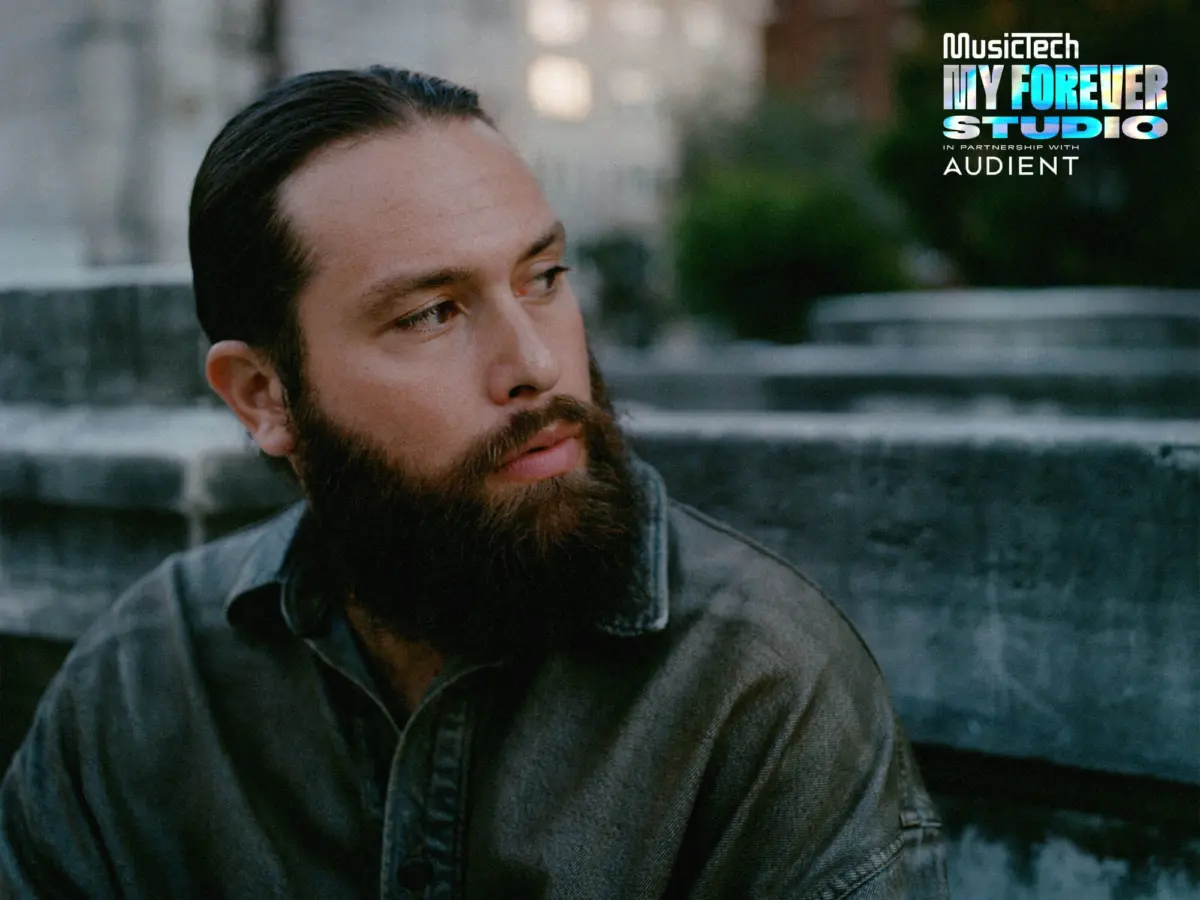
For artists navigating the labyrinth of modern music production, the concept of a "Forever Studio"—a solitary, eternal creative sanctuary—serves as both a liberating thought experiment and a profound exercise in artistic distillation. In the opening episode of My Forever Studio Season 8, produced in partnership with Audient and hosted by Chris Barker and Will Betts, acclaimed songwriter, producer, and multi-instrumentalist Nick Hakim steps into the hot seat.
Hailed by fellow visionary Lianne La Havas as "one of the greatest musical minds ever," Hakim brings an eclectic, cross-pollinated sonic ethos to the table. Blending elements of R&B, soul, indie, and psychedelia, Hakim has built a critically lauded catalog and collaborated with heavyweights such as Erykah Badu, Anderson .Paak, and Mac DeMarco.
Ahead of the release of his ambitious new record, I Can See, Hakim joined Barker and Will Betts in Studio Foreverdom to construct his ultimate, unyielding creative space. Bound by the show’s famously strict rules—a computer, a digital audio workstation (DAW), an audio interface, exactly six hardware pieces, and one non-musical luxury item, with absolutely no bundles—Hakim curated a studio that reflects his deep reverence for analog warmth, tactile performance, and acoustic imperfection.
Detailed Chronology: Building the Ultimate Fantasy Workspace
Setting the Scene: The Floating Islands of Chiloé
When tasked with choosing a geographical location for a studio designed to last for eternity, most artists might lean toward traditional epicenters of the music industry like Los Angeles, London, or New York. Hakim, however, looked toward his familial roots and a breathtaking piece of living folklore.
Hakim chose to anchor his Forever Studio within a traditional, movable house in Chiloé, an archipelago off the coast of Chile just north of Patagonia. In this region, a community tradition known as La Minga involves the whole village coming together to literally move houses across islands using logs, cattle, and communal labor.
"My ideal studio would be in one of these houses that can move," Hakim explained to hosts Barker and Betts. "You know, you wouldn’t move frequently—maybe every 20 or 50 years. The whole community comes, and people come from far to witness it. It’s such a unique and beautiful tradition in a country where half of my family is from."
Inside this floating, light-filled structure, Hakim envisioned a cozy, open-plan loft where living and working seamlessly merge, offering the essential silence and peaceful detachment required to balance the sensory overload of his day-to-day life in New York City.
The Foundation: Digital Processing & Conversions
Operating within the strict parameters of the Forever Studio rules, Hakim locked in his three complimentary core items:
- Computer: Eschewing portable laptops that "feel like they’re about to burst into flames" under heavy tracking loads, Hakim opted for a powerhouse desktop configuration: a heavily upgraded Mac Studio M3 Ultra equipped with 96GB of RAM.
- Audio Interface: Sticking to a trusted industry workhorse with enough headroom and routing flexibility, Hakim selected the Apogee Symphony I/O MKII.
- DAW: After flirting with Logic, Reason, and Pro Tools over the years, Hakim locked in Ableton 12 Suite as his primary canvas for capturing and initiating ideas, supplemented by Pro Tools for final assembly.
The Six Hardware Selections
With his digital backbone secured, Hakim turned his attention to the six hardware pieces that would define the physical texture of his workflow:
- Yamaha U7 Upright Piano (Mahogany Finish): Inspired by a vintage 1970s Japanese model owned by composer Thomas Bartlett, this taller upright boasts an expanded harp and deeper acoustic resonance. For Hakim, the piano is the ultimate therapeutic tool—a physical anchor for tracking the raw demos that form the DNA of his records.
- Roland SP-404 MKII: Swapping out an initial impulse to bring an Akai MPC 2000 XL burdened by complicated floppy-disk dependencies, Hakim opted for Roland’s modern sampling powerhouse. The SP-404 MKII serves as his primary instrument for pitch manipulation, transient shaping, and lo-fi texture generation.
- Neumann U67 Microphone: In a classic gear-head move, Hakim confessed to essentially "stealing" the exact microphone immortalized on the cover of Jorge Ben’s legendary 1969 Brazilian masterpiece, Força Bruta. The U67 provides the rich, vintage vocal transient response essential to his signature sound.
- His Mother’s 1980s Yamaha Nylon-String Guitar: Valued sentimentally far above its modest price tag, this instrument has accompanied Hakim through every songwriting phase of his career. "I don’t think I could live without it," he noted. "That’s how I write everything."
- ATC SCM45A Studio Monitors: For critical listening and mixing duties, Hakim selected the precision-engineered ATC monitors, ensuring pristine translation across his sprawling, multi-layered arrangements.
- Sequential Prophet-5 (Rev 1): Rounding out his hardware selection, Hakim chose the legendary analog synthesizer. Though traditionally borrowed from friends in real life, the Prophet-5 provides the lush, string-like ambient pads and warm bass tones that have come to heavily influence his upcoming, unreleased material.
The Luxury Item: The Studio Spa
Breaking away from standard recording studio amenities, Hakim opted for a holistic wellness setup: a combined outdoor shower, dry sauna, and steam room, capitalizing on the natural cold waters surrounding the Chiloé archipelago for the ultimate hot-and-cold contrast therapy.
Supporting Context & Metrics: The Anatomy of a Masterpiece
To fully understand Hakim’s gear selections is to understand his unorthodox, highly collaborative production methodology. Discussing the creation of his recent albums, Hakim revealed that the raw infrastructure of his records relies heavily on organic tracking environments rather than sterile in-the-box programming.
During intensive sessions at Sonic Ranch in Texas—specifically utilizing their Adobe studio—Hakim assembled a core 7-piece band featuring drummers Abe Rounds and Vishal Nayak, bassist Kyle Miles, and multi-instrumentalists Joe Harrison and Jake Sherman. Rather than relying on digital quantization, Hakim champions the acoustic "human element":
- The Tape-First Philosophy: Working across Studer 24-track tape machines, Vestax 6-channel cassette recorders (such as the MR-66), and Roland Space Echo 301 units, Hakim deliberately pushes gain staging to its absolute limits, allowing natural saturation, tape hiss, and room bleed to dictate the emotional weight of the recording.
- Hybrid Mixing Workflows: The physical path of a Nick Hakim track is an expedition in itself. Audio often begins on a cheap cassette recorder, moves into Ableton, gets routed through high-end analog gear like a Fairchild compressor at Greenpoint’s Thump Recording, and is ultimately summed back through a Neve console at Sonic Ranch.
Official Statements & Insights
Throughout the episode, Hakim offered profound philosophical insights into how music functions not merely as an industry, but as a form of personal medicine and community building. Reflecting on his introduction to music at age 16—spurred by a combination of a Yamaha educational keyboard, his parents’ musical backgrounds, and an accidental teacher strike in Washington, D.C. that introduced him to mentors like Zo!—Hakim emphasized the therapeutic nature of his craft:
"Adolescence is hard for everyone… when I got into music, it really focused my character almost. Like, it kind of defined me. Even though I wasn’t very good at first, I still felt like it was medicinal. It made me feel calm."
This foundational philosophy carried over into his studies in music therapy at Berklee College of Music and his volunteer work in juvenile detention centers. For Hakim, the true purpose of a studio environment is to foster presence, human connection, and emotional honesty:
"My philosophy around music therapy is more that music is therapeutic… it’s about being present with people in the flesh, and being able to talk to them and having music be a guide along with the conversation."
Future Outlook
As Hakim steps into the next phase of his career with the release of I Can See, his appearance on My Forever Studio highlights an artist who has successfully bridged the gap between raw, lo-fi bedroom experimentation and high-end acoustic engineering.
By prioritizing tactile instruments, vintage warmth, and communal spaces over endless digital plug-ins, Hakim’s hypothetical Chiloé sanctuary stands as a testament to the enduring power of human performance. Whether he is running cassette loops through vintage hardware or sweating out new song ideas in a seaside dry sauna, Nick Hakim continues to prove that the most profound sonic journeys are those rooted in personal history, emotional resilience, and uncompromising authenticity.