Executive Overview
The intersection of artificial intelligence and creative expression has rapidly evolved from a niche tech-industry talking point into the most contentious battleground in modern entertainment. As major record labels file high-stakes copyright lawsuits against generative music startups, and as charts grapple with the influx of synthetic tracks, artists are increasingly forced to pick a side. Enter Grammy-winning powerhouse Kelly Clarkson.
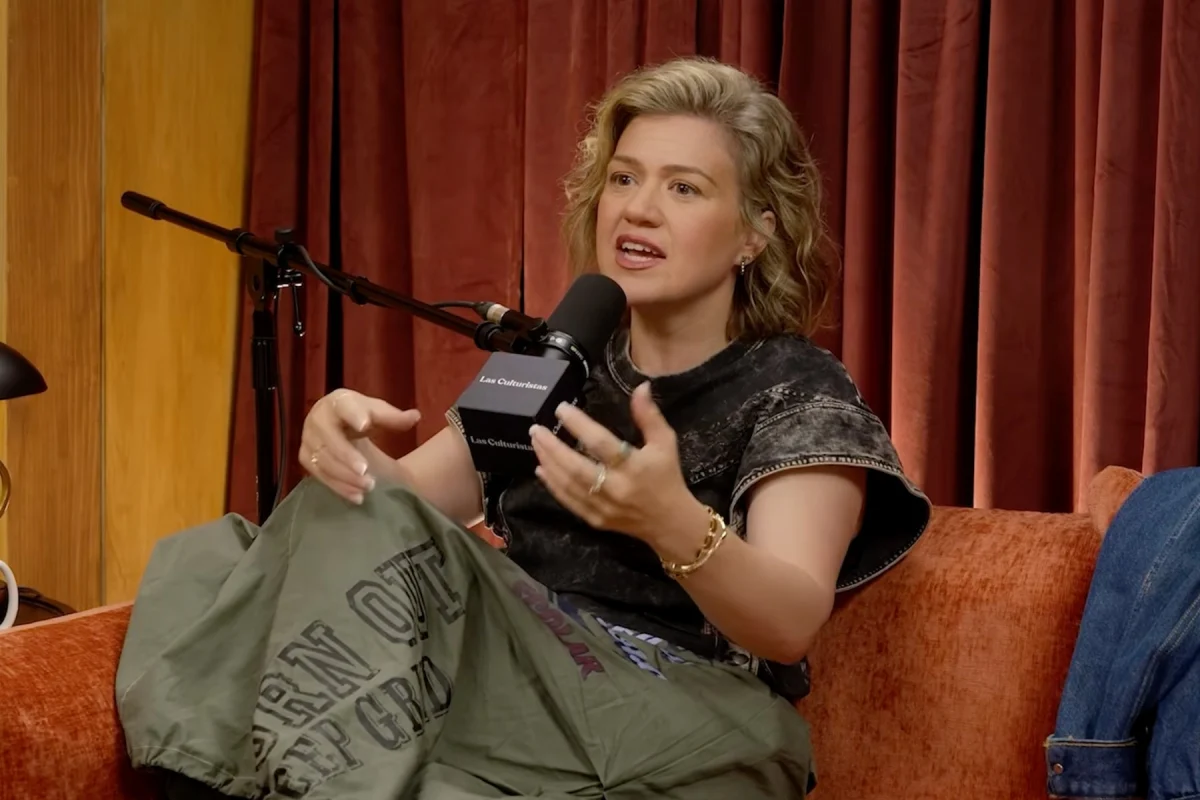
During a recent, wide-ranging appearance on the popular podcast Las Culturistas, hosted by Matt Rogers and Bowen Yang, Clarkson offered a nuanced—and arguably polarizing—perspective that cuts against the grain of standard industry protectionism. While acknowledging the existential legal and artistic threats posed by unchecked automation, Clarkson openly confessed her fascination with artificial intelligence, advocating not for its banishment, but for a structured coexistence. Her proposal? Separate charts for AI-generated music to protect human creators while allowing technological innovation to flourish in its own sandbox.
Clarkson’s comments arrive at a critical juncture. The music industry is currently scrambling to establish legal, ethical, and operational frameworks to manage generative audio. From Billboard updating its transparency policies to data analytics firms like Luminate deploying identification markers, the ecosystem is bracing for a seismic shift. This report examines Clarkson’s remarks within the broader context of the AI revolution in music, exploring the legal battles, charting dilemmas, and philosophical questions defining the future of sound.
Detailed Chronology: The Collision of Pop Culture and Generative AI
To understand the weight of Kelly Clarkson’s recent commentary, it is essential to trace how artificial intelligence transitioned from a theoretical computer science experiment into a daily boardroom crisis for the global music business.
Phase 1: The Novelty Era and Deepfake Disruption (2020–2022)
In the early days of accessible machine learning models, AI-generated music was largely viewed as a novelty. Developers trained early neural networks on public domain classical compositions or royalty-free loops, yielding stilted, predictable instrumentation. However, progress accelerated exponentially around 2022.
The turning point for popular music arrived in early 2023 with viral phenomena like "Heart on My Sleeve," a pseudonymous track that used hyper-realistic, AI-cloned voices of Drake and The Weeknd. The track amassed millions of streams across TikTok, YouTube, and Spotify before being scrubbed following copyright complaints from Universal Music Group (UMG). This moment shattered the illusion that AI was confined to background ambiance; it could now convincingly mimic the cadence, emotional delivery, and distinct vocal branding of superstar human artists without their consent.
Phase 2: Legal Reckoning and Label Counter-Offensives (2023–2024)
As platforms like Suno and Udio emerged—allowing users to generate full songs, complete with lyrics and instrumentation, via simple text prompts—the major record labels took decisive legal action. In mid-2024, a coalition comprising UMG, Sony Music Entertainment, and Warner Records filed landmark copyright infringement lawsuits against Suno and Udio. The core allegation was straightforward yet devastating: these companies had allegedly ingested massive catalogs of copyrighted sound recordings to train their models without licensing agreements or compensation.
Amidst this courtroom drama, artists began drawing hard lines in the sand. Initiatives like the Human Artistry Campaign mobilized thousands of performers—ranging from Billie Eilish and Jon Batiste to Katy Perry and Nicki Minaj—to sign open letters demanding legal protections against the "predatory" use of AI to replace human talent.
Phase 3: The Clarkson Intervention (Late 2024)
It is against this backdrop of fierce hostility that Kelly Clarkson stepped onto Las Culturistas. Unfazed by the industry consensus that treats AI as an unmitigated threat, Clarkson injected a dose of pragmatic ambiguity into the discourse.
"Controversial? I don’t care: I love AI," Clarkson declared to hosts Matt Rogers and Bowen Yang. "There are very amazing things with AI that I’m obsessed with. I’m into it artistically, too. I have fun with it."
Rather than dismissing the technology as a parasitic interloper, Clarkson framed it as an inevitability that demands sophisticated management rather than outright prohibition. Her willingness to publicly endorse the creative utility of AI while simultaneously defending the sanctity of human artistry highlights a widening generational and philosophical split among legacy performers.
Supporting Context & Metrics: Navigating the Data Dilemma
The debate over AI in music is ultimately underpinned by staggering statistics regarding consumption, creation velocity, and economic impact. As generative tools become democratized, the volume of audio flooding streaming services has reached unprecedented heights.
The Deluge of Synthetic Audio
According to industry tracking data, digital service providers (DSPs) now receive tens of thousands of new audio tracks daily. A significant and growing percentage of these uploads are generated, wholly or in part, by artificial intelligence algorithms. Platforms are increasingly overwhelmed by the sheer scale of content, making moderation and attribution exceptionally difficult.
| Metric / Indicator | Industry Status (2024–2025) | Primary Implications |
|---|---|---|
| Daily Track Submissions | Rising exponentially across DSPs | Overwhelms traditional curation and royalty distribution pipelines. |
| Generative Music Platforms | Suno, Udio, and others scaling rapidly | Sparks aggressive copyright litigation from major and independent labels. |
| Fan Sentiment | Deeply divided | Audiences enjoy novelty tracks but express anxiety over the displacement of human emotion. |
| Chart Integrity Measures | Billboard and Luminate implementing tags | Ensures listeners know the origin of charting material. |
The Chart Conundrum: Can Silicon Compete with Soul?
At the heart of Kelly Clarkson’s argument is a structural proposal: the creation of a separate chart for AI-generated music. To understand why this suggestion is gaining traction, one must examine how traditional music charts function.
Charts compiled by Billboard and Luminate are designed to measure popular consumption—how deeply songs resonate with human listeners through radio airplay, digital sales, and streaming metrics. When an AI-generated track enters the marketplace, it enters a race governed by algorithms and novelty viral loops.
If an algorithmically generated track—produced in seconds via a text prompt—achieves the same chart placement as a human artist who spent months or years workshopping lyrics, battling personal demons, and touring to build an audience, it creates a profound equity imbalance. Clarkson’s proposed "separate track" or "separate chart" concept attempts to resolve this tension by acknowledging that while AI music can entertain, it cannot claim the lived human experience that grounds popular music in cultural resonance.
Official Statements and Industry Response
The music industry’s leadership has not stood idly by while generative models disrupt the status quo. Major institutions are actively constructing guardrails to preserve transparency and protect stakeholder value.
Billboard and Luminate’s Transparency Push
Recognizing that suppression is futile, industry authorities are pivoting toward radical transparency. In August 2024, Billboard reaffirmed its commitment to explicitly identify and tag any artificially generated song that manages to crack its mainstream charts. Simultaneously, entertainment data giant Luminate announced a comprehensive initiative to label AI-created content across its analytical platforms later in the year.
Silvio Pietroluongo, Billboard’s executive vice president of charts and data partnerships, emphasized the collaborative nature of this transition:
"Ensuring transparency around AI-generated music requires collaboration across the entire industry from artists and labels to DSPs, technology companies and industry organizations. We’re encouraged by the development of new identification tools and will continue testing and leveraging solutions across the ecosystem, to ensure our charts continue to accurately and responsibly reflect music consumption."
The Legal and Ethical Divide
While data firms and chart compilers focus on categorization, record labels continue to fight on the legal front. The central legal question remains whether training generative AI models on copyrighted sound recordings constitutes "fair use" or systemic copyright infringement. Tech companies argue that AI learning mirrors how human musicians listen to and are inspired by existing works. Labels, conversely, counter that unauthorized commercial ingestion is a blatant misappropriation of intellectual property designed to manufacture direct market substitutes.
Clarkson’s perspective bridges these two camps in an unconventional way. She recognizes the validity of the legal boundaries—stating firmly that AI should not unfairly compete with or displace human artists on mainstream charts—while refusing to demonize the underlying technology as an artistic medium.
Future Outlook: Coexistence or Perpetual Conflict?
As we look toward the future of the music industry, Kelly Clarkson’s commentary serves as a harbinger of a more pragmatic, middle-ground dialogue. The binary narrative of "AI as savior" versus "AI as destroyer" is slowly giving way to granular regulatory frameworks, technological identification watermarks, and structural segregation of content.
Several key developments will shape the trajectory of AI in music over the coming years:
- The Establishment of Dual Ecosystems: As Clarkson suggested, the industry may eventually formalize parallel tracks for human-made and AI-generated music, complete with dedicated playlists, awards categories, and chart systems. This would allow tech enthusiasts to explore generative audio without cannibalizing the economic livelihoods of traditional creators.
- Licensing Standardization: Rather than endless litigation, the future will likely see major labels and publishing houses establish formal, revenue-sharing licensing pacts with ethical AI developers. Artists who wish to license their voices or writing styles for training data will be able to do so safely and lucratively.
- Watermarking and Provenance Tech: Cryptographic content credentials and audio watermarking will become ubiquitous. Fans will know instantly whether a guitar solo was performed by a human virtuoso or synthesized via a neural network, empowering consumers to make conscious ethical choices in their listening habits.
Conclusion
Kelly Clarkson’s candid reflections on Las Culturistas prove that even among legacy superstars, the conversation around artificial intelligence is evolving beyond fear and outrage. By championing the artistic utility of AI while drawing a hard line against unfair market competition, Clarkson has articulated a sophisticated vision for the future.
As the music industry continues to adapt through chart transparency, legal battles, and data labeling, the ultimate challenge will remain what Clarkson so succinctly identified: ensuring that in our rush toward technological marvels, we do not lose the irreplaceable essence of the human soul in song.