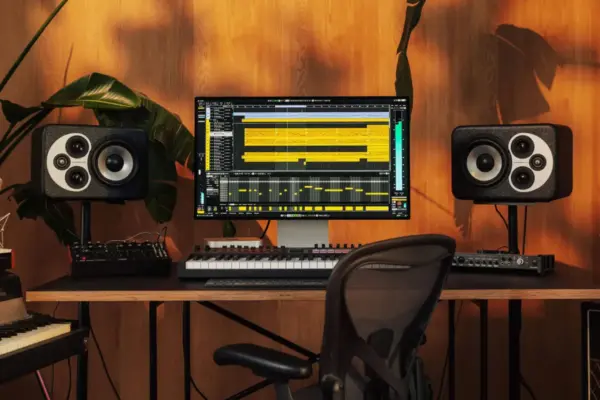
In the sprawling, high-stakes ecosystem of New York City real estate, acquiring professional studio space is an expensive venture. For the vast majority of independent artists, producers, and beatmakers navigating the five boroughs, the reality of modern music production is intimate and frugal: crafting loops from bedroom setups, programming MIDI in cramped apartments, or pooling resources to rent makeshift spaces shared among a tight-knit circle of collaborators.
Enter Embassy Studios.
Spearheaded by hip-hop and EDM mogul Frank Babar, this sprawling facility is not positioned as an affordable alternative to the city’s dwindling commercial spaces. One glance past the foyer makes that abundantly clear. Embassy Studios represents a triumphant return to unbridled, high-end commercial facility design—a place dripping with an almost absurd sense of luxury. However, Babar and his executive team are not merely building a playground for the ultra-wealthy. They are engineering an entirely new kind of creative workspace for New York City’s diverse community of artists, producers, engineers, and writers.
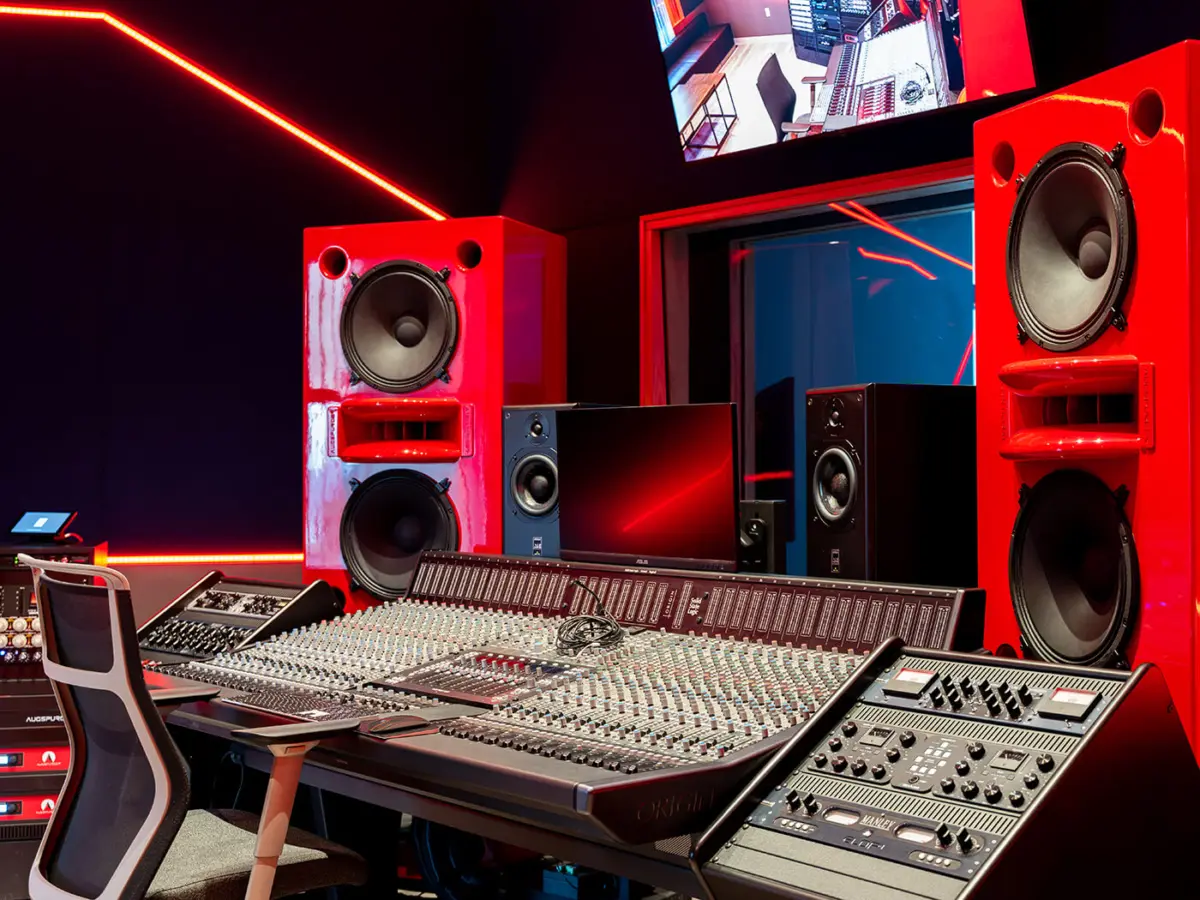
At the heart of Embassy’s operational philosophy is a seamless "record anywhere" approach. The facility is meticulously primed to capture the spontaneous sparks that fly when creative peers occupy the same physical space. From towering racks of analog outboard gear—affectionately dubbed the "Manley Tower of Power"—to massive, custom-tuned Augspurger monitoring systems anchored in nearly every room, Embassy spared no expense. Yet, despite the jaw-dropping spec sheet, the studio’s operational team is quick to point out a fundamental truth of the trade: even the most coveted, vintage-heavy signal chains cannot rival a producer’s raw experience, intuition, and taste.
In this exclusive feature, we pull back the curtain on Embassy Studios. We examine how a team of visionaries, resident engineers, and operational leaders transformed a blank canvas into a multi-room creative campus where the architecture itself acts as an active component of the signal chain.
Detailed Chronology & Facility Infrastructure: Building a Creative Campus
The realization of Embassy Studios did not happen overnight. It was born from a desire to address a glaring void in New York City’s modern recording infrastructure. While many legacy studios across Manhattan and Brooklyn have either closed their doors or downscaled into sterile, DAW-centric mixing boxes, Embassy was conceptualized as a holistic creative ecosystem.
The Blueprint: From Concept to Completion
The journey began with a singular mandate from Frank Babar and his leadership core: to construct a world-class destination that honors New York’s rich lineage of music, culture, and storytelling while pushing past the limitations of traditional recording layouts. Rather than stacking rooms in a windowless basement—a historical staple of New York studio design—the development team sought out spaces infused with natural light and architectural grandeur.
The result is a facility anchored by expansive 20-foot windows found in Studio A1’s live room, the Studio A2 control room, and the acoustically treated multimedia room. These soaring architectural features flood the workspaces with natural light, offering sweeping, cinematic views of the Empire State Building and the bustling Manhattan skyline below.
A Network of Connected Spaces
What separates Embassy from a traditional suite of isolated studios is its underlying technological infrastructure. Every room across the facility is interconnected via a robust, low-latency Dante-enabled digital audio network, paired with comprehensive analog tie lines. This allows creative teams to fluidly scale their productions across multiple spaces simultaneously.
The infrastructure was put to the ultimate test during a recent, high-profile artist camp that brought 50 people—including primary recording artists, independent songwriters, tracking producers, and major-label A&R representatives—under one roof to prepare for an upcoming album release. With every single studio operating simultaneously, the facility’s live room and multimedia spaces were rapidly transformed into auxiliary writing and production suites. This allowed multiple creative cells to work in parallel without bottlenecking resources, proving that Embassy’s modular design philosophy works seamlessly under intense, real-world pressure.
Supporting Context & Metrics: Decoding the Rooms and Hardware Ecosystem
To truly understand the operational capacity of Embassy Studios, one must examine its zoning. The facility operates less like a single recording studio and more like a high-performance creative campus, with each room engineered for a specialized phase of the production pipeline.
The Flagship Suites: Studio A1 and A2
Studio A1: The crown jewel of the complex. Centered around a pristine Solid State Logic (SSL) Origin console, Studio A1 is outfitted with an imposing monitoring setup featuring Augspurger Duo 15 mains, Augspurger Sub 18 subwoofers, and ATC SCM20ASL nearfields. It feeds directly into a breathtaking live room featuring 20-foot ceilings, natural daylight, and a private artist lounge overlooking the Manhattan skyline.
Studio A2: Operating as a powerful secondary tracking and mixing suite, Studio A2 is built around an SSL AWS 948 console boasting 24 pristine preamps. It provides major-label clients with the flexibility to run parallel sessions or expand sprawling, multi-room tracking dates without a drop in sonic fidelity.
The Production Powerhouses: Studio B1 and B2
Designed primarily for contemporary songwriting, modern beat production, precision vocal tracking, and intricate mixing, the two Studio B rooms are optimized for maximum efficiency. Each room features an integrated isolation booth, an SSL Matrix2 Delta console, and a streamlined layout that appeals to modern producers who demand instant recall and deep digital-analog hybrid integration.
Specialized Creative Environments
Beyond traditional tracking and mixing environments, Embassy includes:
Dedicated Production Rooms: Two acoustically optimized spaces built for digital programming, sample editing, and top-line writing.
Dolby Atmos Mix Room: A state-of-the-art immersive audio suite engineered for spatial mixing, future-proofing the facility for the rapid rise of spatial streaming formats.
Podcast Suite: A dedicated, broadcast-ready room optimized for spoken-word recording, long-form interviews, and digital media syndication.
Multimedia & Performance Room: A flexible, acoustically treated multipurpose space designed for live-streamed performances, press junkets, video content creation, and live band tracking, all framed against a dramatic Manhattan backdrop.
Official Statements: Insights from the Embassy Team
To shed light on the inner workings of this massive undertaking, the leadership and engineering teams at Embassy Studios shared their operational philosophies, technical choices, and industry insights over an exclusive correspondence.
Vanessa Sanchez, Chief Operating Officer
Reflecting on the scale and ambition of the project, COO Vanessa Sanchez emphasizes that Embassy was built to foster organic community rather than mere transactional studio rentals:
"The vision behind the Embassy was to create a dynamic, world-class creative destination. New York has always been a global centre for music, culture, and storytelling, but we saw an opportunity to build something that went beyond the traditional recording studio. We wanted to create an environment that delivers exceptional sound and recording capabilities while also inspiring collaboration, innovation, and community."
Sanchez highlights the facility’s unique architectural choices—such as the 20-foot windows and Dante-enabled infrastructure—as the primary catalysts for large-scale collaborative projects like writer’s camps. This modularity allows teams to pivot instantly from tracking to composition without breaking creative momentum.
Steven “RAWQWLTY” Tejeda, Resident Engineer
When discussing the continuous evolution of the studio’s outboard arsenal, Resident Engineer Steven Tejeda points directly to the facility’s latest prize:
"The new Manley Dual Band EQs are the latest addition to our ‘Manley Tower of Power.’ While the refreshed design, updated logo, and new colourway are welcome, it’s the sonic performance that truly impresses. They retain the unmistakable weight, depth, and harmonic richness of Manley’s transformer- and tube-based circuitry while offering a level of clarity and top-end extension that feels remarkably modern. Unlike many vintage passive EQ designs, they preserve detail and air without sacrificing the musical character that makes Manley gear so desirable."
Sean Park, Resident Engineer
Addressing the facility’s most significant capital expenditure, Sean Park argues that physical architecture outranks gear lists in importance:
"The acoustics and the rooms themselves [were the biggest investment]. People often focus on the gear, but the environment you are working in also matters a lot. Having the right acoustics and listening environment gives people confidence to make better creative decisions. In many ways, the room becomes another piece of the signal chain. What I’ve also noticed is the effect the spaces have on artists. When artists walk into a great-sounding room, it changes the energy of the session. They become more engaged, more confident in what they’re hearing, and those moments often lead to better performances and better records."
Park also advocates for the versatility of budget-friendly mobile interfaces like the Universal Audio Apollo Twin, noting that speed and familiarity often trump expensive gear when trying to capture an artist’s lightning-in-a-bottle inspiration. When asked about his dream piece of hardware, Park points to the elusive Hazelrigg VNE Tube compressor:
"There’s so many to choose from, but the one I’ve been eyeing is the Hazelrigg VNE Tube compressor. I’ve only had experience with the plug-in version, but even within the emulation, it compresses without degrading the source. It adds a sense of lushness that’s consistent no matter what you run through it."
B-Hall, Resident Engineer
Resident Engineer B-Hall echoes the sentiment regarding team chemistry and room tuning, emphasizing the rigorous metrics behind Embassy’s acoustic design:
"I’d also say the level of detail that went into the rooms themselves was a huge investment. I’ve worked in a lot of studios around New York and New Jersey, and Embassy’s rooms are by far some of the best-sounding rooms I’ve ever been in. The acousticians were incredibly intentional with every measurement, material, and decision that shaped the sound of the room. On top of that, having Dave from Augspurger come in to tune the speakers after major sessions helps make sure the next artist walks into a room that’s accurate and readily translatable."
B-Hall also highlights an unsung hero of modern hybrid workflows: unglamorous TRS-to-TT patch cables. By integrating these reliable connectors throughout the facility’s patchbays, Embassy allows laptop-based producers to seamlessly drop their personal rigs straight into the studio’s pristine preamps, vintage compressors, SSL consoles, and Augspurger monitors without missing a beat.
Discussing career lessons, B-Hall shares a profound philosophy forged on the basketball court and applied behind the mixing console:
"If you’re early, you’re on time. If you’re on time, you’re late. And if you’re late, you’re fired!… That quote stuck with me, and I’ve carried that mindset into almost every area of my life, especially engineering. I’m the engineer who shows up way earlier than necessary, but that extra time allows me to settle in, prepare, and make sure the room is ready before the artist walks in… Another lesson I had to learn was how to remove my ego from the mixing process. Engineering is creative, but it’s also a service. Sometimes the most valuable thing you can do is not show off what you can add, but understand what the song actually needs."
Future Outlook: The Evolution of New York Commercial Recording
As the music industry continues to swing between ultra-minimalist bedroom production and hyper-collaborative commercial environments, Embassy Studios occupies a fascinating and formidable vanguard position. By refusing to compromise on architectural grandeur, acoustic excellence, and high-end analog hardware—while simultaneously embracing the digital flexibility demanded by laptop-native producers—the facility sets a new benchmark for what a modern commercial studio can achieve.
The success of Embassy Studios suggests that the commercial recording studio is far from obsolete. Instead, it is evolving. When physical spaces are engineered to act as active instruments within the signal chain—and when paired with a team that prioritizes psychological safety, artistic collaboration, and over-preparedness—the recording studio transforms from a simple room with microphones into a catalyst for cultural history.
As Frank Babar’s ambitious enterprise continues to host the industry’s elite writers, producers, and performers high above the Manhattan skyline, Embassy Studios stands as proof that when you build a sanctuary for creativity, the music will inevitably follow.