Executive Overview
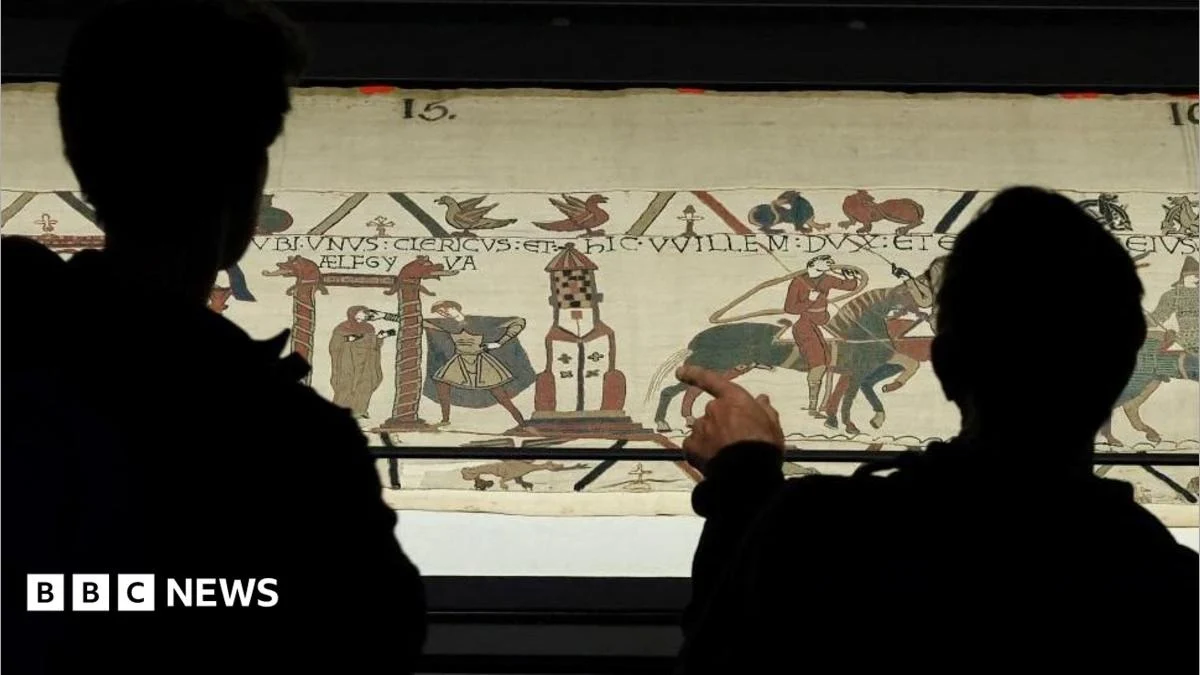
The British Museum has announced a comprehensive operational overhaul of its blockbuster exhibition featuring the historic Bayeux Tapestry, following mounting public frustration, severe bottlenecks, and widespread criticism regarding visitor management. The 11th-century masterpiece—which depicts the tumultuous events surrounding the 1066 Norman Conquest—has drawn unprecedented public interest since making its historic return to the United Kingdom, marking the first time the artifact has left French soil in over nine centuries.
However, the astronomical demand has collided with the physical and operational limitations of the London institution. Visitors have faced staggering wait times stretching up to two hours, and hundreds of ticket holders were recently turned away due to severe backlogs compounded by an early museum closure for a private event. The ensuing backlash on social media laid bare the deep disappointment of patrons who had anticipated the cultural event for months, or even decades.
In response to the crisis, museum leadership has unveiled a multifaceted corrective strategy. The newly introduced measures include extended operating hours, the integration of an immersive audio guide, the provision of much-needed additional seating, and drastically improved directional signage. While museum officials maintain that public enthusiasm for the exhibition has been "extraordinary," the rapid rollout of these emergency interventions underscores the profound logistical challenges of hosting one of the most culturally significant and heavily sought-after artifacts of the modern museum era.
Detailed Chronology: From Record-Breaking Launch to Logistical Crisis
July: The Ticket Frenzy
The seeds of the current logistical strain were sown months before the exhibition even opened its doors. When tickets for the Bayeux Tapestry exhibition first went on sale in July, public demand instantly overwhelmed the museum’s booking infrastructure. In a staggering display of cultural appetite, a record-breaking 100,000 tickets were sold on the very first day of release. While cultural economists and tourism boards heralded the milestone as a triumph for London’s post-pandemic arts sector, it served as an early warning sign for the immense crowd-control challenges that lay ahead.
September 10: Opening Day and Immediate Bottlenecks
The exhibition officially opened to the public on September 10, bringing the 70-meter-long narrative embroidery to a British audience for the first time since its creation more than 900 years ago. Almost immediately, cracks in the visitor-flow architecture began to show. The exhibition design relied on a strict one-way system with a designated 40-minute viewing slot per ticket holder.
However, the sheer density of the crowds—combined with the intricate, detail-heavy nature of the 58 narrative scenes—meant visitors routinely exceeded their allotted time. Patrons frequently lingered to examine the 626 human figures and 200 horses stitched into the linen, causing cascading delays that rippled through subsequent time slots.
Mid-September: The Breaking Point and Social Media Backlash
The situation escalated from minor delays to a full-scale public relations crisis midway through the month. On a day when the museum closed early to accommodate a private event, backlogs surged to critical levels. Consequently, hundreds of exasperated ticket holders who had arrived within their designated windows were denied entry altogether.
The exclusion of ticket holders sparked a wave of indignation across social media platforms. Patrons vented their frustrations online, detailing hours of fruitless queuing outside the museum.
- "It was supposed to be a monumental cultural event that we looked forward to for months," wrote one disillusioned visitor.
- Another shared an even more poignant account, noting she had waited since she was seven years old for the opportunity to see the Bayeux Tapestry, only to have her hopes dashed at the gallery gates after enduring a grueling wait in the queue.
Late September: Emergency Interventions and Apologies
Confronted with mounting negative press and reputational damage, the British Museum issued a formal, public apology to those turned away from the galleries. Management instituted immediate remedial measures, promising full ticket refunds alongside priority booking slots to allow affected visitors to reschedule their visits. Furthermore, to combat the slow-moving bottlenecks inside the gallery space, museum staff suspended photography inside the exhibition rooms and deployed a recorded audio loop encouraging patrons to maintain a steady pace along the viewing path.
Supporting Context & Metrics: Economics, Scale, and Historical Significance
Financial Realities and Pricing Pressures
The staging of the Bayeux Tapestry exhibition represents a massive financial undertaking for the British Museum, a reality reflected in its pricing structure. Adult tickets are priced at £33 during peak operational times, scaling back to £27 during off-peak hours.
To put these figures into perspective, visiting the artifact in its permanent, custom-built repository in Bayeux, Normandy, typically incurs a standard fee equivalent to roughly £10 (€12). This stark price differential has drawn scrutiny from consumer advocates, who argue that higher ticket prices elevate visitor expectations regarding crowd management, comfort, and the overall quality of the gallery experience. Conversely, the museum has maintained a family-friendly policy by allowing children under the age of 16 to access the London exhibition entirely free of charge, helping to democratize access for younger learners.
The Artifact: History, Craft, and Composition
The exhibition’s immense popularity is rooted in the unique historical gravity of the object itself. On loan from the French government—where it has resided in Normandy since 1983—the Bayeux Tapestry is scheduled to remain on display at the British Museum until July 2027.
Despite its conventional moniker, art historians and conservators frequently emphasize that the artifact is technically an embroidery rather than a tapestry. Executed in woolen yarns on a linen foundation, the 70-meter-long masterpiece vividly recounts the dramatic events of the 1066 Norman Conquest. Through 58 distinct narrative panels, the work details the complex political maneuvers of Harold Godwinson and William, Duke of Normandy, culminating in the decisive Battle of Hastings and the collapse of Anglo-Saxon rule in Britain.
The Phased Ticket Strategy
Anticipating sustained high demand throughout the multi-year residency, the British Museum structured its ticket sales in distinct phases. While the initial July release saturated the market with record-breaking sales, organizers deliberately held back inventory to ensure fair access for the wider public. Members of the public who missed out during the chaotic opening phase will have two additional windows of opportunity to secure admission, with subsequent ticket blocks scheduled to go on sale in October and January.
Official Statements and Strategic Adjustments
In response to the operational turbulence, senior representatives from the British Museum have offered transparency regarding both the triumphs and the tribulations of the exhibition’s opening weeks.
"The public response to the 11th-century embroidery has been nothing short of extraordinary," a museum spokesperson stated. "We are deeply heartened by the sheer volume of people who wish to witness this historic artifact firsthand. However, we also acknowledge—and sincerely regret—that some visitors have experienced wait times and congestion far exceeding acceptable standards."
To mitigate these issues, the museum has outlined a comprehensive operational roadmap designed to smooth out the peaks and troughs of daily visitor traffic:
- Extended Opening Hours: Recognizing that daytime bottlenecks are exacerbated by compressed daily schedules, the museum has announced plans to extend its operating hours. While exact timetables have not yet been finalized or publicly disclosed, leadership confirmed that the longer hours are specifically designed to suppress the formation of daytime queues and afford visitors holding late-afternoon or evening bookings a more relaxed, unhurried viewing environment.
- Enhanced Audio Guidance: Beginning next Monday, every visitor will be offered an integrated audio guide. Beyond merely describing the scenes, the audio experience is strategically paced to sync with the flow of the gallery, providing contextual historical depth while subtly encouraging an optimal walking rhythm.
- Infrastructure Upgrades: To alleviate physical fatigue among waiting patrons, the museum is deploying additional seating areas along the exterior and interior queuing zones. Furthermore, upgraded, high-visibility signage is being installed to provide clearer directional cues, reducing confusion and preventing the formation of stagnant crowds.
Future Outlook: Sustaining a Cultural Triumph
As the British Museum looks toward the remainder of the exhibition’s unprecedented residency—which is slated to run through July 2027—the stakes could not be higher. The temporary repatriation of the Bayeux Tapestry is arguably the most high-profile international cultural exchange of the decade, serving as a powerful diplomatic and educational bridge between the United Kingdom and France.
However, the early operational missteps serve as a cautionary tale for major cultural institutions navigating the post-pandemic landscape of "blockbuster" exhibitions. In an era where cultural tourism is driven as much by social media virality as by historical appreciation, museums must balance the commercial imperative of high-volume ticket sales with the physical realities of architectural capacity and visitor comfort.
The swift implementation of extended hours, audio guides, and enhanced crowd-management infrastructure indicates that the British Museum is actively learning from its early missteps. If these corrective measures successfully stabilize visitor flow, the exhibition can finally fulfill its promise: offering millions of British and international visitors an uninterrupted, awe-inspiring encounter with one of humanity’s most enduring medieval treasures, free from the shadow of logistical chaos.