Executive Overview
The global music festival industry is frequently analyzed through the lens of its apex predators. Media coverage, ticket sales, and online discourse are dominated by a select group of top-tier headliners. Debates rage over who drew the largest crowd at Lollapalooza, which surprise guest electrified the stages at Reading and Leeds, or who is currently being positioned to headline the Pyramid Stage at Glastonbury. However, this hyper-focus on the top line of the poster obscures a vital truth: the long-term health, creative vitality, and cultural relevance of the live music ecosystem are driven by the artists booked in the smaller fonts.
This investigative feature shifts the spotlight downward to examine the lived realities of the emerging class of 2026—specifically, those selected for the prestigious NME 100. By interviewing six of the most promising rising acts of the season—54 Ultra, Ceebo, KuleeAngee, Madra Salach, Nadia Kadek, and The Itch—we uncover the logistical, financial, and emotional realities of navigating the modern festival circuit from the lower half of the bill. From the strategic value of late-night "discovery slots" to the challenges of language barriers and the unglamorous reality of backstage artist villages, this report provides an authoritative look at what it takes to win over audiences when you are not yet a household name.
Detailed Chronology of the 2026 Summer Circuit
To understand the trajectory of an emerging artist, one must map the relentless, exhausting chronology of the spring-to-autumn festival calendar. For the class of 2026, the journey began in the damp, crowded club venues of showcase festivals and culminated in high-stakes performances on some of the world’s most prestigious outdoor stages.
[May] Showcase Season (The Great Escape)
       │
[June] Continental Expansion (Fête de la Musique, Paris)
       │
[July] Mid-Summer Peak (Coachella, Lollapalooza, Latitude)
       │
[August] Late-Summer Grind (Green Man, Kendal Calling, Haldernpop)- May: The Showcase Starting Line: The season kicked off in earnest with showcase events like Brighton’s The Great Escape. For electronic duo KuleeAngee, this served as a crucial testing ground to refine their live setups before transitioning to larger outdoor stages.
- June: Continental Footprints: By mid-June, emerging acts were crossing the English Channel. UK rapper Ceebo made a pivotal debut in Paris for Fête de la Musique, discovering firsthand how his brand of British rap translated to French audiences.
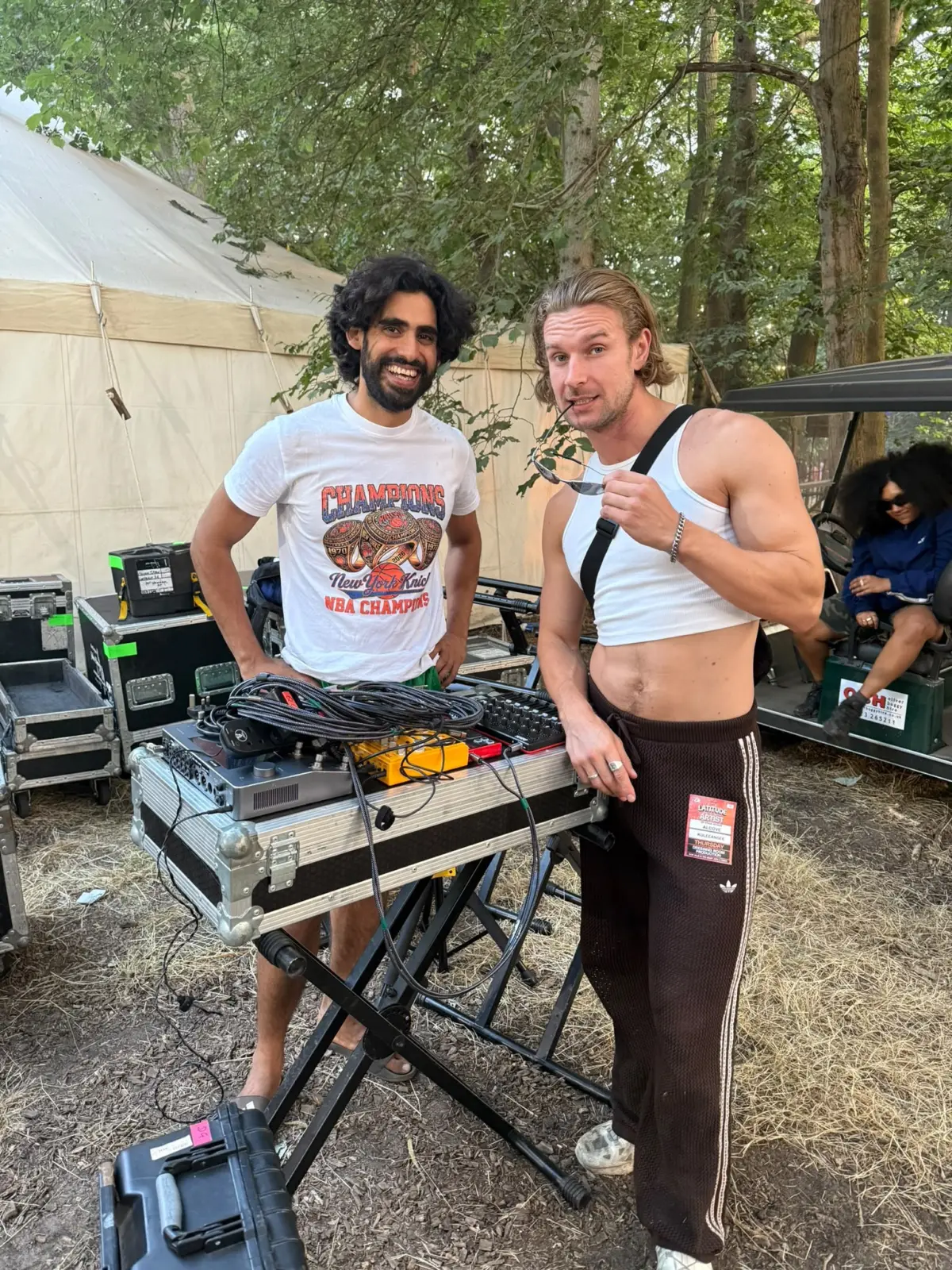
- July: The Mid-Summer Peak: July marked the entry into major commercial festivals. Latin indie soul artist 54 Ultra made high-profile debuts at Coachella in California and Lollapalooza in Chicago. Concurrently, in the UK, indie-folk artist Nadia Kadek and KuleeAngee secured vital Thursday night slots at Latitude Festival in Suffolk, capitalizing on early-arrival crowds seeking new music.
- August: The Late-Summer Grind: The season reached its fever pitch in August. Dance-punk duo The Itch took the stage at Wales’ Green Man, a festival they had long attended as fans. Meanwhile, Irish folk-punk outfit Madra Salach traveled to Germany’s Haldernpop, unexpectedly sharing a stage with established indie heavyweights, while Nadia Kadek traveled north to perform at Kendal Calling in the Lake District.
Supporting Context & Metrics: The Economics of the "Small Font"
While headliners command seven-figure fees, emerging artists operate within a vastly different economic and operational framework. Understanding the mechanics of these lower-tier bookings requires looking at the data-driven strategies festivals use to program their secondary stages.
The Power of the Thursday Night "Discovery Slot"
At major multi-day festivals like Latitude, Thursday night programming has become a highly coveted asset for emerging talent. Because the main stages remain closed until Friday, the thousands of attendees who arrive early to camp are left with limited entertainment options.
Data indicates that tent venues hosting emerging acts on Thursday nights experience an average capacity increase of 40% to 60% compared to similar early-afternoon slots on Friday or Saturday. Both KuleeAngee and Nadia Kadek utilized these slots to capture captive, highly receptive audiences who had not yet developed "festival fatigue."

Operational Realities and the "Manic Energy" of Touring
For smaller acts, the luxury of a comprehensive soundcheck is virtually non-existent. Most emerging bands operate on "line-checks"—a rapid, ten-minute diagnostic of instruments and vocals conducted immediately before the set begins.
This lack of preparation time, combined with tight travel budgets that often require driving through the night, creates what Simon Tyrie of The Itch describes as a "slight manic energy." Rather than detracting from the performance, this raw, sleep-deprived state often fuels high-energy genres like dance-punk and folk-punk, translating into a more authentic, visceral experience for the audience.
The Myth of Backstage Excess
Contrary to the historic rock-and-roll mythology of drug-fueled backstage ragers, the contemporary artist village for emerging acts is a remarkably sober, professionalized environment. With rising touring costs leaving little margin for error, young artists prioritize vocal health, physical stamina, and networking.
As Paul Banks of Madra Salach notes, the modern backstage village is defined by "downtime" and healthy eating rather than chaotic partying, reflecting a broader cultural shift toward professionalism among Gen Z and millennial performers.
Official Statements & First-Hand Accounts
To capture the true essence of the 2026 circuit, we spoke directly with the artists on the front lines. Their accounts reveal a mix of tactical ambition, unexpected cross-cultural connections, and the sheer grit required to play the festival "game."
54 Ultra: Gamifying the Crowd
For Latin indie soul artist 54 Ultra, performing at industry behemoths like Coachella and Lollapalooza was a trial by fire. Rather than being intimidated by audiences unfamiliar with his catalog, he views the performance as a strategic challenge.

"It’s never pressure; it’s a game," 54 Ultra explains. "I’m used to turning new people into fans because nobody knew who I was for so long in New York and New Jersey. I know that feeling and how to get people to pay attention."
For 54 Ultra, the summer was a validation of his live appeal, proving that his distinct blend of soul can command massive, open-air crowds just as easily as intimate East Coast clubs.
Ceebo: Breaking the Language Barrier
For South London rapper Ceebo, the summer of 2026 was defined by international expansion. Playing his first-ever shows abroad in Paris, he was forced to confront the potential obstacle of language barriers.
"I thought the language barrier would be a thing, but it wasn’t," Ceebo says. "When I first performed in Paris, someone rushed over to me when I got offstage. He’d been speaking French throughout my set, then started speaking to me in English and told me he’d travelled specifically to see me. Knowing people are already invested enough to travel to see me means a lot."
Ceebo’s experience highlights the globalized nature of modern rap, where streaming metrics translate into physical ticket sales in unexpected territories.
Ceebo's Festival Pipeline:
[Worked as Event Staff at Wireless] ➔ [Performed at Fête de la Musique, Paris] ➔ [Targeting Wireless Headline Slot]
KuleeAngee: Euphoria and National Identity
Scottish electronic duo KuleeAngee (comprising Duncan Grant and Kesh Kanabar) found their euphoric, inviting sound perfectly suited to the festival format. Their experience at Latitude validated their belief that electronic music acts as a powerful unifying force in live settings.

"The band really suits the festival vibe—it’s inviting and euphoric," Kesh Kanabar reflects. "It was pretty validating because we’ve always thought our music would work really well at festivals. Now I’m just excited to do more."
Beyond the stage, the duo emphasized the community-building aspect of the festival circuit, recalling an impromptu backstage meeting with fellow Scottish band Brògeal in Amsterdam that blossomed into a genuine friendship.
Madra Salach: Folk-Punk and Comedic Disruption
Irish folk-punk outfit Madra Salach brought a chaotic, theatrical energy to the European continent. Band members Paul Banks and Jack Martin have developed a unique, albeit risky, method for winning over foreign crowds: bad stand-up comedy.
"Pretty much every set we do, I’ll hand it over to Jack to tell a joke," Paul Banks says. "It’s been really good at these shows on the continent where maybe English isn’t their first language; Jack does his joke and absolutely dies on his arse. It’s been really special."
Jack Martin adds: "Sometimes they’re overly polite and give me a round of applause, and that’s also a laugh. They’re not even really jokes; they’re just short ramblings. The ramblings of a madman."
Despite the comedic self-deprecation, the band’s musical output struck a deep chord, leading to a surprise high-point of their season: joining acclaimed band Black Country, New Road on stage at Haldernpop for a rendition of "Band On The Run."

Nadia Kadek: The Art of the Sunday Afternoon Chill
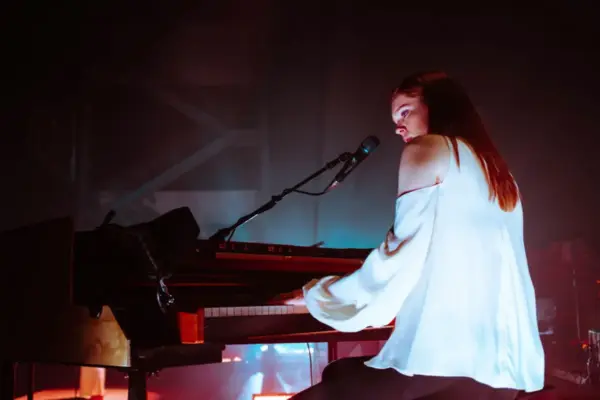
While most artists dream of late-night headliner slots, British-Indonesian indie-folk artist Nadia Kadek approaches her career milestones with a different philosophy. Having grown up attending festivals due to her mother working at Glastonbury, Kadek understands the subtle magic of the daytime slots.
"I’d love to open the Pyramid Stage at Glastonbury," Kadek reveals. "None of my big dreams are actually about headlining. I’d also love to play the Latitude main stage on a Sunday afternoon, when everyone’s just chilling out on the last day. My favourite festival memories are those little moments: the first set of the weekend, or when the sun’s going down. Those are the moments that stick with you."
Kadek’s summer was marked by profound moments of connection, such as discovering a couple at Kendal Calling—hundreds of miles from her home—who knew every lyric to her songs.
The Itch: Embracing the Chaos
For dance-punk duo The Itch (Georgia Hardy and Simon Tyrie), the festival season is an invaluable crucible for artistic development. They argue that the lack of preparation and unpredictable nature of these shows forces a band to become sharper and more resilient.
"Festivals are actually a really good way to hone your performance and your setlist in a way that you can’t necessarily do just by playing venues," Georgia Hardy notes. "There’s an element of ‘anything can happen.’ You haven’t necessarily done a soundcheck; you’ve usually just arrived, got ready, and walked straight onto the stage. There’s not much time to think about it, which can be quite freeing."
Future Outlook
The experiences of the NME 100 class of 2026 underscore a critical reality: the future of the live music industry relies heavily on these lower-billing artists. As the industry faces ongoing challenges—including rising production costs, inflation-driven ticket prices, and the vulnerability of independent festivals—supporting emerging talent is more important than ever.

The Emerging Artist Career Loop:
[Showcase / Small Font Booking] ➔ [Capturing Wandering Audiences] ➔ [Streaming & Social Growth] ➔ [Main Stage / Headliner Status]
For these six acts, the summer of 2026 was not merely a series of performances, but a stepping stone toward sustainable careers. 54 Ultra is setting his sights on South American Lollapalooza editions; Ceebo is eyeing a triumphant return to Wireless, the very festival where he once worked as event staff; and KuleeAngee is championing the revival of iconic Scottish events like T In The Park.
By embracing the chaos, navigating the logistics, and winning over audiences one tent at a time, these artists are proving that the true heart of festival season lies not in the headliners, but in the small font.