Executive Overview
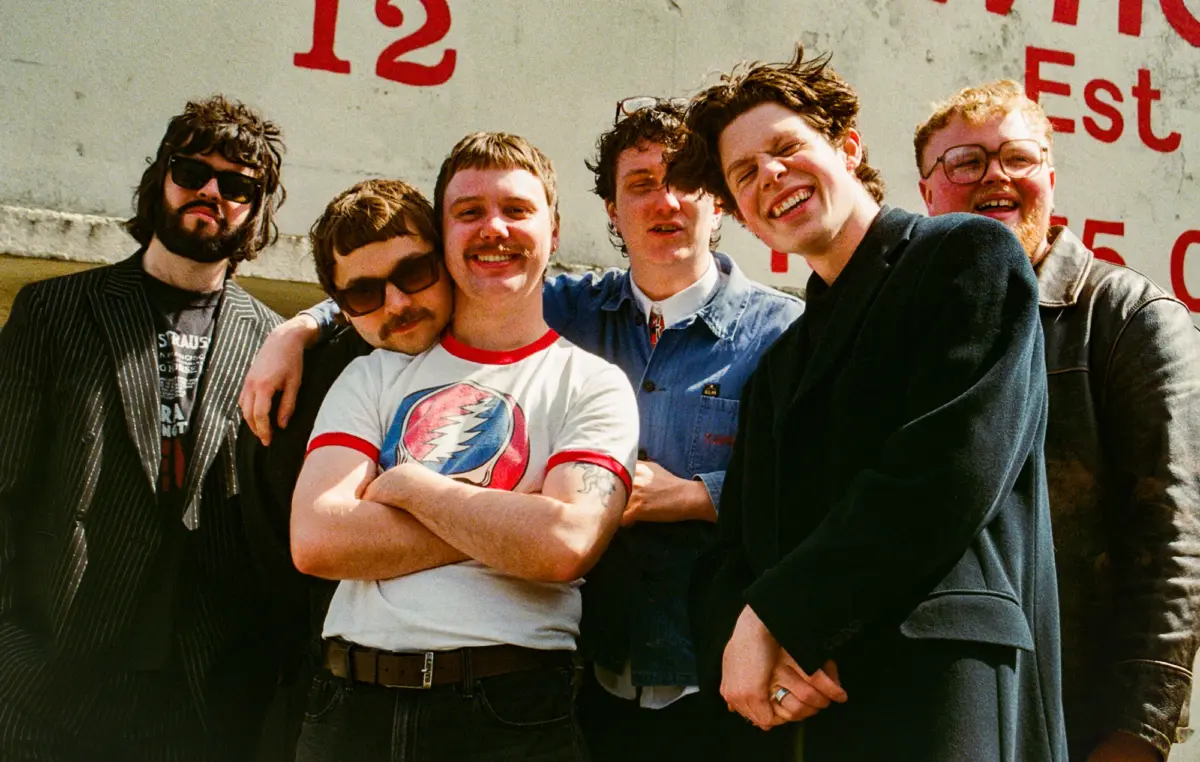
In the subterranean heat of Chalk, a premier music venue in Brighton, a seismic shift in the landscape of contemporary folk took place during this year’s edition of The Great Escape. Amidst a festival designed to showcase the highly polished future of pop, indie, and electronic music, the weekend’s most arresting performance belonged to a group whose artistic DNA stretches back more than a century. Dublin-based sextet Madra Salach (whose name translates from Irish as "Dirty Dog") delivered a visceral, punk-infused reimagining of traditional Irish music, bridging the gap between historical displacement and modern anxieties.
Armed with a harmonium, mandolin, acoustic drone textures, and a blistering punk ethos, the band took a packed, sweating basement crowd through decades of historical grief and personal catharsis. From the 1950s emigration lament "Murphy Can Never Go Home" to the 1870s classic "Spancil Hill," Madra Salach did not merely cover these songs; they reanimated them. By weaving tales of historical Irish displacement with raw, original compositions addressing love, loss, and existential dread, the band has positioned themselves at the absolute vanguard of the modern folk revival.
The climax of their set, "The Man Who Seeks Pleasure," served as a manifesto for their creative philosophy. Written in a cramped suburban bedroom only a few years ago, the song has already assumed the weight of an ancient standard. It showcases the emotional purging of frontman Paul Banks, whose vocal delivery acts as a lightning rod for the collective anxieties of a generation. With an explosive touring schedule, skyrocketing merchandise sales, and a rapidly growing international fanbase, Madra Salach are transitioning from Dublin’s pub snugs to Europe’s most prestigious festival stages, proving that the oldest stories are often the most urgent.
Detailed Chronology: From Pub Snugs to Festival Stages
The meteoric rise of Madra Salach is a testament to the power of organic, word-of-mouth momentum in an industry otherwise dominated by algorithmic curation. The band’s evolution from a casual pub session into a touring juggernaut occurred in distinct, highly concentrated phases.
[Early 2023]                     [Late 2023]                      [January 2026]                [Summer 2026]
Banks & Duffy play               Martin proposes labor-song       Release of debut EP           ~30 Festival bookings,
"The 1884" pub; cover            project; tape loops &            "It's A Hell Of An Age";      including TRNSMT,
Pogues & Dubliners.              drones introduced.               critical acclaim.             Green Man, & Chalk.
2023: The Dual Origins and the Fusion of Genres
The genesis of Madra Salach is described by its founders as "blurry," arising from two distinct musical experiments in Dublin’s fertile underground scene.
- The Traditional Strain: Vocalist Paul Banks and drummer Dara Duffy began playing informal, high-energy sessions at their local pub, The 1884. These nights were characterized by raw, unvarnished covers of The Pogues and The Dubliners. "You were there to play drinking music," Banks recalls, noting that the goal was immediate, rowdy crowd engagement rather than academic preservation.
- The Avant-Garde Labor Strain: Simultaneously, mandolinist Jack Martin was conceptualizing a radically different project. Heavily influenced by his family’s deep roots in the Irish labor movement, Martin wanted to adapt historic workers’ songs. Rather than using traditional arrangements, he envisioned setting these century-old political anthems against a backdrop of experimental tape loops, ambient feedback, and low-frequency drones.
By late 2023, these two approaches fused. The raw, drinking-song energy of Banks and Duffy collided with Martin’s avant-garde, politically charged concepts. To flesh out this complex wall of sound, the lineup expanded into a robust six-piece, recruiting guitarist Adam Cullen, bassist Jack Lawlor, and harmonium player Maxime Arnold. The addition of the harmonium, in particular, provided the physical, breathing drone that would become the band’s sonic signature.
January 2026: The Debut EP and Critical Breakthrough
The band consolidated their identity with the release of their debut EP, It’s A Hell Of An Age. The title itself was lifted from a poignant line in the mid-century emigration ballad "Murphy Can Never Go Home."
The EP was a critical success, praised for its refusal to romanticize the past. Instead of treating Irish history as a museum piece, It’s A Hell Of An Age drew direct parallels between the economic migration of the 1950s and the modern housing and cost-of-living crises driving young Irish people away from their homeland today. The original track "I Was Just A Boy" showcased Banks’ ability to pen contemporary narratives that carry the same devastating weight as songs written during the Great Famine or the industrial revolution.
Summer 2026: The International Explosion
Prior to the summer of 2026, Madra Salach had never performed a live set outside of the Republic of Ireland. Within a matter of months, their booking agent’s phone did not stop ringing. The band secured a staggering summer itinerary of approximately 30 major festival appearances across the UK and Europe.
Key milestones of this breakout summer included:
- A high-profile support slot at hip-hop trio Kneecap’s massive London outdoor show, where Madra Salach’s distinctive merchandise was worn by an estimated 20% of the attendees.
- Packed, sweaty performances at tastemaker festivals including TRNSMT in Scotland, Electric Picnic in Ireland, and a highly anticipated slot at Wales’ Green Man Festival.
- The definitive showcase at The Great Escape in Brighton, which solidified their reputation as a live act that must be seen to be believed.
Supporting Context & Metrics: The Mechanics of the Irish Folk Renaissance
Madra Salach’s rapid ascent does not exist in a vacuum. It is part of a broader, globally recognized renaissance in Irish traditional and folk music. Over the last decade, bands like Lankum, Radie Peat, Ye Vagabonds, and ØXN have dismantled the stereotypical, tourist-friendly image of Irish music, replacing it with something dark, heavy, and politically uncompromising.
| Metric / Aspect | Traditional "Tourist" Folk | The New Irish Folk Movement (Madra Salach, Lankum) |
|---|---|---|
| Primary Instruments | Acoustic guitar, tin whistle, clean fiddle | Harmonium, tape loops, distorted mandolin, drone |
| Thematic Focus | Romanticized pastoral life, idealized rebellion | Working-class struggle, emigration, trauma, addiction |
| Performance Venue | Hotel bars, heritage centers, tourist pubs | Basement punk venues, major international music festivals |
| Sonic Influence | Classical folk structures, pop-adjacent vocal harmonies | Post-punk, industrial drone, noise rock, traditional singing |
The Political Underpinnings: Labor and Lore
A key element of Madra Salach’s authenticity is their connection to working-class history. Mandolin player Jack Martin’s family lineage is deeply tied to Irish organized labor. His grandfather served as the president of the Services, Industrial, Professional and Technical Union (SIPTU), the largest trade union in Ireland.
"Usually people’s grandparents have photos of Jesus on the walls, but mine had Jim Larkin," Martin notes, referring to the legendary trade union leader who founded the Irish Transport and General Workers’ Union and led the historic 1913 Dublin Lockout. "Jim Larkin is my granddad’s Pope."
This political consciousness prevents Madra Salach from falling into the trap of superficial folk-pop. The songs they select to cover are not chosen for their catchiness, but for their historical weight. When they perform "Spancil Hill"—a song written in the 1870s by Michael Considine as he lay dying of neurosyphilis in California, dreaming of his home in County Clare—it is delivered with the urgency of a modern refugee crisis.
   [Jim Larkin & SIPTU Labor History]
                  │
                  ▼
     [Jack Martin's Family Legacy]
                  │
                  ▼
 [Integration of Political & Social Themes]
                  │
                  ▼
     [Madra Salach's Artistic Ethos]
Official Statements: In Their Own Words
The members of Madra Salach are highly articulate about their mission, their relationship with tradition, and the psychological toll of their intense live performances.
On the Catharsis of "The Man Who Seeks Pleasure"
Vocalist Paul Banks spoke extensively about the emotional weight of their closing anthem, which features the repeating lyric: "For the man who seeks pleasure, is the man who seeks pain."
"The thing that I like about that line is that it’s not saying anything new. It’s a behavioral pattern that a lot of people are stuck in that’s been summed up into a sentence that I can then scream over a drone, which then feels cathartic for me and seems to be cathartic for people watching.
For a long time when we were gigging it, I’d almost always get too close to the line emotionally, and I’d be really dysregulated for an hour after the show. And I think that speaks to… there’s something special about that song."
— Paul Banks, Vocalist
On Defining the Folk Ethos
For Banks, folk music is not a static genre defined by specific acoustic instruments, but a living, breathing oral history belonging to the working class.
"I think the centre of the folk ethos is that it’s just human stories—stories of individuals as opposed to the history book stories of battles and conquerors and kings. It’s a people’s oral history, so as long as you’re writing from a place of truth, everything else can follow."
— Paul Banks
On Navigating the Modern Folk Boom
The band is quick to credit the artists who paved the way for their mainstream viability, allowing them to bypass the traditional cliches of Irish performance.
"I think we’re very lucky that we’re not having to plot this course on our own. People have the context. We don’t have to pander too much to like, swilling pints of Guinness and wearing big jumpers because other bands have showcased that, culturally, we have a lot more to offer than that—even though I love big jumpers and Guinness! We jumped on the bandwagon, and it’s going great!"
— Paul Banks
Future Outlook: The Next Chapter for Madra Salach
As Madra Salach look past their whirlwind summer of 2026, the primary challenge facing the sextet is translating their monumental live energy into a full-length studio album. The band has hinted that their upcoming material is developing "more teeth," influenced by the massive, high-energy festival crowds they have spent the last year performing for.
      [Establish Raw Sound] ──► [Intense Live Testing] ──► [High-Energy Studio Album]
      (2026 EP: "Hell Of An Age") (30+ Summer Festivals)   (Upcoming LP Development)
Key Priorities for the Band:
- Preserving Live Energy in Studio: The band is currently experimenting with live-tracking techniques to capture the physical, air-moving power of Maxime Arnold’s harmonium and Dara Duffy’s thunderous drumming.
- Developing New Material: While their early setlists relied on a 50/50 split of traditional covers and original songs, their upcoming release will feature a significantly higher proportion of original compositions written collectively on the road.
- Expanding Global Touring: Following their UK and European success, plans are reportedly underway for the band’s first tour of North America, where a massive Irish diaspora awaits their unique blend of heritage and punk rebellion.
What remains clear is that Madra Salach’s success is built on an unshakeable foundation of honesty. In an era where audiences have "highly-tuned bullshit detectors," as Banks puts it, the absolute sincerity of their performance is their greatest asset. Whether playing in a damp basement in Brighton or on a massive main stage at Green Man, Madra Salach will continue to pull their audiences into the emotional center of the song, refusing to let them look away.