In the storied landscape of British popular music, few figures possess a lineage as richly interwoven with the fabric of 20th-century audio culture as singer-songwriter Claire Hamill. From humble beginnings in Teesside—where her parents ran the region’s sole oasis of youth culture out of a coffee bar—to rubbing shoulders with music royalty in London, Los Angeles, and Denver, Hamill’s career is a masterclass in artistic survival and profound musical appreciation.
In a recent deep-dive retrospective curated by writer Michael Heatley, Hamill opened her personal archive and record collection to trace the soundtrack of her life. The resulting list of ten definitive recordings is far more than a mere collection of nostalgic artifacts; it is a sonic autobiography. Spanning over three decades of commercial release dates—from early 1960s harmony pop to 1990s adult contemporary masterpieces—these records encapsulate the formative triggers, industry encounters, and creative epiphanies that shaped a distinct British songstress.
This feature examines those ten foundational tracks. Through Hamill’s personal reflections, we explore how family harmony, the harrowing realities of early music-industry fame, accidental mentorships with fallen rock icons like Paul Kossoff and Tim Buckley, and run-ins with legendary broadcasters like John Peel forged an enduring artistic identity.
Detailed Chronology: The Soundtrack of a Life
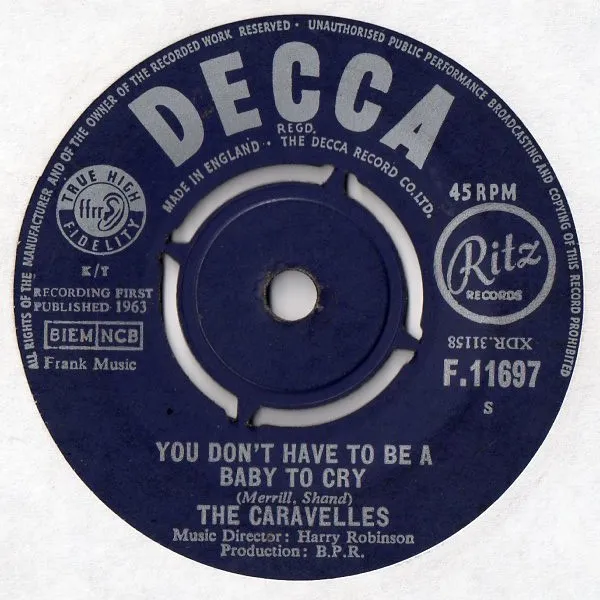
1. The Genesis of Harmony: The Caravelles – "You Don’t Have To Be A Baby To Cry" (1963)
- Format: 7” UK Single (Decca F 11697)
- Estimated Collector Value: £5
The musical journey began not in a concert hall, but in the domestic warmth of home. For a young Hamill, one of her earliest and most enduring memories was listening to her mother and Auntie Josie blend their voices in seamless vocal harmony. That foundational experience planted an early seed.
When she was 12, her family relocated to Teesside, a move that placed her at the epicenter of a burgeoning local youth culture. Her parents established a pioneering coffee bar—the only establishment of its kind within a 30-mile radius—complete with a glowing jukebox and a prized Coca-Cola machine. While the jukebox spun myriad tracks, it was the delicate interplay of vocal harmony demonstrated by records like The Caravelles’ breakthrough hit that instilled a deep, lifelong reverence for the mechanics of songcraft.
2. Orchestral Pop Perfection: The Beach Boys – "Good Vibrations" (1966)
- Format: 7” UK Single (Capitol CL 15475)
- Estimated Collector Value: £8
If vocal harmony was introduced in the living room, it was elevated to an entirely cosmological plane by Brian Wilson’s compositional genius. Hearing Good Vibrations for the first time was, in Hamill’s words, "mind-blowing."
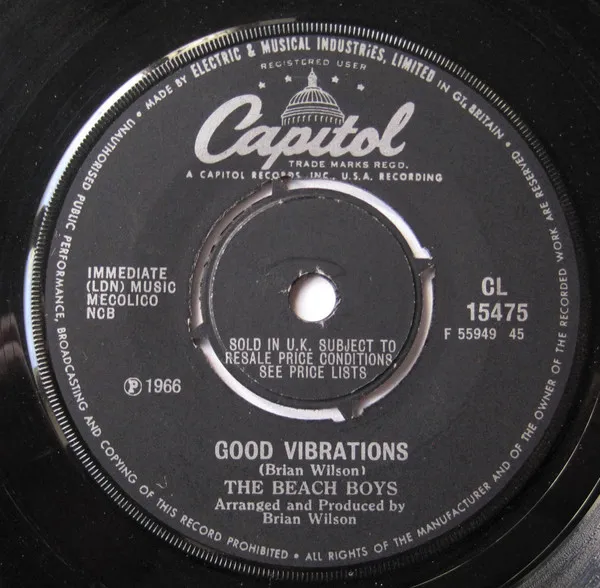
The track’s radical arrangement shifts, electro-theremin textures, and quasi-orchestral movements represented a massive leap forward in her informal musical education. While family gatherings frequently revolved around the communal comfort of Sloop John B—a staple whose singalong lyrics made it a party favorite—Good Vibrations proved that pop music could be an avant-garde, boundary-pushing art form.
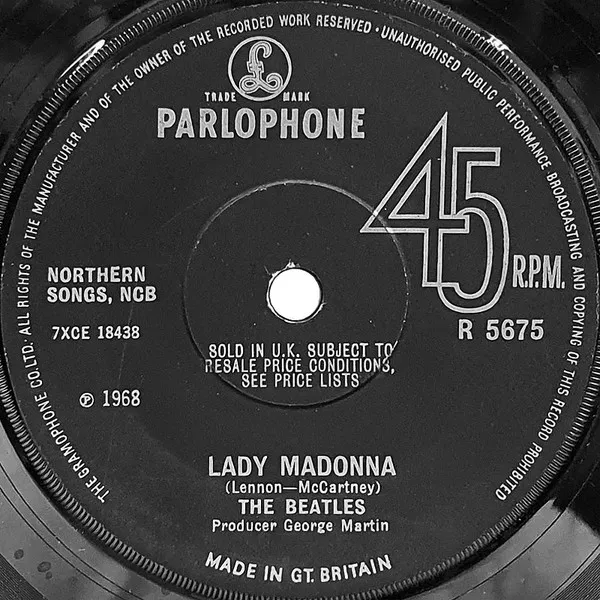
3. Resilience and Recognition: The Beatles – "Lady Madonna" (1968)
- Format: 7” UK Single (Parlophone R 5675)
- Estimated Collector Value: £60
Music often mirrors real life, and for Hamill, The Beatles’ Lady Madonna became a poignant portrait of familial endurance. Following the dissolution of her parents’ marriage, her mother—formerly a typist at Imperial Chemical Industries (ICI)—retrained and re-entered the workforce to financially sustain the family. Witnessing this tireless resilience firsthand, Hamill saw her mother reflected directly in the song’s titular character.
This era also marked her baptism by fire as a performing artist. During a holiday in Whitby alongside a friend and her guitar-playing father, a teenage Hamill was coaxed into a local pub to sing. Armed with The Beatles’ Eleanor Rigby—one of the first songs she had mastered—she took the stage. The warm, protective reception from the pub patrons ("Isn’t she lovely? Isn’t she cute?") cemented her desire to perform.
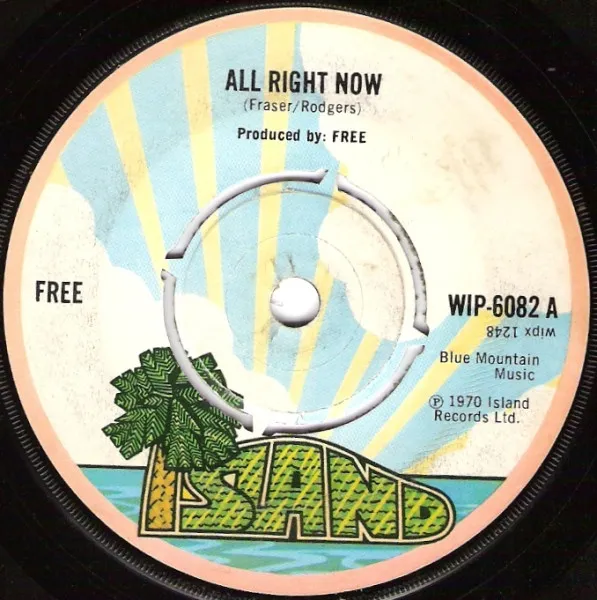
4. The Weight of Stardom: Free – "All Right Now" (1970)
- Format: 7” UK Single (Island WIP 6082)
- Estimated Collector Value: £5
By the dawn of the 1970s, blues-rock outfit Free were the undisputed darlings of British schoolyards. For Hamill and her peers, the band was a cultural touchstone. Frontman Paul Rodgers happened to hail from Middlesbrough, adding a tangible layer of local pride; Hamill vividly recalls the stampede of schoolgirls rushing to the top floor of their convent school just to catch a glimpse of Rodgers’ mother walking down their road.
More profoundly, this period offered an early, sobering glimpse into the dark side of the industry. At age 17, Hamill found herself hanging out at Island Records’ legendary Basing Street headquarters with Free guitarist Paul Kossoff. Invited over for tea to chat as peers, Hamill gained an early awareness that would echo throughout her life: "Fame, it’s a terrible thing for young people sometimes." Kossoff’s tragic trajectory would remain a poignant reminder of the music industry’s high human cost.
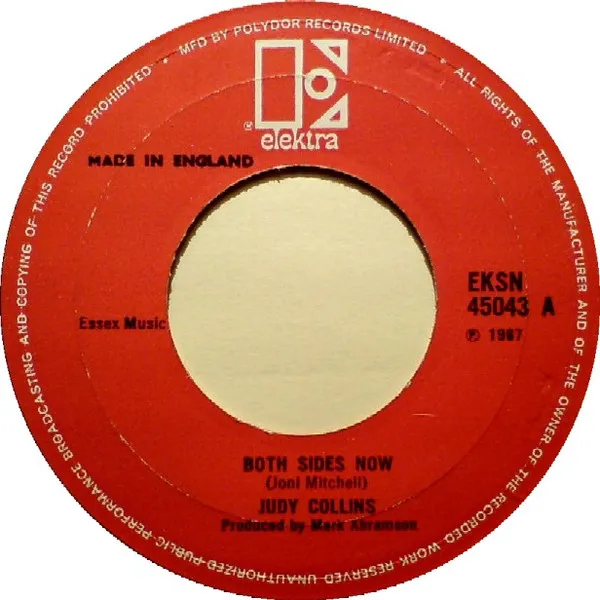
5. Finding Her Voice: Judy Collins – "Both Sides, Now" (1970)
- Format: 7” UK Single (Elektra EKSN 45043)
- Estimated Collector Value: £5
The man who had originally escorted a young Hamill to the Whitby pub eventually became her mother’s long-term partner, bringing with him an expansive, sophisticated record collection. Through him, Hamill was introduced to Joni Mitchell via Judy Collins’ interpretation of Both Sides, Now.
The discovery was an epiphany. Unlike Sandy Denny, whose soaring, traditional folk delivery felt distinctively academic and historic, Mitchell’s contemporary lyrical introspection provided a mirror for Hamill’s own burgeoning identity. "Now I know who I am: I’m like Joni Mitchell, because I write songs as well," she recalls thinking. Years later, that circle closed when she was formally introduced to Mitchell in David Geffen’s Los Angeles office—a genuinely unforgettable encounter.
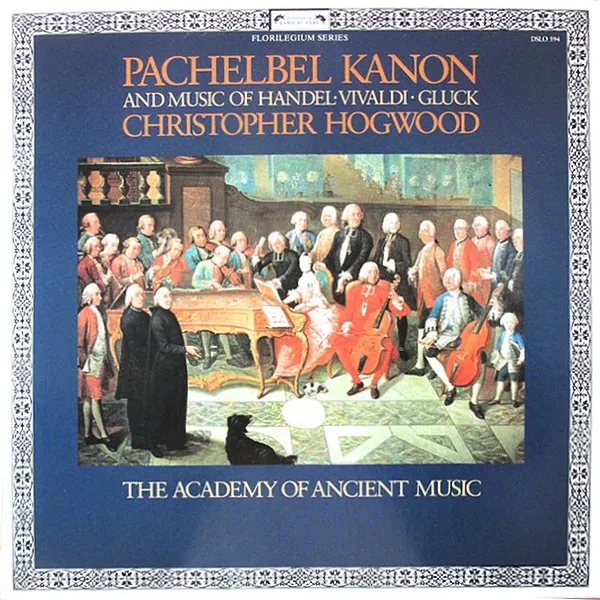
6. Classical Crossovers and Television Triumphs: Academy of Ancient Music – Pachelbel’s Canon in D (1981)
- Format: LP UK Release (L’Oiseau Lyre DSLO 594)
- Estimated Collector Value: £10
The 1980s ushered in new multimedia collaborations. Hamill’s then-husband, Nick Austin, created a pioneering satellite television channel dedicated to new-age and classical music, which eventually found a late-night home on Channel 4.
This platform birthed an unexpected cultural phenomenon when Michael Appleton, former producer of The Old Grey Whistle Test, paired footage of Emperor penguins waddling rhythmically to Pachelbel’s Canon in D. Austin commissioned Hamill to compose original vocal accompaniment for the segment. While the resulting audio-visual marriage captured the public imagination, the surreal realities of television gatekeeping soon followed: when invited onto the popular BBC Saturday morning children’s show Going Live, the production team bluntly informed her, "No, we don’t want Claire, we just want the penguins."
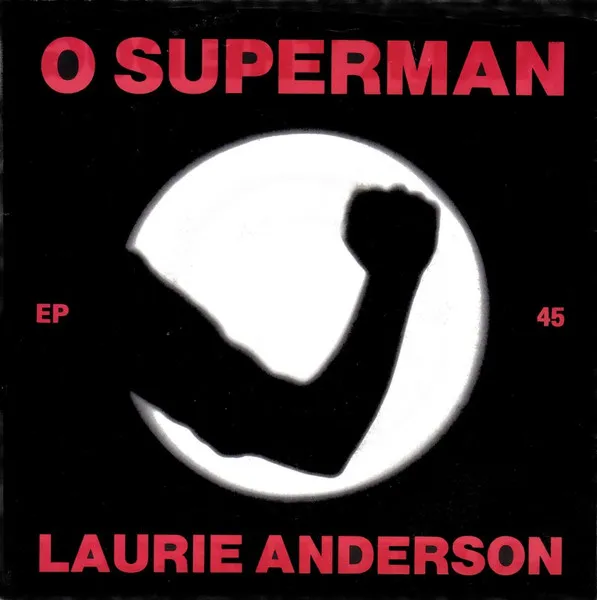
7. Breathless Innovations: Laurie Anderson – "O Superman" (1981)
- Format: 7” UK Single (Warner Bros K 17870)
- Estimated Collector Value: £5
A true connoisseur of innovation, Hamill encountered Laurie Anderson’s minimalist masterpiece O Superman via the ultimate tastemaker of the era: John Peel’s BBC Radio 1 show.
Anderson’s striking use of vocoders and breathless vocal inflections immediately captured Hamill’s imagination, directly inspiring the vocal delivery on her own composition, The Moon Is A Powerful Lover. Her immersion in the London music scene also brought her directly into Peel’s orbit. At a bustling industry party, the notoriously sharp-witted DJ pulled her aside with a characteristic grin: "Claire Hamill, you’ve been to too many of these parties lately; you’re a bit of a ligger, aren’t you?" Despite the gentle ribbing, Hamill remembers Peel with profound fondness.
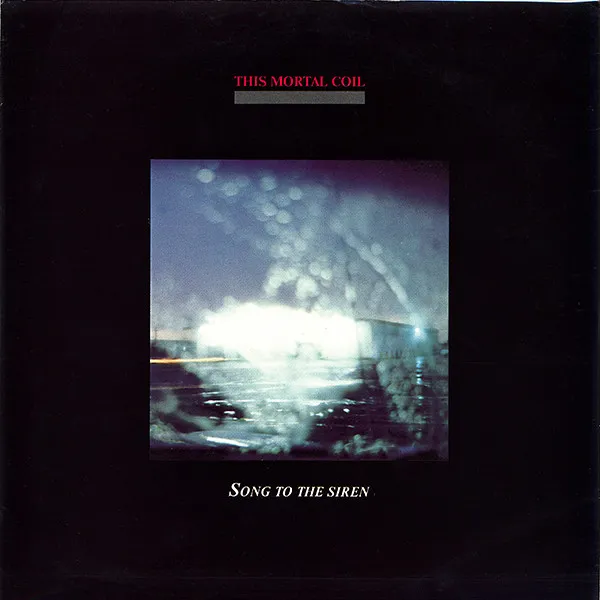
8. Spectral Beauties: This Mortal Coil – "Song to the Siren" (1983)
- Format: 7” UK Single (4AD AD 310)
- Estimated Collector Value: £15
The ethereal 4AD collective This Mortal Coil, helmed by Elizabeth Fraser of Cocteau Twins fame, delivered a hauntingly fragile interpretation of Tim Buckley’s Song to the Siren. For Hamill, Fraser remains the gold standard of British vocalists.
This record holds deep personal resonance due to Hamill’s brief history with its original author. While playing a club residency in Denver, Colorado, in 1974, Hamill crossed paths with Tim Buckley. Impressed by her set, Buckley struck up a friendship with the young singer. Like Paul Kossoff, Buckley’s untimely passing left an indelible, melancholic mark on Hamill’s view of her musical peers.
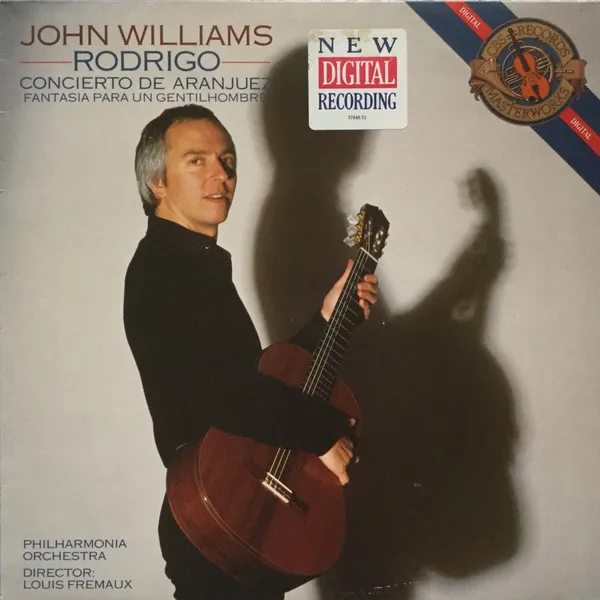
9. Copyrights and Conciertos: John Williams – Rodrigo’s Concierto de Aranjuez (1984)
- Format: UK CD Release (Sony Classical SK 37848)
- Estimated Collector Value: £5
Hamill’s admiration for classical guitar virtuosity led her to write contemporary lyrical accompaniment over Joaquin Rodrigo’s sweeping masterpiece, Concierto de Aranjuez.
Eager to record the modern reinterpretation, Hamill navigated the labyrinthine world of music publishing. She tracked down Rodrigo’s daughter, the sole copyright holder of the estate, and penned a polite, heartfelt request for permission. The response was swift and unyielding: "Absolutely not!" Though the project was shelved, the track remains a testament to her constant drive to bridge classical composition with modern singer-songwriter sensibilities.
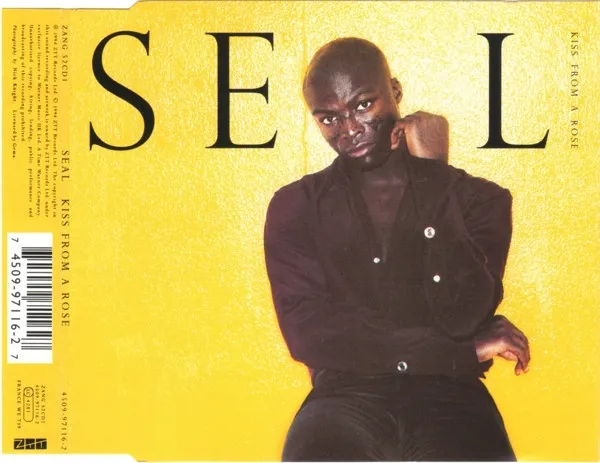
10. Modern Appreciation: Seal – "A Kiss From a Rose" (1994)
- Format: UK CD Single (ZTT ZANG 52CD1)
- Estimated Collector Value: £5
Closing out the chronology is Seal’s massive 1994 chart-topper, which holds the unique distinction of being the first physical record Hamill actually went out into a shop and purchased with her own money.
Growing up in a household where pocket money was strictly limited to 50p a week and record players were absent, recorded music was a rare luxury. By the time she entered the industry professionally, promotional freebies flooded her doorstep, rendering record-shopping unnecessary for years. Yet, A Kiss From a Rose broke that spell. Hamill remains deeply impressed by its sophisticated structural architecture: "I love the way it changes before it goes into the chorus, the pre-chorus; surprising for a pop song, but really good. Lovely arrangement, lovely voice, lovely production."
Supporting Context & Metrics
To fully appreciate the weight of Claire Hamill’s vinyl and CD archive, one must contextualize the financial and cultural economy of modern record collecting. While many of the original 7-inch pressings featured in her retrospective—such as The Caravelles’ You Don’t Have To Be A Baby To Cry or Free’s All Right Now—currently trade in mint or near-mint condition at modest collector valuations between £5 and £10, pivotal cultural artifacts command significantly higher premiums.
+--------------------------------------------------------------------------+
|                       COLLECTOR MARKET VALUATIONS                        |
+-----------------------------------+--------------------------------------+
| Release                           | Estimated UK Market Value            |
+-----------------------------------+--------------------------------------+
| The Caravelles (1963)             | £5                                   |
| The Beach Boys (1966)             | £8                                   |
| The Beatles (1968)                | £60 (Spike due to historical demand) |
| Free (1970)                       | £5                                   |
| Judy Collins (1970)               | £5                                   |
| Academy of Ancient Music (1981)   | £10                                  |
| Laurie Anderson (1981)            | £5                                   |
| This Mortal Coil (1983)           | £15                                  |
| John Williams / Rodrigo (1984)    | £5                                   |
| Seal (1994)                       | £5                                   |
+-----------------------------------+--------------------------------------+
As demonstrated above, items such as The Beatles’ Lady Madonna (Parlophone R 5675) routinely command upwards of £60 among discerning UK collectors, driven by the crossover appeal of late-60s Parlophone pressings and deep-pocketed Beatles completists. Meanwhile, cult independent releases like This Mortal Coil’s Song to the Siren on 4AD hold steady around £15, reflecting the enduring obsession with 1980s gothic-pop and dream-pop vinyl artifacts.
Official Statements and Retrospective Insights
Reflecting on her journey through the pages of music history, Hamill’s observations offer a rare window into the psychological realities of life as a touring artist and songwriter in 1970s and 80s Britain.
Industry figures loom large in her reflections—none more so than the late, great BBC Radio 1 broadcaster John Peel. Recalling her days running in London’s fast-paced circles, Hamill notes:
"Peel was absolutely adorable… When I was in London, I was hanging out a lot, and I remember at a music-biz party Peel said to me, ‘Claire Hamill, you’ve been to too many of these parties lately; you’re a bit of a ligger, aren’t you?’"
On the collaborative front, her encounters with fallen luminaries like Paul Kossoff and Tim Buckley underscore a sobering vocational truth: the fragile equilibrium required to navigate early artistic acclaim. Whether mourning the swift descent of her peers or recalling the rejection letter from Joaquin Rodrigo’s estate regarding her unauthorized lyrical adaptation of Concierto de Aranjuez, Hamill’s narrative remains anchored in resilience.
Future Outlook
As the music industry continues to re-evaluate the foundational architects of the British folk, pop, and rock movements, Claire Hamill’s enduring legacy remains more active than ever.
Rather than resting purely on the laurels of her past collaborations with Island Records, 4AD, and the wider 1970s singer-songwriter boom, Hamill continues to forge new creative paths. Her current artistic output—highlighted by recent work with the Claire Hamill Band—culminates in the release of her latest project, A House Among The Trees, issued via Archway Ocean.
Furthermore, live performance remains a vital component of her career trajectory. Fans and vinyl enthusiasts eager to catch the veteran songstress can anticipate her upcoming live appearance at the prestigious Nene Valley Rock Festival, where she is slated to perform this September.
By bridging the gap between the domestic family harmony of 1960s Teesside and the sophisticated contemporary songwriting of today, Claire Hamill proves that true musical education never truly ends—it merely finds new grooves to spin.